

New energy waste heat generator suction end body casting process design method
A technology of casting process and design method, which is applied in the field of casting process design of the suction end body of the new energy waste heat generator, can solve the problems of large amount of calculation, harsh requirements, and tediousness, and achieve the optimization of the determination method, reduction of shrinkage porosity, and accuracy Enhanced effect
Patent Information
- Authority / Receiving Office
- CN · China
- Current Assignee / Owner
- Publication Date
- 2019-07-09
Smart Images
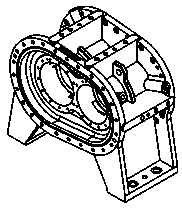
Figure 1 
Figure 2 
Figure 3
Abstract
Description
technical field
[0001] The invention relates to the technical field of casting process design, in particular to a casting process design method for a suction end body of a new energy waste heat generator. Background technique
[0002] In order to save energy, reduce pollution, and reduce production costs, most enterprises have begun to use waste heat generators to generate electricity from waste heat. The important part of waste heat generators is the suction end body, and its structure is as follows: figure 1 As shown, the structure of the suction end body is relatively complex, the development is difficult, and the production difficulty coefficient is high, resulting in air leakage during the use of the product, reducing the use efficiency of the product and even directly failing to use the product normally.
[0003] Casting process design is a key process for making the suction end body, so as to ensure that the produced castings have no defects such as shrinkage porosity...
Examples
Embodiment
[0051] right figure 1 For the casting of the suction end body shown, the point model method is used to analyze the position of the hot joint, and it is compared with the position of the actual hot joint of the suction end body casting. The accuracy of the analysis and prediction of the hot joint is 88%. The method in the application is used to analyze the hot spots, and the accuracy rate of the hot spots prediction is 98%. It can be seen from the prediction accuracy rate that the application can accurately heat the heat section and reduce the occurrence probability of shrinkage porosity, shrinkage cavity, and porosity of the casting during the production process.