
Production method of fibrinogen
A fibrinogen and production method technology, applied in the field of biopharmaceuticals, can solve problems such as the influence of reconstitution time, expensive medicines, and reduced coagulation activity, and achieve good appearance and stability, good coagulation activity, and short reconstitution time Effect
Patent Information
- Authority / Receiving Office
- CN · China
- Patent Type
- Applications(China)
- Current Assignee / Owner
- Publication Date
- 2020-08-11
Smart Images
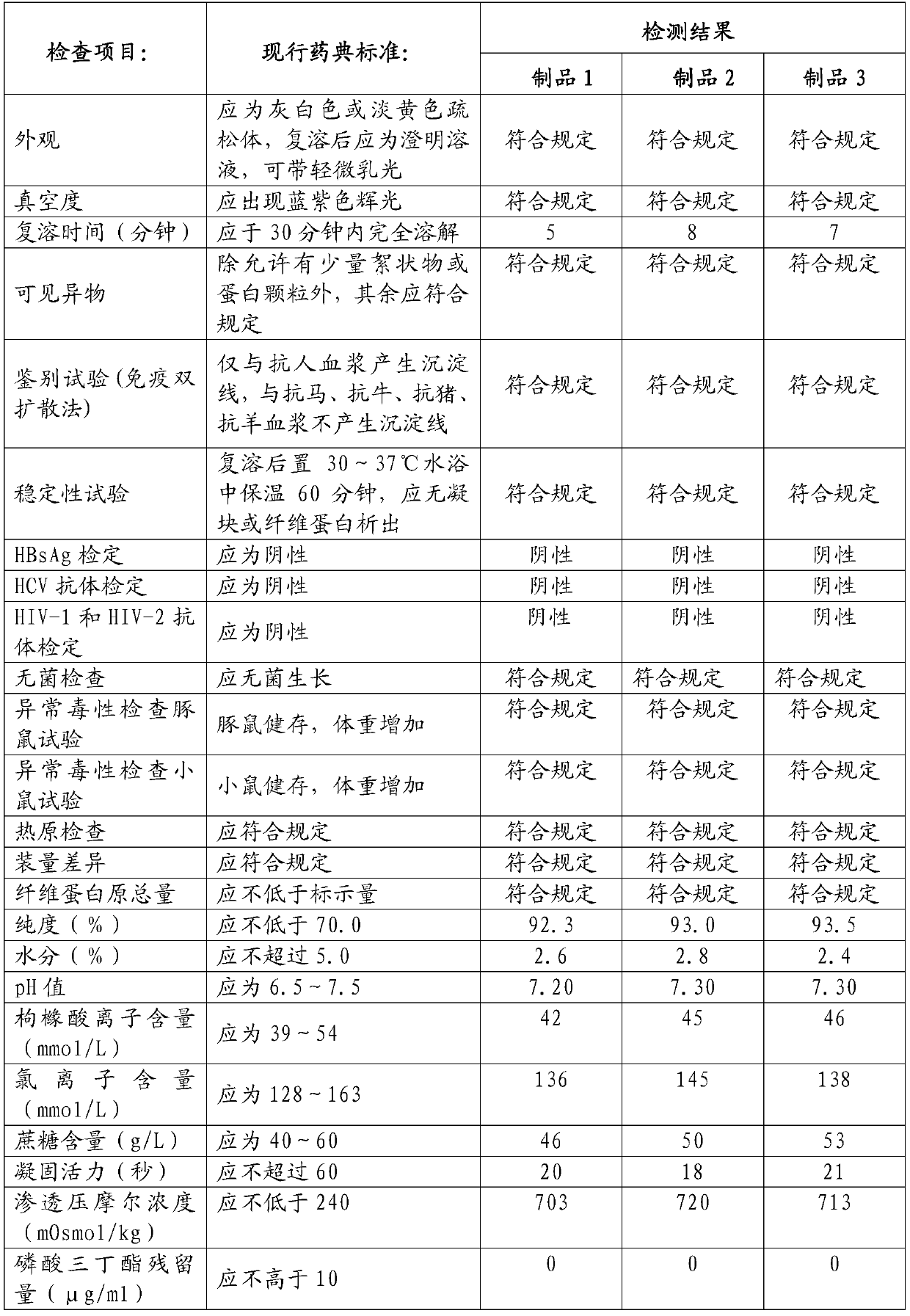
Figure 1 
Figure 2 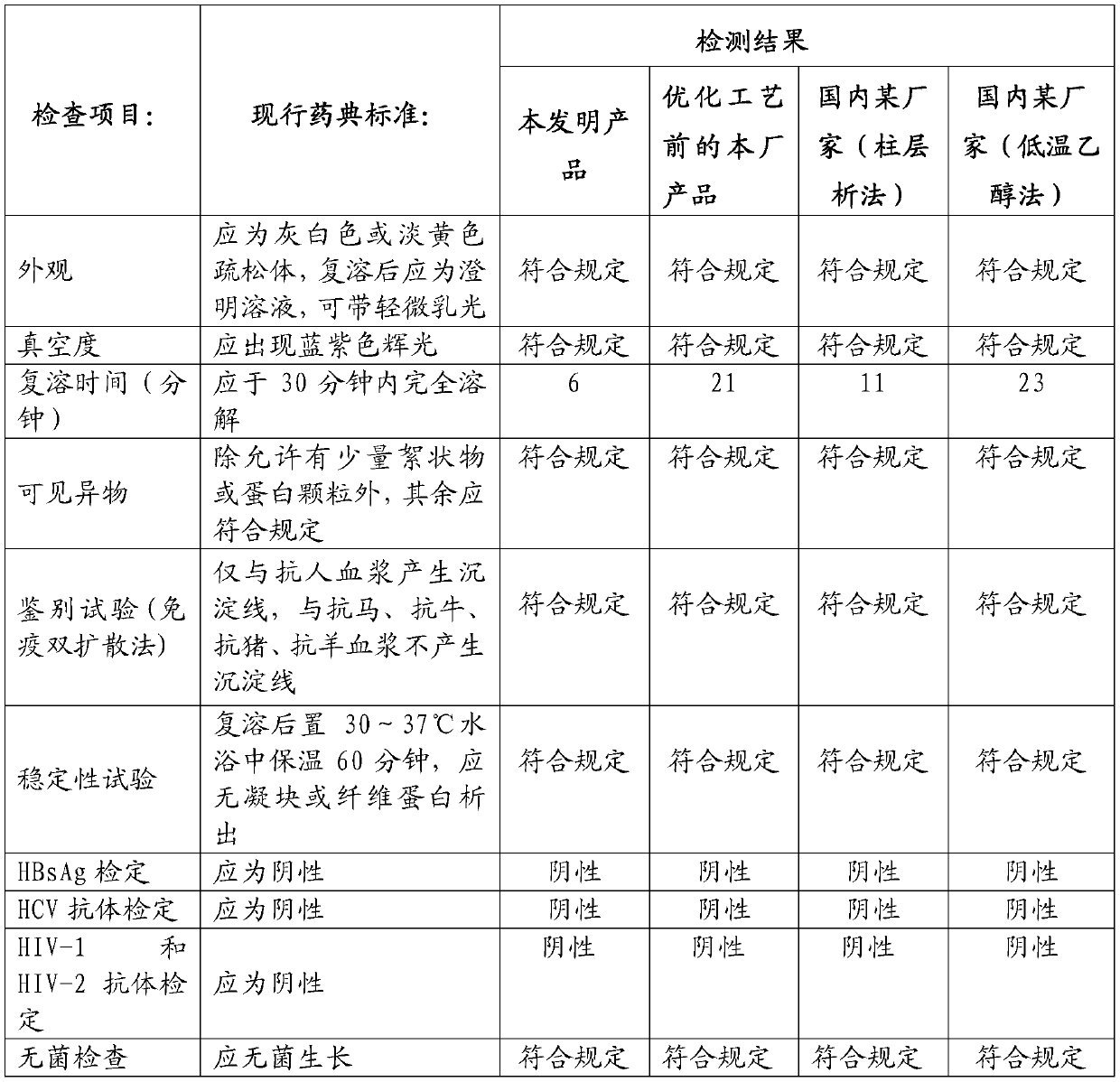
Figure 3
Abstract
Description
technical field
[0001] The invention belongs to the field of biopharmaceuticals, in particular to a method for producing fibrinogen. Background technique
[0002] Human fibrinogen (fibrinogen, Fg) is coagulation factor I, which is the coagulation factor with the highest content in plasma, and is also a "central" protein in the coagulation system. The final stage of coagulation is the formation of thrombin, which converts fibrinogen to fibrin. In addition to directly participating in the coagulation process, fibrinogen can also mediate platelet aggregation and affect blood viscosity. It is an important risk factor for cardiovascular and cerebrovascular diseases. It also plays an important role in pathological processes such as the formation of atherosclerosis and tumor metastasis. Fg gene defects can lead to congenital hypofibrinogenemia (or no) and dysfibrinogenemia.
[0003] Fibrinogen directly participates in the coagulation process mainly as coagulation factor I. In t...
Examples
Embodiment 1
[0107] (1) Plasma collection and quick-freezing: 3.48 tons of fresh human plasma collected was quick-frozen within 30 minutes by flat-plate direct-cooling quick-freezing technology and stored in a -30°C freezer. This batch of plasma passed the virus test and met the quarantine period stipulated by the state.
[0108](2) Plasma melting and cryoprecipitation: transfer the batch of qualified plasma from the -30°C freezer to the pre-thawing room at 0-4°C for 1 hour, and then spray it with water for injection below 10°C. Alcohol spray disinfection and water for injection rinse alcohol and dry. Break the bag of the raw material plasma and transfer it to the slurry melting tank, circulate the water for injection with an interlayer temperature of 30°C to melt the plasma, and perform continuous separation and centrifugation at a speed of 5,000-5,600 rpm. The liquid intake of the centrifuge is 900 L / min. kg and the supernatant, and stored in a -30°C freezer.
[0109] (3) Preparation o...
Embodiment 2
[0122] (1) Plasma collection and quick-freezing: 3.51 tons of fresh human plasma collected was quick-frozen within 30 minutes by flat-plate direct-cooling quick-freezing technology and stored in a -30°C freezer. This batch of plasma passed the virus test and met the quarantine period stipulated by the state.
[0123] (2) Plasma melting and cryoprecipitation: transfer the batch of qualified plasma from the -30°C cold storage to the pre-thawing room at 0-4°C for 1.5 hours, and then spray it with water for injection below 10°C. Alcohol spray disinfection and water for injection rinse alcohol and dry. Break the bag of the raw material plasma and transfer it to the melting tank, and circulate the water for injection with an interlayer temperature of 30°C to melt the plasma, and perform continuous separation and centrifugation at a speed of 5000-5600 rpm. kg and the supernatant, and stored in a -30°C freezer.
[0124] (3) Preparation of Component I Precipitation: Transfer the supe...
Embodiment 3
[0137] (1) Plasma collection and quick-freezing: 3.45 tons of fresh human plasma collected was quick-frozen within 30 minutes by flat-plate direct-cooling quick-freezing technology and stored in a -30°C freezer. This batch of plasma passed the virus test and met the quarantine period stipulated by the state.
[0138] (2) Plasma melting and cryoprecipitation: transfer the batch of qualified plasma from the -30°C freezer to the pre-thawing room at 0-4°C for 2 hours, and then spray it with water for injection below 10°C. Alcohol spray disinfection and water for injection rinse alcohol and dry. Break the bag of the raw material plasma and transfer it to the slurry tank, and circulate the water for injection with an interlayer temperature of 30°C to melt the plasma, and perform continuous separation and centrifugation at a speed of 5000-5600 rpm. kg and the supernatant, and stored in a -30°C freezer.
[0139] (3) Preparation of Component I Precipitation: Transfer the supernatant ...