
A kind of cow dung source attractant for preventing and controlling adults of black gill beetle
A technology of dark gill beetle and attractant, which is applied in the direction of attracting pests, pest control, biocide, etc., can solve the problem of reducing the attractiveness of scarabs, and achieve low production cost, good control effect, and environmental friendliness
Patent Information
- Authority / Receiving Office
- CN · China
- Patent Type
- Patents(China)
- Current Assignee / Owner
- Publication Date
- 2021-10-15
Smart Images
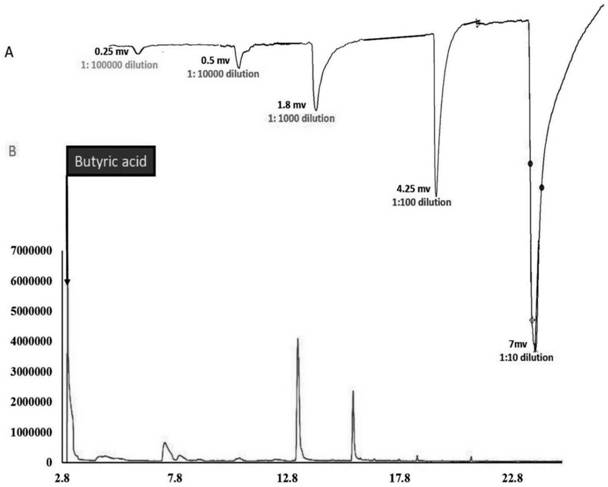
Figure 1 
Figure 2 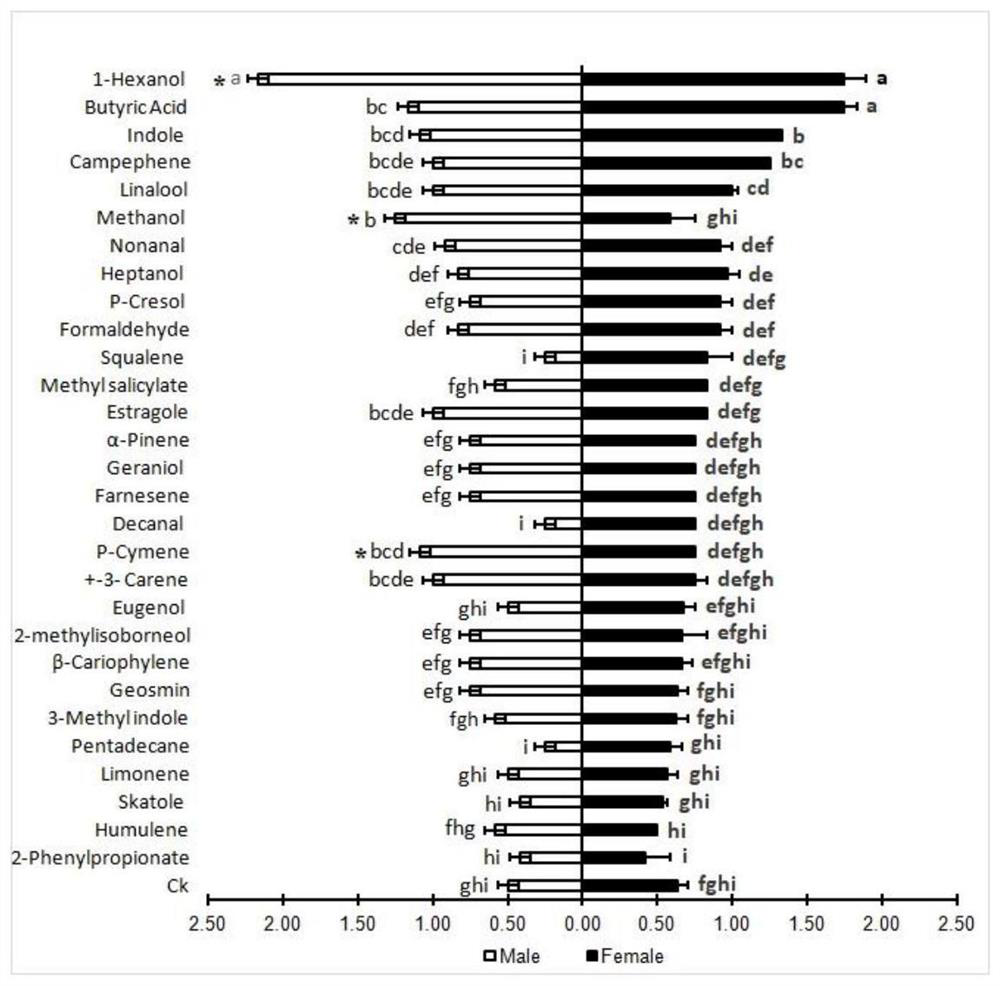
Figure 3
Abstract
Description
technical field
[0001] The invention belongs to the technical field of biological control of harmful organisms, and in particular relates to a cow dung source attractant for preventing and controlling adult black beetle beetles. Background technique
[0002] The black beetle has one generation per year, and the larvae have 3 instars. Among them, the 3rd instar lasts the longest and consumes the most food. The damage period almost runs through the entire growing season of the crops. In addition, the latent damage in the soil greatly increases the difficulty of control. It is recognized worldwide as a subterranean pest that is difficult to control. Since the larvae of the black beetle are hidden and cause damage underground, the principles of "combining underground and aboveground control" and "larval and adult control" should be adopted for comprehensive prevention and control, and the control in the adult stage can often achieve twice the result with half the effort. [000...
Examples
Embodiment 1
[0015] The GC-MS analysis of embodiment 1 cow dung extract components
[0016] Both unripe and decomposed manure were analyzed. Gas chromatograph: Shimadzu GCMS-QP2010SE; Chromatographic column: RTx-5MS (30m×0.25mm i.d., SGE) capillary column. Heating program: initial temperature is 50°C, keep for 3min; rise to 190°C at 20°C / min, keep for 3min; rise to 280°C at 5°C / min, keep for 5min.
[0017] The GC-MS results of undecomposed and decomposed cow manure are shown in Table 1 and Table 2, respectively.
[0018] Table 1
[0019]
[0020] Table 2
[0021]
[0022] It can be seen that a total of 12 components were obtained in the undecomposed cow dung, and a total of 11 components were obtained in the decomposed cow dung.
Embodiment 2
[0023] Embodiment 2 The antennal potential response of the dark beetle to different compound monomers
[0024] A total of 28 kinds of cow dung volatiles in Example 1 and plant volatile monomers that have been proved to have an attractive effect on scarab beetles in other people's research results were tested for insect antennal potential response. Using paraffin oil as a solvent, all 28 kinds of volatile monomers were diluted into a solution to be tested with a concentration of 0.1%. Select very active black beetle adults in plastic basins, place them on filter paper, and under a dissecting microscope, cut off the antennae base quickly with a scalpel, and mix the isolated antennae base with a conductive liquid (containing 750mg / ml NaCl , 35mg / ml KCl, 29mg / ml CaCl2·2H 2 O aqueous solution) was connected to the reference electrode, and the tip of the antennae was inserted into the recording electrode. The silver-silver chloride wire is connected to the electrode and connected ...
Embodiment 3
[0027] Embodiment 3 The antennal potential response of the black beetle to different concentrations of butyric acid solutions
[0028] Using paraffin oil as solvent, butyric acid (Butyric acid) was diluted to solutions with mass fractions of 10%, 1%, 0.1%, 0.01%, and 0.001%, respectively, and each gradient solution was subjected to insect antennal potential test. The method is as in the example 2.
[0029] The result is as figure 2 shown.
[0030] It can be seen that the dark gill beetle has electrophysiological activity to various concentrations of butyric acid (Butyric acid) solutions, and the greater the concentration, the stronger the electrophysiological activity.