
Carboxylic acid compound as well as preparation method and application thereof
A compound and carboxylic acid technology, applied in the field of carboxylic acid compounds, can solve the problems of complex operation procedures, environmental pollution, and high process costs
Patent Information
- Authority / Receiving Office
- CN · China
- Current Assignee / Owner
- Publication Date
- 2020-08-28
Smart Images
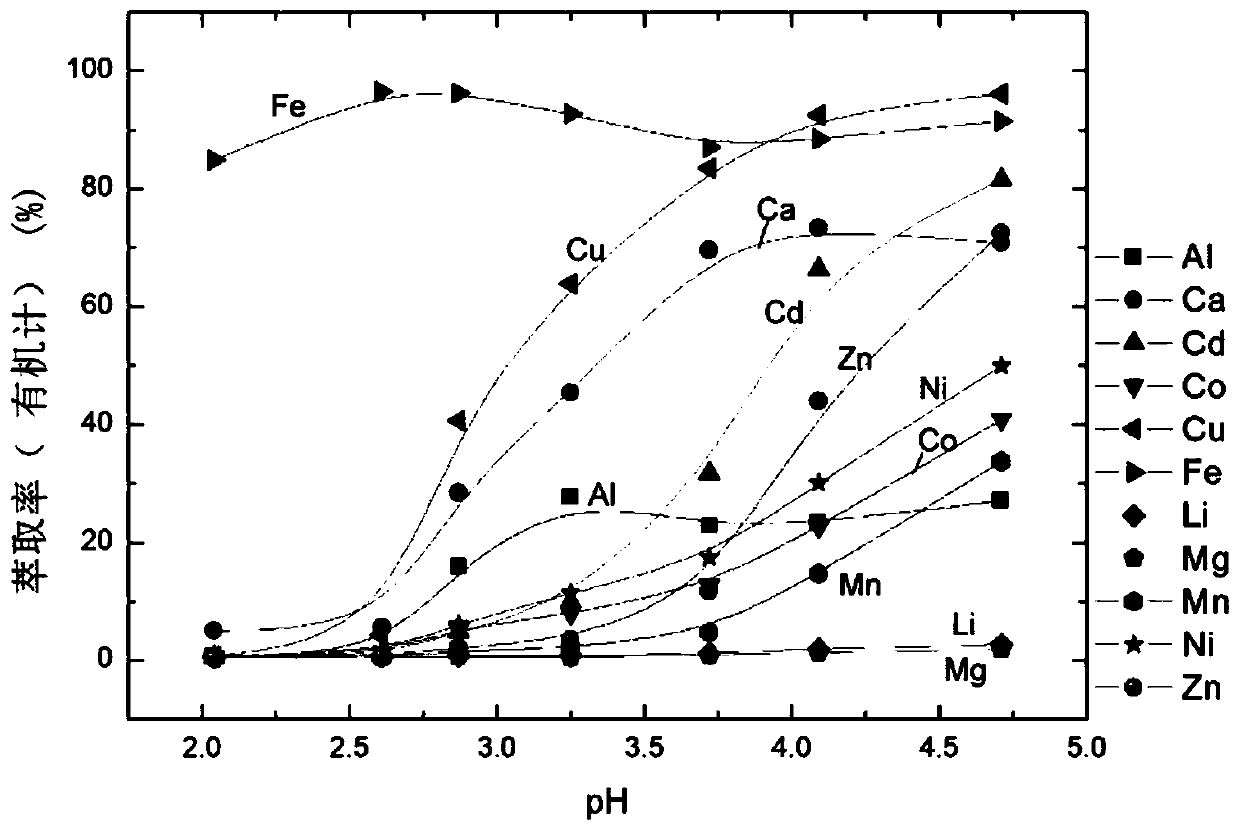
Figure 1 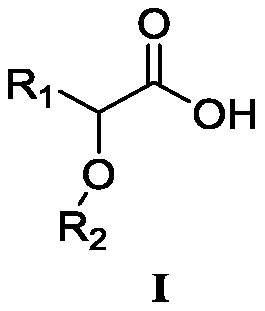
Figure 2 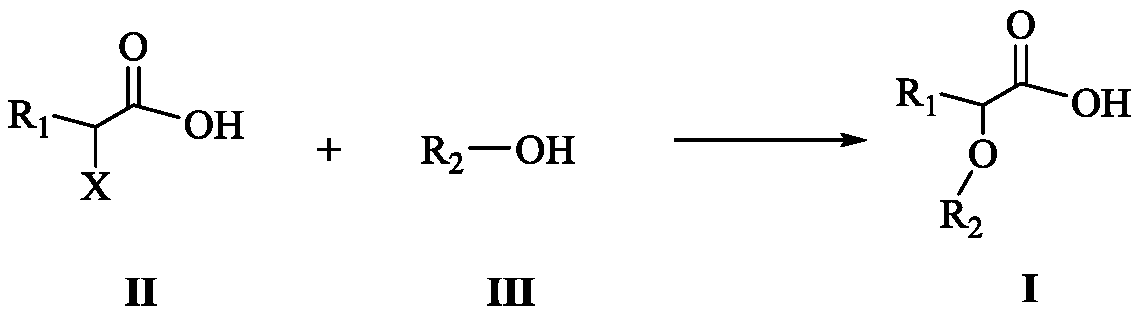
Figure 3
Abstract
Description
technical field
[0001] The invention relates to a carboxylic acid compound, its preparation method and application. Background technique
[0002] In recent years, with the rapid development and promotion of electric vehicles, the demand for lithium-ion batteries has also continued to expand. Nickel-cobalt-manganese ternary cathode material has good cycle performance, stable structure, and high cost performance. It is a new type of lithium-ion battery cathode material, and the main raw materials of the precursor product of ternary cathode material are nickel salt, cobalt salt, and manganese salt.
[0003] Cobalt is mostly accompanied by nickel, and most of them appear at the same time in minerals, such as in nickel laterite ore. In many industries, waste residues containing valuable metals such as nickel and cobalt will be produced, such as waste power battery materials, waste residues containing nickel and cobalt, waste catalysts, etc. Most of these waste residues also cont...
Examples
Embodiment 1
[0081]
[0082] Add 50g of isooctyl alcohol, 225mL of tetrahydrofuran (THF), and 8.8g of sodium particles into a three-necked flask, react at 60-70°C for 6 hours, a large amount of white solids are formed, and a small amount of sodium particles remain; L 2-bromooctanoic acid THF solution and continue to react at 60°C for 4h; after cooling, remove THF by rotary evaporation, add 200mL water and 200mL ethyl acetate (EA) to the concentrated solution, shake and separate, take the water layer; Acidify with hydrochloric acid to pH ≈ 1, extract with ethyl acetate, wash the organic phase twice with water, and spin dry to obtain 65 g of a light yellow product, namely compound BC195. 1 H NMR (400MHz, CDCl 3 )δ4.1(1H), 3.52(1H), 3.35(1H), 1.82(2H), 1.54(3H), 1.20-1.31(14H), 0.91(6H), 0.87(3H); 13 C NMR (101MHz, CDCl 3 )δ171(s), 79(s), 72(s), 36(s), 32(s), 29(s), 26-28(m), 22–23(m), 14(s), 11(s); MS[M-H] - :271.
Embodiment 2
[0084]
[0085] Add 28.6g of isooctyl alcohol, 200mL of tetrahydrofuran (THF), 8.8g of 60% sodium hydride (dispersed in mineral oil) into the three-necked flask, and react at 60-70°C for 6 hours, a large amount of white solids are formed, and a small amount of sodium particles remain; Add 20mL of 10mol / L THF solution of 2-bromohexanoic acid dropwise at 60°C and continue to react at 60°C for 4h; after cooling, remove THF by rotary evaporation, add 200mL of water and 200mL of ethyl acetate (EA) to the concentrated solution, shake The layers were separated, and the water layer was taken; the water layer was acidified with hydrochloric acid to pH ≈ 1, extracted with ethyl acetate, the organic phase was washed twice with water, and spin-dried to obtain 38 g of a light yellow product, namely compound BC196. 1 H NMR (400MHz, CDCl 3 )δ3.97(1H), 3.41(1H), 3.26(1H), 1.70(2H), 1.45(3H), 1.05-1.24(10H), 0.91(9H); 13 C NMR (101MHz, CDCl3) δ175(s), 82(s), 76(s), 40(s), 32(s), 30(s), 29(...
Embodiment 3
[0087]
[0088] Add 32g of n-octanol, 200mL of tetrahydrofuran (THF), and 5.7g of sodium particles into a three-necked flask, react at 60-70°C for 6 hours, a large amount of white solids are formed, and a small amount of sodium particles remain; L of THF solution of 2-bromohexanoic acid and continue to react at 60°C for 4 hours; after cooling, remove THF by rotary evaporation, add 200mL water and 200mL ethyl acetate (EA) to the concentrated solution, shake and separate, and take the water layer; the water layer Acidify with hydrochloric acid to pH ≈ 1, extract with ethyl acetate, wash the organic phase twice with water, and spin dry to obtain the target compound, compound BC191.
[0089] Compound BC191 1 H NMR (400MHz, CDCl 3 )δ12.53(1H), 4.01(1H), 3.32(2H), 1.65(2H), 1.20-1.32(16H), 0.89(6H); 13 C NMR (101MHz, CDCl 3 )δ173(s), 81(s), 65(s), 32-30(m), 22–23(m), 14(s); MS[M-H] - :243.