
A method for immobilizing enzymes on nanofibers
A nanofiber and enzyme immobilization technology, applied in the direction of immobilized enzymes, biochemical equipment and methods, enzymes, etc., can solve the problems of weak binding force between immobilized materials and enzymes, difficulty in repeated use of immobilized enzymes, and mechanical strength of immobilized enzymes Low-level problems, to achieve the effect of improving the amount and stability of enzyme immobilization, improving the utilization rate of enzyme, and improving biocompatibility
Patent Information
- Authority / Receiving Office
- CN · China
- Patent Type
- Patents(China)
- Current Assignee / Owner
- Publication Date
- 2022-07-15
Smart Images
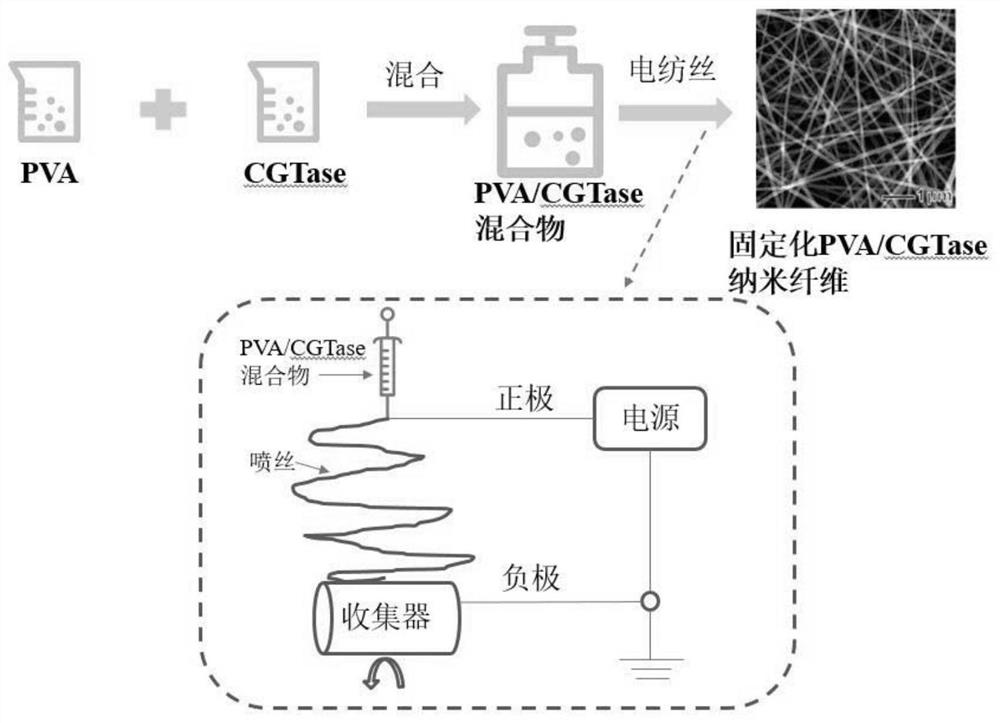
Figure 1 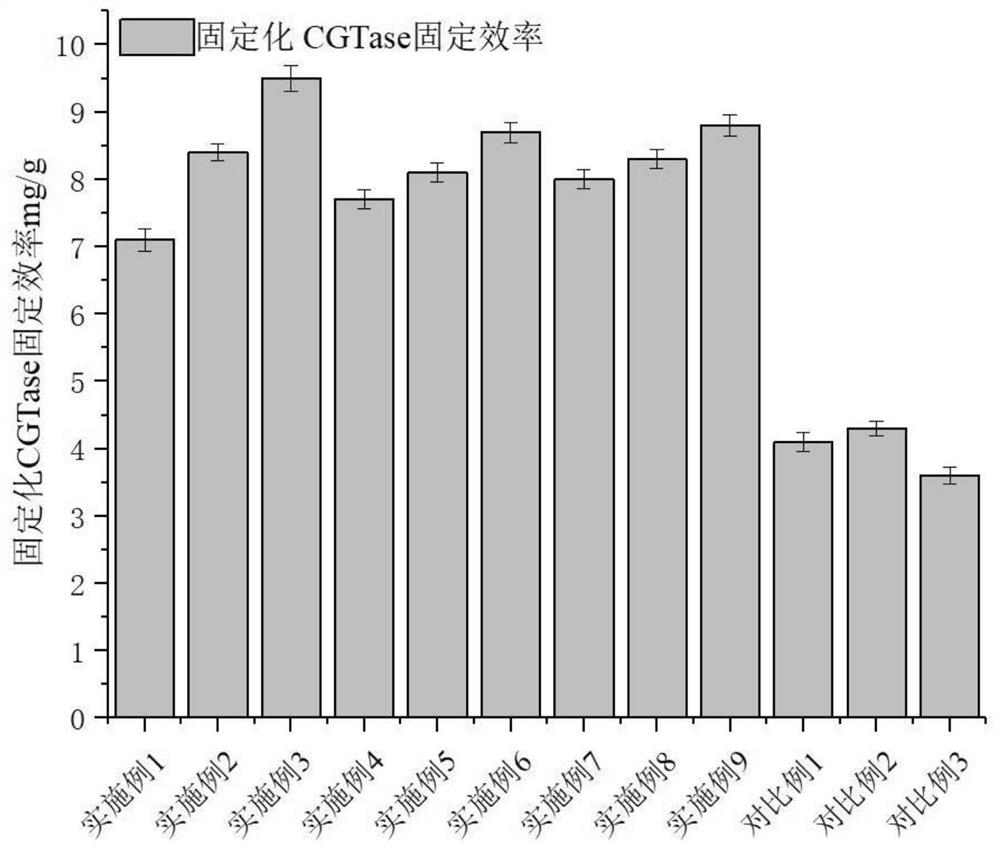
Figure 2 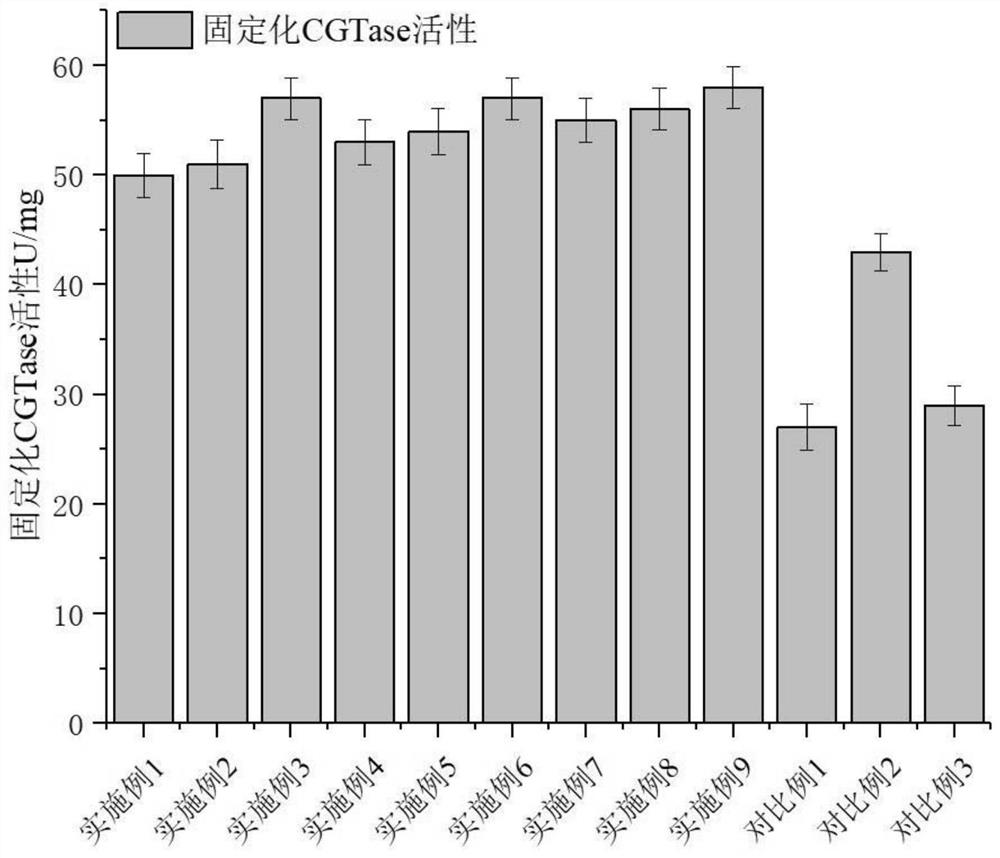
Figure 3
Abstract
Description
technical field
[0001] The present application belongs to the field of biochemical industry, and specifically relates to a method for immobilizing enzymes on nanofibers. Background technique
[0002] In the field of biochemical engineering, methods that need to immobilize enzymes are often involved, so that the enzymes can be reused and the cost of separation and purification following the reaction can be reduced. The patent documents using nanofibers as immobilized enzyme materials are, for example:
[0003] Chinese patent document CN1948474A (Application No. 200610154566.5) discloses a preparation method of chitosan nanofiber composite film immobilized enzyme, the method is to dissolve chitosan and polyvinyl alcohol in a mixed solvent of glacial acetic acid and water to form a transparent solution , the chitosan nanofiber composite membrane is made by electrospinning, and it is used as the carrier for enzyme immobilization, and the enzyme is immobilized on the nanofiber co...
Examples
Embodiment 1
[0095] (1) Dissolve PSF powder in DMAC (100 mM, pH 6), at 85 °C, dissolve PSF in the solvent at a mass concentration of 75 g / L PSF while stirring, at 90 °C, according to the mass concentration ratio PSF:PVA=2:1 PVA was added, and the PVA was dissolved in the solution with stirring. The solution was cooled at room temperature and then mixed with the CGTase solution to obtain a PSF / PVA mixed solution with a final enzyme concentration of 1 mg / ml.
[0096]The enzyme was purchased from Japan Amano Company, the enzyme activity preservation rate was 99%, the effective substance content was 99%, white crystal, and the solubility in water increased with the increase of temperature. Not hygroscopic, but easy to form various stable hydrates.
[0097] (2) inject the PSF / PVA solution prepared in step (1) into the syringe respectively, use the flattened needle as the capillary for spinning, fix the syringe on the micro-extrusion pump, and control the solution flow rate to 0.2ml / h. The pos...
Embodiment 2
[0100] (1) Dissolve PSF powder in DMAC (100 mM, pH 6), at 85 °C, dissolve PSF in the solvent at a mass concentration of 75 g / L PSF while stirring, at 90 °C, according to the mass concentration ratio PSF:PVA=2:1 PVA was added, and the PVA was dissolved in the solution with stirring. The solution was cooled at room temperature and then mixed with the CGTase solution to obtain a PSF / PVA mixed solution with a final enzyme concentration of 2 mg / ml.
[0101] The enzyme was purchased from Japan Amano Company, the enzyme activity preservation rate was 99%, the effective substance content was 99%, white crystal, and the solubility in water increased with the increase of temperature. Not hygroscopic, but easy to form various stable hydrates.
[0102] (2) inject the PSF / PVA solution prepared in step (1) into the syringe respectively, use the flattened needle as the capillary for spinning, fix the syringe on the micro-extrusion pump, and control the solution flow rate to 0.2ml / h. The po...
Embodiment 3
[0105] (1) Dissolve PSF powder in DMAC (100 mM, pH 6), at 85 °C, dissolve PSF in the solvent at a mass concentration of 75 g / L PSF while stirring, at 90 °C, according to the mass concentration ratio PSF:PVA=2:1 PVA was added, and the PVA was dissolved in the solution with stirring. The solution was cooled at room temperature and then mixed with the CGTase solution to obtain a PSF / PVA mixed solution with a final enzyme concentration of 3 mg / ml.
[0106] The enzyme was purchased from Japan Amano Company, the enzyme activity preservation rate was 99%, the effective substance content was 99%, white crystal, and the solubility in water increased with the increase of temperature. Not hygroscopic, but easy to form various stable hydrates.
[0107] (2) inject the PSF / PVA solution prepared in step (1) into the syringe respectively, use the flattened needle as the capillary for spinning, fix the syringe on the micro-extrusion pump, and control the solution flow rate to 0.2ml / h. The po...