
A salt-tolerant bacterium and its application
A salt-tolerant and functional technology, applied in the field of agricultural microorganisms, achieves high agricultural application prospects and economic value, promotes rice growth, and has the effects of excellent strain resources
Patent Information
- Authority / Receiving Office
- CN · China
- Patent Type
- Patents(China)
- Current Assignee / Owner
- Publication Date
- 2022-07-26
Smart Images
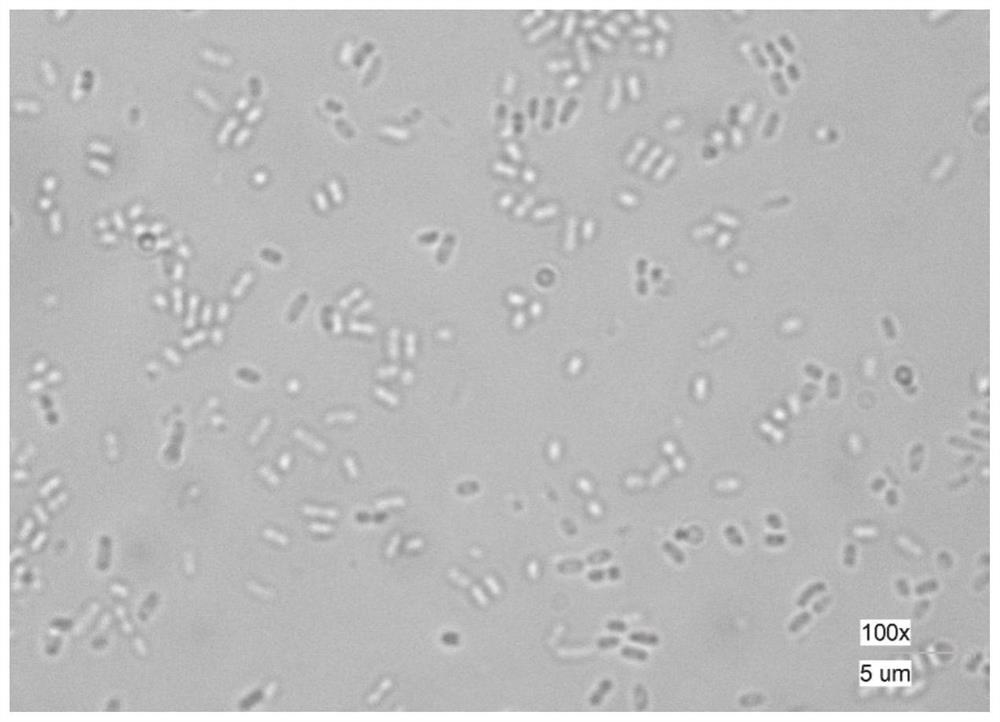
Figure 1 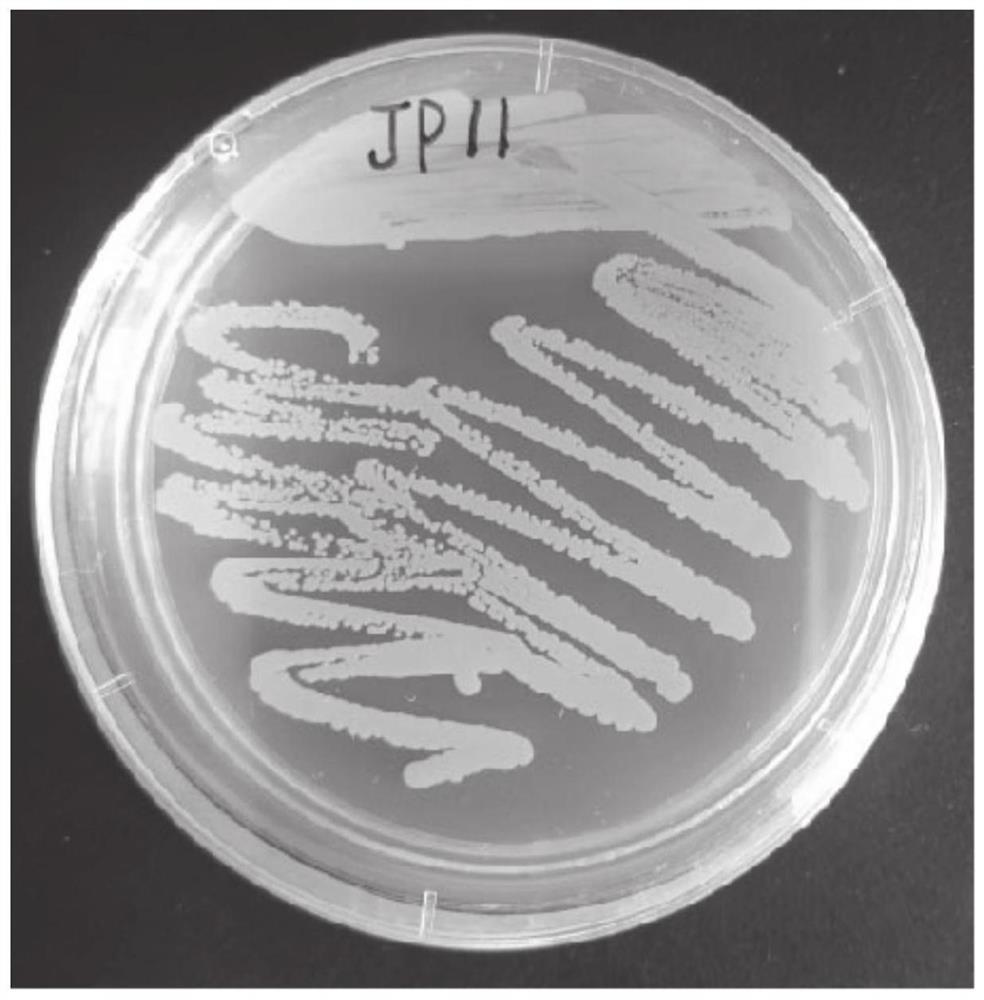
Figure 2 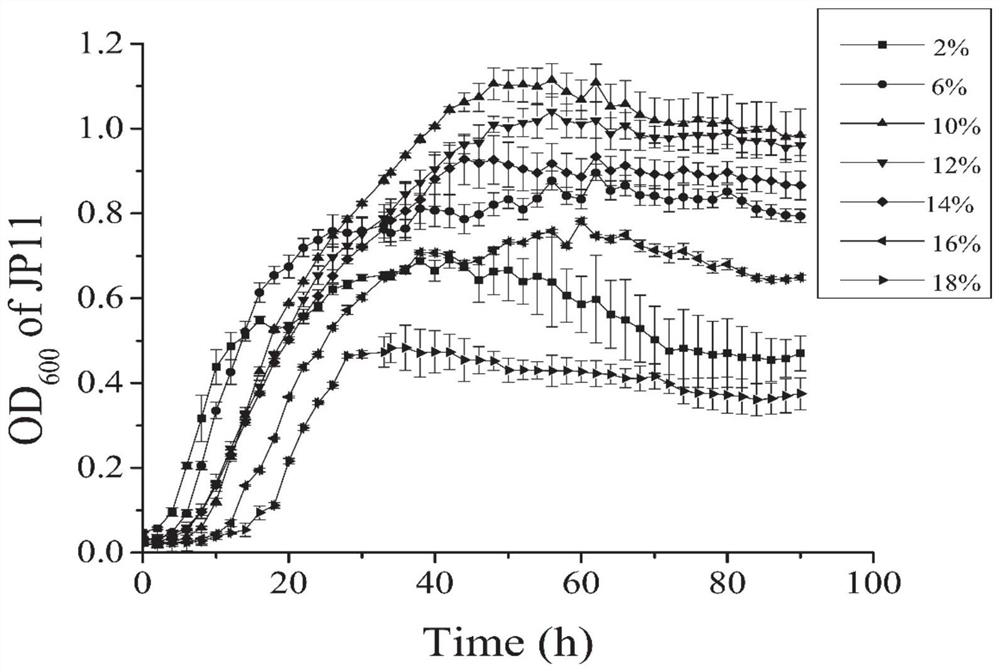
Figure 3
Abstract
Description
technical field
[0001] The invention relates to a salt field bacteria strain and application thereof, in particular to a salt field salt field bacteria JP11 with salt tolerance and growth promoting function and its application in alleviating the inhibitory effect of salt stress on rice growth, belonging to the technical field of agricultural microorganisms. Background technique
[0002] Soil salinization has become a serious threat to agricultural ecosystems. 15% to 50% of the irrigated land in the world suffers from salinization, and the inhibition of plant growth by soil salinization seriously restricts the production of crops. Saline-alkali land management is a major problem that needs to be overcome urgently in the world. In addition to traditional physical and chemical methods, biological treatment has become a new direction for saline-alkali land improvement. Among them, the use of functional microorganisms to treat saline-alkali soil can integrate the comprehensive ...
Examples
Embodiment 1
[0039] Example 1 Screening of salt-tolerant salt field bacteria
[0040] (1) Collect root soil samples of salinity-tolerant plants such as Suaeda salsa and reed from the saline-alkali land of the Yellow River Delta Nature Reserve, put them into clean sampling bags, mark them well, put them in an ice box and bring them back to the laboratory. Store at -20°C for later use. Weigh 1g of soil samples in a sterile ultra-clean bench and place them in 100mL conical flasks containing glass beads and 20mL of sterile water, and incubate them in a shaking incubator at 28°C and 180rpm for 1 hour to fully disperse and mix the soil samples. . Under sterile conditions, draw 0.5 mL of soil suspension and mix well with 4.5 mL of sterile water, and then successively dilute them successively to make 10 -1 , 10 -2 , 10 -3 For the sample solutions of different dilutions, draw 0.2 mL of the sample solutions and spread them on the salt-tolerant screening solid medium plate, and invert them in a c...
Embodiment 2
[0045] Example 2 Morphological observation and identification of physiological and biochemical characteristics of strain JP11
[0046] The morphology of strain JP11 was observed using the oil lens of a Nikon inverted microscope.
[0047] The culture temperature of strain JP11 was set at 28°C for the identification of physiological and biochemical characteristics. At the same time, the optimum temperature, optimum growth pH and optimum salt concentration of strain JP11 when growing on LB solid medium were analyzed.
[0048] The biological characteristics of strain JP11 are: rod-shaped, single, cell size is (0.5μm ~ 0.8μm) × (1.0μm ~ 1.3μm), no spores ( figure 1 ). When cultured at 28°C, the colonies are regular circles, protruding, milky white, opaque, smooth and moist surface, easy to pick, and neat edges ( figure 2 ).
[0049] The physiological and biochemical characteristics of strain JP11 are: Gram staining negative, aerobic, positive for catalase, urease, phenylalani...
Embodiment 3
[0058] Example 3 Analysis of the growth-promoting effects of strain JP11 on potassium, phosphorus and phosphorus dissolution
[0059] The isolated single colony of strain JP11 was transferred to a test tube containing 5 mL of liquid medium, and cultured with shaking at 28 °C and 180 rpm for 24 h. Cultivate in a constant temperature incubator for 3 days, and observe whether there are transparent oil droplet colonies on the silicate bacteria medium plate. The results showed that after the strain JP11 was cultured in the silicate bacteria solid medium for 2 days, transparent oil droplet-shaped colonies grew on the plate, indicating that the strain JP11 could dissolve potassium feldspar and had potassium-dissolving properties ( Figure 4 ).
[0060] The isolated single colony of strain JP11 was transferred to a test tube containing 5 mL of liquid medium, shaken for 24 h at 28 °C and 180 rpm, and 5 μL of seed solution was taken and placed on the Montkina organophosphorus solid cul...