
Gene clone and expression of RGD die body protein of oral gland in Japan lamprey possessing function for anti tumour
A technology of oral gland and lamprey, applied in the field of gene cloning and expression of RGD motif protein of Japanese lamprey oral gland with anti-tumor effect
Patent Information
- Authority / Receiving Office
- CN · China
- Patent Type
- Applications(China)
- Current Assignee / Owner
- Publication Date
- 2006-04-19
- Estimated Expiration
- Not applicable · inactive patent
Smart Images
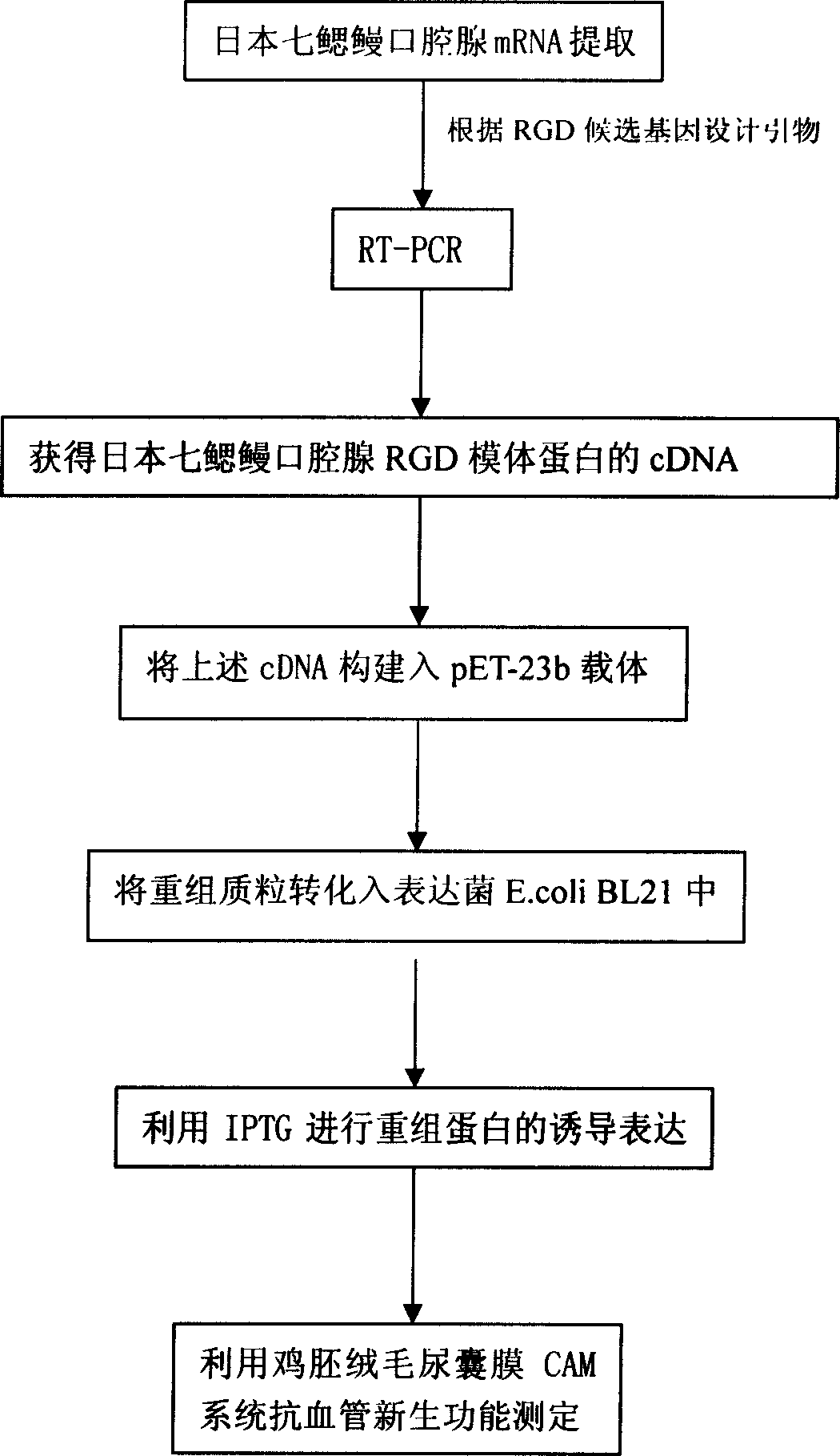
Figure 1 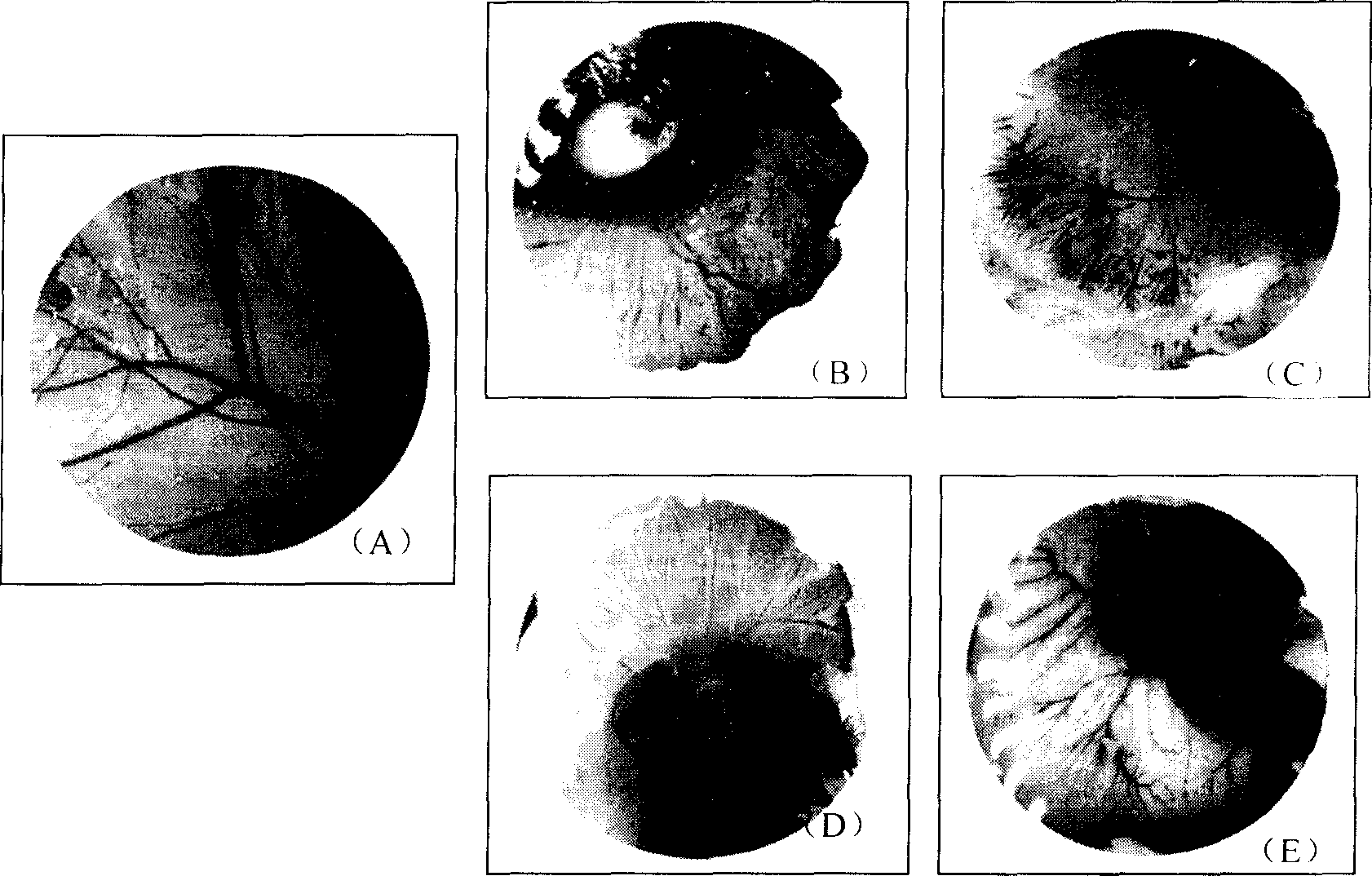
Figure 2
Abstract
Description
technical field
[0001] The gene cloning and expression of the Japanese lamprey oral gland RGD motif protein with antithrombotic effect belongs to the field of biotechnology, and involves the cDNA sequences and cloning of three RGD motif proteins in the Japanese lamprey oral gland, and the corresponding Protein sequence and its expression in Escherichia coli or Pichia pastoris, and the binding of these three recombinant proteins to the extracellular matrix by antagonizing the binding of certain integrins highly expressed on the surface of neovascular endothelial cells and tumor cells, blocking integrin-mediated It can inhibit angiogenesis and tumor cell proliferation, adhesion, invasion and metastasis, and cause apoptosis of vascular endothelial cells and tumor cells to achieve anti-tumor effect. Background technique
[0002] The Japanese lamprey (Lampetra japonica) belongs to the class Cyclostomata, order Lamprey, family Lamprey, genus Lamprey, and is the oldest jawless vert...
Examples
Embodiment Construction
[0062] 1. Extraction of total RNA: Trizol reagent of GIBCOBRL was used. details as follows:
[0063] (1) Get the venom glands of Agkistrodon halys and quickly place them in liquid nitrogen for preservation;
[0064] (2) Weigh 0.2 g venom gland tissue, add 1 ml TRIzol reagent to prepare venom gland homogenate, and incubate at 4°C for 5 min;
[0065] (3) Add 0.2ml chloroform, close the lid tightly, shake vigorously for 15sec, and then place it on ice for 5min;
[0066] (4) 4°C, 12000xg, centrifuge for 15 minutes;
[0067] (5) Transfer the upper aqueous phase to another centrifuge tube, add 0.5ml of isopropanol, and incubate on ice for 10 minutes;
[0068] (6) 4°C, 12000xg, centrifuge for 15 minutes;
[0069] (7) Discard the supernatant, add 1ml of 75% ethanol to the precipitate (containing RNA) to wash, and vortex to mix;
[0070] (8) Centrifuge at 10,000xg for 5 minutes at 4°C to obtain RNA precipitates;
[0071] (9) After air drying, dissolve with appropriate amount of T...