
Clutch piston assembly for increasing clamping force
Patent Information
- Authority / Receiving Office
- US · United States
- Current Assignee / Owner
- Publication Date
- 2019-09-03
Smart Images
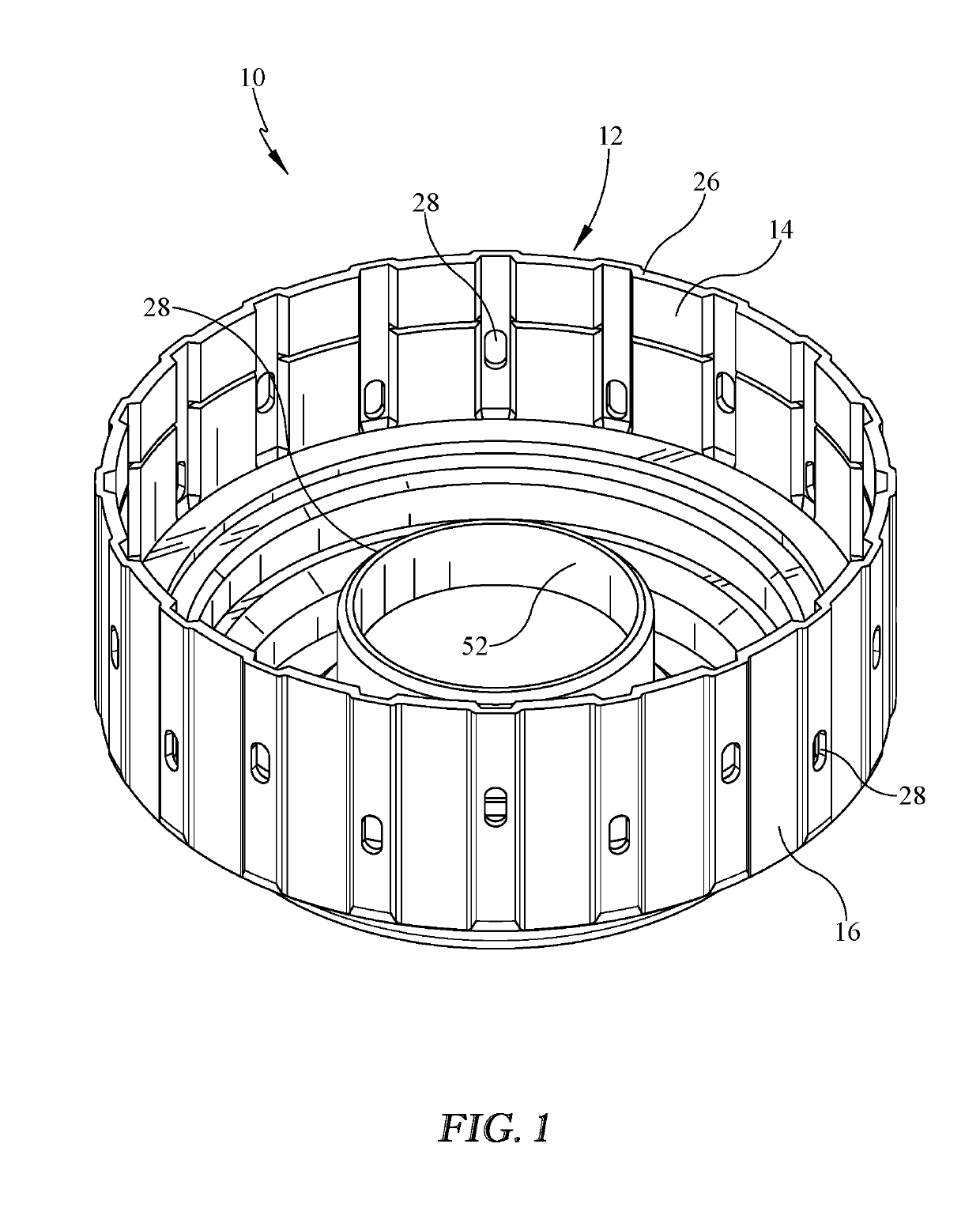
Figure 1 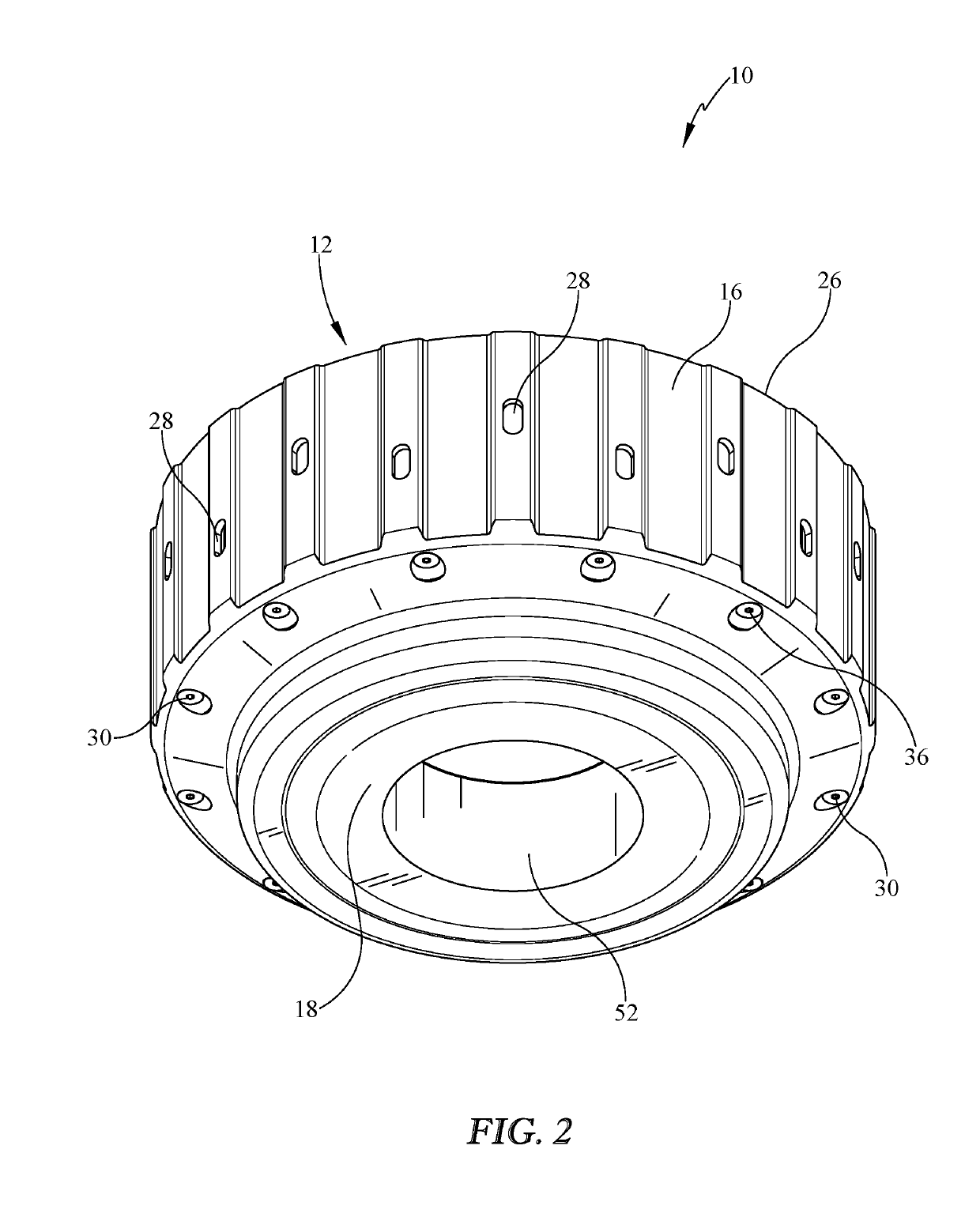
Figure 2 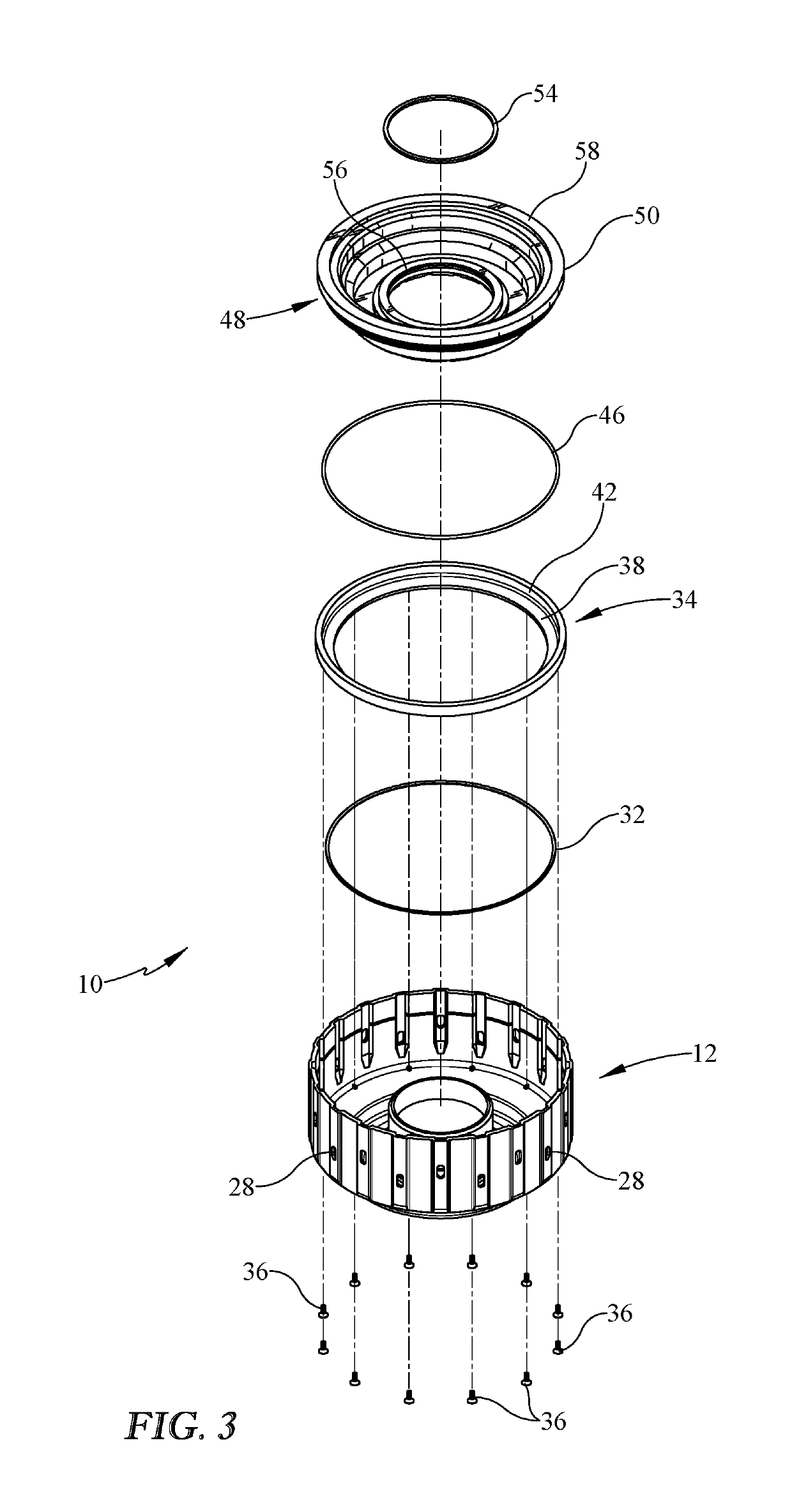
Figure 3
Abstract
Description
BACKGROUND OF THE INVENTION1. Field of the Invention
[0001] The present invention relates to a clutch piston assembly within a transmission or torque converter that uses a separate piston cylinder bore and a replacement clutch piston that applies against reactions surfaces within the torque converter or transmission in order to increase clamping force on the clutches in order to reduce clutch slippage against their reaction plates without increasing the oil pressure within the system.2. Background of the Prior Art
[0002] Racing vehicles operate at very high RPMs (Revolutions Per Minute). As the RPMs increase, the clutches tend to slip against their reaction plates or steels which results in loss of power transfer from the engine to the drive wheels. As even the small percentage power loss can be the difference between winning and losing a race, such a situation is highly undesirable. To address this problem, many designers increase the hydraulic pressure within the transmission or torqu...
Examples
Embodiment Construction
[0013]Referring now to the drawings, it is seen that the clutch piston assembly for increasing clamping force of the present invention, generally denoted by reference numeral 10, is comprised of a piston housing 12. As seen, the piston housing 12 has an interior wall surface 14 and an exterior wall surface 16. The piston housing 12 has a base 18 from which a central housing bore 20 rises upwardly. As seen, the base 18 transitions into an upwardly directed step 22 which transitions into a diagonally upwardly and outwardly directed shoulder 24, which transitions into an upwardly directed side wall 26. The piston housing 12 is formed as a single unitary, indeed monolithic, unit that can be formed from any appropriate material such as aluminum, steel, titanium, etc. A series of oil openings 28 are located along the side wall 26. The upwardly directed step 22 has a first diameter 30.
[0014]A first O-ring 32, made of any appropriate sealing material, such as silicone, rubber, neoprene, and...