
Tire
a technology of tires and wheels, applied in the field of tires, can solve the problems of deterioration of dry steering stability, block rigidity reduction, etc., and achieve the effect of dry steering stability and on-ice performan
Patent Information
- Authority / Receiving Office
- US · United States
- Patent Type
- Patents(United States)
- Current Assignee / Owner
- Publication Date
- 2020-06-09
Smart Images
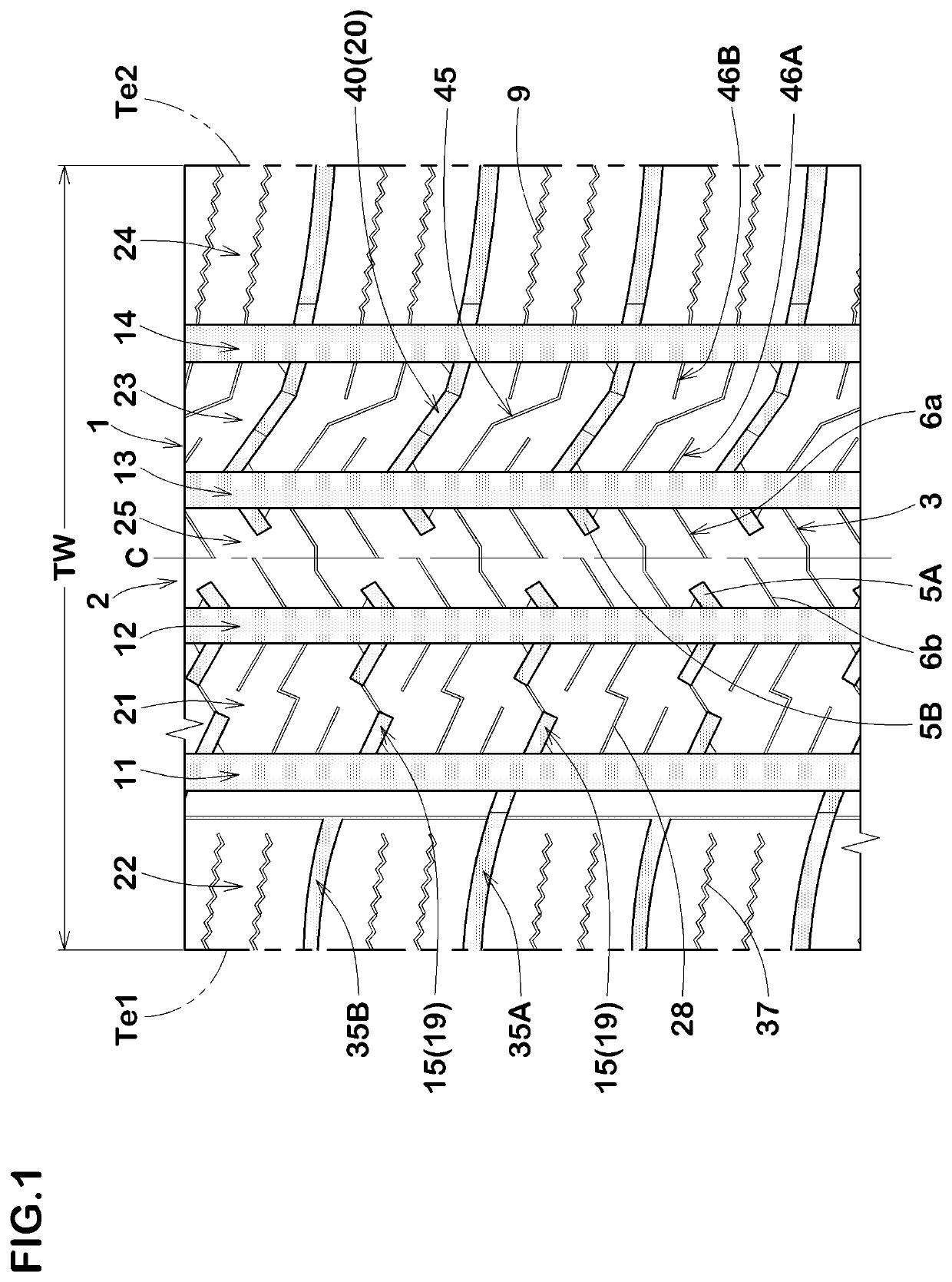
Figure 1 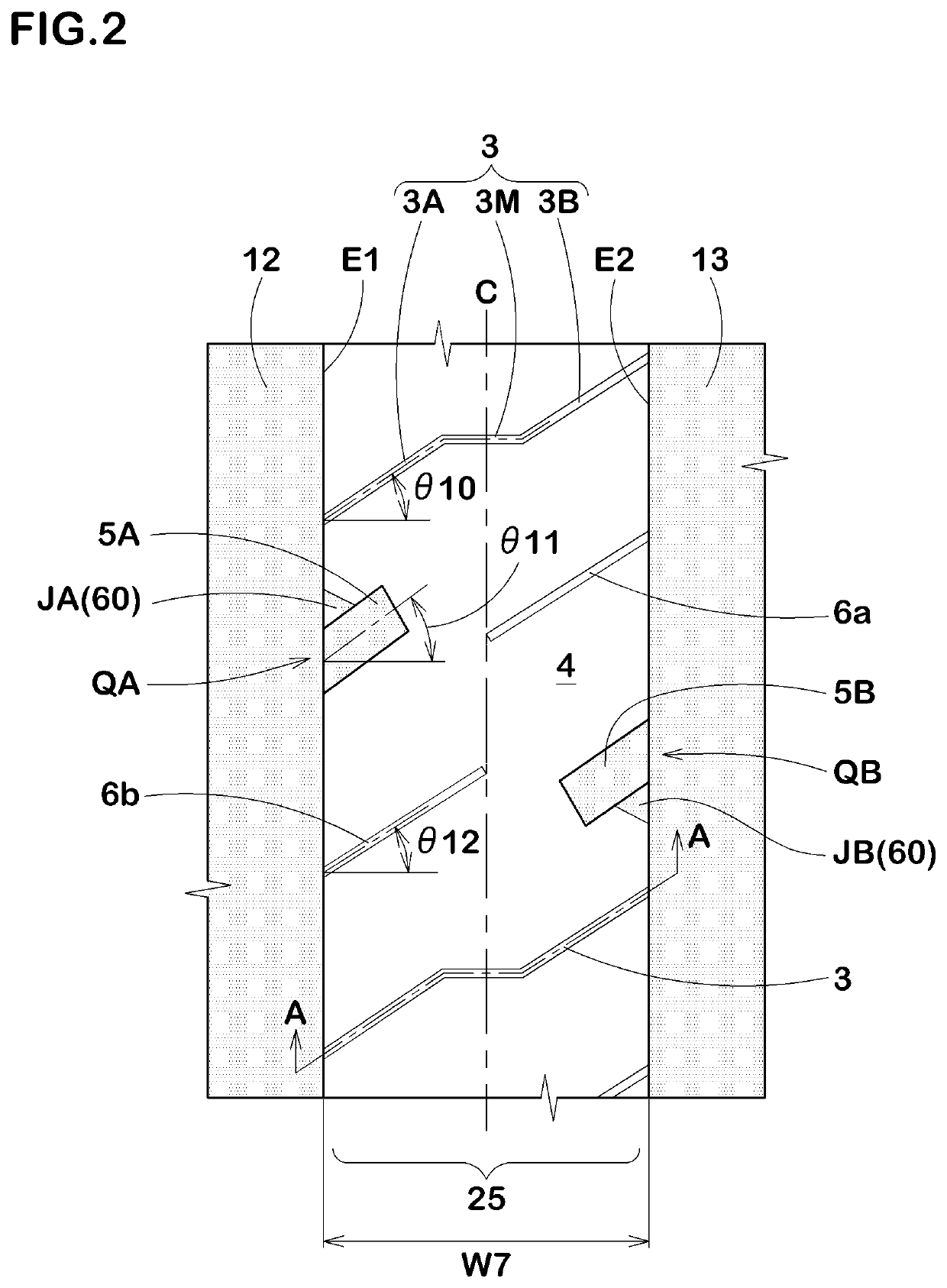
Figure 2 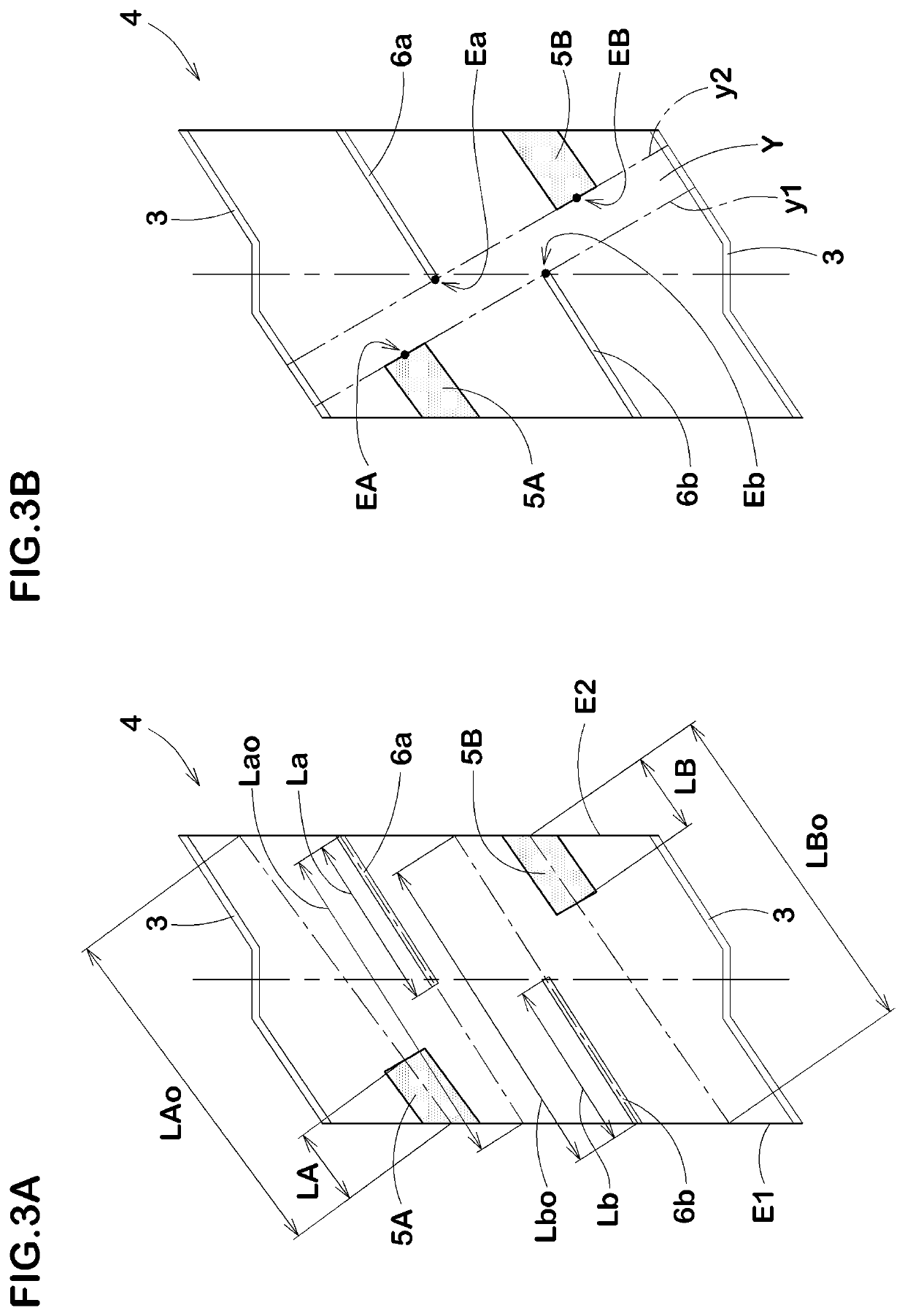
Figure 3
Abstract
Description
TECHNICAL FIELD
[0001] The present invention relates to a tire having both running performance on a dry road surface (hereinafter referred to as “dry steering stability”) and the running performance on an icy road surface (hereinafter referred to as “on-ice performance”).BACKGROUND ART
[0002] In a tire, a large number of sipes and lateral grooves are formed in a tread portion so that the on-ice performance is secured by road surface digging frictional force (edge effect) caused by edges of the sipes and the lateral grooves (see Japanese unexamined Patent Application No. 2015-168356, for example).
[0003] In order to increase the on-ice performance, formation number and length of the sipes and the lateral grooves have been increased. However, the increase in the number and the length of the sipes and the lateral grooves causes decrease of block rigidity, therefore, it is possible that the dry steering stability and the like are deteriorated, on the other hand. As just described, there is a ...
Examples
working example (example)
[0131]Tires of size 215 / 60R16 having a basic tread pattern shown in FIG. 1 were made by way of test according to the specification listed in Table 1. In Reference 1, as shown in FIG. 4A, the first center lateral groove 5A and the second center closed sipe 6a are not opposed to each other and the first center closed sipe 6b and the second center lateral groove 5B are not opposed to each other, whereby the high rigidity region Y is not formed. In Reference 2, the length Lb is smaller than one third of the extended length Lb0 and the length La is smaller than one third of the extended length La0, therefore, edge lengths are insufficient although the high rigidity region Y is formed. In Reference 3, the length Lb is larger than two thirds of the extended length Lb0 and the length La is larger than two thirds of the extended length La0, therefore, the high rigidity region Y is not formed. In Reference 4, the length LA is larger than a half of the extended length LA0 and the length LB is ...