
Method of producing carbon nanotubes in fluidized bed reactor
a technology of carbon nanotubes and fluidized beds, which is applied in the direction of material nanotechnology, chemical/physical processes, chemical apparatus and processes, etc., can solve the problems of high cost of carbon nanotubes, difficult mass production, and short residence time, so as to improve yield and purity
Patent Information
- Authority / Receiving Office
- US · United States
- Patent Type
- Patents(United States)
- Current Assignee / Owner
- Publication Date
- 2021-07-06
Smart Images
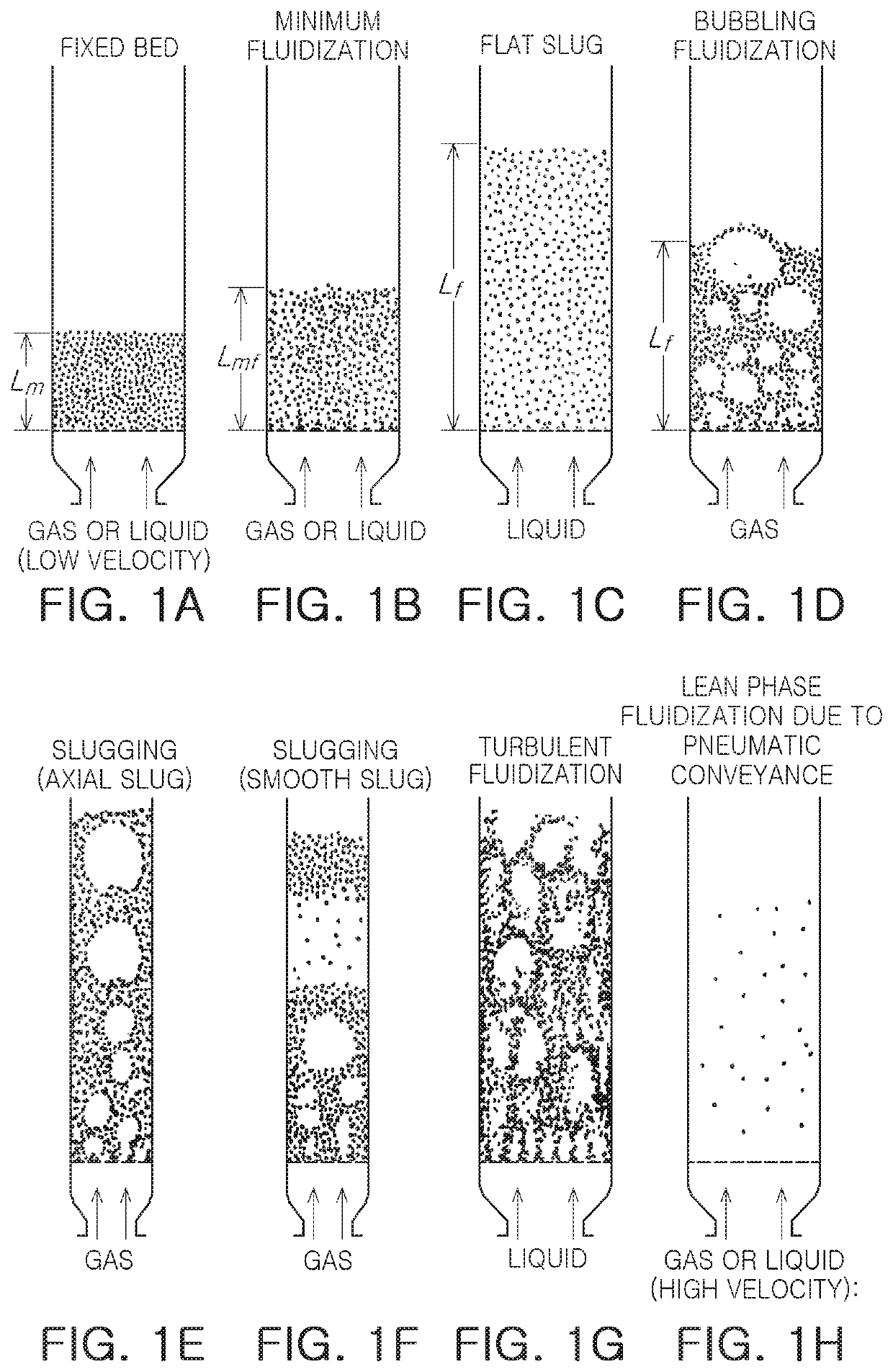
Figure 1 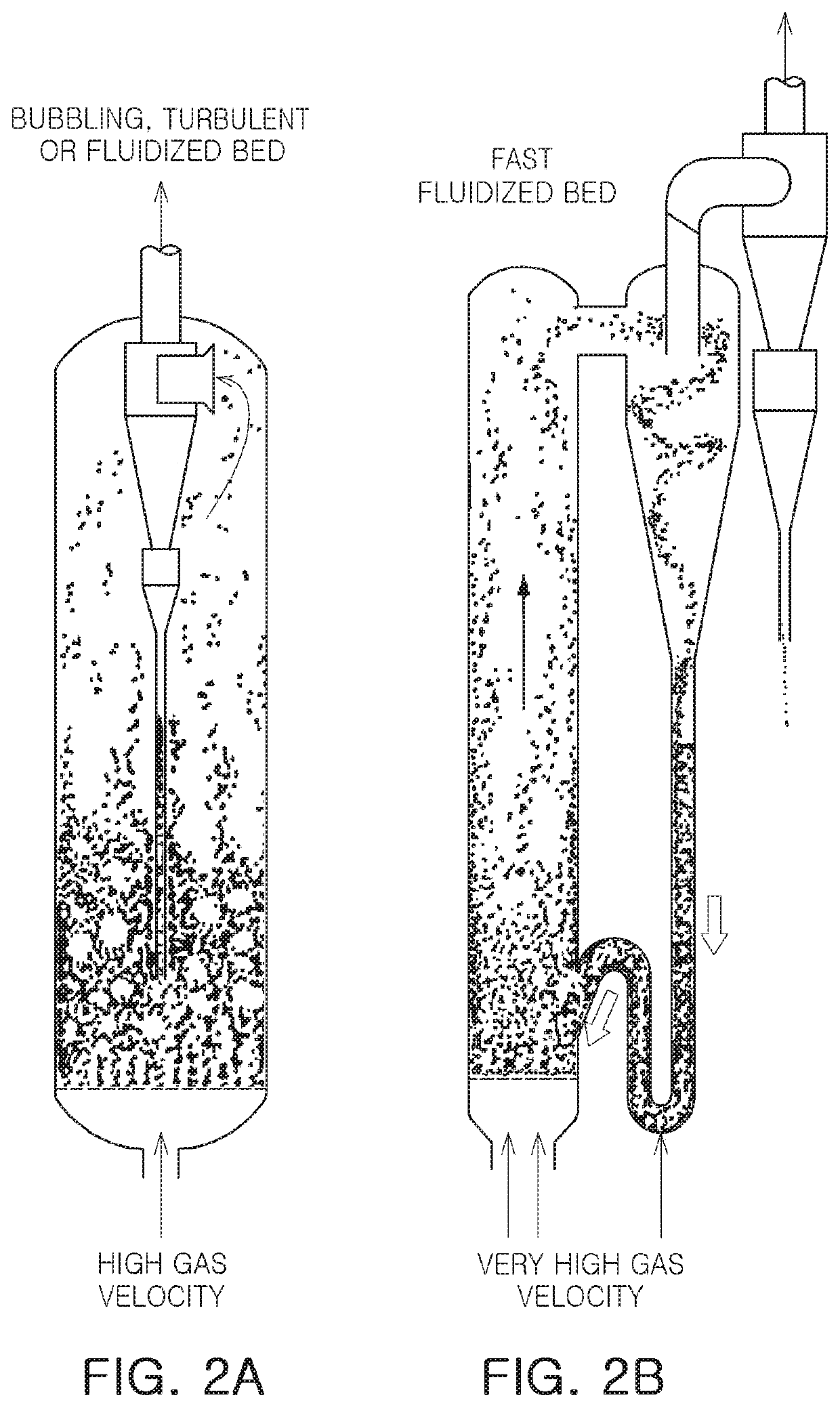
Figure 2 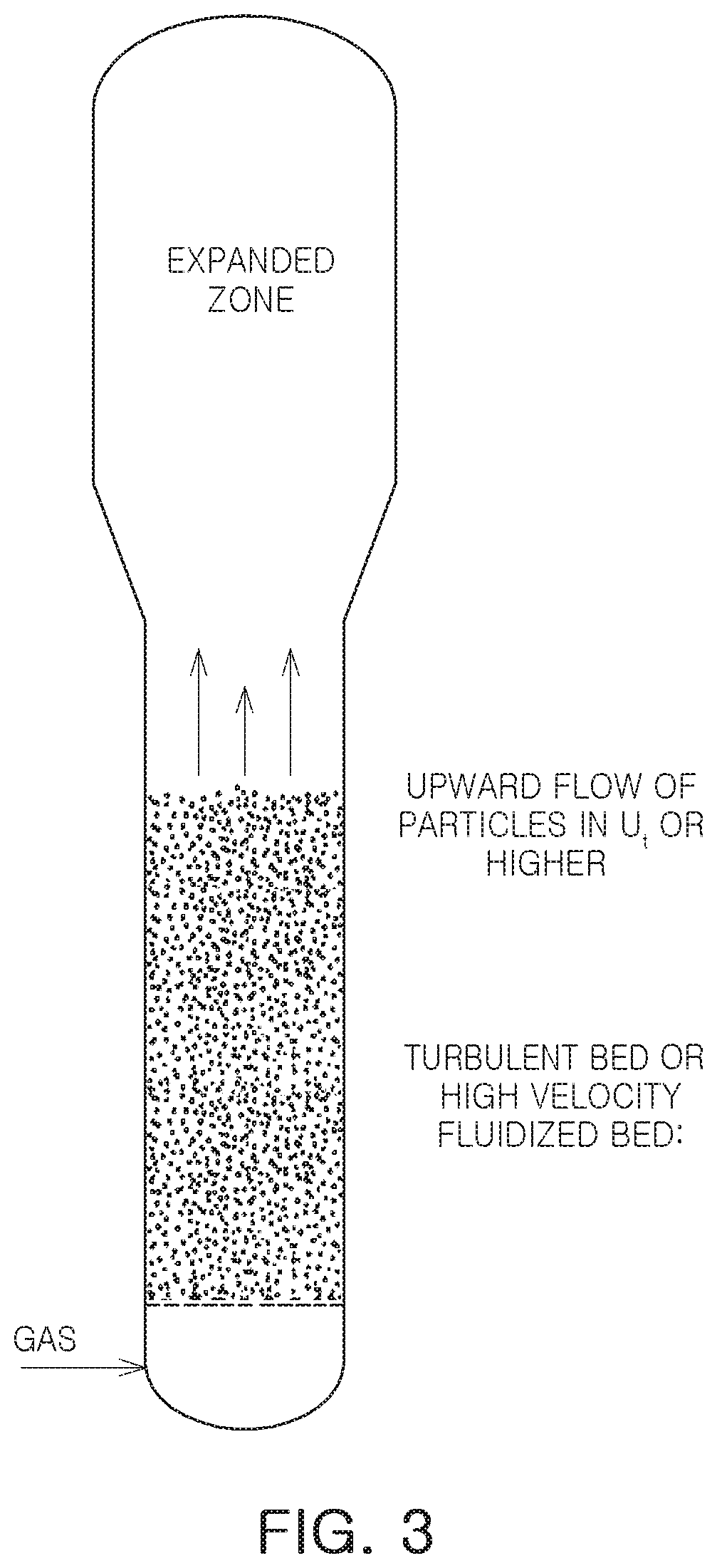
Figure 3
Abstract
Description
CROSS-REFERENCE TO RELATED APPLICATION
[0001] This application claims priority to Korean Patent Application No. 10-2017-0084234 filed Jul. 3, 2017, the disclosure of which is hereby incorporated in its entirety by reference.BACKGROUND OF THE INVENTIONField of the Invention
[0002] The present disclosure relates to a method of producing carbon nanotubes in a fluidized bed reactor.Description of Related Art
[0003] Carbon nanotubes, discovered by Dr. Iijima in 1991, are a carbon material having a tube shape and a diameter of several nanometers. Carbon nanotubes may be classified as single-walled carbon nanotubes, double-walled carbon nanotubes, or multi-walled carbon nanotubes, according to the number of rolled walls having a cylindrical shape thereof.
[0004] Single-walled carbon nanotubes may be structures simply rolled with a single wall of a sheet of graphite, and may have a diameter of 0.5 nm to 3 nm. Double-walled carbon nanotubes may be structures in which two walls of the single-walled c...
Examples
example
[0055]A fluidized bed reactor used for a reaction comprises an inlet portion extending linearly in the vertical direction and having an inner diameter of 0.15 m and a length of 2.0 m, an expanded zone slantedly connected to the inlet portion and having an inner diameter of 0.30 m and a length of 0.65 m, a dispersion plate formed with a through hole having an inner diameter of 25 mm to discharge carbon nanotubes (CNT), after end of reaction, and a structure in which gas is supplied at a lower end of the dispersion plate and gas is discharged at an upper end of the dispersion plate. Further, the heating portion is a heating device for covering the predetermined height position of the inlet portion and the expanded zone to heat the inlet portion and the expanded zone.
[0056]A catalyst having a particle size of 130 microns and a density of 1300 kg / m3, in which iron and cobalt were supported on an Al2O3 support, was charged to a fluidized bed reactor having the structure shown in FIG. 3. ...