
Method for producing astaxanthin dimethyldisuccinate
Patent Information
- Authority / Receiving Office
- US · United States
- Current Assignee / Owner
- Publication Date
- 2013-07-23
- Estimated Expiration
- Not applicable · inactive patent
Smart Images
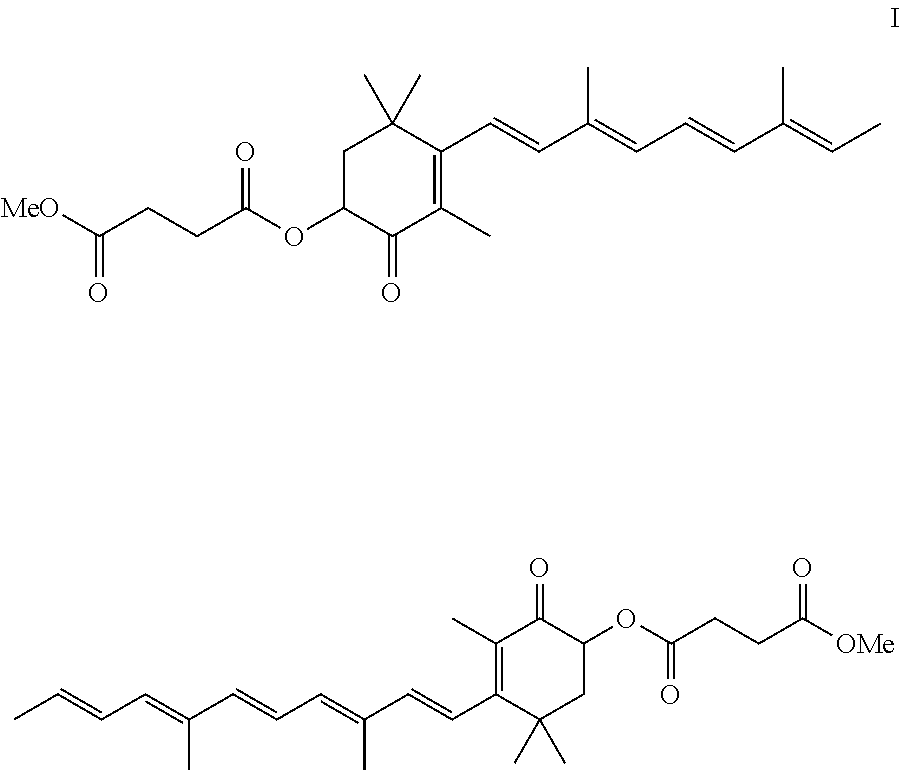
Figure 1 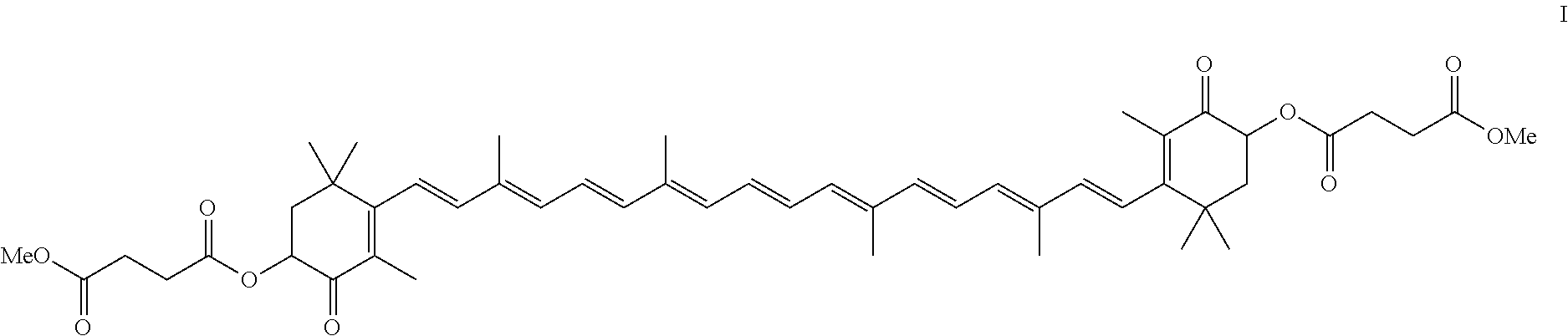
Figure 2 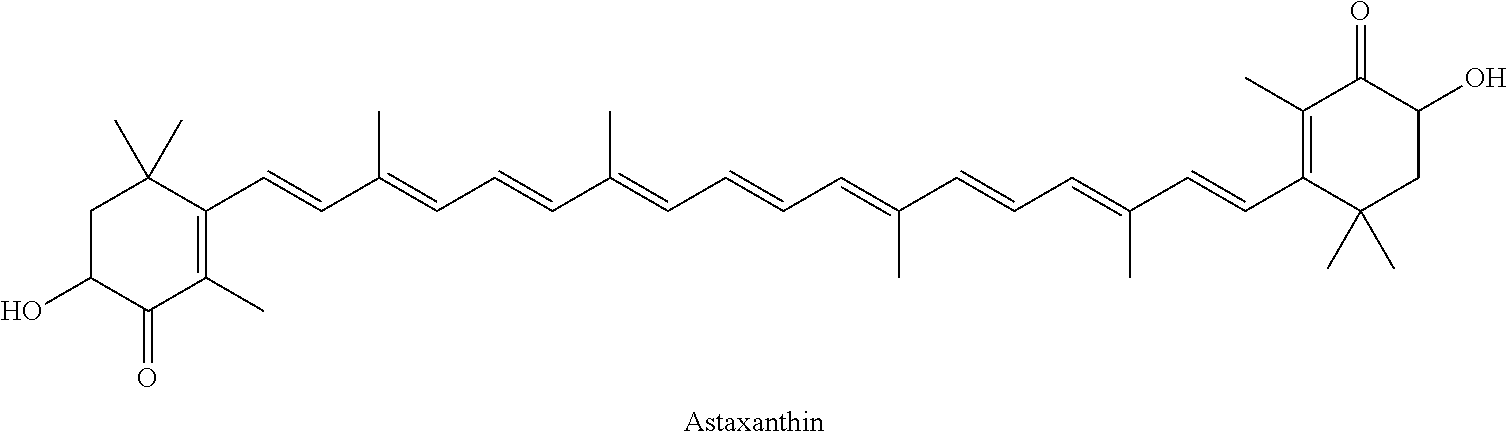
Figure 3
Abstract
Description
CROSS-REFERENCE TO RELATED APPLICATIONS
[0001] This application claims benefit of U.S. Provisional application 61 / 302,183, filed Feb. 8, 2010.BACKGROUND OF THE INVENTION
[0002] The present invention relates to an improved method for producing all-E astaxanthin dimethyldisuccinate of the formula I.
[0003]
[0004] Astaxanthin itself is a sought-after dye which is used primarily as a feed additive for pigmenting farmed salmon.
[0005]
[0006] A very efficient method for producing astaxanthin is the double Wittig olefination of the symmetrical C10 dialdehyde of the formula II with two equivalents of the corresponding 015 phosphonium salt of the formula III as described, inter alia, in Helv. Chim. Acta 64, 7, 2445 (1981).
[0007]
[0008] This reaction can be carried out, for example in dichloromethane using methanolic sodium methoxide solution as base (cf. also WO 2007128574) or by heating the components of the formulae II and III in 1,2-epoxybutane.
[0009] For improving the storage stability of astaxanthin...
Examples
example 1
[0078]The crude astaxanthin solution was produced by reacting II with III in dichloromethane using methanolic sodium methoxide solution (cf. Helv. Chim. Acta 64, 7, 2445 (1981)). The solution comprised 4.56% by weight of astaxanthin (HPLC analysis) and 0.8% by weight of methanol (GC analysis) and also 0.55% by weight of water (Karl-Fischer titration).
[0079]982 g of this solution (equivalent to 75 mmol of astaxanthin) were charged. At atmospheric pressure, 350 ml of solvent were distilled off over a Normag column head. The aqueous upper phase of the distillate was separated off and the lower phase was washed with 175 g of water. The phases were separated and the organic lower phase was recirculated to the distillation bottom.
[0080]This procedure was repeated further twice. Subsequently, 350 ml of solvent were distilled off at atmospheric pressure. The remaining distillation residue no longer comprised methanol. The water content was 0.051% by weight.
[0081]At 20° C., 21.36 g (270 mmol...