
System and method for data tagging applications
Patent Information
- Authority / Receiving Office
- US · United States
- Current Assignee / Owner
- Publication Date
- 2016-07-14
Smart Images
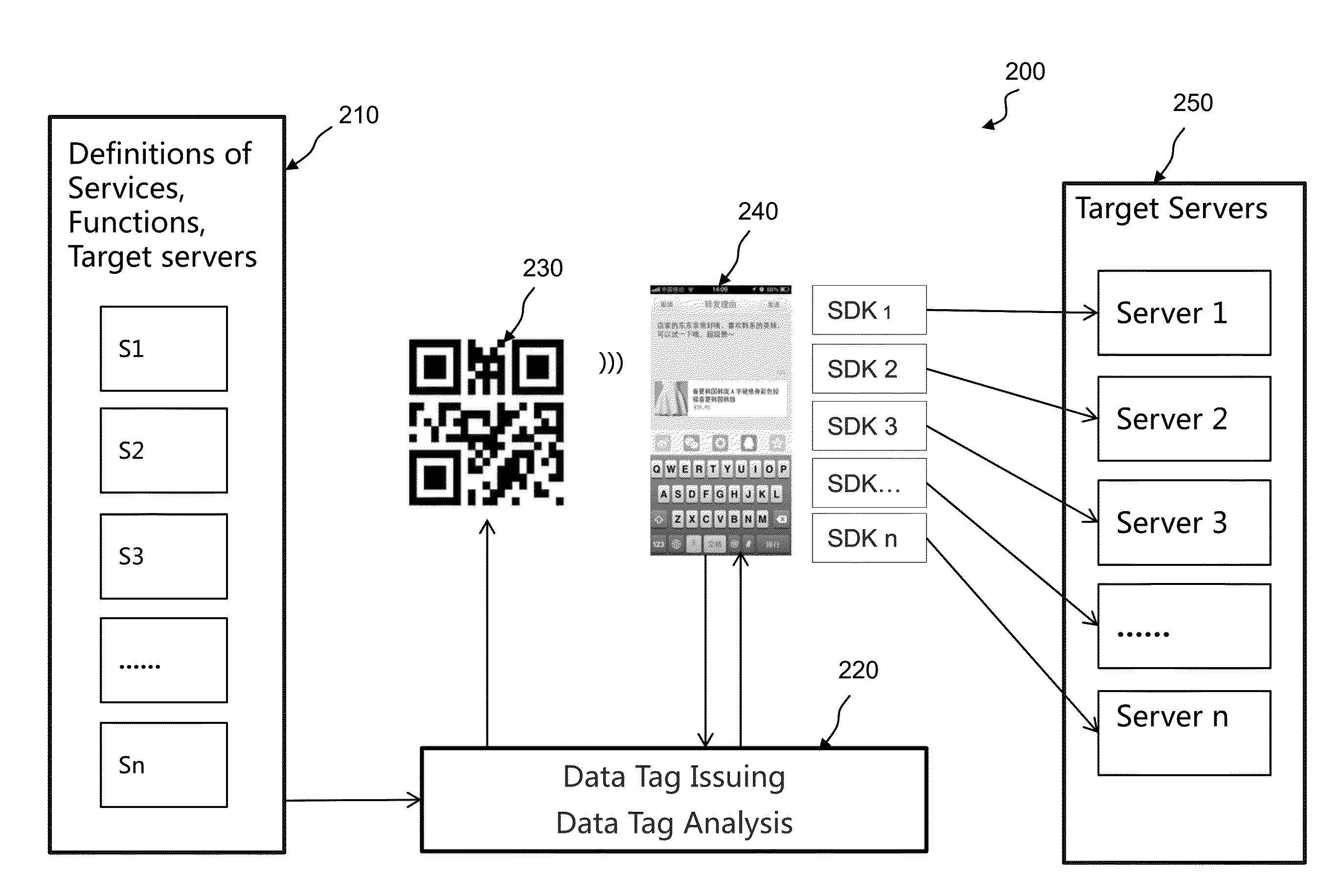
Figure 1 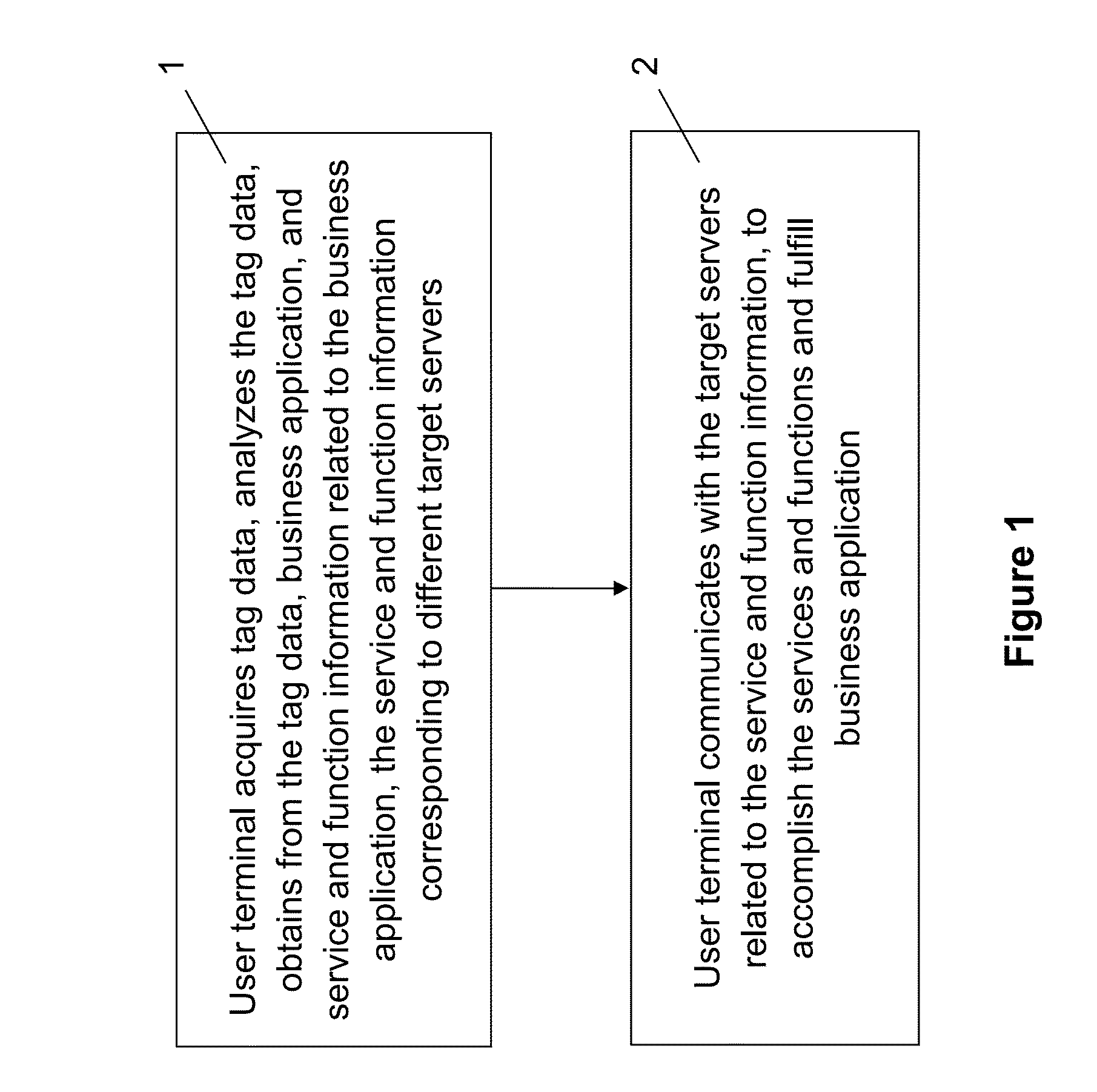
Figure 2 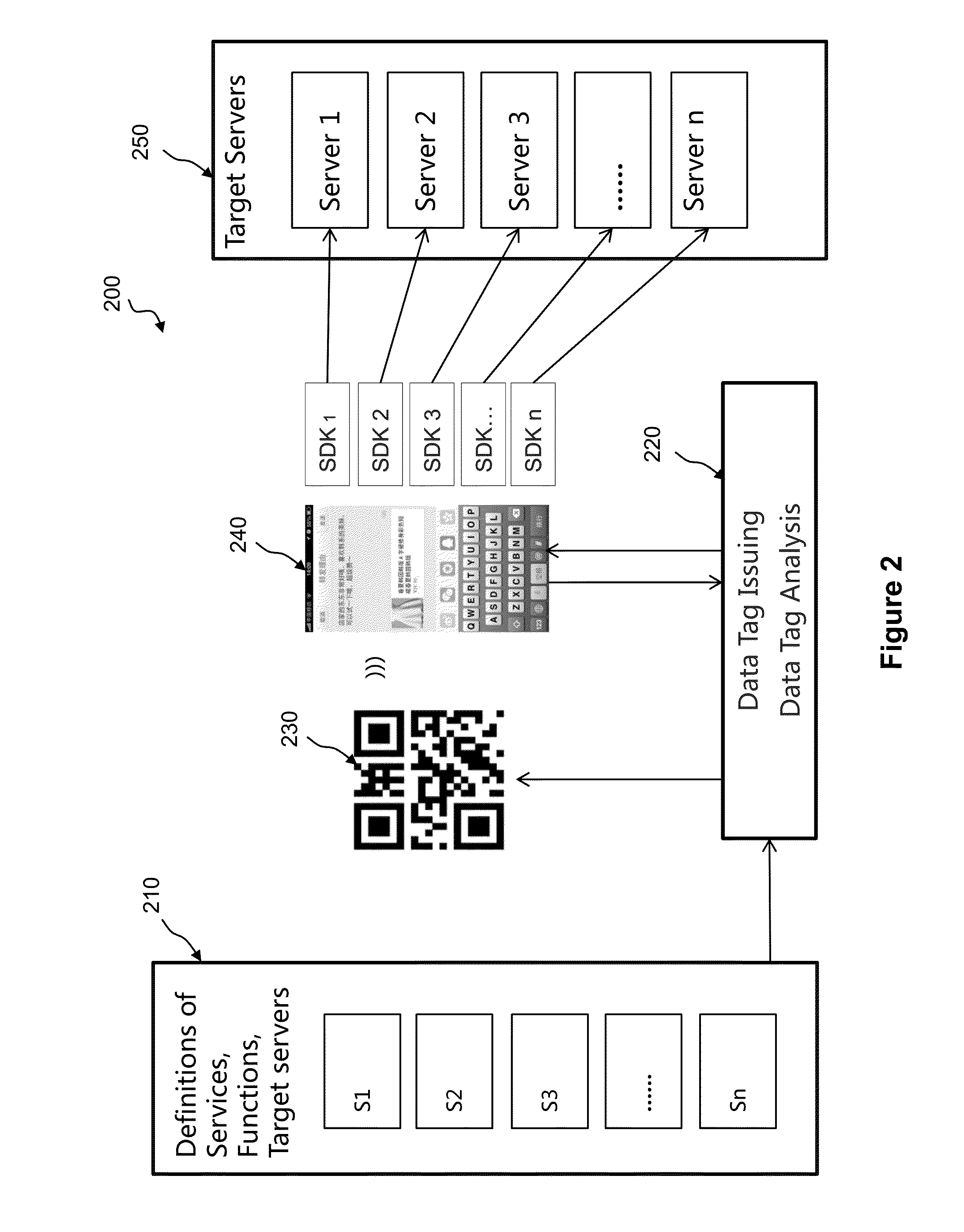
Figure 3
Abstract
Description
BACKGROUND OF THE INVENTION
[0001] The present application relates to the field of computer application technologies, especially the field of data coding and data tagging.
[0002] Two-dimensional (2D) codes (also referred as two-dimensional barcodes, data matrix codes or QR codes) have large information capacity, high security, high rate of data retrieval, and error correction ability. After they were invented, 2D codes have been widely applied to logistics and operations management, and identification card management.
[0003] With increased popularity of smart phones, 2D codes can be captured and uploaded onto real-time Internet by smart phones in real time and used cross-media channels, which enable them to find wide applications in Object-to-Object (OTO) fields, such as information acquisition, mobile shopping, commodity counterfeiting, identity authentication, coupon distribution, and so on.
[0004] The mobile OTO applications of 2D codes currently focus on providing convenience in e-comme...
Examples
example 1
Product Ordering in Response to Tag Data
[0054]During store shopping, a consumer can use a mobile phone to take picture of data tag such as a 2D code on a commodity. An application (i.e. APP) installed on the mobile phone can decode the 2D code in the captured image and obtain application service embedded in the 2D code to order the commodity. The consumer can also obtain service information and function information such as product information, location information, logistics information, shopping mode selection, and order and payment information.
[0055]Specifically, the mobile phone first uses the application to connect to the server that maintains the product information via a mobile wireless network, acquires the product information, and displays it on the mobile phone. Then a location server (an example of a target server) determines the location of the consumer, and his or her relative location to the manufacturer and the storage warehouse. Web-based product order information is ...
example 2
TV Set-Top Boxes
[0057]With the increased popularity of high-definition television, TV set-top boxes become common household electronic devices and in hotels. HD programs typically require users to pay a fee. However, the right to watch HD programs is tied to a specific TV set-top box. It is difficult for a user to watch the HD programs on a different TV set-top box. Moreover, another difficulty is to allow users to watch HD TV programs for a short term in hotels and other venues.
[0058]The data tagging method and system enable a data tag such as a 2D code to be displayed on TV after the TV set-top box is turned on. A user can take a picture of the 2D code using a mobile phone. The mobile phone can decode the 2D code, extract service information for the paid TV programs, and can obtain information about authentication, permissions, payment information, and other services and features.
[0059]First, the 2D code includes information about an authentication server (another example of a tar...