
Toilet assembly
Patent Information
- Authority / Receiving Office
- US · United States
- Current Assignee / Owner
- Publication Date
- 2004-03-04
- Estimated Expiration
- Not applicable · inactive patent
Smart Images
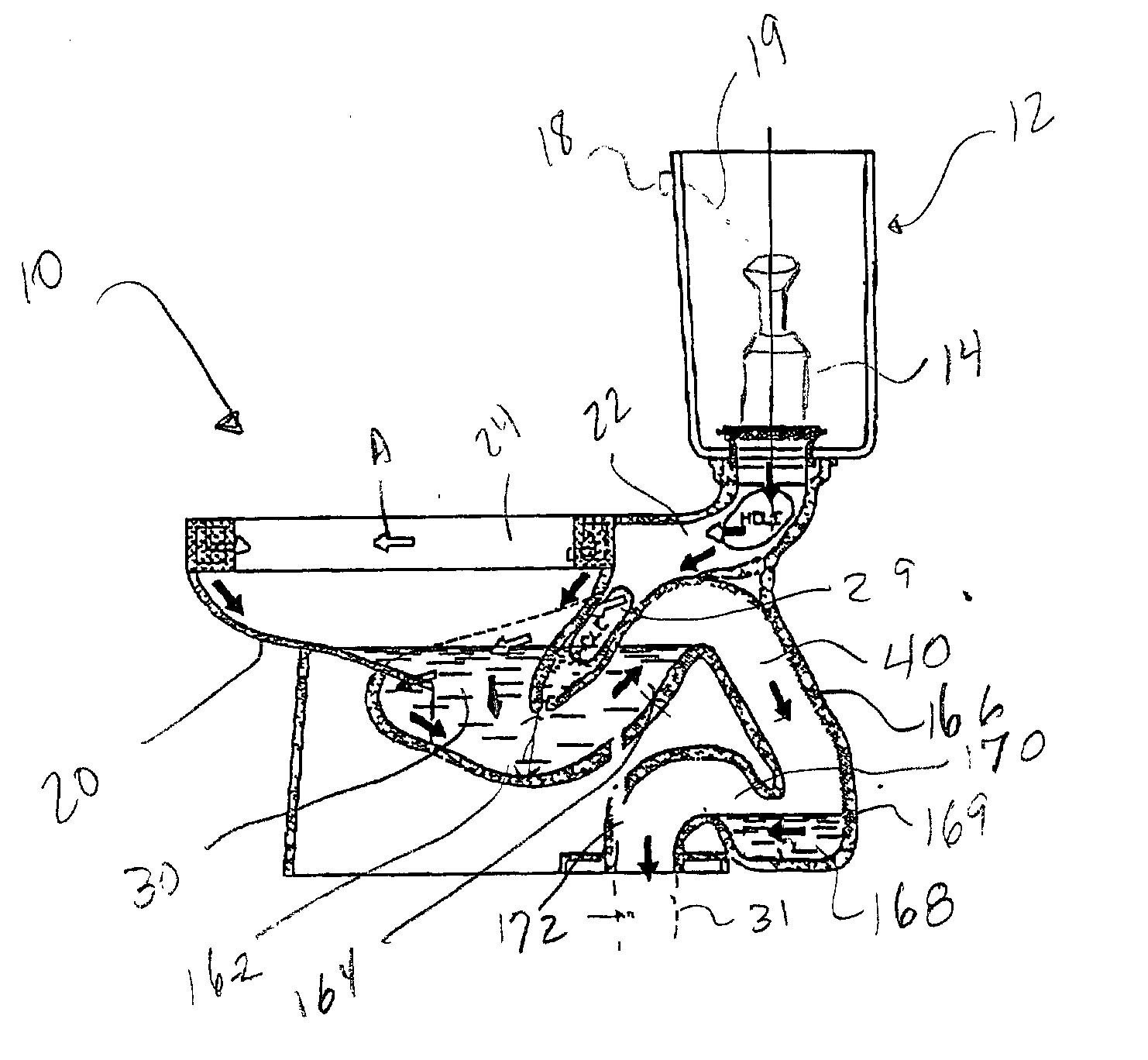
Figure 1 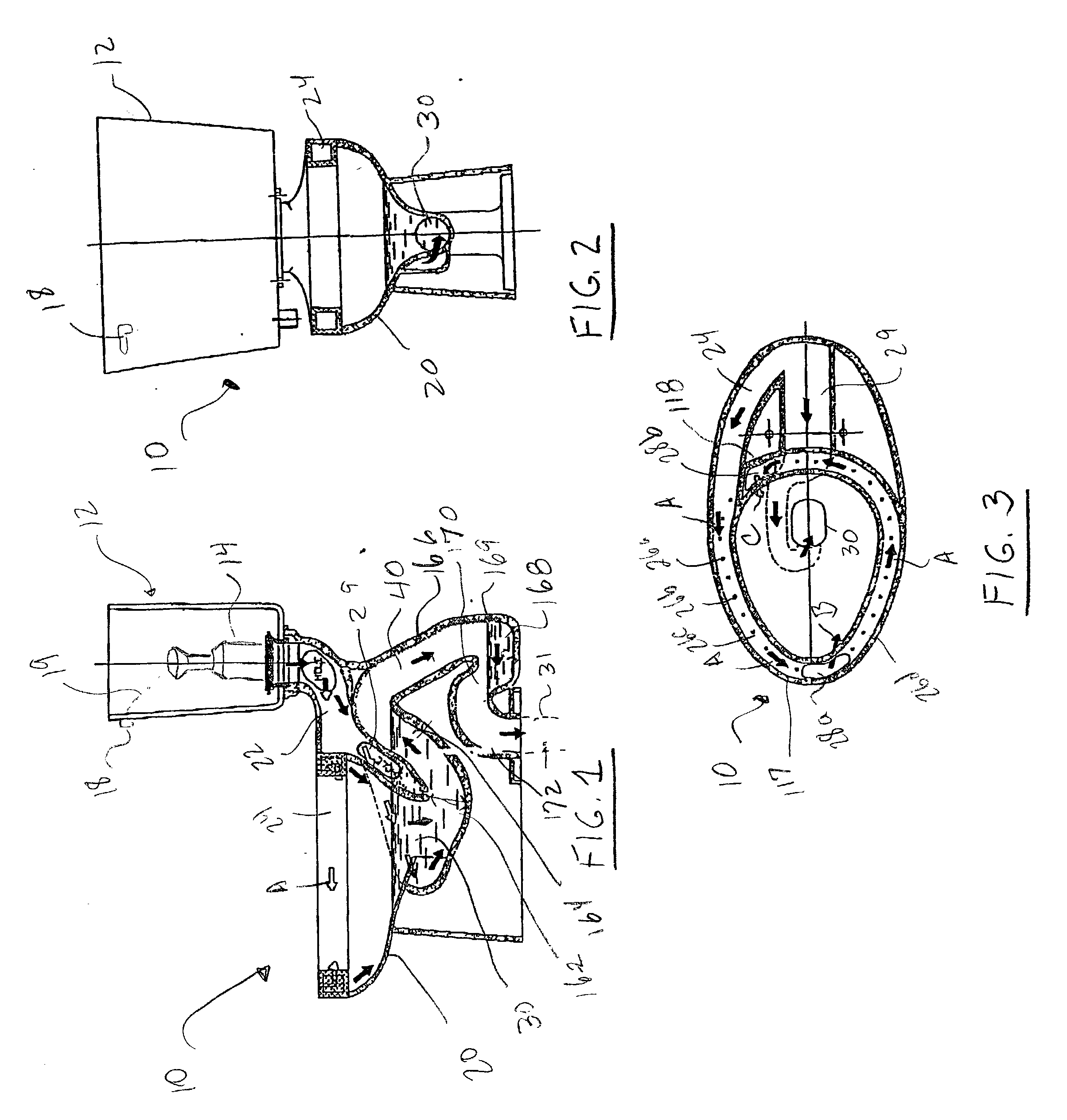
Figure 2 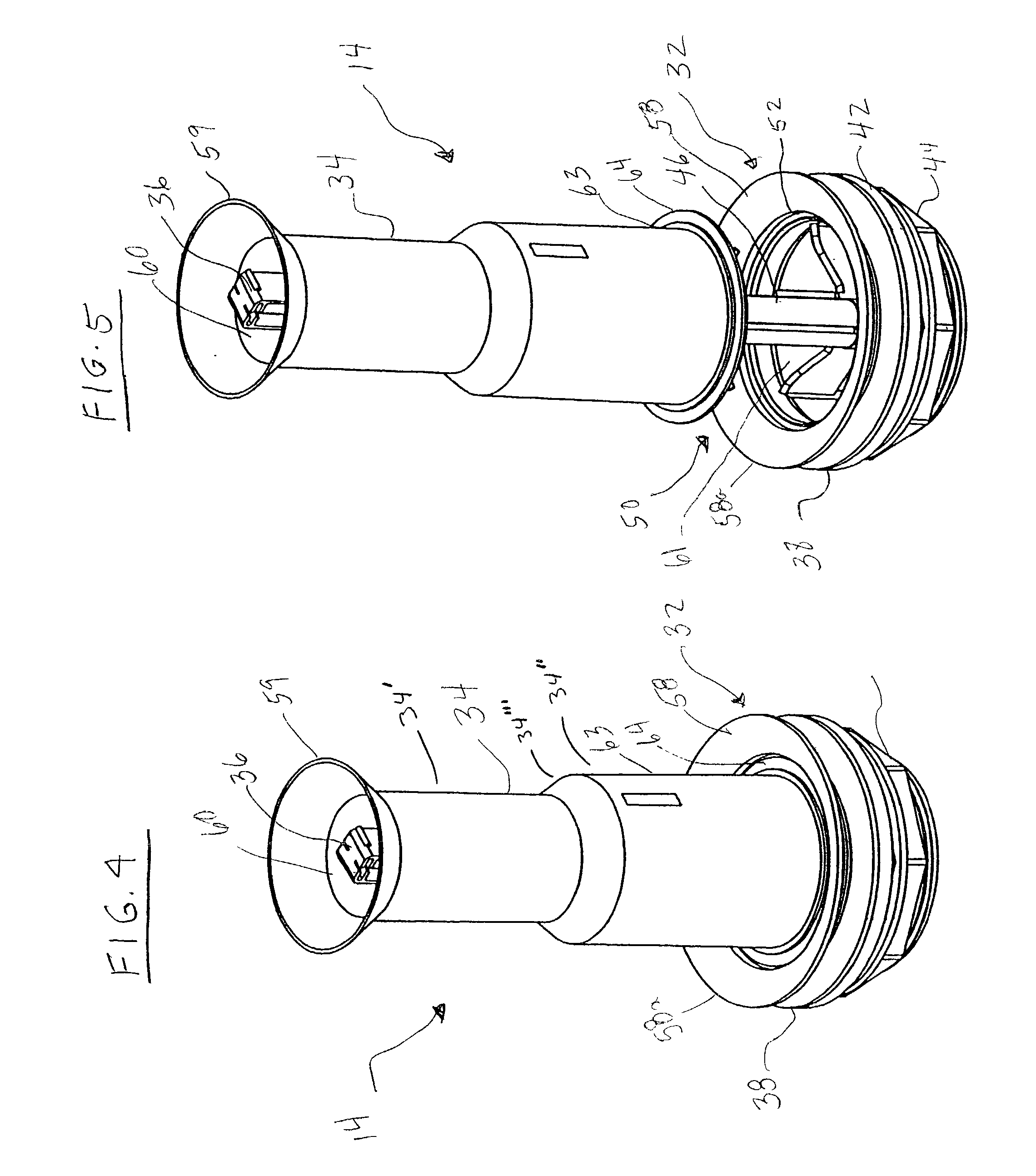
Figure 3
Abstract
Description
[0001] The present invention relates to a toilet for the removal of human and other waste. The present invention further relates to a toilet which is resistant to clogging, increases flushing capacity, and delivers the flush water volume with greater energy.BACKGROUND OF INVENTION
[0002] Toilets for removing waste products are well known. Typically, toilets incorporate three systems that work together to perform the flushing action. Those systems are (1) the bowl siphon, (2) the flush mechanism, and (3) the refill mechanism. Working in concert, these three systems allow for the flushing function of the toilet.
[0003] Siphoning is used to transport fluid and waste from the higher elevation of the bowl to a lower elevation of the wastewater line. The flow channels in a toilet assembly are designed to begin siphoning when the water in the bowl rises above a certain level. The siphon tube itself is an upside down U-shaped tube that draws water from the toilet bowl to the wastewater line. ...
Examples
Embodiment Construction
[0059] Referring now to FIGS. 1-3, a toilet tank in accordance with the teachings of the present 15 invention is illustrated. As will be explained in more detail below, this toilet has a greater energy throughput of the flush water to thereby provide more energy available to remove waste from the toilet bowl. In addition, this toilet permits a toilet to meet governmental agency requirements which mandate a maximum water usage of 1.6 gallons (6 liters) per flush. Further, this toilet improves the flow characteristics of the flow water and flow capacity to provide for not only a more efficient flush but also enhanced cleaning performance and anti-clogging siphoning to assist in waste removal. Moreover, this toilet provides for a quieter and faster flush operation.
[0060] As shown in FIGS. 1-3, the toilet 10 includes a water tank 12 which includes a flush valve assembly 14. The water tank 12, which is positioned over the back of the toilet bowl 20, contains water that is used to initiat...