
Locking catheter hub
Patent Information
- Authority / Receiving Office
- US · United States
- Current Assignee / Owner
- Publication Date
- 2005-05-19
Smart Images
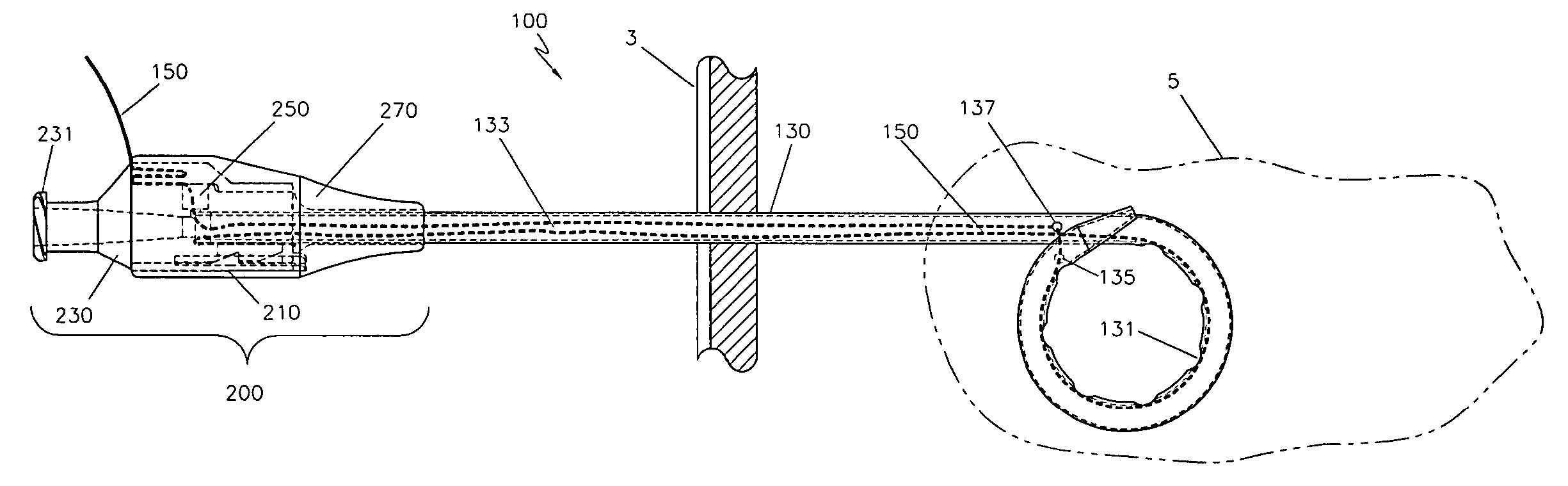
Figure 1 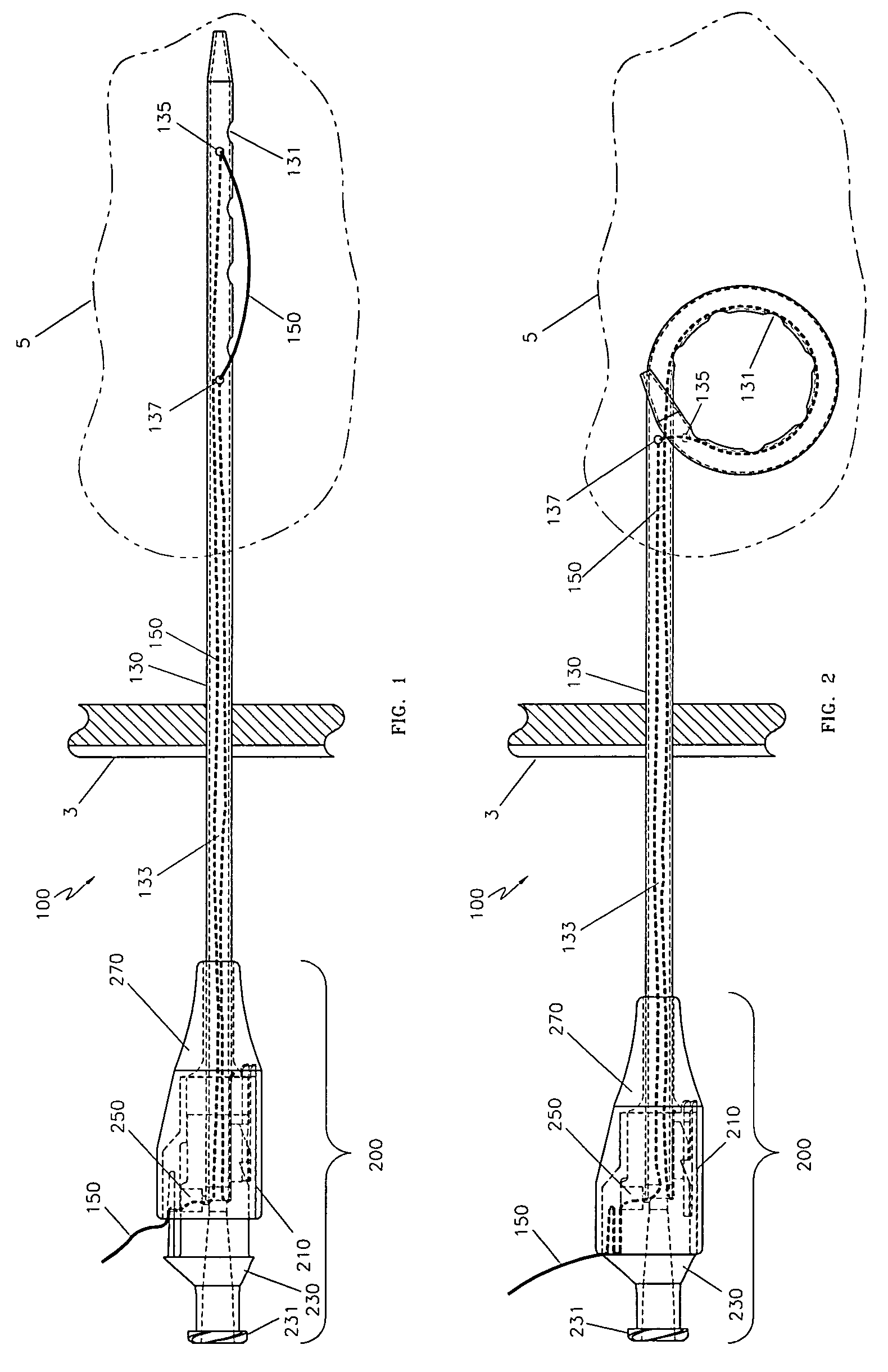
Figure 2 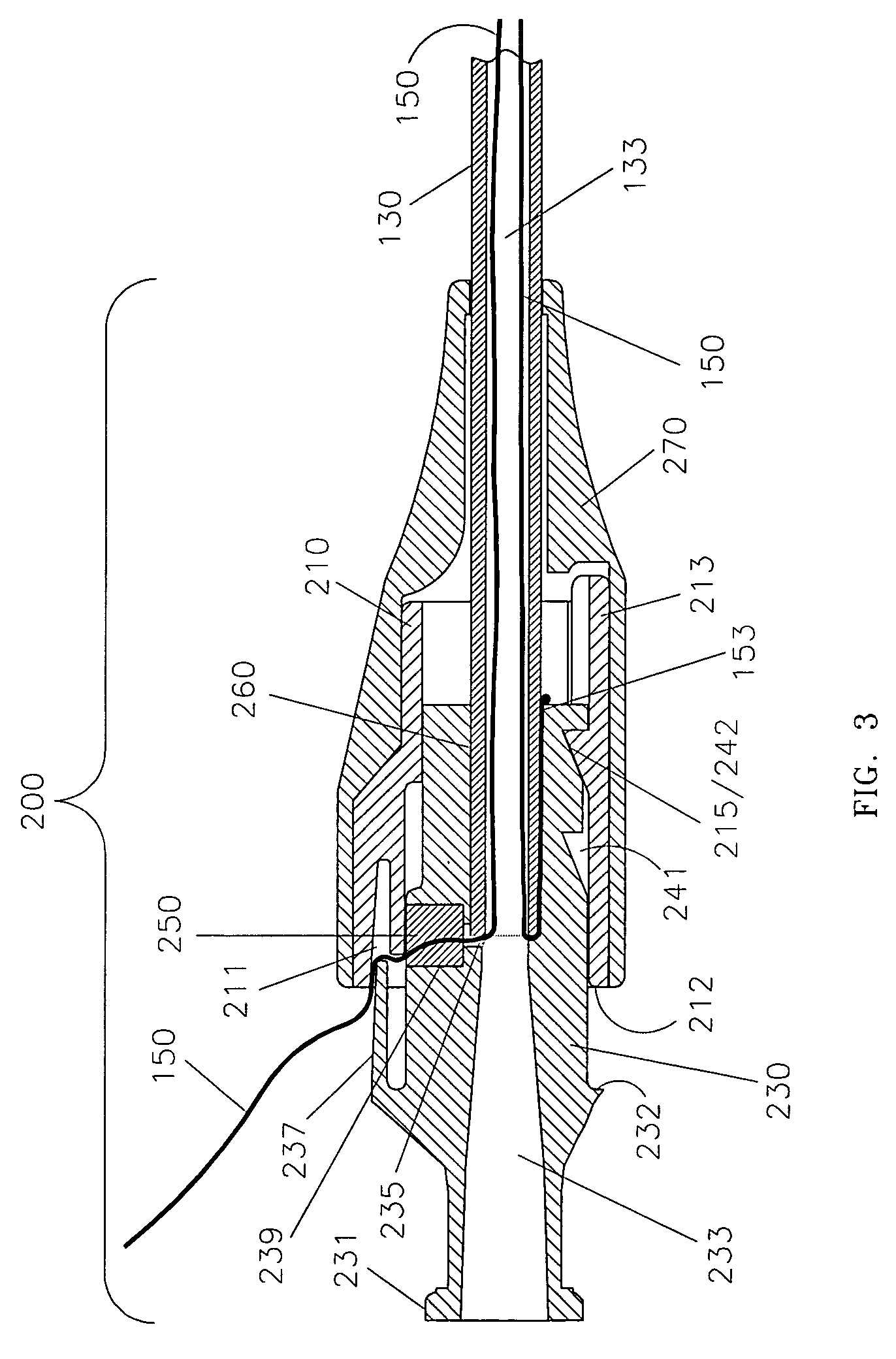
Figure 3
Abstract
Description
CROSS REFERENCE TO RELATED APPLICATION
[0001] This application claims priority to U.S. provisional patent application No. 60 / 520,606, filed Nov. 17, 2003, which is incorporated herein by reference.FIELD OF THE INVENTION
[0002] The present invention relates to a catheter designed to be inserted into a body cavity, and more specifically, to a catheter having an anchoring end. BACKGROUND OF THE INVENTION
[0003] There are several types of prior art catheters designed for insertion into a body cavity of a patient. These typically employ an anchoring device in the end of the catheter intended to reduce the risk of accidentally pulling the catheter out of the cavity. One type of such catheter employs a suture that is accessible from outside of the patient, passes through a connector on the catheter into internal opening (or lumen) of the shaft of the catheter. It then exits through the tip and reenters the lumen at a more proximal location where it can be secured inside of the lumen or on ...
Examples
Embodiment Construction
[0060] A catheter 100 consistent with the present invention is shown inserted through the body wall 3 of a patient and then into a body cavity 5. The catheter may be for the purposes of drainage of infected fluids, removal of urine, infusion of nutrition, or other uses.
[0061]FIG. 1 illustrates a catheter 100 having a locking or latching hub assembly 200 consistent with the present invention. Catheter 100 is comprised of a catheter shaft or tube 130 having a proximal and distal portion or end. The distal end typically has at least one hole 131 and another hole 137 into at least one internal lumen 133. Even though the catheter shown in the figures has only a single lumen, any number of lumens may be used with the present invention.
[0062] The proximal end of the catheter shaft is connected to a hub 230 of a latching hub assembly 200 at hub / shaft bond 260, shown in FIG. 3. The shaft 130 is secured to the hub at bond 260 using adhesive or other bonding techniques well known in the art....