
Adjustable pulmonary vein ablation catheter
a pulmonary vein and catheter technology, applied in the field of medical methods and systems, can solve the problems of increasing the risk of patient undergoing treatment, adding to the time required to perform the desired treatment, etc., and achieve the effect of reducing or eliminating
Patent Information
- Authority / Receiving Office
- US · United States
- Patent Type
- Applications(United States)
- Current Assignee / Owner
- Publication Date
- 2011-02-03
- Estimated Expiration
- Not applicable · inactive patent
Smart Images
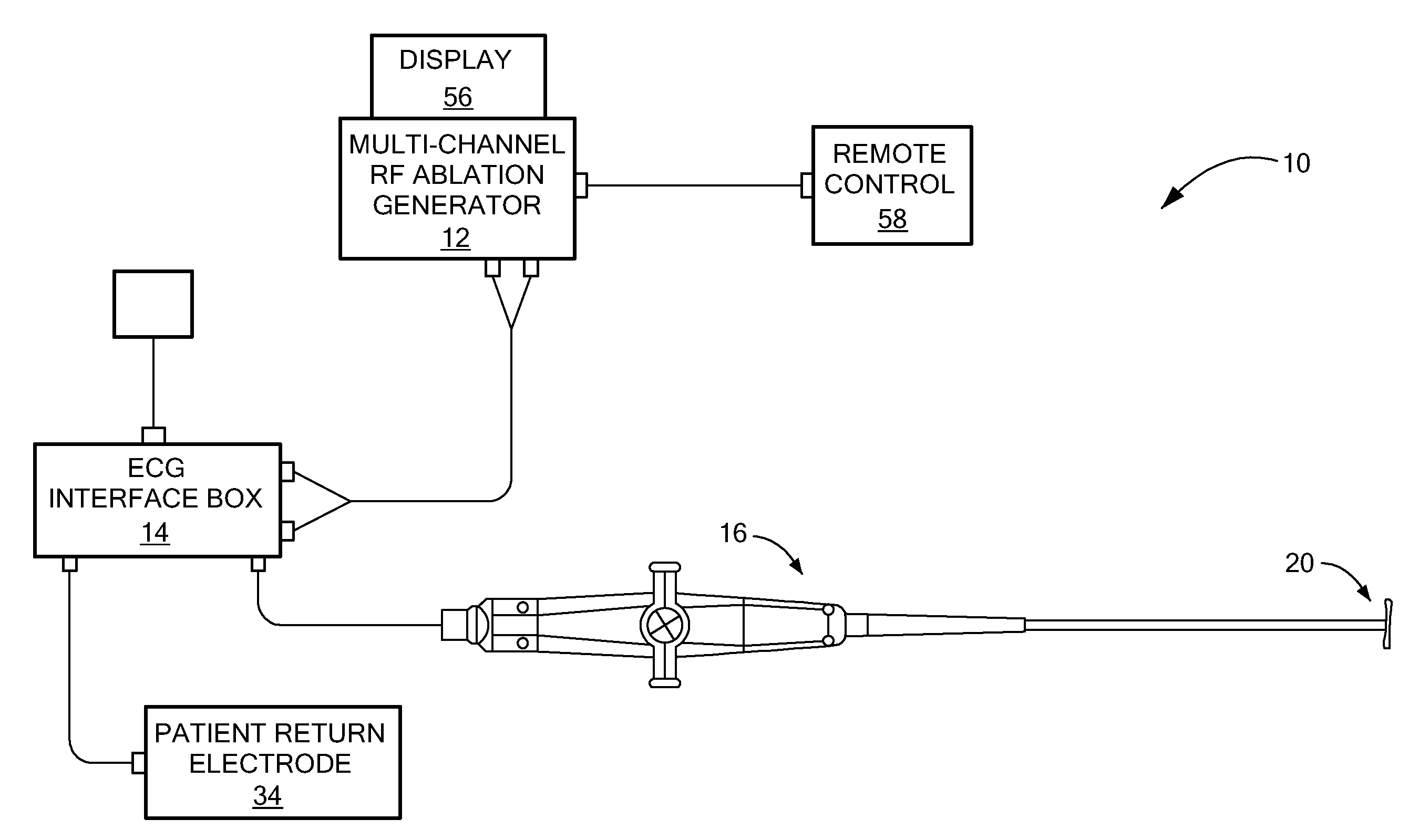
Figure 1 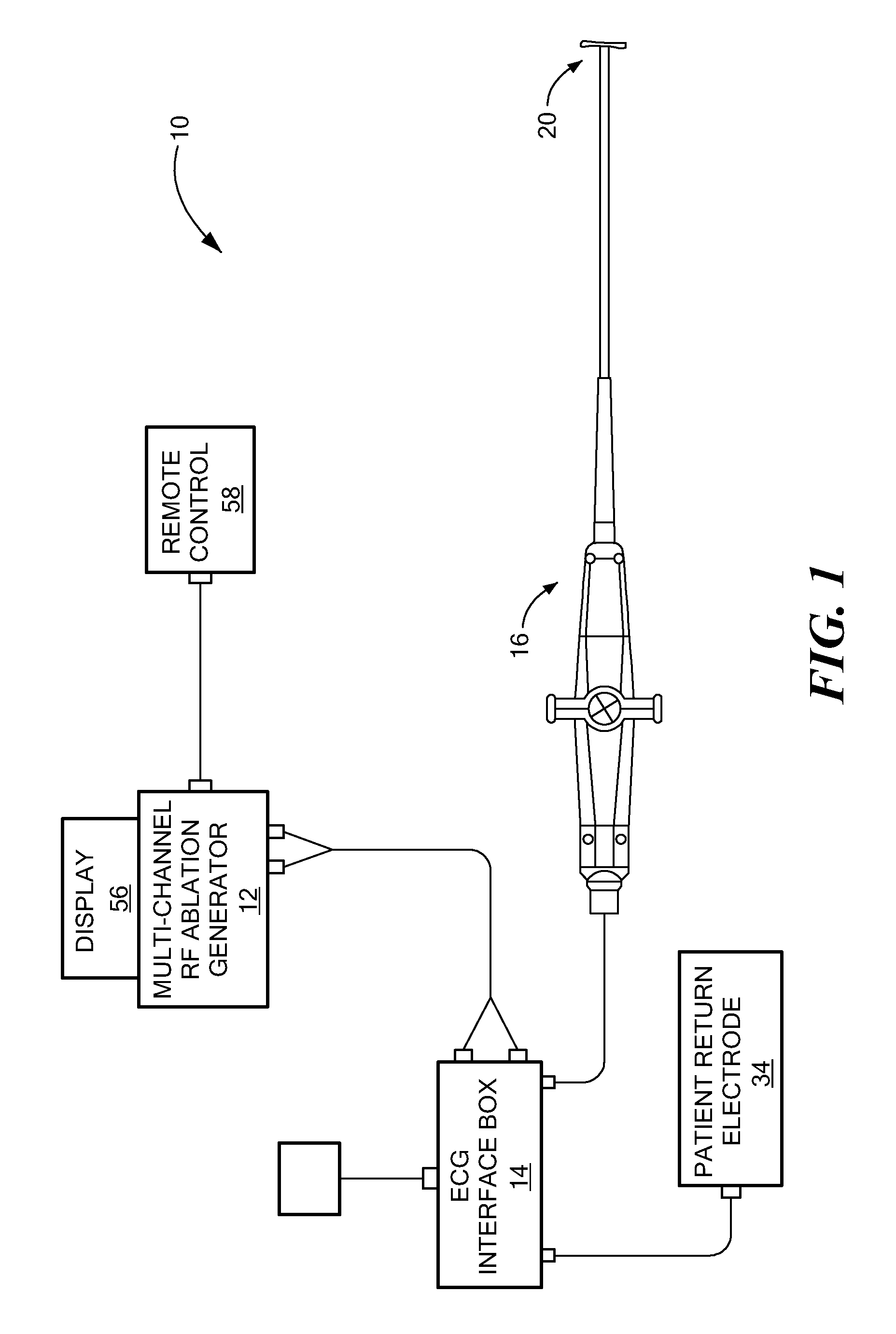
Figure 2 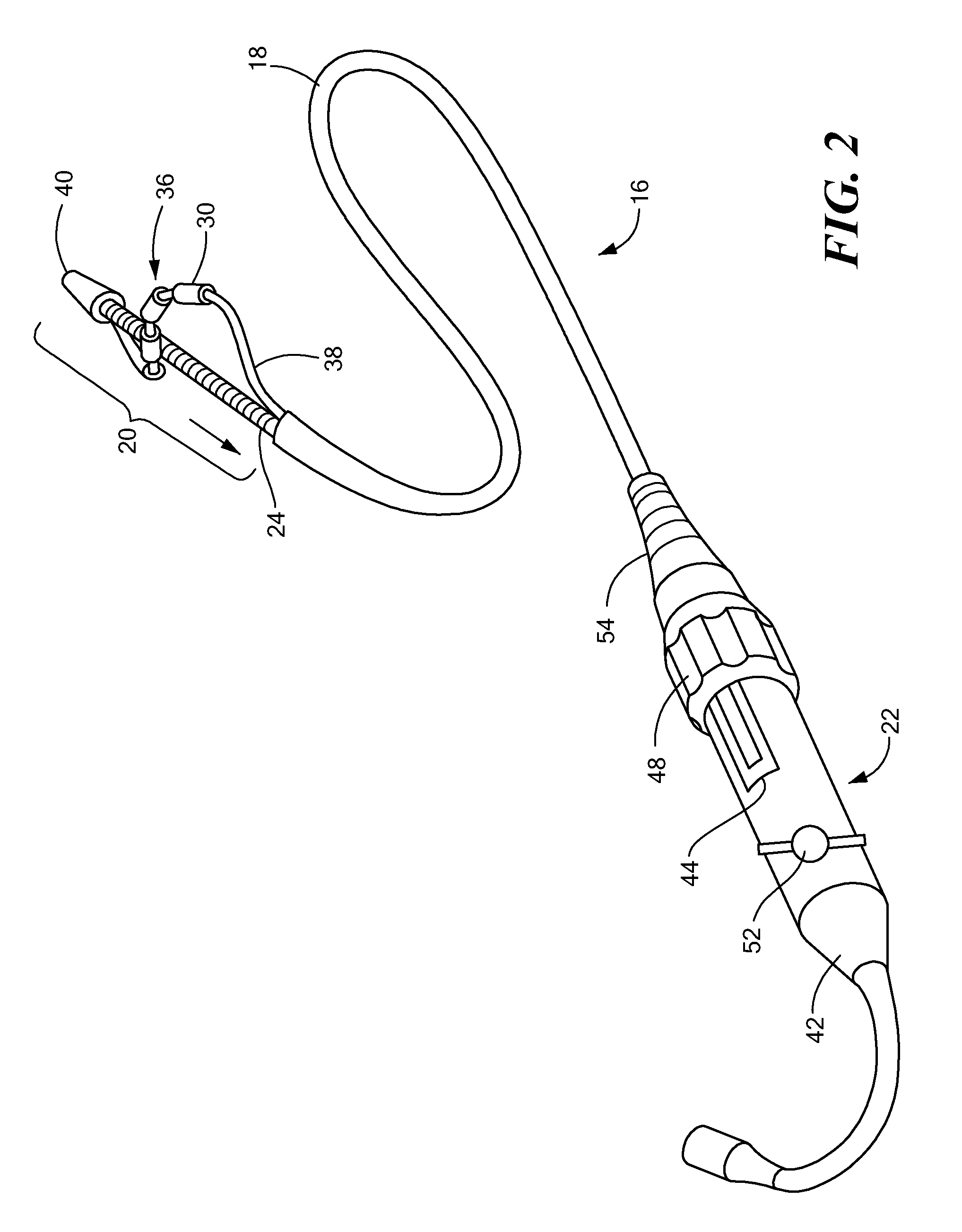
Figure 3
Abstract
Description
CROSS-REFERENCE TO RELATED APPLICATION
[0001] n / aSTATEMENT REGARDING FEDERALLY SPONSORED RESEARCH OR DEVELOPMENT
[0002] n / aFIELD OF THE INVENTION
[0003] The present invention relates to a medical method and system having a selectively configurable treatment array, and a method and system for modifying and controlling the shape and / or dimensions of a treatment array.BACKGROUND OF THE INVENTION
[0004] Numerous procedures involving catheters and other minimally invasive devices may be performed to provide a wide variety of treatments, such as ablation, angioplasty, dilation or the like. For example, to treat cardiac arrhythmias, physicians often employ specialized ablation catheters to gain access into interior regions of the body. Such catheters include tip electrodes or other ablating elements used to create ablation lesions that physiologically alter the ablated tissue without removal thereof, and thereby disrupt and / or block electrical pathways through the targeted tissue. In the treatment...
Examples
Embodiment Construction
[0022]The present invention advantageously provides a medical system and components thereof providing multiple controllable shapes or dimensions that can be selectively manipulated to provide varying treatment patterns. In particular and as shown in FIG. 1, an ablation therapy system, generally designated as ‘10,’ is provided for treating unwanted tissue conditions, including atrial fibrillation or other arrhythmias. The ablation therapy system may generally include a radiofrequency (“RF”) signal generator 12 having a user interface for the operation and control thereof, an electrocardiogram (“ECG”) unit 14 operably coupled to or otherwise interfaced with the RF signal generator 12, and a medical device 16 operably coupled to or otherwise interfaced with the RF signal generator 12 and / or the ECG unit 14.
[0023]Now referring to FIGS. 1-2, the medical device 16 may include a catheter sized and dimensioned to intraluminally and transseptally access a left atrium of a patient's heart for...