
Tracing multiple data access instructions
Patent Information
- Authority / Receiving Office
- US · United States
- Current Assignee / Owner
- Publication Date
- 2006-06-01
- Estimated Expiration
- Not applicable · inactive patent
Smart Images
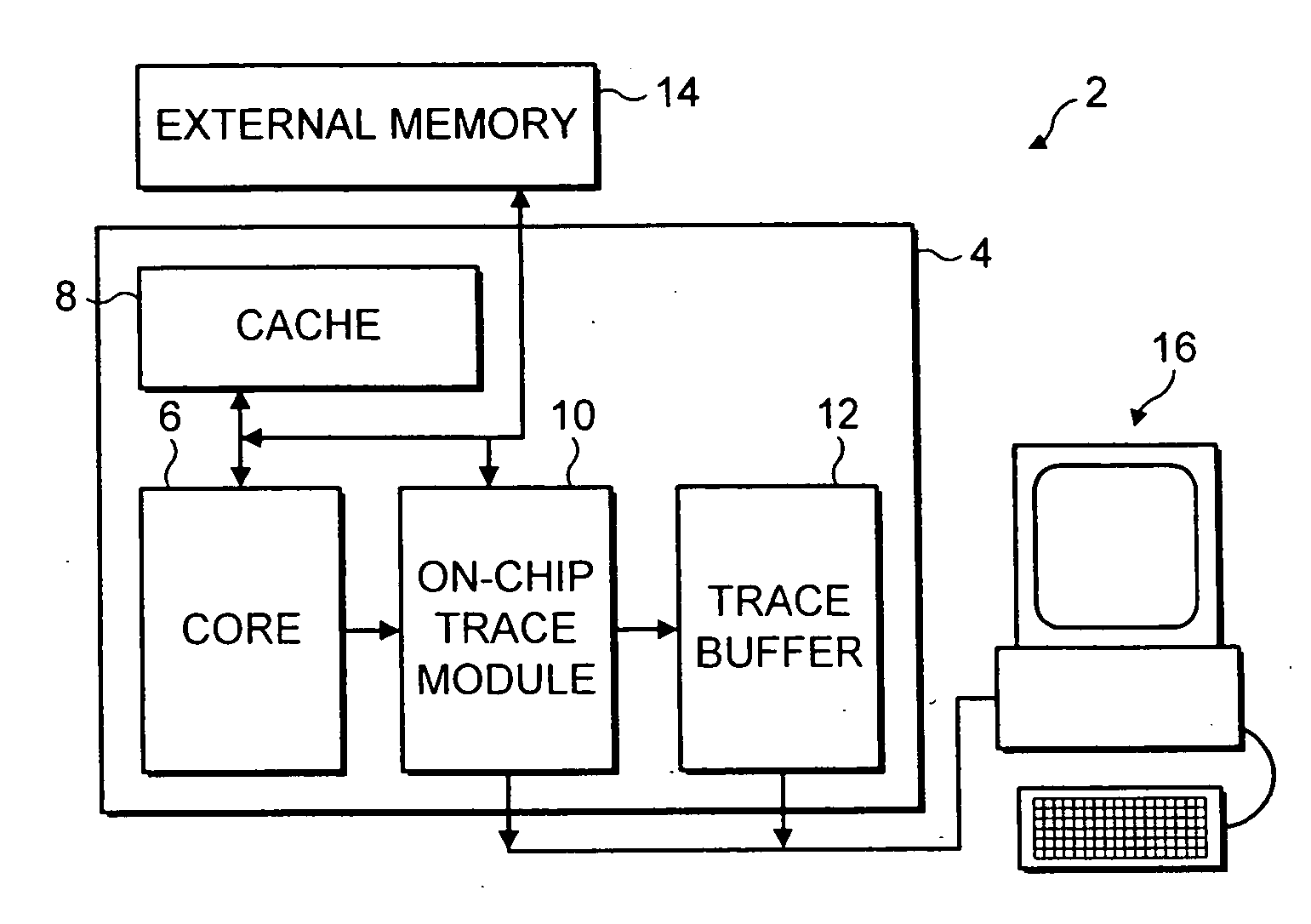
Figure 1 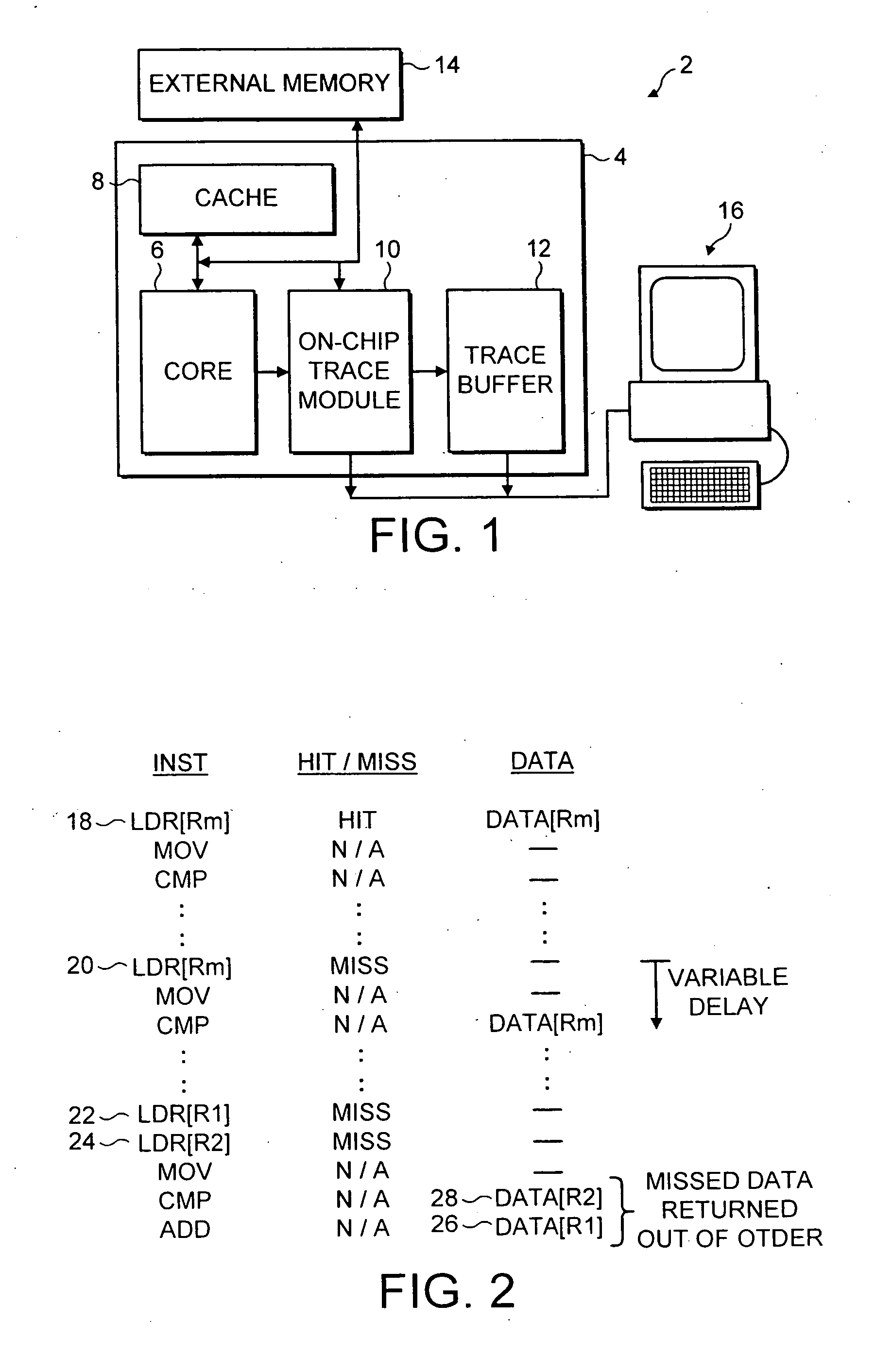
Figure 2 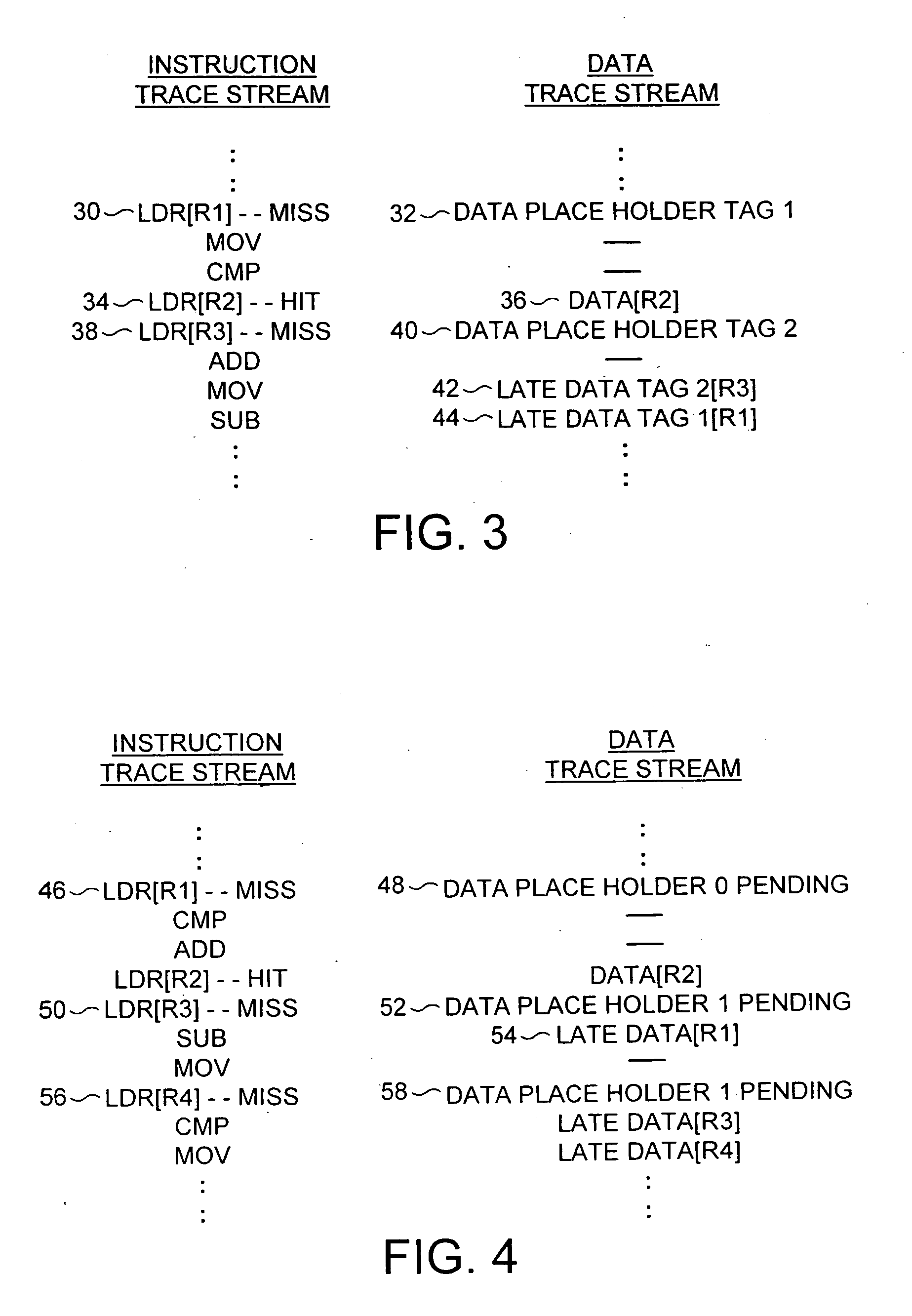
Figure 3
Abstract
Description
[0001] This application is a Continuation of application Ser. No. 09 / 973,189, filed Oct. 10, 2001. The entire content of this application is incorporated herein by reference.BACKGROUND OF THE INVENTION
[0002] 1. Field of the Invention
[0003] This invention relates to data processing systems. More particularly, this invention relates to data processing systems providing tracing mechanisms to enable data accesses via multiple data access instructions to be traced.
[0004] 2. Description of the Prior Art
[0005] As data processing systems increase in complexity whilst it is desired to also reduce development time for new systems, there is a need to improve the debug and tracing tools and mechanisms that may be used within the development of data processing systems. Tracing the activity of a data processing system whereby a trace stream is generated including data representing the step-by-step activity in the system is a highly useful tool in system development. However, with the general ...
Examples
Embodiment Construction
[0031]FIG. 1 schematically illustrates a data processing system 2 providing a on-chip tracing mechanism. An integrated circuit 4 includes a microprocessor core 6, a cache memory 8, an on-chip trace module controller 10 and an on-chip trace buffer 12. The integrated circuit 4 is connected to an external memory 14 which is accessed when a cache miss occurs within the cache memory 8. A general purpose computer 16 is coupled to the on-chip trace module controller 10 and the on-chip trace buffer 12 and serves to recover and analyse a stream of tracing data from these elements using software executing upon the general purpose computer 16.
[0032] It is often the case that the processor core 6 may, during operation, need to access more data processing instructions and data than there is actually space for in the external memory 14. For example, the external memory 14 may have a size of 1 MB, whereas the processor core 6 might typically be able to specify 32-bit addresses, thereby enabling 4...