

Toneable conduit and method of preparing same
Patent Information
- Authority / Receiving Office
- US · United States
- Current Assignee / Owner
- Publication Date
- 2006-09-21
- Estimated Expiration
- Not applicable · inactive patent
Smart Images
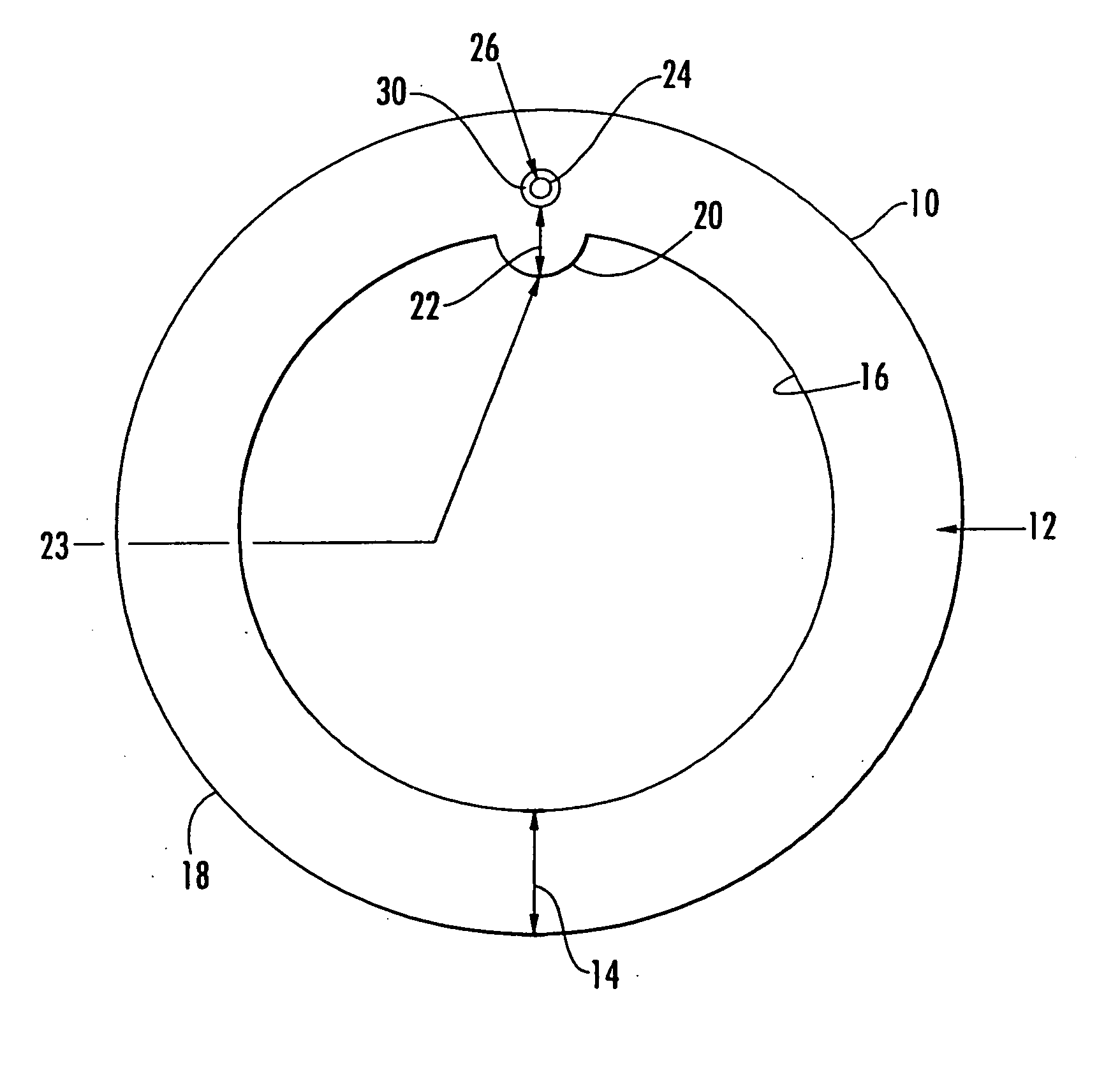
Figure 1 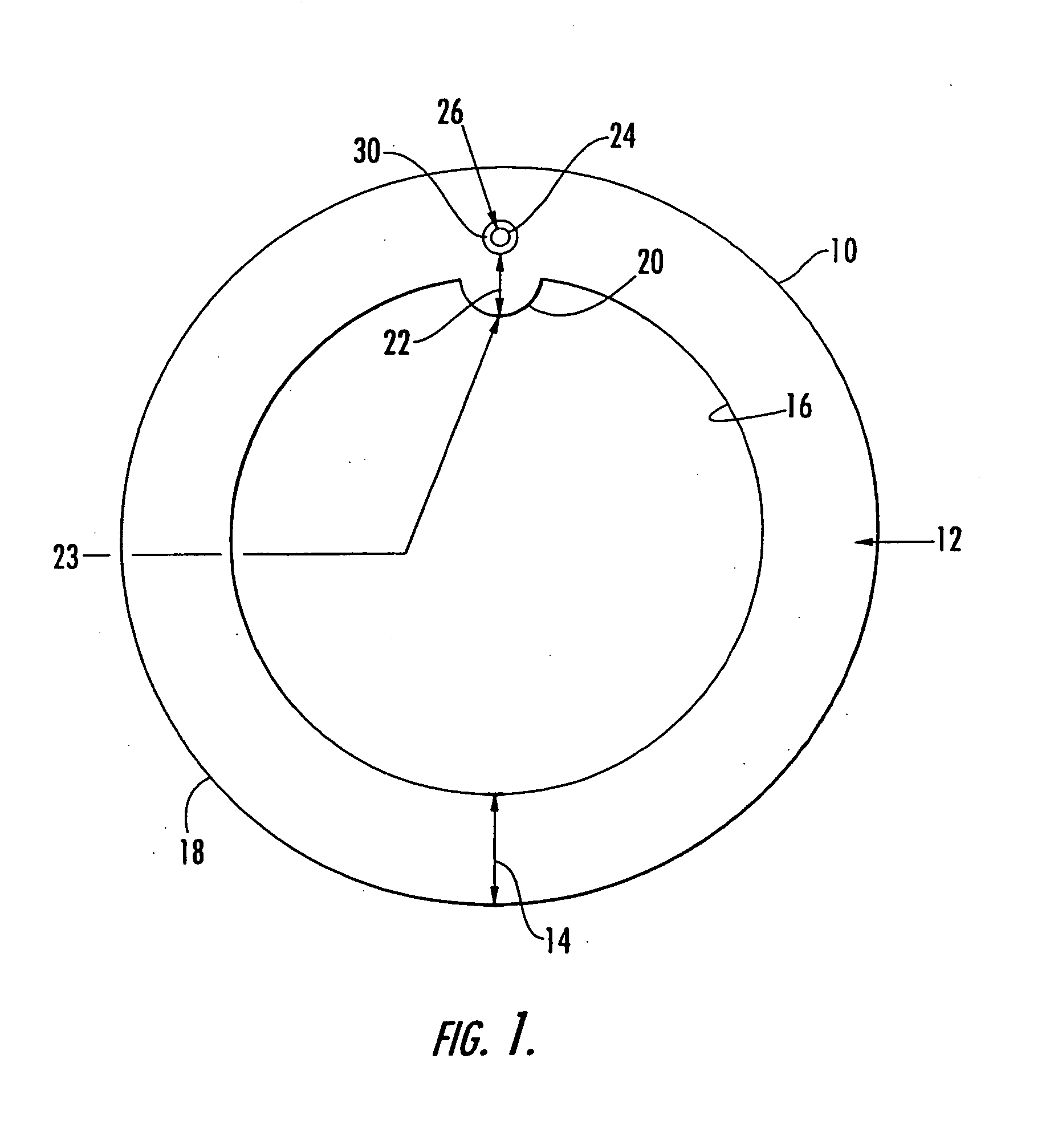
Figure 2 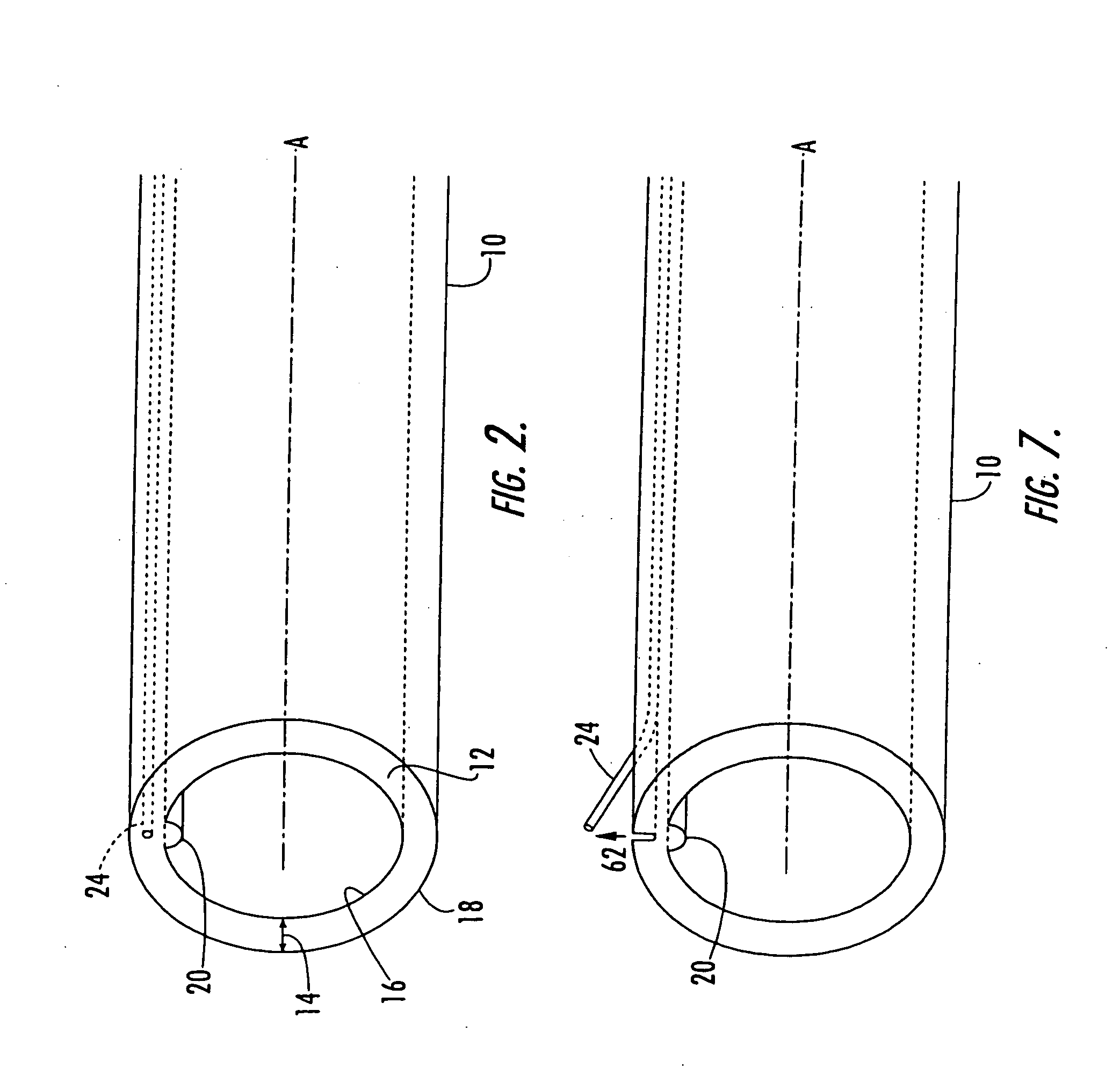
Figure 3
Abstract
Description
CROSS REFERENCE TO RELATED APPLICATIONS
[0001] This application is a continuation of copending U.S. patent application Ser. No. 10 / 830,754, filed Apr. 23, 2004, which is a divisional of copending U.S. patent application Ser. No. 10 / 158,810, filed May 30, 2002, which is a continuation-in-part of copending U.S. patent application Ser. No. 09 / 989,289, filed Nov. 20, 2001.FIELD OF THE INVENTION
[0002] The present invention relates to toneable conduit and more particularly to toneable conduit that can be detected by conventional toning equipment and that includes a wire that is capable of being torn out of the conduit to allow the conduit and wire to be coupled. BACKGROUND OF THE INVENTION
[0003] Conduit is often buried to provide an underground path for cables such as coaxial cables and fiber optic cables. In particular, conduit is typically formed of a plastic material that protects the coaxial cables and fiber optic cables from the moisture and other hazards of the underground environ...
Examples
Embodiment Construction
[0023] In the drawings and the following detailed description, preferred embodiments are described in detail to enable practice of the invention. Although the invention is described with reference to these specific preferred embodiments, it will be understood that the invention is not limited to these preferred embodiments. But to the contrary, the invention includes numerous alternatives, modifications and equivalents as will become apparent from consideration of the following detailed description and accompanying drawings. In the drawings, like numbers refer to like elements throughout.
[0024]FIGS. 1 and 2 illustrate a toneable conduit according to the present invention. As shown in these figures, the conduit is formed of an elongate polymeric tube 10 that includes a wall 12 having a predetermined thickness 14 and further includes an interior surface 16 and an exterior surface 18. The exterior surface 18 is preferably smooth so that the conduit can be effectively coupled as discus...