

Arrangement and method for controlling a combustion engine
a technology of combustion engine and arrangement and control method, which is applied in the direction of electric control, machines/engines, output power, etc., can solve the problems of increasing emissions, reducing the acid content of exhaust gases, and increasing the corresponding pressure, so as to achieve a large load range
Patent Information
- Authority / Receiving Office
- US · United States
- Current Assignee / Owner
- Publication Date
- 2006-10-12
- Estimated Expiration
- Not applicable · inactive patent
Smart Images
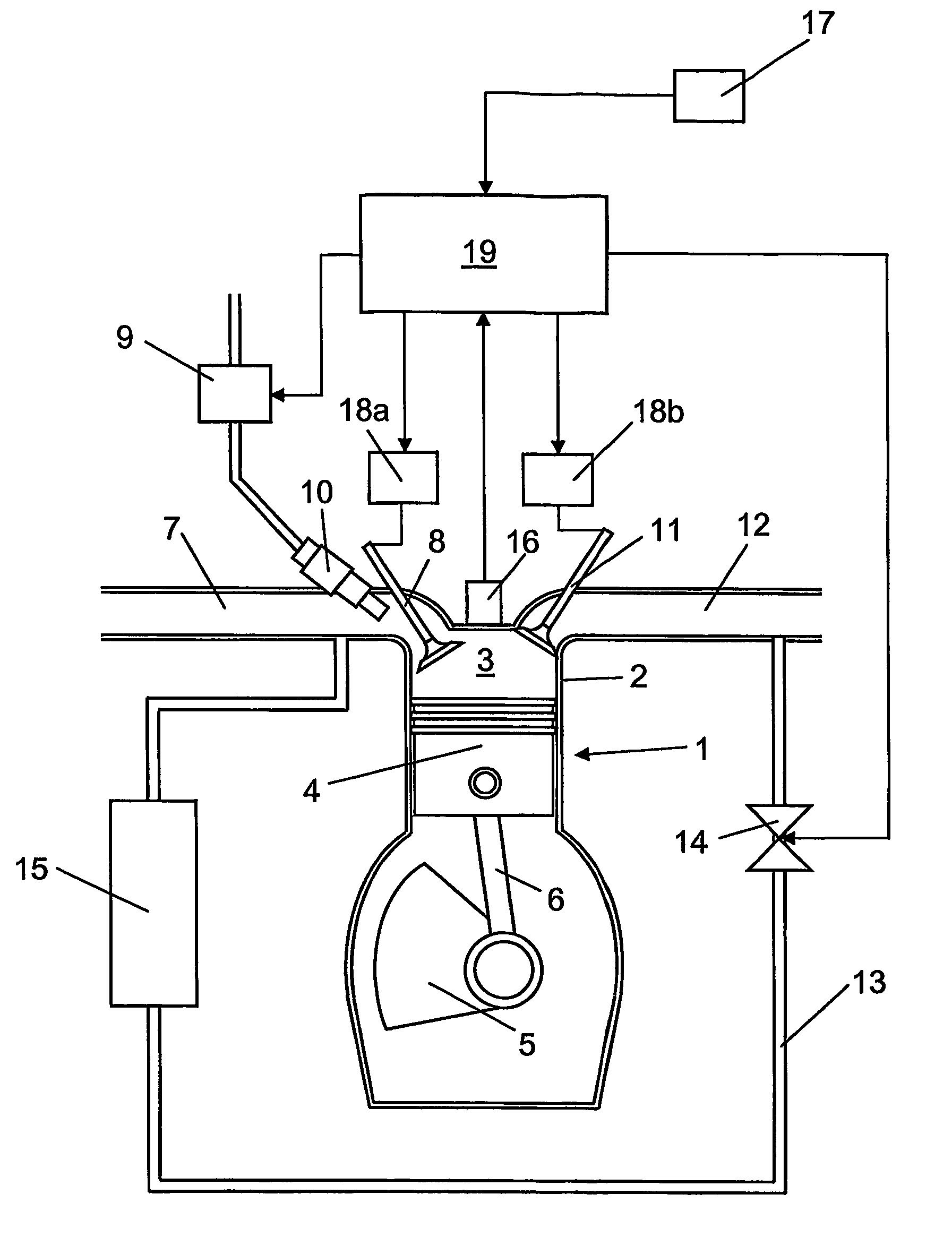
Figure 1 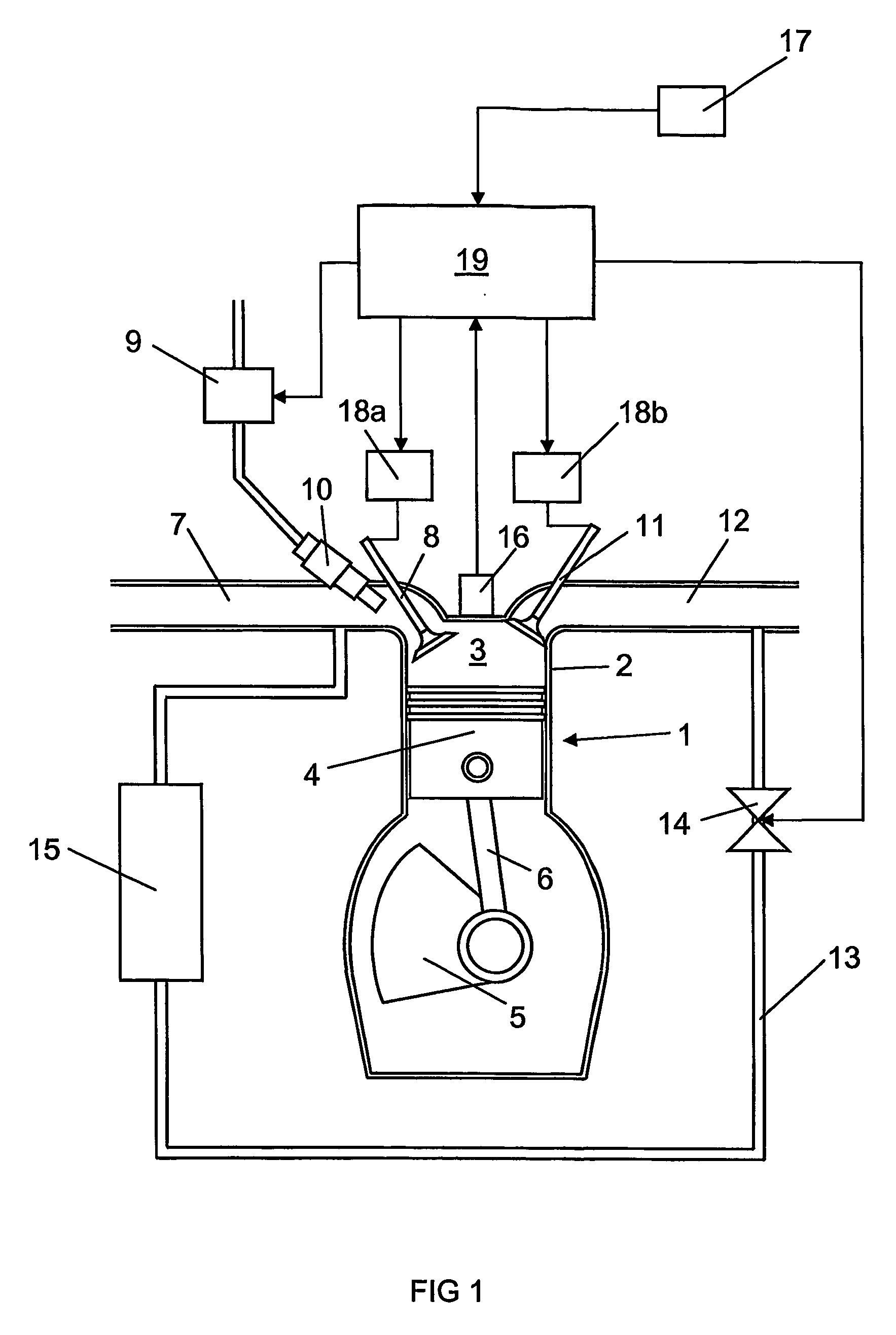
Figure 2 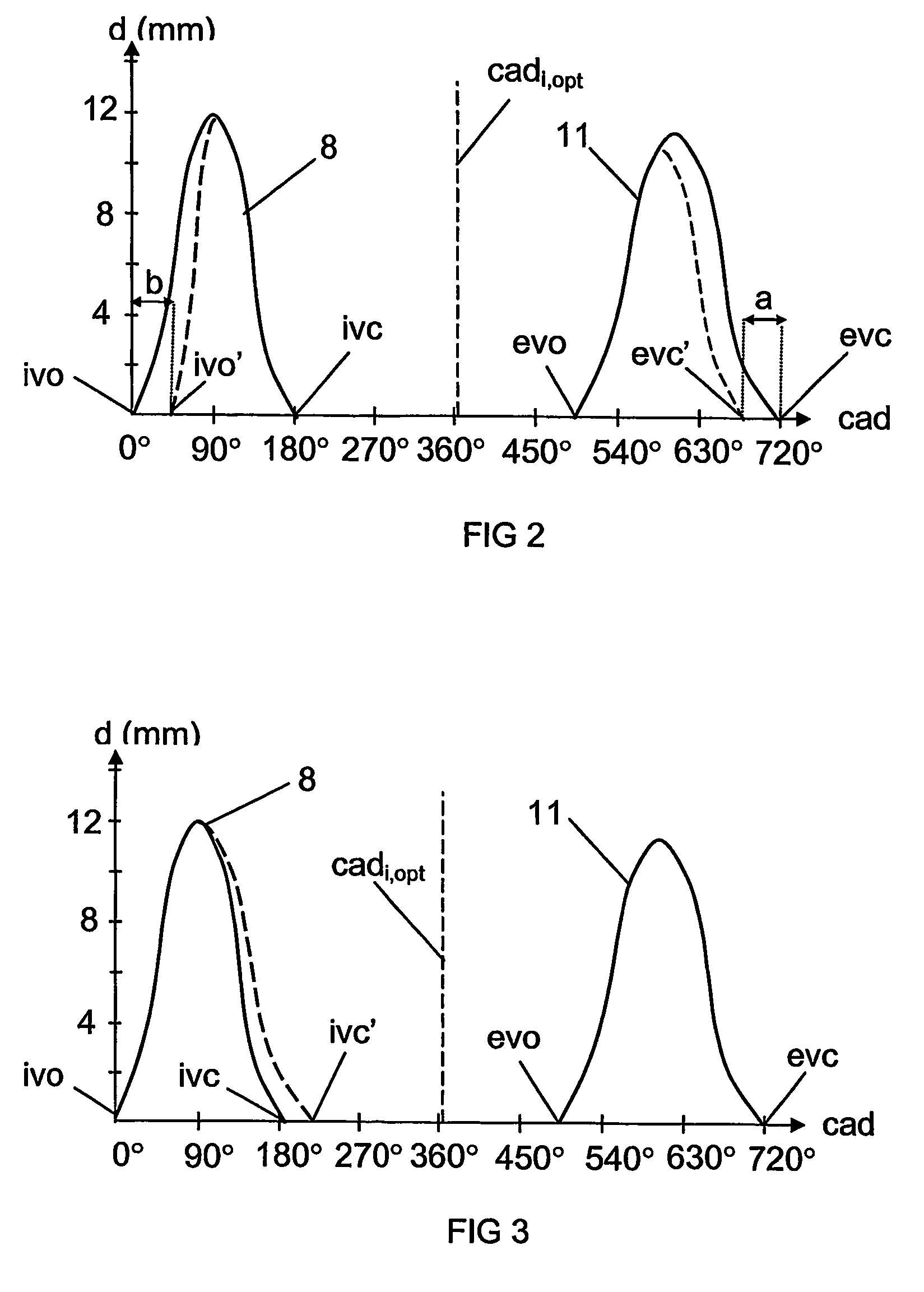
Figure 3
Abstract
Description
BACKGROUND TO THE INVENTION, AND STATE OF THE ART
[0001] The present invention relates to an arrangement and a method for controlling a combustion engine according to the preambles of claims 1 and 11.
[0002] One type of such combustion engines are called HCCI (Homogeneous Charge Compression Ignition) engines and may be regarded as a combination of an Otto engine and a diesel engine. In HCCI engines, a homogeneous mixture of fuel and air is compressed in a combustion chamber until self-ignition of the fuel mixture takes place. Advantages of such engines are that they produce low discharges of nitrogen oxides NOx and soot particles while at the same time being of high efficiency. One reason for HCCI engines not being used conventionally to any great extent is that it is difficult to control the self-ignition of the fuel mixture to a correct crankshaft angle.
[0003] Two different valve control strategies are known for controlling under laboratory conditions the self-ignition of the fue...
Examples
Embodiment Construction
[0020]FIG. 1 depicts an arrangement for controlling a combustion engine 1 of the type in which a homogeneous mixture of fuel and air is compressed until self-ignition of the mixture takes place due to the heat arising during the compression. Such an engine 1 is usually called an HCCI (Homogeneous Charge Compression Ignition) engine. An HCCI engine may be regarded as a combination of an Otto engine and a diesel engine. A cylinder 2 of the engine 1 is depicted here. The engine 1 may of course have substantially any desired number of such cylinders 2. The engine 1 comprises a combustion chamber 3 which is bounded downwards in the cylinder 2 by a movable piston 4. The piston 4 is connected to a crankshaft 5 by a connecting rod 6. The movements of the piston 4 in the cylinder 2 are converted to rotary movement of the crankshaft 5.
[0021] When the piston 4 moves downwards in the cylinder 2 and an inlet valve 8 is open, air is drawn into the expanding combustion chamber 3 via an inlet line...