
Behind-the-ear hearing aid with integrally-molded instrument case
Patent Information
- Authority / Receiving Office
- US · United States
- Current Assignee / Owner
- Publication Date
- 2007-08-23
- Estimated Expiration
- Not applicable · inactive patent
Smart Images
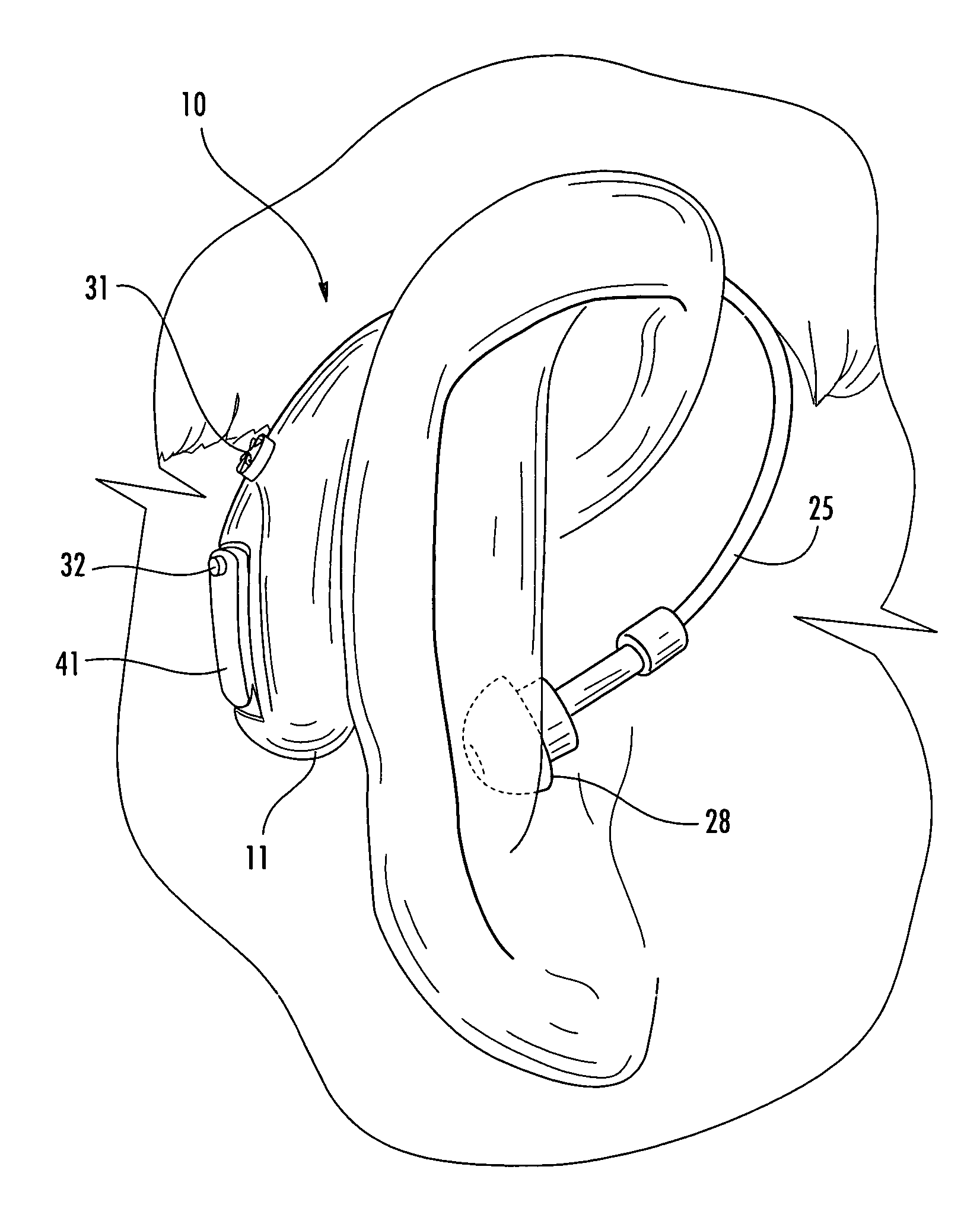
Figure 1 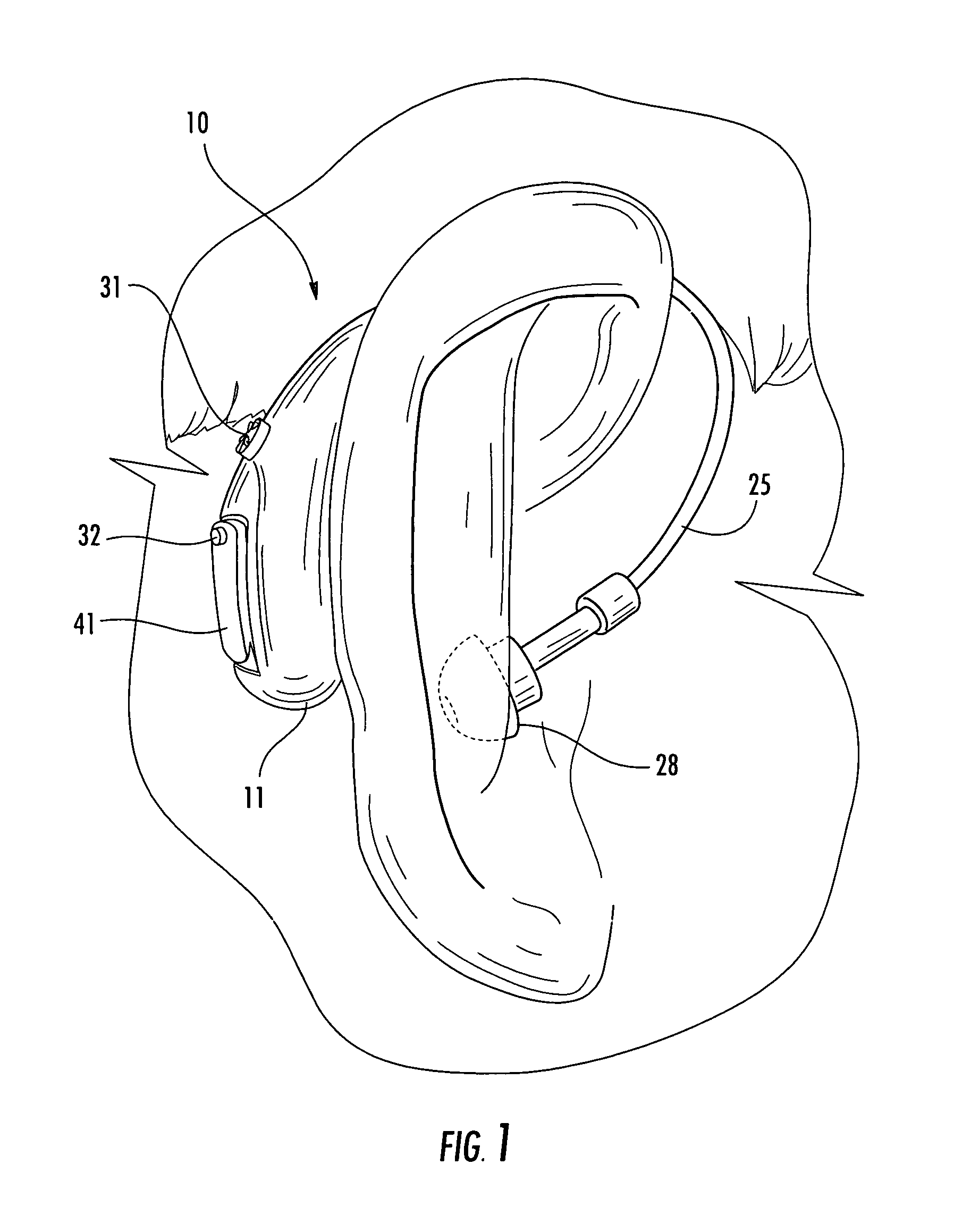
Figure 2 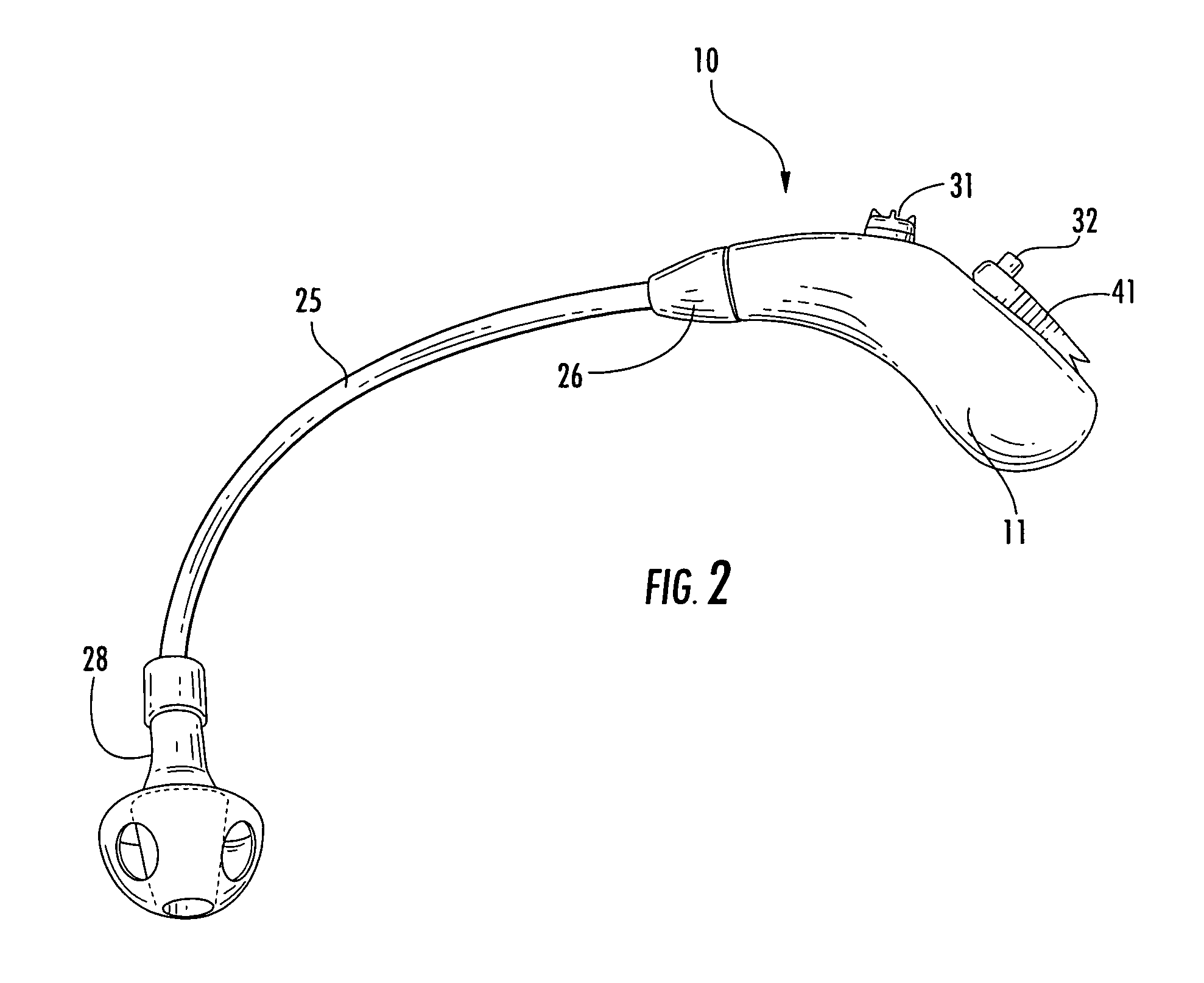
Figure 3
Abstract
Description
TECHNICAL FIELD AND BACKGROUND OF THE INVENTION
[0001] This invention relates generally to hearing aids, and more specifically, to an open fit behind-the-ear (BTE) hearing aid with a substantially seamless, integrally-molded instrument case. The instrument case is designed to prevent entry of moisture, dust, and other foreign matter into the interior compartment which houses highly sensitive hardware and components essential to proper operation of the hearing aid.
[0002] Unfortunately, today 1 in 10 Americans (over 30 million people) experience some degree of hearing loss. Hearing loss is the third leading chronic health condition among Americans, after arthritis and high blood pressure. Additionally, the problem of hearing loss is “growing younger.” 15% of recent college graduates have as much or more hearing loss than their parents. And over two million Americans with hearing loss are under the age of 18.
[0003] In many cases, hearing aids offer an effective and practical solution...
Examples
Embodiment Construction
[0035] Referring now specifically to the drawings, a BTE hearing aid according to the present invention is illustrated in FIGS. 1 and 2, and shown generally at reference numeral 10. The hearing aid 10 comprises a sleek, ergonomic, integrally-molded instrument case 11 which is designed to reside behind an ear of the wearer.
[0036] As best shown in FIGS. 3 and 4, the instrument case 11 forms a substantially seamless electronics compartment 12. Conventional components including a microphone 14, loudspeaker 15, computer chip 16 and battery 17 are all housed in the electronics compartment 12. By inserting a programming strip (not shown) through slot 21 in the instrument case 11, the computer chip 16 is programmed to match a particular hearing loss with the most prescriptive amplification needed. The programming strip contacts a flex PCB interface 22.
[0037] Using known DSP technology, the hearing aid 10 converts a sound signal received at the microphone 14 into a digital format before pr...