
Inherited Mitochondrial Dna Mutations in Cancer
a cancer and mitochondrial technology, applied in the field of mitochondrial dna mutations in cancer, can solve the problems of increasing the rate of superoxide generation, causing severe cellular damage, and increasing the proportion of inappropriate donation of electrons
Patent Information
- Authority / Receiving Office
- US · United States
- Current Assignee / Owner
- Publication Date
- 2008-11-13
- Estimated Expiration
- Not applicable · inactive patent
Smart Images
Figure 1 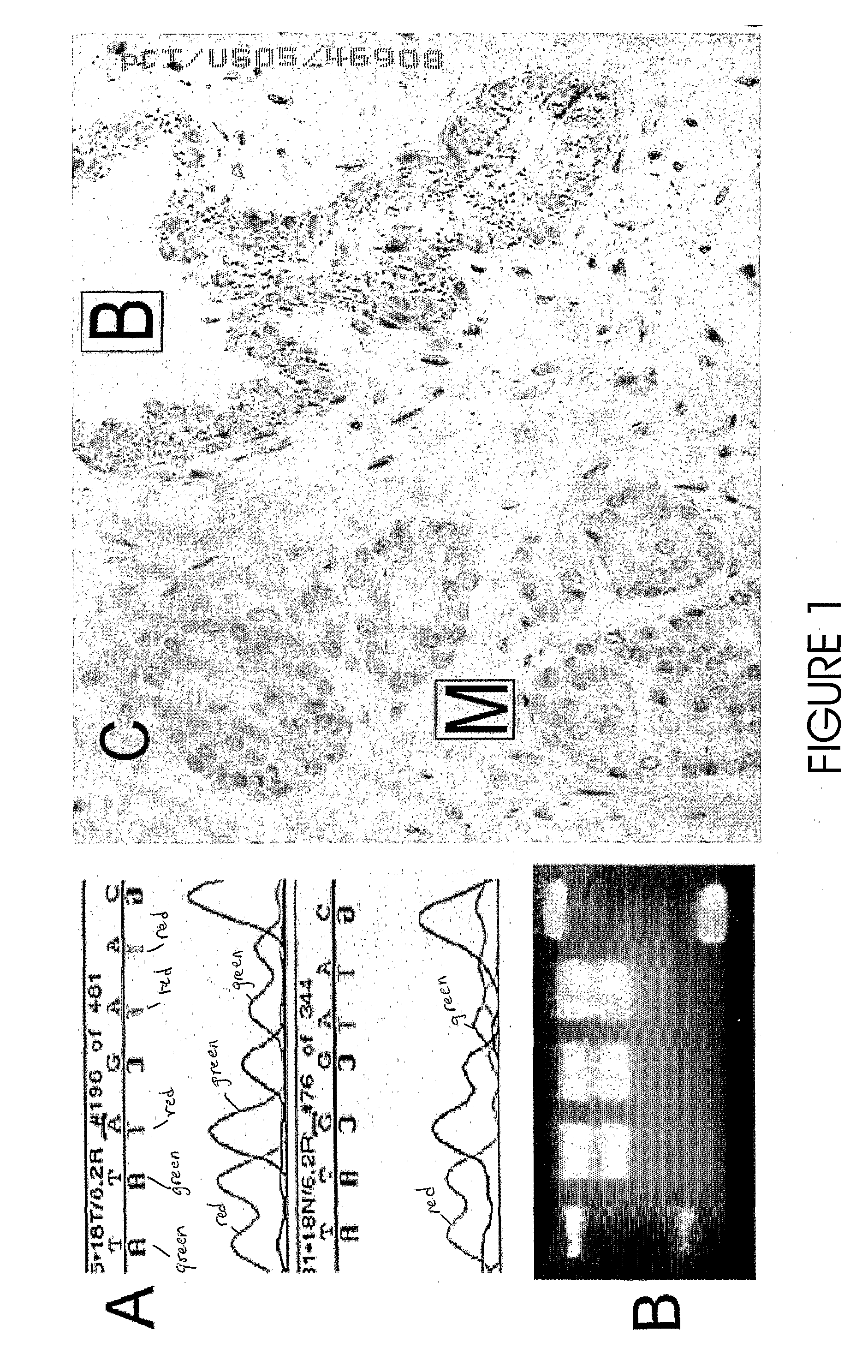
Figure 2 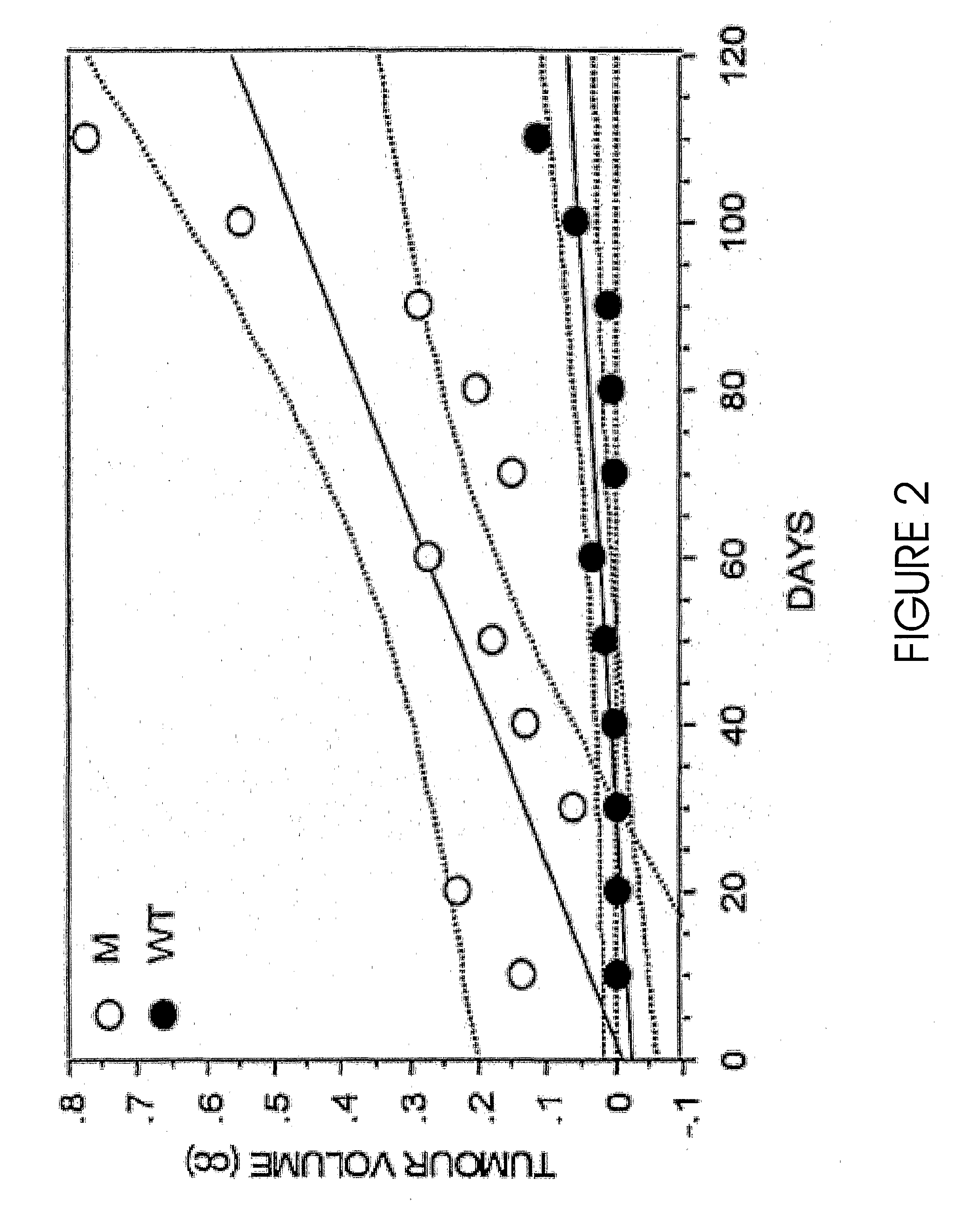
Figure 3
Abstract
Description
CROSS-REFERENCE TO RELATED APPLICATIONS
[0001] This application claims priority to U.S. Provisional Application Ser. No. 60 / 666,752 filed Mar. 30, 2005 and Ser. No. 60 / 642,743 filed Jan. 10, 2005, both of which are incorporated herein or by reference to the extent not inconsistent herewith.STATEMENT REGARDING FEDERALLY SPONSORED RESEARCH OR DEVELOPMENT
[0002] This invention was made with government support under NIH grant CA96994, CA98912, NS21328 and AG13154, and Department of Defense grants DAMNS17-00-1-0080. The government has certain rights in the invention.BACKGROUND OF THE INVENTION
[0003] In 2005, 232,090 new prostate cancer and 36,160 new renal cancer cases were predicted with deaths of 30,350 men from prostate cancer, and 12,660 deaths from renal cancer1. While other cancers (e.g. leukemia, lymphoma, testicular carcinoma) are characterized primarily by excessive cellular proliferation, both prostate and renal cancers are characterized primarily by resistance to apoptosis2,3. The ...
Examples
examples
Materials and Methods
Patient Materials:
[0056]All patient studies were implemented under Emory University IRB approved protocols. Histologically confirmed prostate cancer samples were selected from our collection of radical prostatectomies, institutional tissue resources, and microdissected samples prepare between 1995 and 2002. The “no-cancer” control group was assembled from subjects that had undergone prostate biopsy and been found to be free of prostate cancer. These individuals were all at least 50 years old and had a PSA <4 ng / ml.
[0057]Sequencing the mtDNA COI Gene:
[0058]In order to determine which (if any) area of the mitochondrial genome was mutated in prostate cancer we began our investigations by sequencing the entire genome in multiple prostate cancer cases. It rapidly became apparent that the gene most frequently affected with missense mutations was cytochrome c oxidase subunit 1 (COI). For this reason the majority of our subsequent sequencing effort has concentrated on t...