
Optimized methodology for dispositioning missed scheduled tasks
a scheduling and optimization technology, applied in the field of computer systems, can solve the problems of unnecessarily executing tasks, tasks may not run at the desired time, inefficient and imprecise, etc., and achieve the effect of facilitating the disposition and execution of missed scheduled tasks
Patent Information
- Authority / Receiving Office
- US · United States
- Patent Type
- Applications(United States)
- Current Assignee / Owner
- Publication Date
- 2009-07-23
- Estimated Expiration
- Not applicable · inactive patent
Smart Images
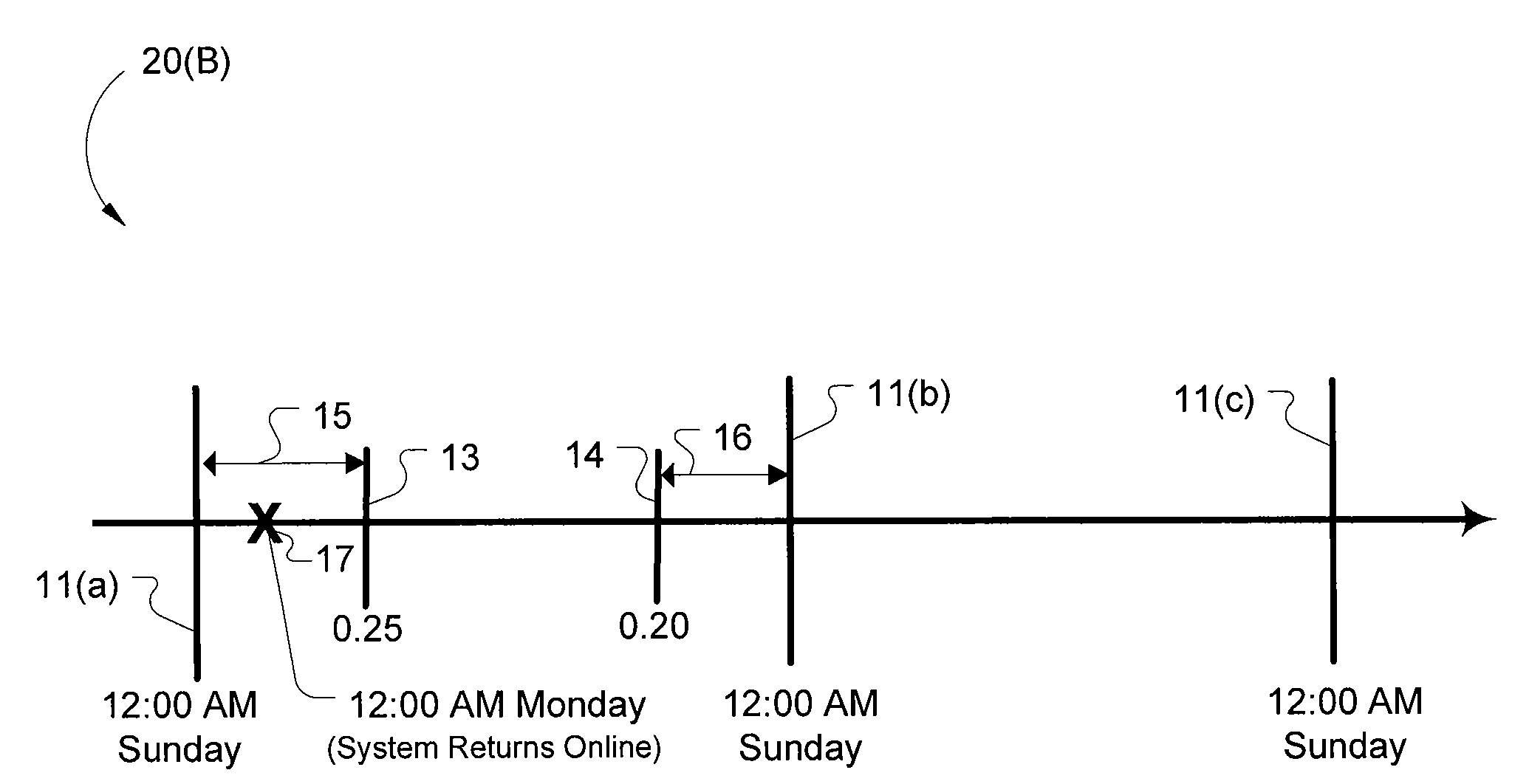
Figure 1 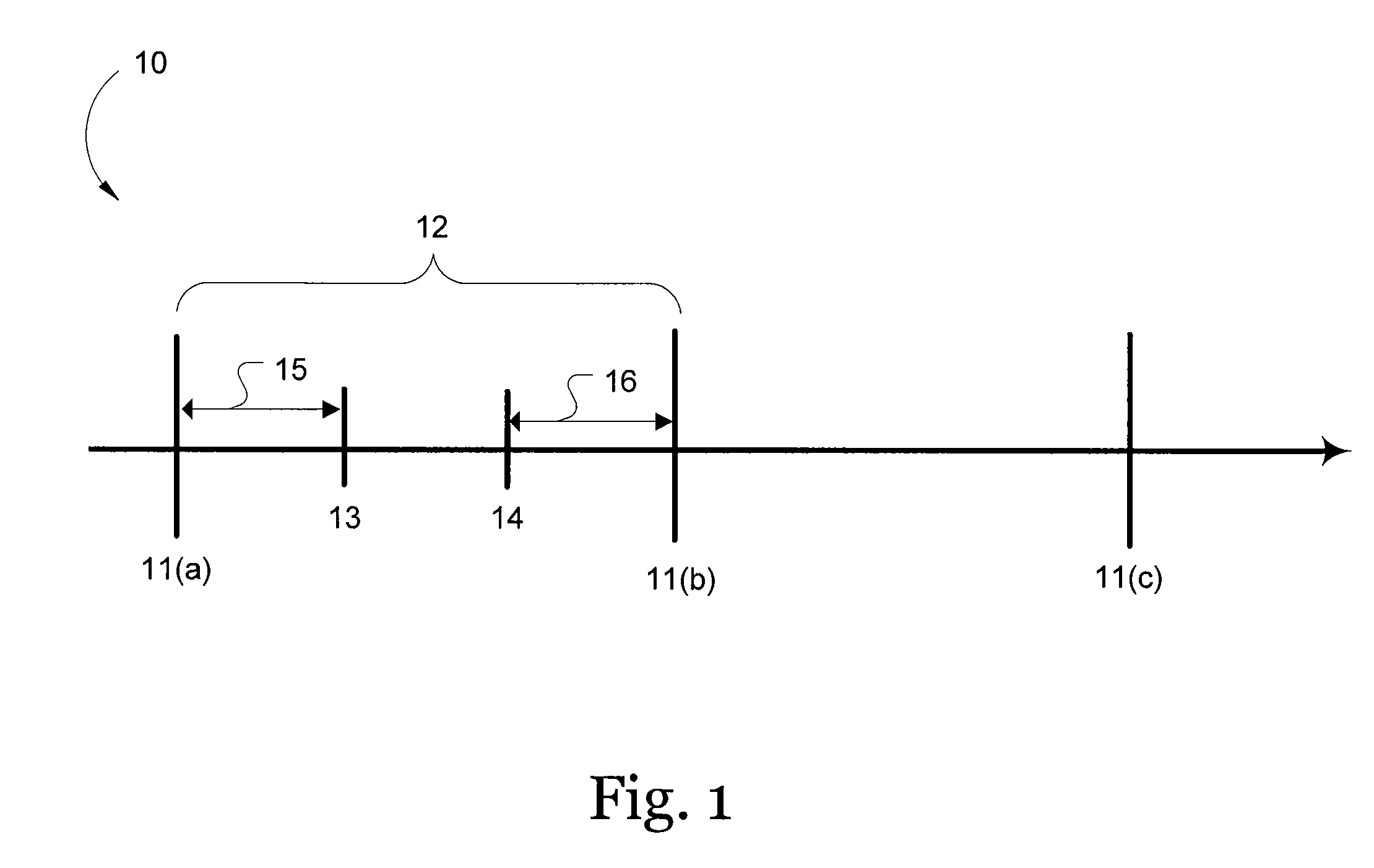
Figure 2 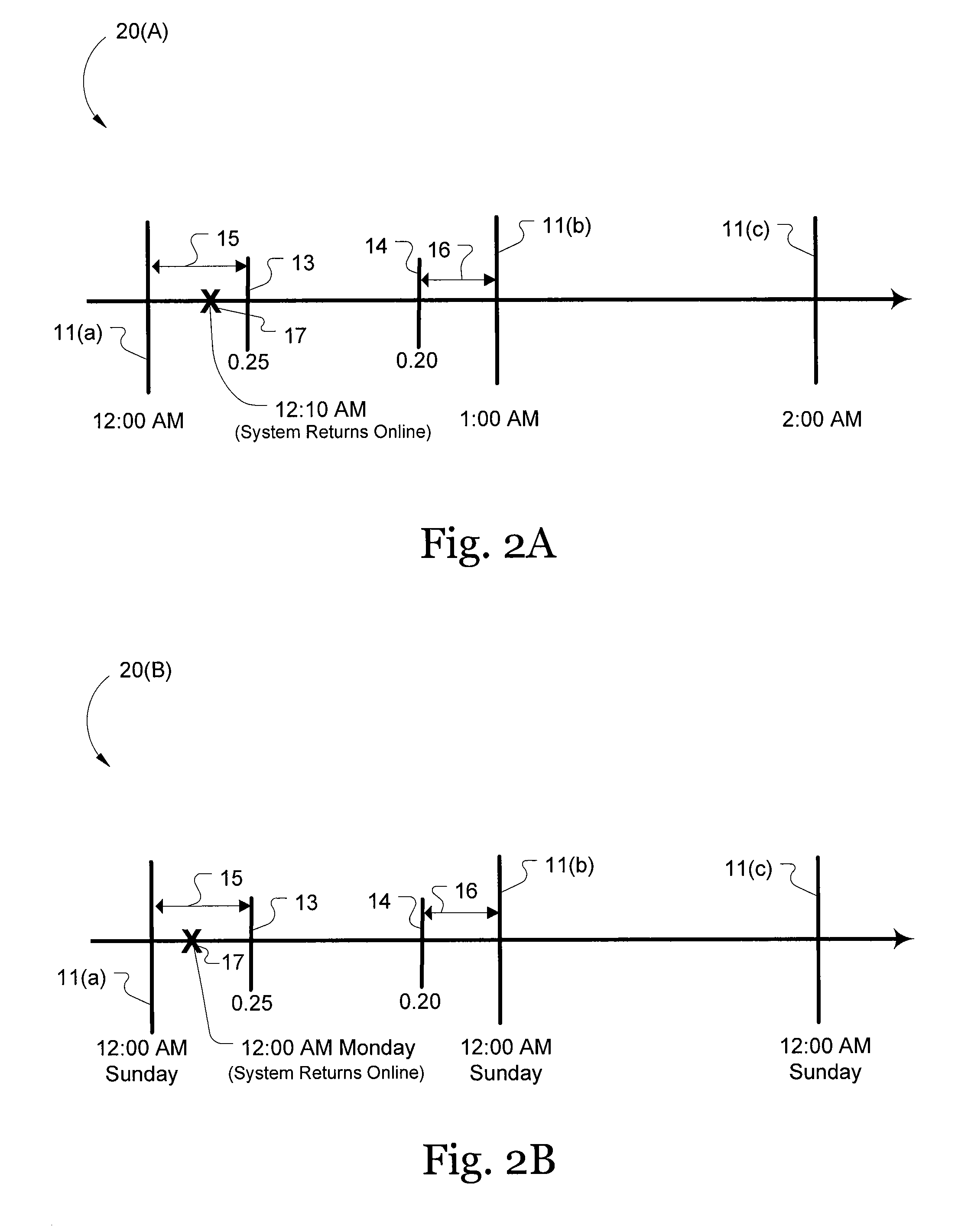
Figure 3
Abstract
Description
FIELD OF THE INVENTION
[0001] The present invention generally relates to computer systems employing task-based scheduling of various operations. The present invention specifically relates to a method and system operating on a computer system which optimizes the disposition and execution of tasks that failed to execute at an originally scheduled time.BACKGROUND OF THE INVENTION
[0002] Computer systems employing scheduled tasks ideally operate by having each task being executed at its regularly scheduled time, often at predefined intervals. Scheduled tasks may not run at the desired time, however, due to various technical problems with the system such as the failure of an application or a server. Once the system is operational again, however, the application that monitors and executes the scheduled tasks must decide whether to either discard or execute the tasks that failed to run at their scheduled times. The execution of tasks in a timely manner may be critical to the intended operation...
Examples
example 1
[0032]As depicted in FIG. 2A, Backups 20(A) are scheduled to run hourly on the hour (11(a)-(c)). The user sets the Lateness Ratio Limit 13 to 0.25. Thus, if a problem that prevented a scheduled backup from running at the scheduled time is resolved within the Lateness Period 15, that is, the calculated Lateness Ratio is 0.25 or less, the backup will be run. The user sets the Closeness Ratio Limit 14 to 0.20. If a problem that prevented a scheduled backup from running at the scheduled time is resolved within the Closeness Period 16, that is, the calculated Closeness Ratio is 0.20 or less, then the task will be run in place of the next scheduled task execution 11(b).
[0033]The system is down for 15 minutes, from 11:55 PM until 12:10 AM, so the 12:00 AM backup does not occur at its regularly scheduled time. In this scenario, the calculated Lateness Ratio is: (12:10 AM-12:00 AM) / (60 minutes)=10 / 60=0.17. Once the system returns to operation at 12:10 AM, denoted as Point X 17, because the c...
example 2
[0036]This example demonstrates how the Lateness Ratio used in the previous example of hourly backups may also be applicable in other scenarios where backups are scheduled at much longer intervals.
[0037]As depicted in FIG. 2B, Backups 20(B) are scheduled to run weekly at 12:00 AM on Sundays (11(a)-(c)). The user sets the Lateness Ratio Limit 13 to 0.25. Missed backups with a calculated Lateness Ratio of 0.25 or less will be run. The user sets the Closeness Ratio Limit 14 to 0.20. Missed backup 11(a) with a calculated Closeness Ratio of 0.20 or less will be run in place of the next scheduled task execution 11(b).
[0038]The system is down for just over 24 hours, from 11:55 PM Saturday until 12:00 AM Monday, so the 12:00 AM Sunday backup does not occur at its regularly scheduled time. In this scenario, the calculated Lateness Ratio is: (12:00 AM Monday-12:00 AM Sunday) / (7×24 hours)=24 / 168=0.14. Once the system returns to operation at 12:00 AM Monday, denoted as Point X 17, because the c...
example 3
[0040]As depicted in FIG. 2C, Backups 20(C) are scheduled to run hourly on the hour. The user sets the Lateness Ratio Limit 13 to 0.25. Missed backups attempted to be executed in the Lateness Period 15 with a calculated Lateness Ratio of 0.25 or less will be run. The user sets the Closeness Ratio Limit 14 to 0.20. Missed backups attempted to be executed in the Closeness Period 16 with a calculated Closeness Ratio of 0.20 or less will be run in place of the next scheduled task execution 11(b).
[0041]The system is down for one hour, from 11:55 PM until 12:55 AM, so the 12:00 AM backup 11(a) did not occur on time. In this example, the calculated Lateness Ratio is (12:55 AM-12:00 AM) / (60 minutes)=0.92. This result is larger than the Lateness Ratio Limit 13, so at this point it has not been established that the missed backup needs to be run.
[0042]The Closeness Ratio calculated for this scenario is (1:00 AM-12:55 AM) / 60 minutes)=0.08. Since this is less than the Closeness Ratio Limit 14 of...