
Data leakage prevention for resource limited device
a technology for computing devices and leakage prevention, applied in database distribution/replication, television systems, instruments, etc., can solve problems such as harm to the organization, risk of intentional or inadvertent transmission of sensitive information from inside the organization to the outside, and failure of a regular information technology audit. achieve the effect of effective and efficien
Patent Information
- Authority / Receiving Office
- US · United States
- Patent Type
- Patents(United States)
- Current Assignee / Owner
- Publication Date
- 2012-10-09
Smart Images
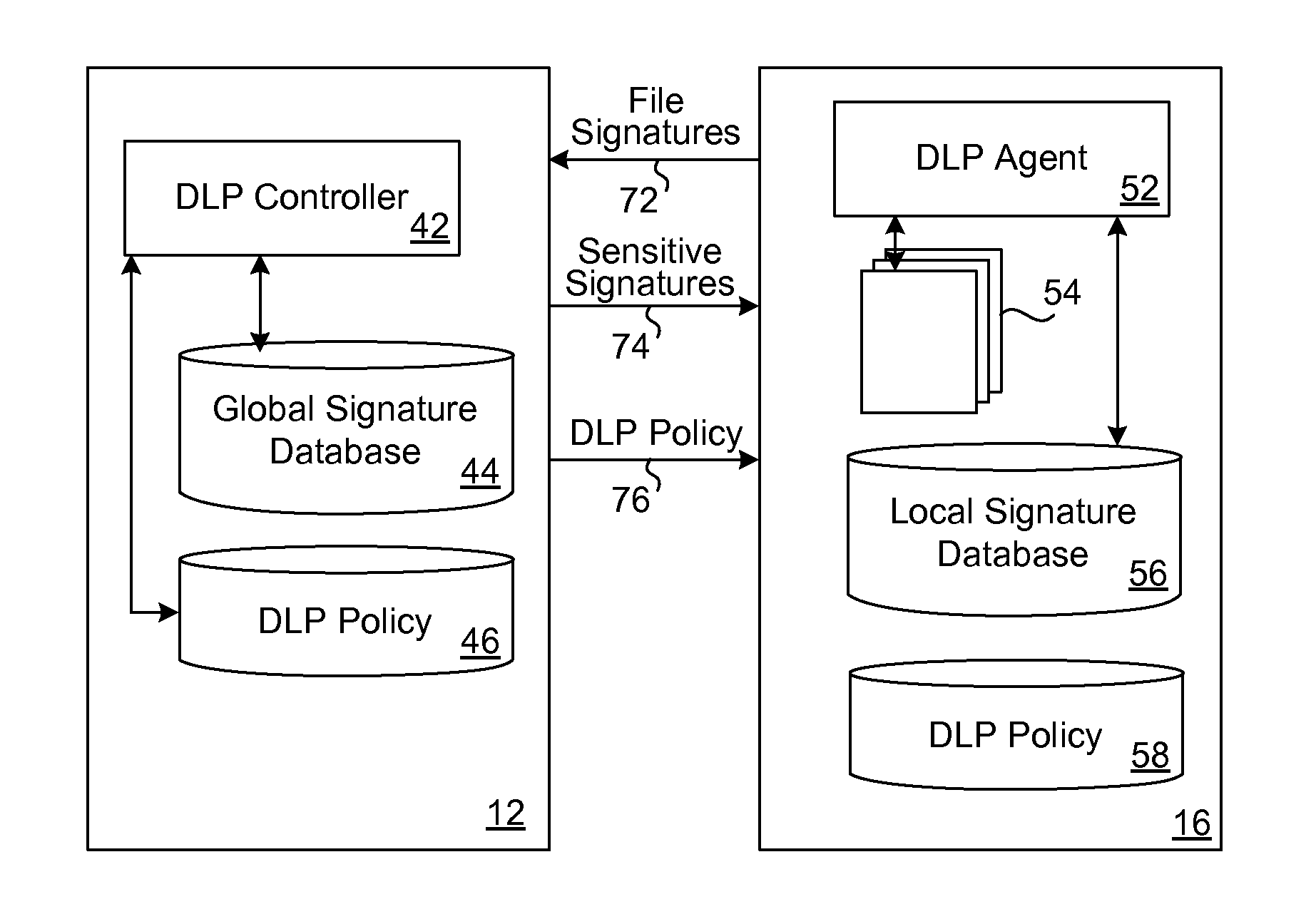
Figure 1 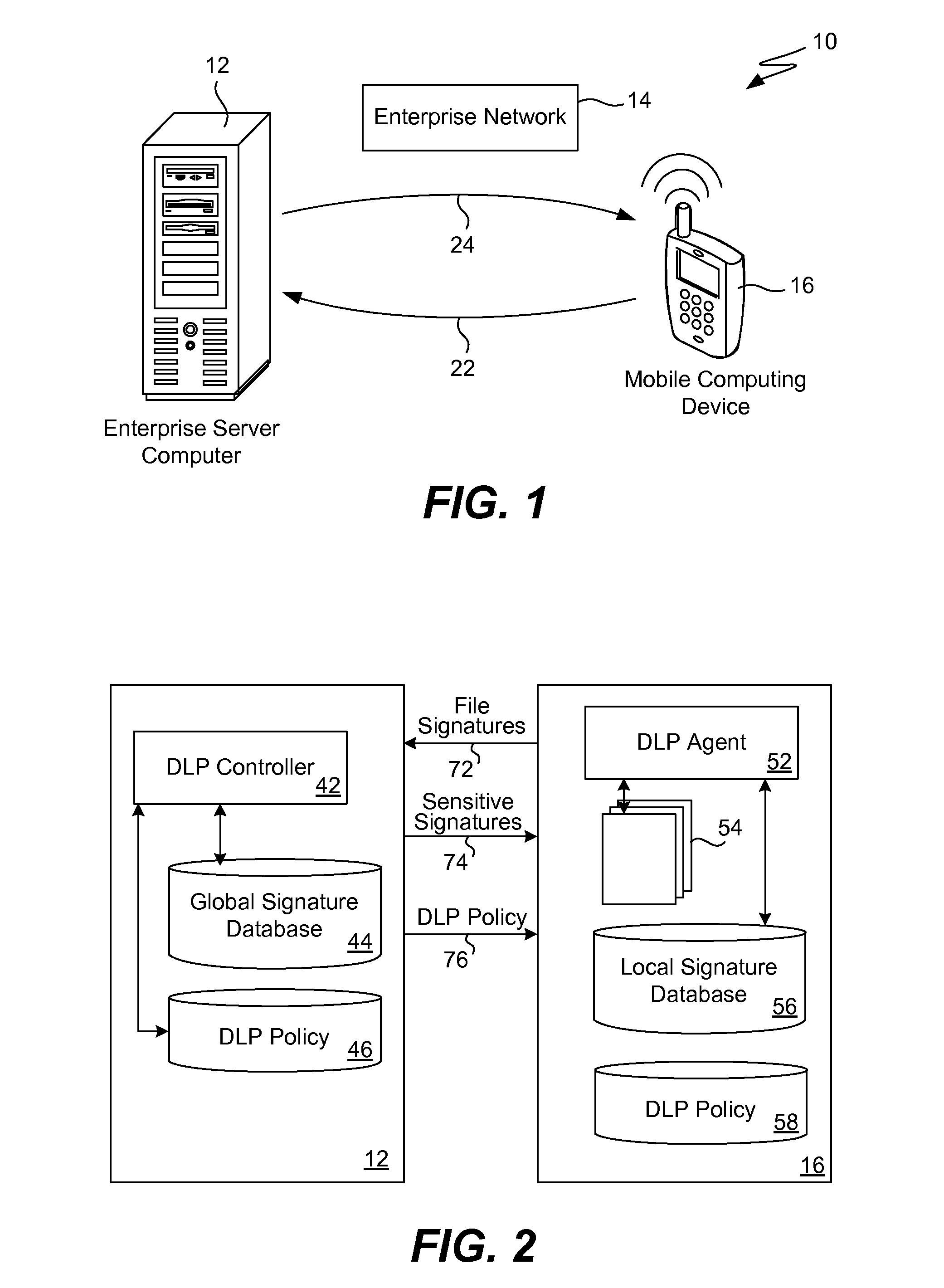
Figure 2 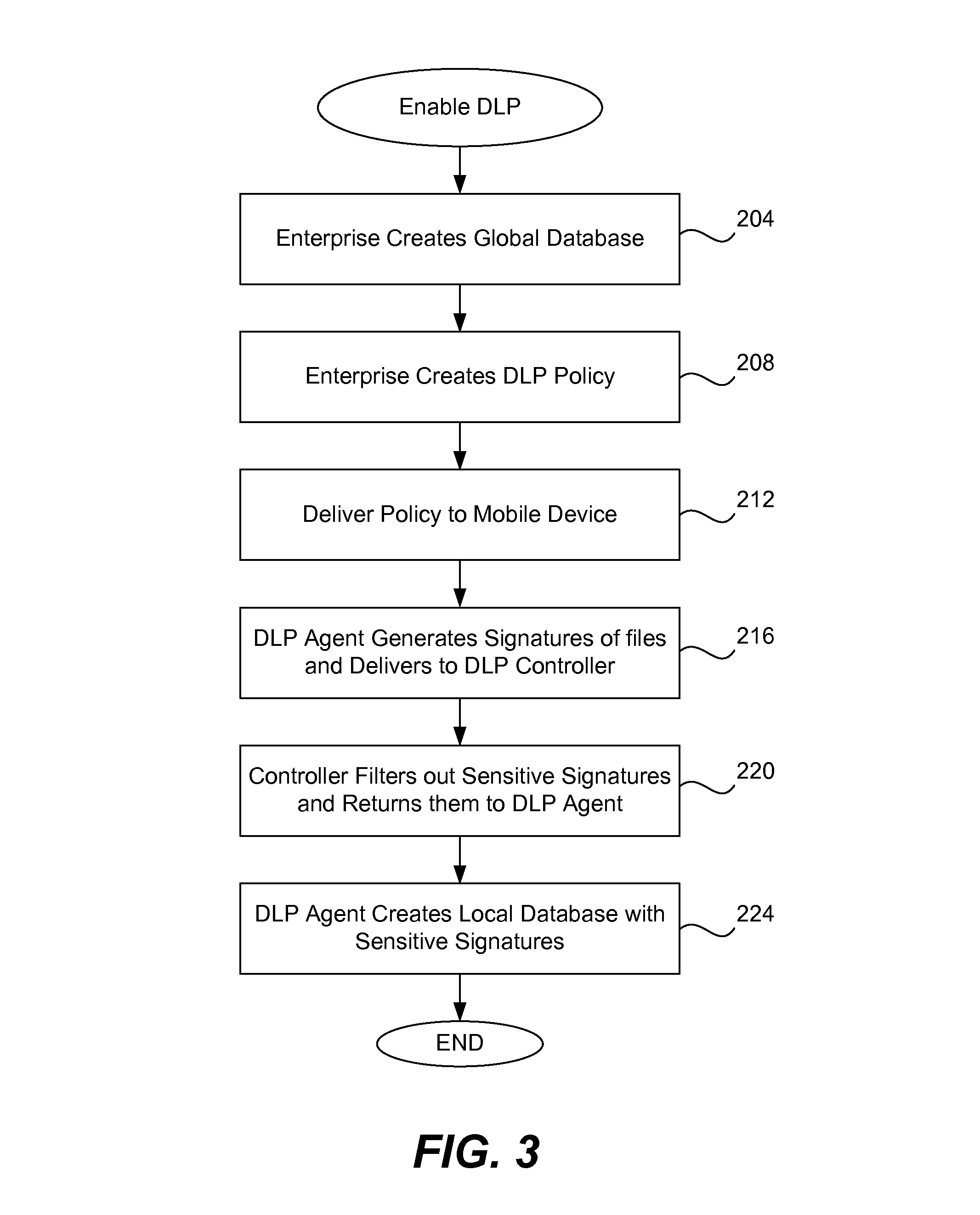
Figure 3
Abstract
Description
FIELD OF THE INVENTION
[0001] The present invention relates generally to data leakage prevention for computing devices. More specifically, the present invention relates to leakage prevention for resource-limited devices using a local signature.BACKGROUND OF THE INVENTION
[0002] Information within organizations and entities is often classified as sensitive either for business reasons or for legal reasons. This information may reside within text files, databases, images, pictures, messages, etc. In addition to the potential threat of an unscrupulous party illegally accessing the organization from the outside via an electronic network, and then removing or disrupting the information, there exists the risk of intentional or inadvertent transmission of the sensitive information from inside the organization to the outside. For example, a disgruntled employee might send a sensitive data file to which he or she has access to an outside party via e-mail, thus causing harm to the organization.[00...
Examples
Embodiment Construction
[0021]As mentioned above, the traditional data leakage prevention (DLP) approach works fine with desktop or laptop computers which have large memories and powerful processing capabilities. Unfortunately, it is difficult for mobile devices to carry out the computation intensive tasks required of DLP products due to their inherent limited memory and limited processing power. Using the traditional DLP approach with mobile devices would not be appropriate.
[0022]It is realized that, compared with a desktop computer, the number of files stored in a resource-limited device (e.g., a mobile telephone) is very small. Keeping this in mind, it will be useful to decrease the DLP signature database in a mobile device. The present invention thus utilizes a DLP software agent in the mobile device and a DLP software controller located at a fixed device, such as a desktop computer or computer server.
[0023]The role of the DLP agent is to perform the following functions: automatically generate digital ...