
High-efficient encryption and decryption processing method for implementing sms4 algorithm
Patent Information
- Authority / Receiving Office
- US · United States
- Current Assignee / Owner
- Publication Date
- 2009-12-31
Smart Images
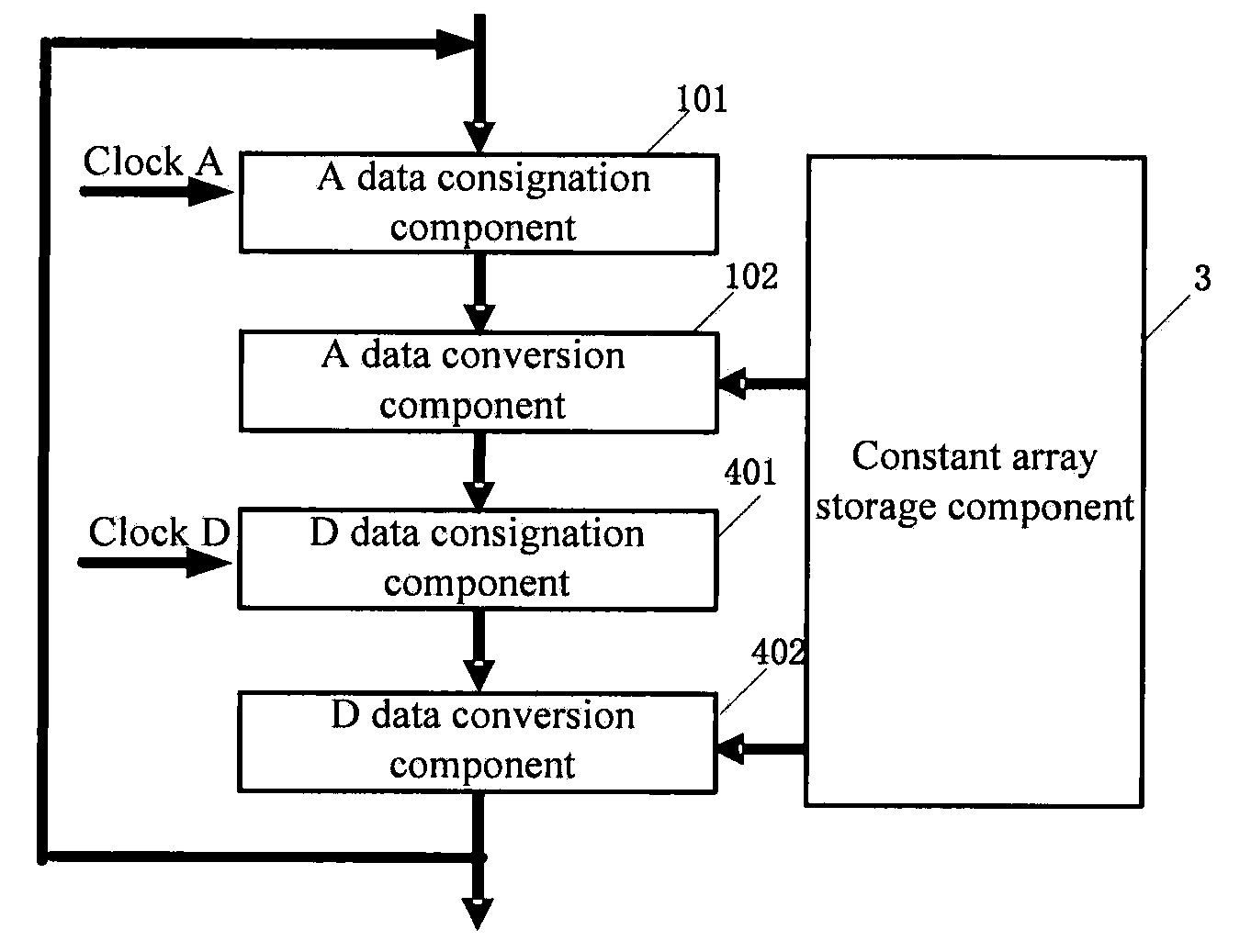
Figure 1 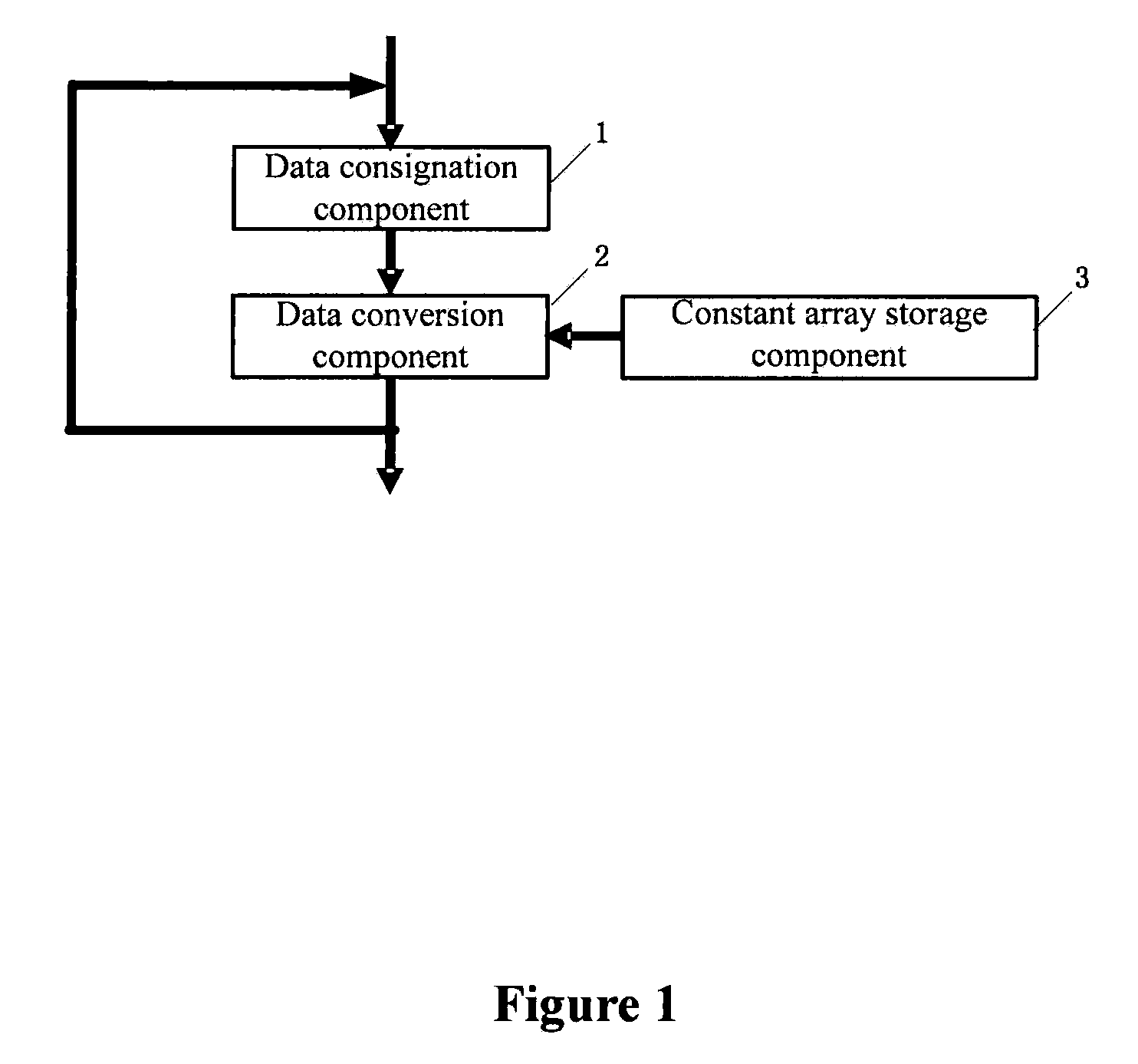
Figure 2 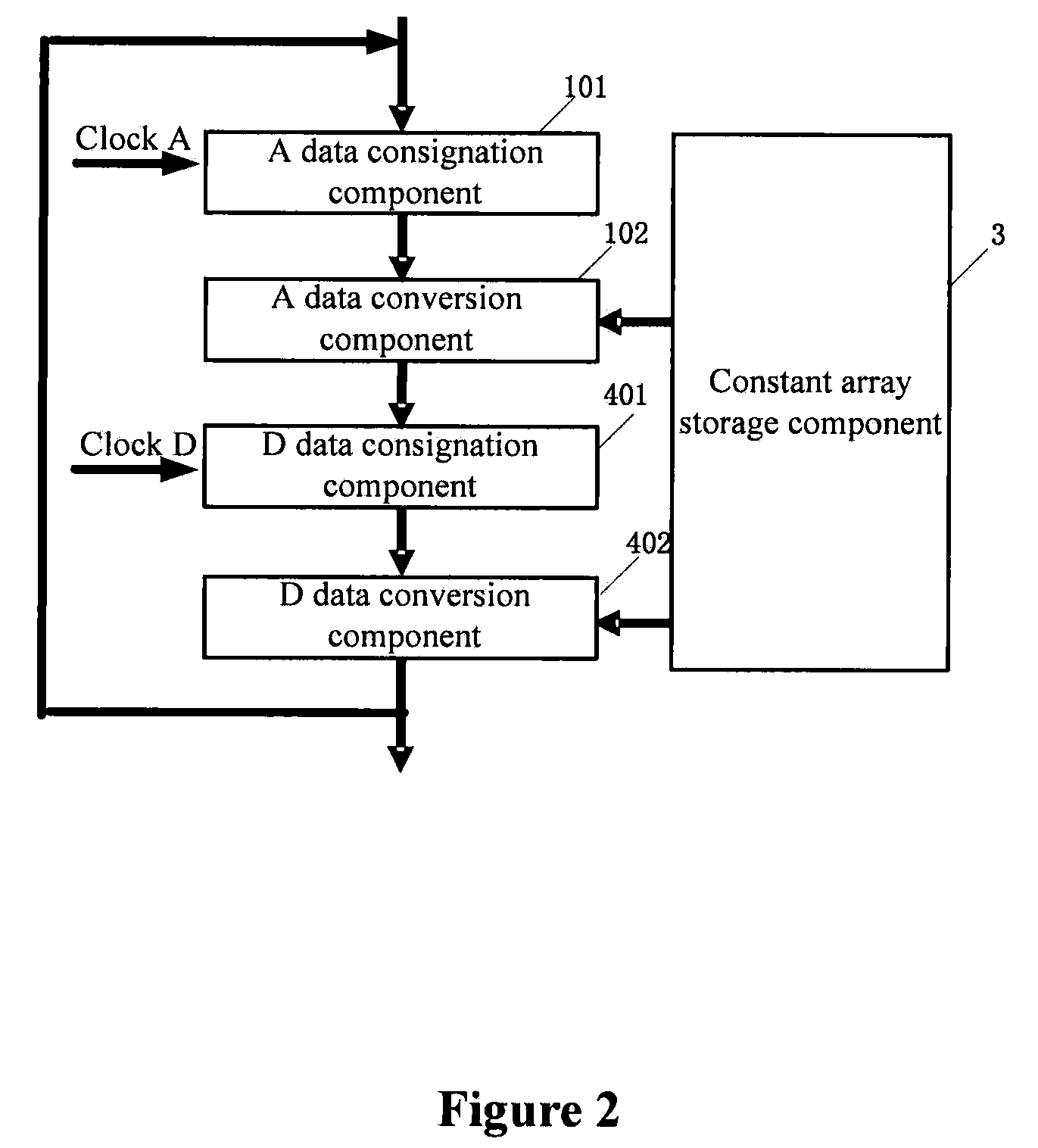
Figure 3
Abstract
Description
[0001] The present invention claims priority to Chinese patent application No. 200610104431.8, entitled “ENCRYPTION AND DECRYPTION PROCESSING METHOD FOR IMPLEMENTING SMS4 ALGORITHM IN A HIGH-EFFICIENCY”, filed with the Chinese Patent Office on Jul. 31, 2006, which is hereby incorporated by reference in its entirety.FIELD OF THE INVENTION
[0002] The present invention relates to the field of information technology, particularly to an encryption and decryption processing method for implementing SMS4 algorithm in high-efficiency.BACKGROUND OF THE INVENTION
[0003] Key components for implementing SMS4 cryptographic algorithm include a key extension section and an encryption and decryption section. The key extension section and the encryption and decryption section have substantially the same internal structure and processing procedure. The encryption and decryption component mainly includes three parts: a data consignation component, a constant array storage component, and a data conversion co...
Examples
first embodiment
[0099]Referring to FIG. 2 and FIG. 3, the first embodiment includes the steps as follows.
[0100]1) Prepare a Constant Array
[0101](1) Constant array data obtained from key extension processing is arranged according to the order of address and stored in the constant array storage component 3.
[0102](2) A corresponding width and depth is configured according to the number of data conversion processing components in the data conversion processing, with the width multiplied by the depth being 1024. Two data conversion processing components are adopted, and in this case the width of the constant array is 64 bits and the depth is 16.
[0103](3) Data with the same width in the constant array forms a row. The 1024-bit constant array data with the depth of 16 is divided into 16 rows, which are named rk0, rk1, . . . rk15 respectively.
[0104]In the process of encryption, the first row of the constant array stored in the constant array storage component 3 refers to the first address of the constant a...
second embodiment
[0120]Referring to FIGS. 4 and 5, a second embodiment includes the steps as follows.
[0121]1) Prepare a Constant Array
[0122](1) Constant array data obtained from key extension processing is arranged according to the order of address and stored in the constant array storage component 3.
[0123](2) A corresponding width and depth is configured according to the number of data conversion processing components in the data conversion processing, with the width multiplied by the depth being 1024. Four data conversion processing components are adopted, and in this case the width of the constant array is 128 bits and the depth is 16.
[0124](3) Data with the same width in the constant array forms a row. The 1024-bit constant array data with the depth of 8 is divided into 8 rows, which are named rk0, rk1, . . . rk7 respectively; each 128-bit row of the constant array is divided into four 32-bit data blocks, i.e., rk0 is divided into rk0a, rk0b, rk0c, rk0d; rk1 is divided into rk1a, rk1b, rk1c, rk1...