
System Decomposition Via Evolutionary Programming
Patent Information
- Authority / Receiving Office
- US · United States
- Current Assignee / Owner
- Publication Date
- 2010-11-11
- Estimated Expiration
- Not applicable · inactive patent
Smart Images
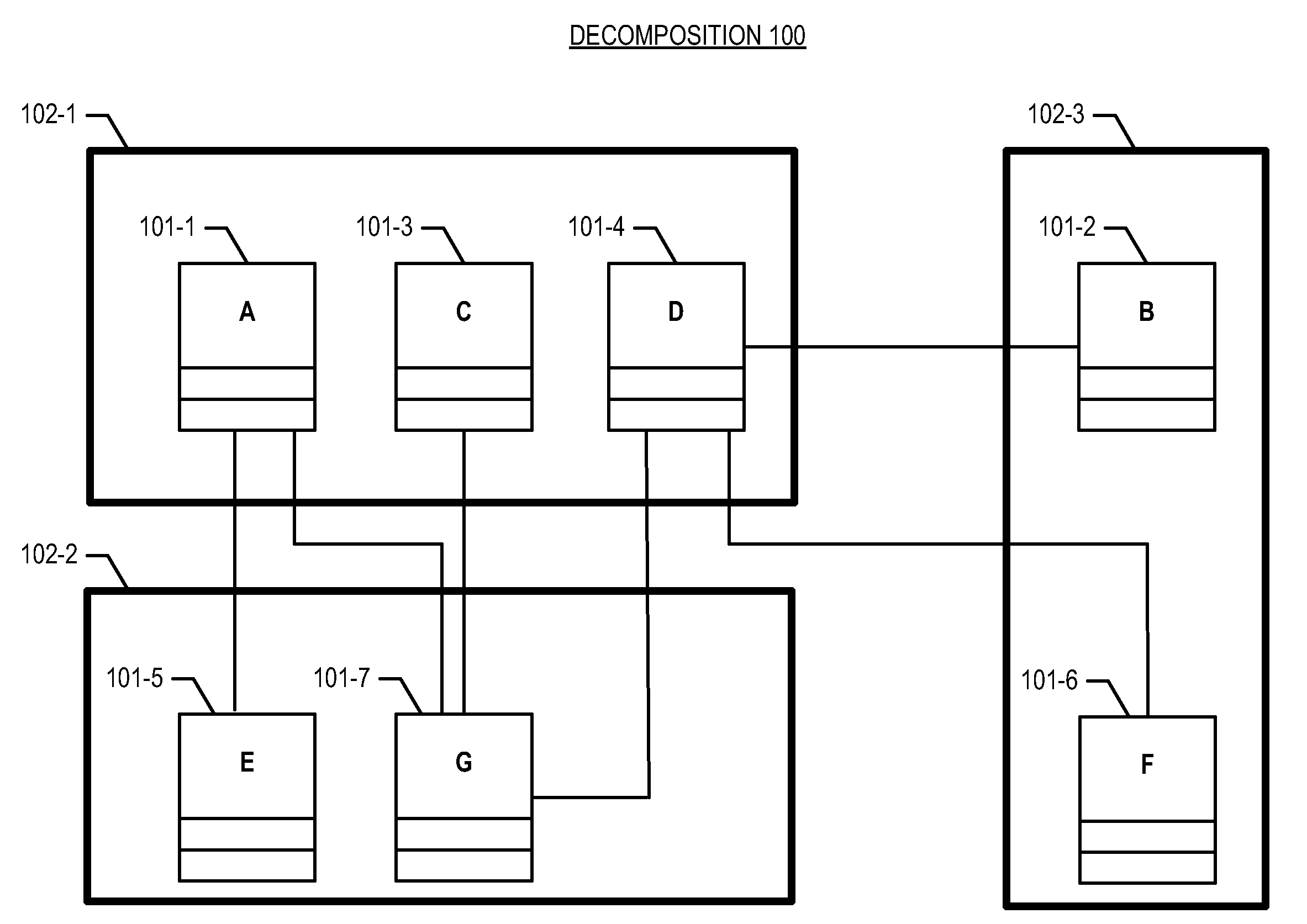
Figure 1 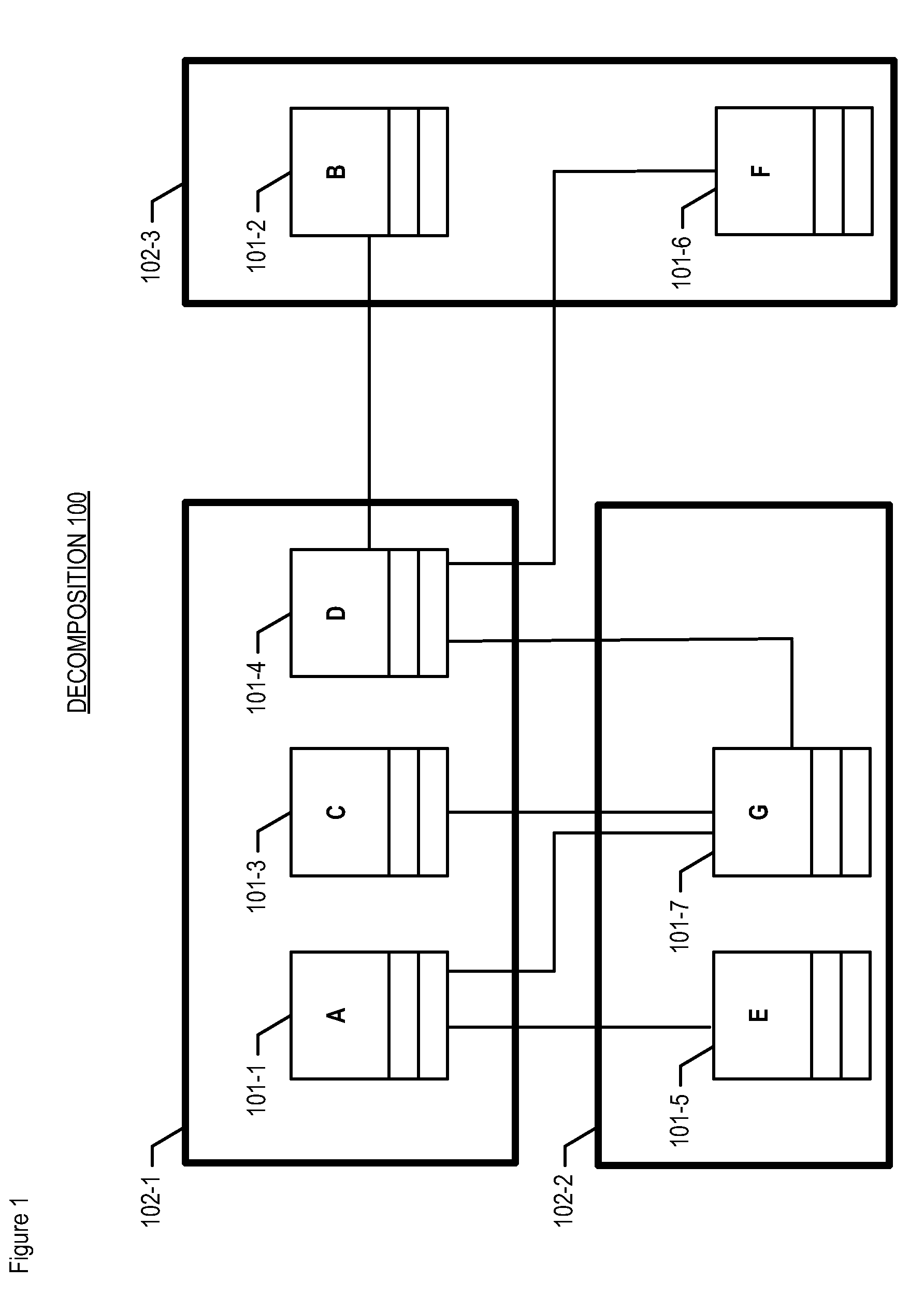
Figure 2 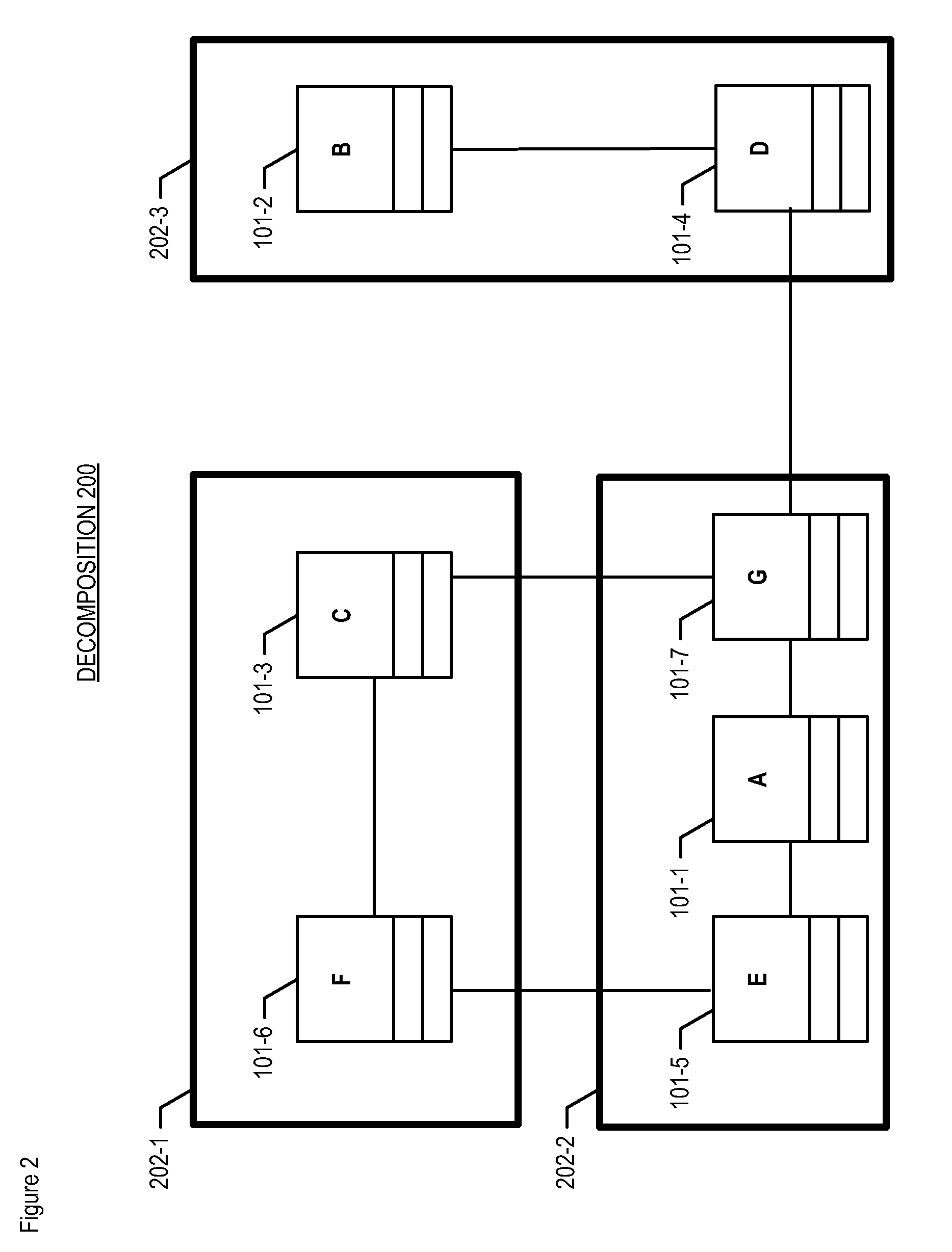
Figure 3
Abstract
Description
FIELD OF THE INVENTION
[0001] The present invention relates to optimization in general, and, more particularly, to optimal system-subsystem decomposition.BACKGROUND OF THE INVENTION
[0002] In some instances it is useful to decompose the elements of a system into a plurality of subsystems. Such decomposition can facilitate understanding of the system, implementation of the system (particularly when performed by a team of individuals), and visual presentation via a computer monitor or printed paper.
[0003] FIG. 1 depicts first illustrative decomposition 100 of a system, in accordance with the prior art. As shown in FIG. 1, the system comprises six elements 101-1 through 101-6, interconnected as shown, and decomposition 100 comprises three subsystems: subsystem 102-1, comprising elements 101-1, 101-3, and 101-4; subsystem 102-2, comprising elements 101-5 and 101-7; and subsystem 102-3, comprising elements 101-2 and 101-6.
[0004] FIG. 2 depicts second illustrative decomposition 200 of the same ...
Examples
Embodiment Construction
[0019]FIG. 3 depicts the salient elements of data-processing system 300, in accordance with the illustrative embodiment of the present invention. As shown in FIG. 3, data-processing system 300 comprises memory 301 and processor 302, interconnected as shown.
[0020]Memory 301 is capable of storing data and executable instructions, as is well-known in the art, and might be any combination of random-access memory (RAM), flash memory, disk drive memory, etc. It will be clear to those skilled in the art, after reading this specification, how to make and use memory 301.
[0021]Processor 302 is a general-purpose processor that is capable of executing instructions stored in memory 301, of reading data from and writing data into memory 301, and of executing the tasks of the methods described below and with respect to FIGS. 4 and 6. As will be appreciated by those skilled in the art, in some alternative embodiments of the present invention, processor 302 might instead be a special-purpose process...