
Mismatched delay based interference cancellation device and method
a delay-based interference and delay technology, applied in the direction of transmission, electrical equipment, etc., can solve the problems of high received bit-error rate, degradation of signal error vector magnitude, etc., and achieve the effect of reducing the interference signal
Patent Information
- Authority / Receiving Office
- US · United States
- Current Assignee / Owner
- Publication Date
- 2011-03-17
- Estimated Expiration
- Not applicable · inactive patent
Smart Images
Figure 1 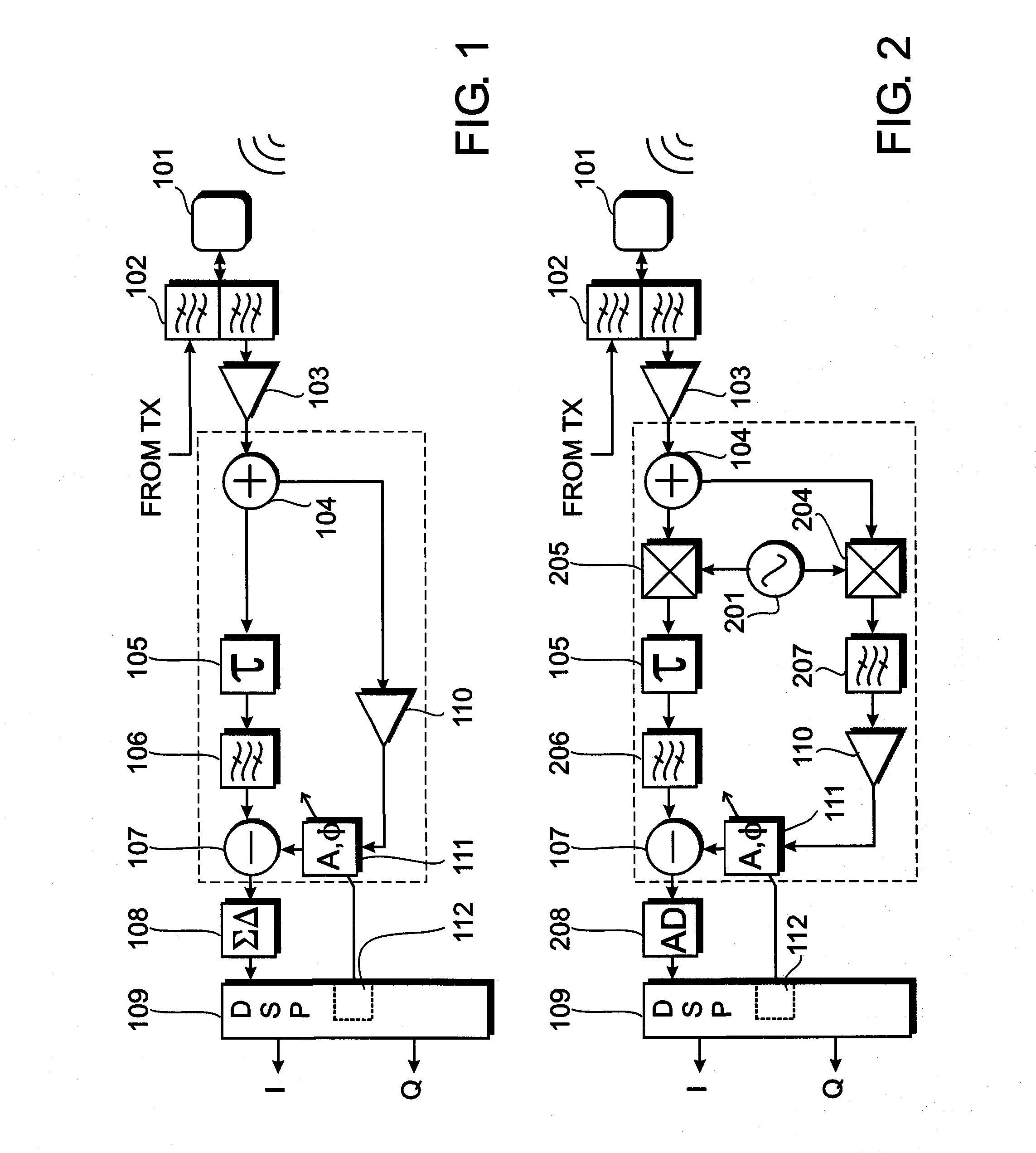
Figure 2 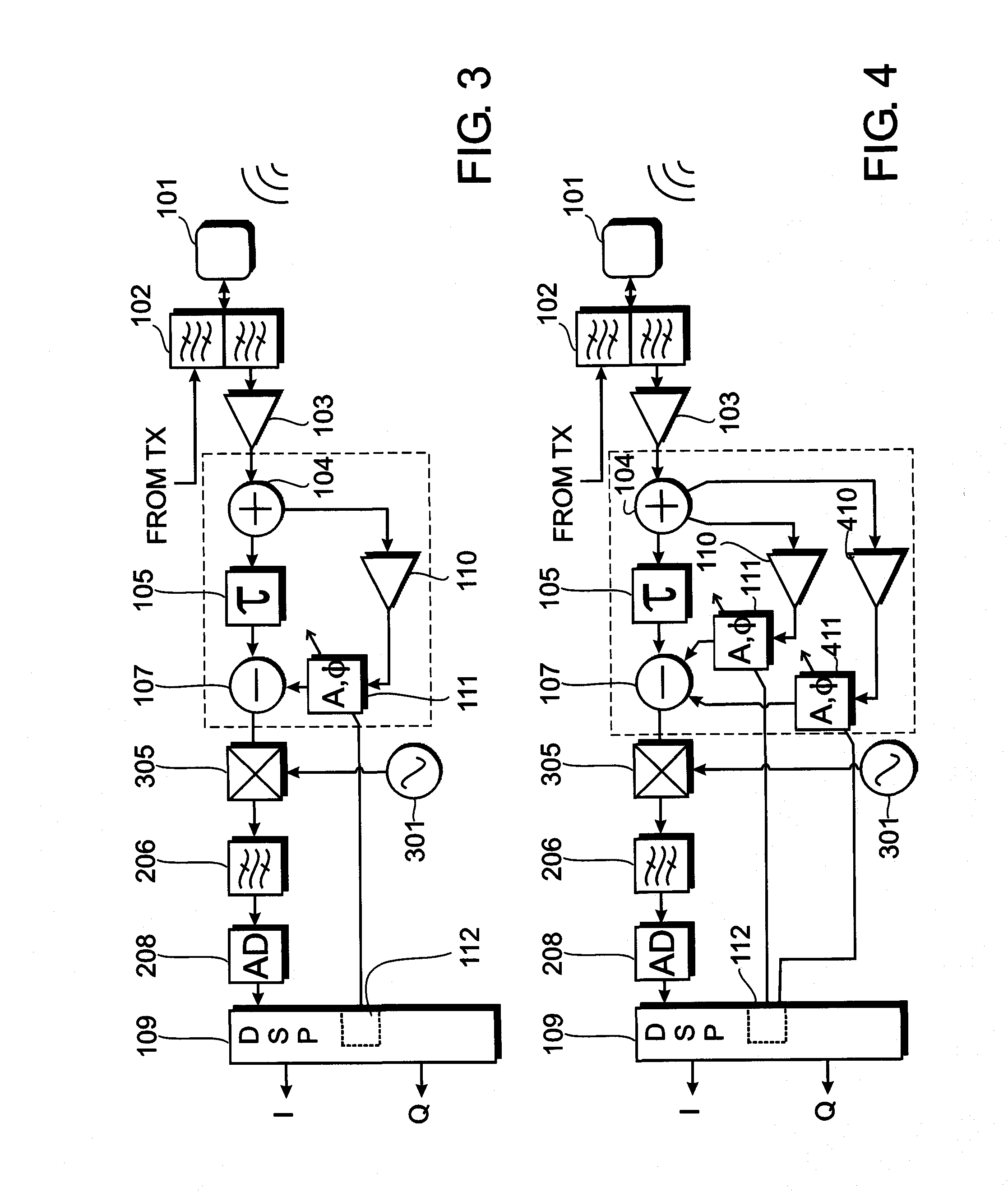
Figure 3
Abstract
Description
CROSS REFERENCE TO OTHER APPLICATIONS
[0001] The present application is related to a patent application entitled “Frequency shifting based interference cancellation device and method” (Attorney Docket No. 4424-P04911US0) filed concurrently herewith. The entire disclosure of the foregoing application is incorporated herein by reference.FIELD OF THE INVENTION
[0002] The field of the present invention relates to an interference signal cancellation device, used for example, in a receiver used in a base transceiver station (BTS) of a mobile communications network. The field of the present invention further relates to a method for interference cancellation on a disturbed signal comprising an interference signal. The field of the present invention also relates to a computer program product enabling a foundry to carry out the manufacture of an interference cancellation device, and to a computer program product enabling a processor to carry out the method for interference cancellation.BACKGROUND...
Examples
Embodiment Construction
[0037]The invention will now be described on the basis of the drawings. It will be understood that the embodiments and aspects of the invention described herein are only examples and do not limit the protective scope of the claims in any way. The invention is defined by the claims and their equivalents. It will be understood that features of one aspect can be combined with a feature of a different aspect or aspects.
[0038]FIG. 1 shows a receiver arrangement or a receive path that may be used in a base-station of a mobile communications network. A signal from a remote transmitter is received at an antenna 101. The antenna 101 is connected to a duplex filter 102 that separates a transmission path from the receive path in the frequency domain. Instead of a duplex filter, other techniques may be used, such as a circulator or time multiplexing. The signal arriving from the transmission path is illustrated as the input to the upper part of the duplex filter 102. The lower part of the duple...