
Electrochemical systems and methods for operating an electrochemical cell with an acidic anolyte
an electrochemical cell and anolyte technology, applied in the field of electrochemical cells comprising cation-conductive membranes, can solve the problems of acidic solution of anolyte, and achieve the effects of less chemical products, less resistance to transport, and less surface area
Patent Information
- Authority / Receiving Office
- US · United States
- Patent Type
- Applications(United States)
- Current Assignee / Owner
- Publication Date
- 2012-04-12
Smart Images
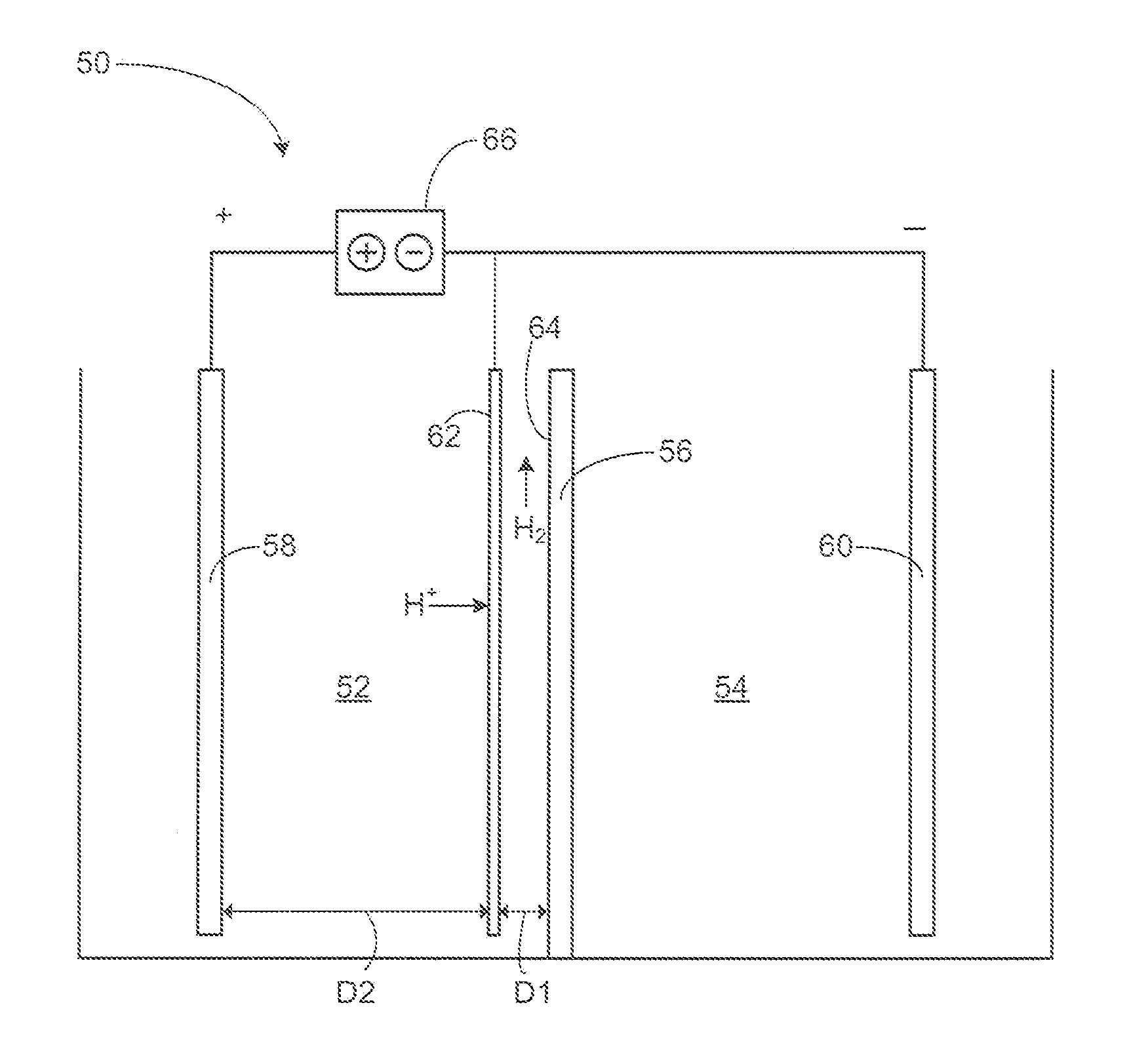
Figure 1 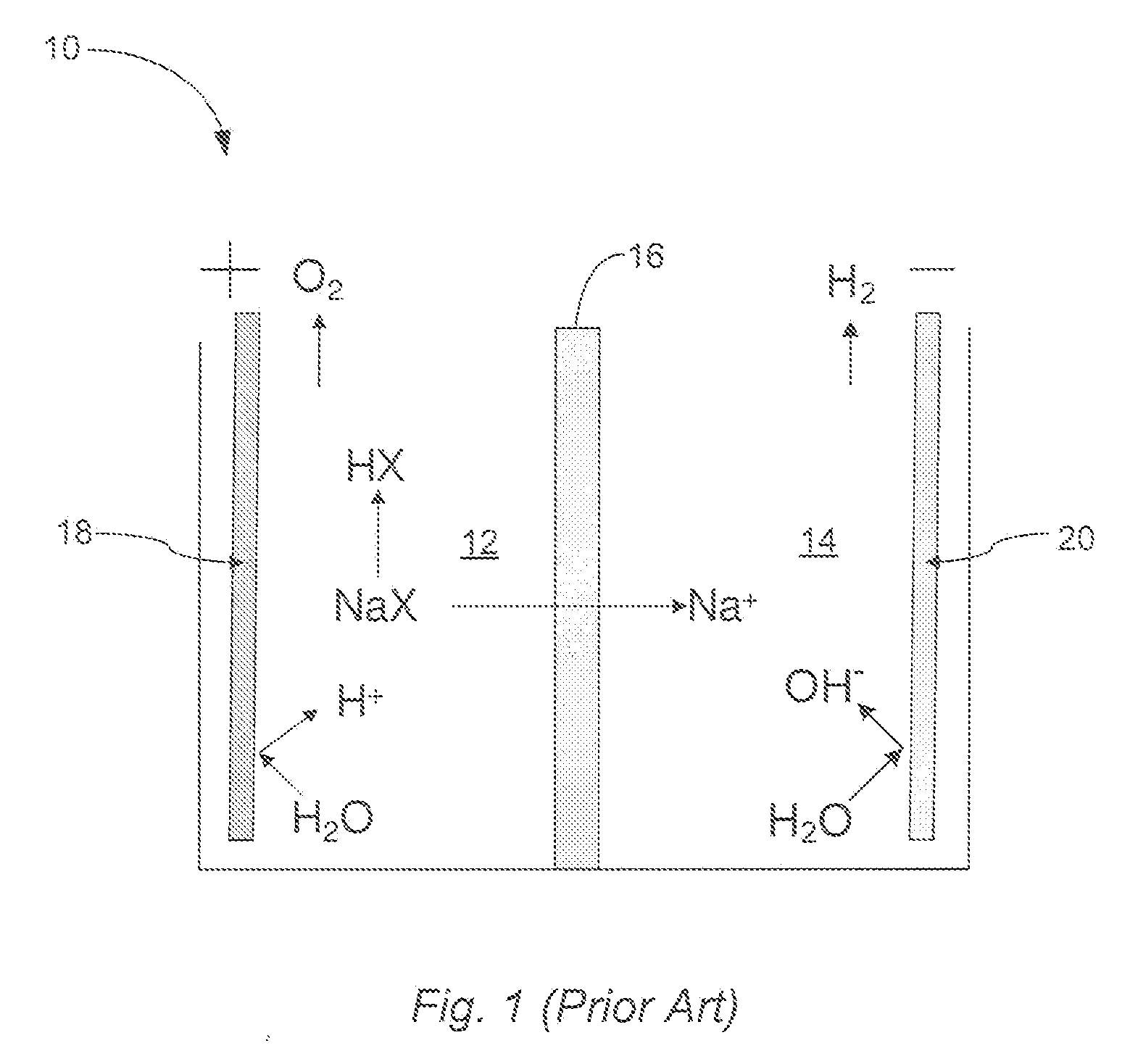
Figure 2 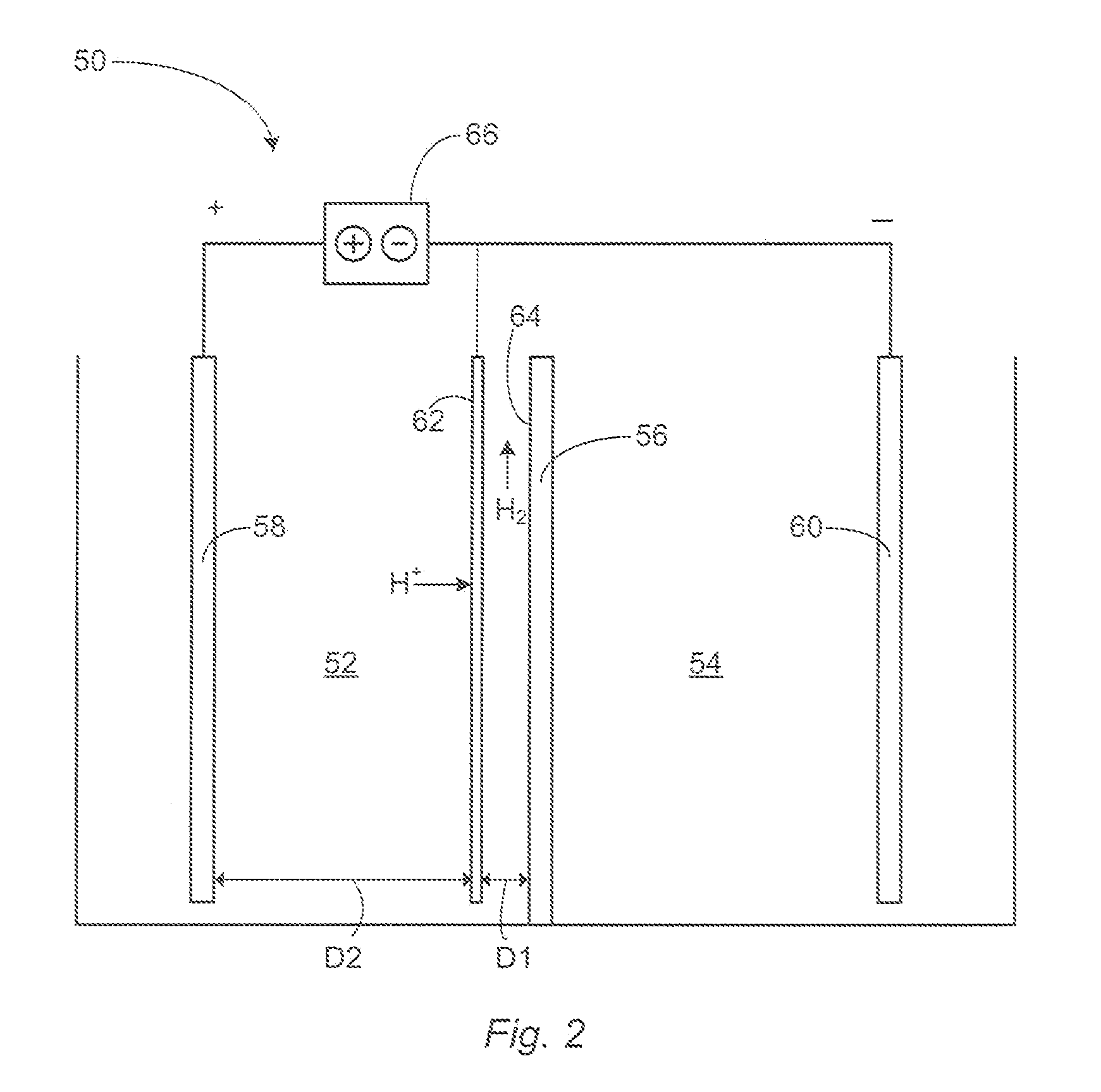
Figure 3
Abstract
Description
CROSS-REFERENCE TO RELATED APPLICATIONS
[0001] This application claims the benefit of U.S. Provisional Application No. 61 / 391,496, filed Oct. 8, 2010, entitled “Electrochemical Systems and Methods For Operating an Electrochemical Cell With an Acidic Anolyte,” the entire disclosure of which is hereby incorporated by reference.FIELD OF THE INVENTION
[0002] The present invention relates in general to electrochemical cells comprising a cation-conductive membrane. More particularly, the present invention discusses systems and methods for operating an electrochemical cell comprising an anode, a primary cathode, a secondary cathode, an acidic anolyte, and an alkali cation-conductive ceramic membrane, such as a NaSICON membrane, which is normally not compatible with acidic conditions. Generally, the secondary cathode acts to protect an anolyte side of the membrane from the acidic anolyte.BACKGROUND OF THE INVENTION
[0003] Electrolytic cells comprising ceramic membranes that selectively transport ...
Examples
Embodiment Construction
[0027]Reference throughout this specification to “one embodiment,”“an embodiment,” or similar language means that a particular feature, structure, or characteristic described in connection with the embodiment is included in at least one embodiment of the present invention. Thus, appearances of the phrases “in one embodiment,”“in an embodiment,” and similar language throughout this specification may, but do not necessarily, all refer to the same embodiment.
[0028]Furthermore, the described features, structures, or characteristics of the invention may be combined in any suitable manner in one or more embodiments. In the following description, numerous specific details are provided, such as examples of suitable cation-conductive membranes, anolytes, catholytes, etc., to provide a thorough understanding of embodiments of the invention. One having ordinary skill in the relevant art will recognize, however, that the invention may be practiced without one or more of the specific details, or...