
Apparatus and method for classifying orientation of a body of a mammal
Patent Information
- Authority / Receiving Office
- US · United States
- Current Assignee / Owner
- Publication Date
- 2014-01-30
Smart Images
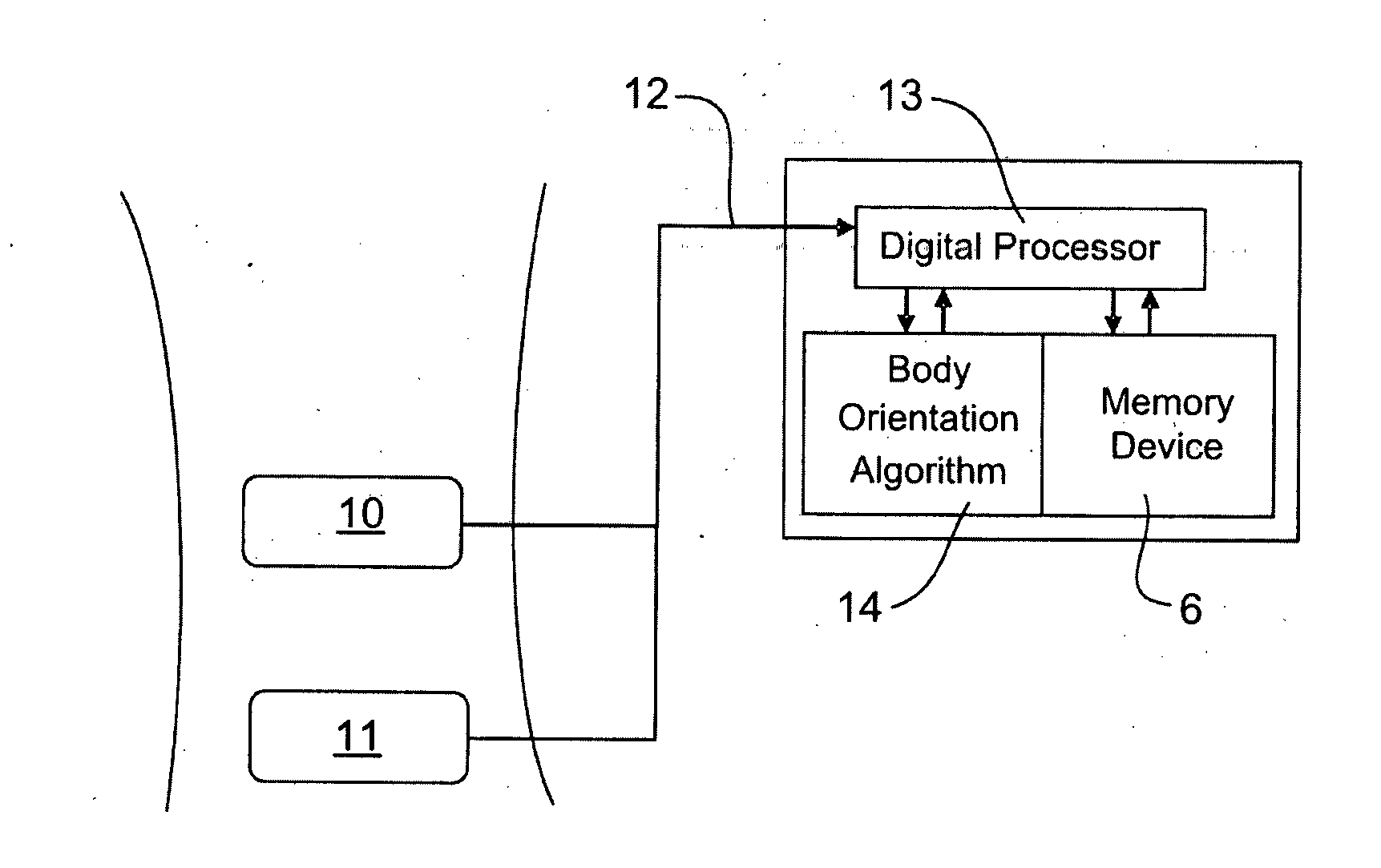
Figure 1 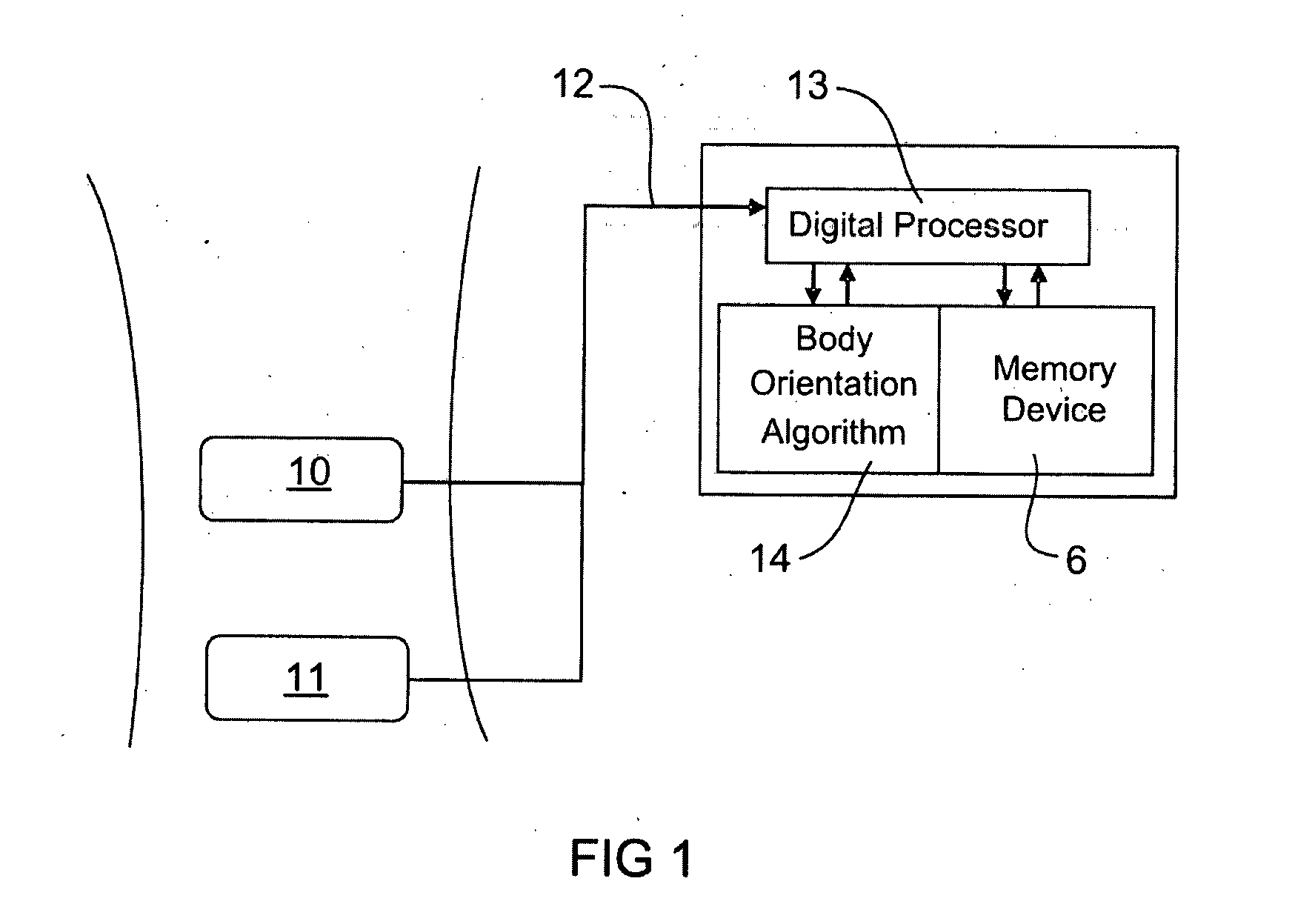
Figure 2 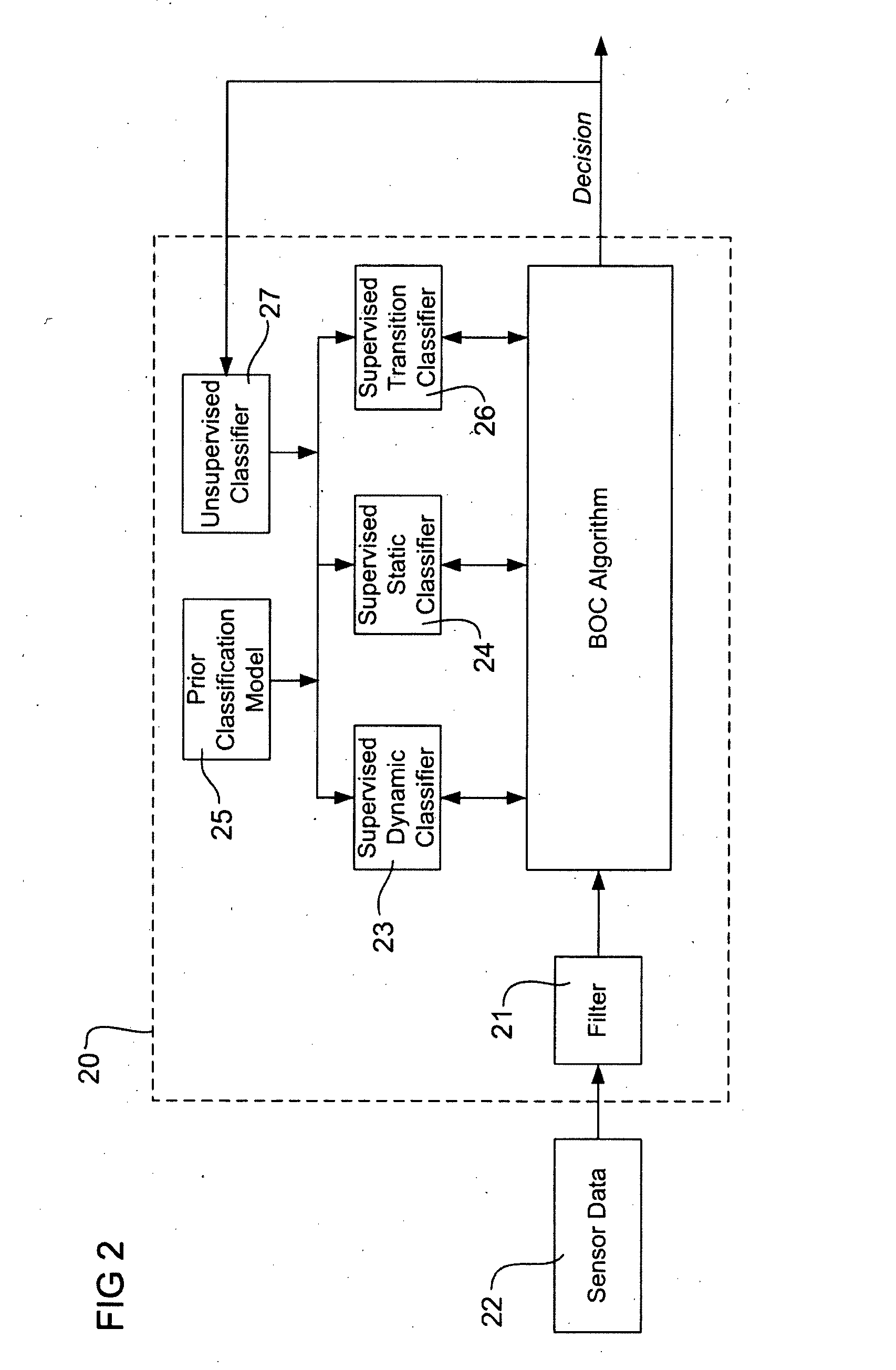
Figure 3
Abstract
Description
FIELD OF THE INVENTION
[0001] The present invention relates to apparatus and a method for ascertaining and classifying orientation of the body of a vertebral mammal. The present invention is particularly suitable for classifying posture of a human subject at a given point in time and it will be described herein in this context. Nevertheless, it is to be understood that the present invention is not thereby limited to such applications. Classifying posture of a human subject includes ascertaining whether the subject is sitting, standing or lying down. Body orientation may encompass further levels of detail, including sitting upright, sitting slouched, kneeling, etc. as well as dynamic body orientations including walking, running, etc.
[0002] The present invention is related to the method and apparatus described in International Patent Application PCT / AU2005 / 000743 the disclosure of which is incorporated herein by cross-reference.
[0003] In this document use of the words orientation, standin...
Examples
Embodiment Construction
[0058]FIG. 1 shows position sensors 10, 11 placed on a human spine. Position sensors 10, 11 are connected via wireless link 12 to a digital processor 13 adapted to execute a body orientation algorithm 14. A memory device 15 is associated with the digital processor 13 for storing data in digital format.
[0059]Referring to FIGS. 2 to 4, BOC algorithm 20 may assign class signatures to primary body orientations including standing, sitting and lying down. Raw position sensor values show clear patterns when a person wearing a classification device is in one of these states. These patterns take the form of a sequence of discrete time-series G values, local earth field components and angular displacements in sagittal, coronal and transverse planes. An offline study with multiple subjects may be carried out to establish a set of patterns that hold true for a large population. Based on an established set of patterns and raw position sensor data for a given subject, the BOC algorithm may perfor...