
Heat scavenging method for thermal recovery process
Patent Information
- Authority / Receiving Office
- US · United States
- Current Assignee / Owner
- Publication Date
- 2014-08-07
Smart Images
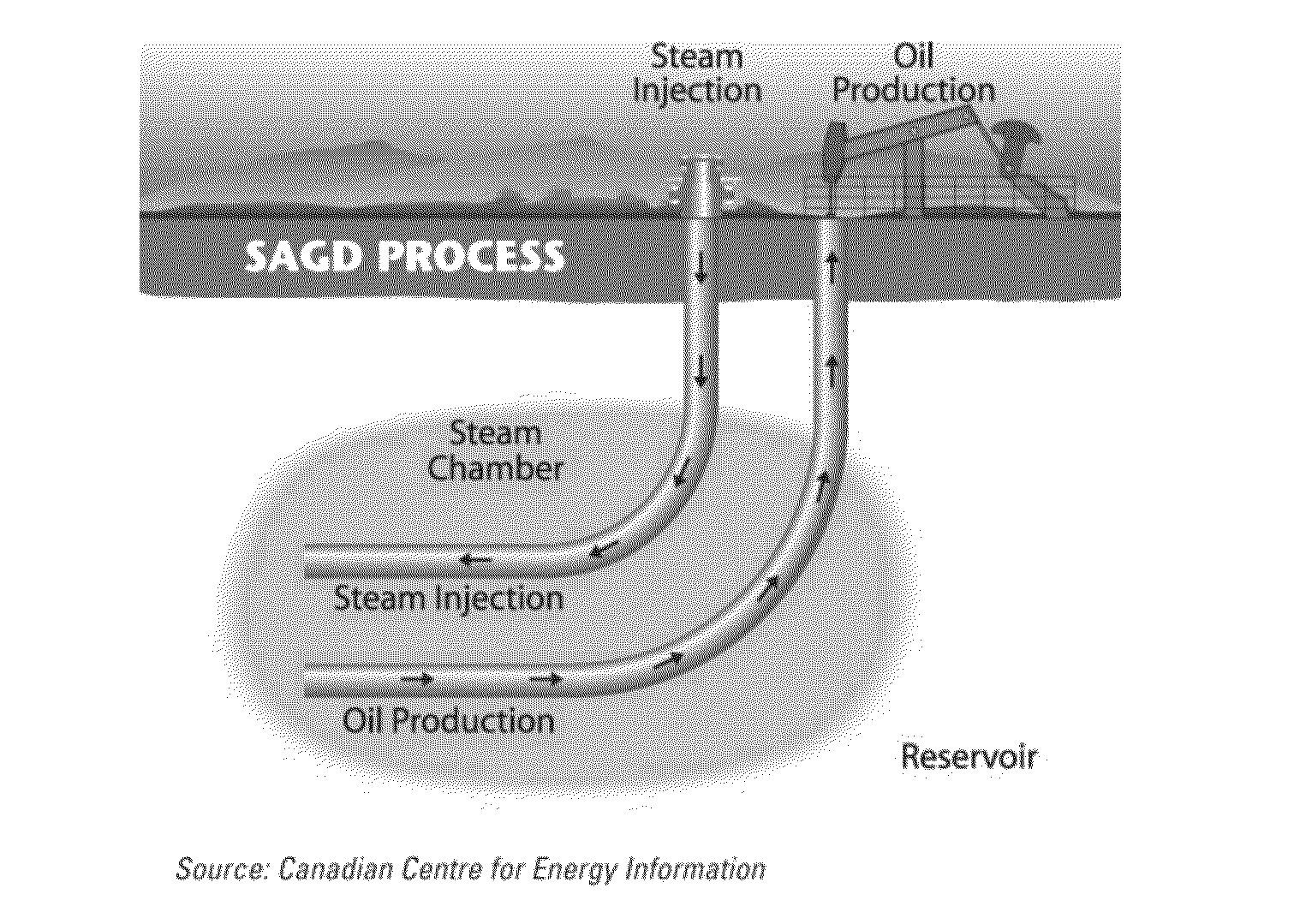
Figure 1 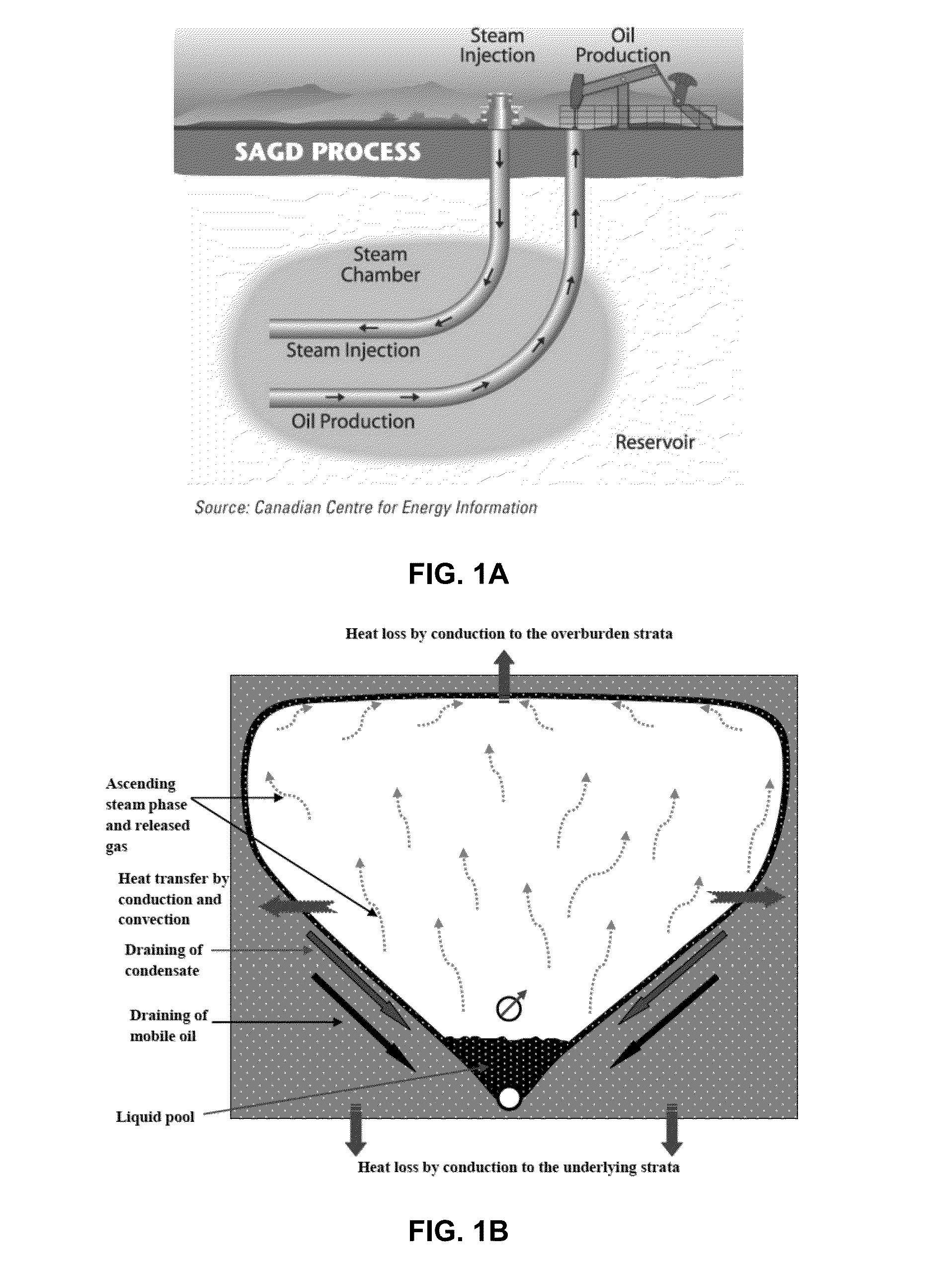
Figure 2 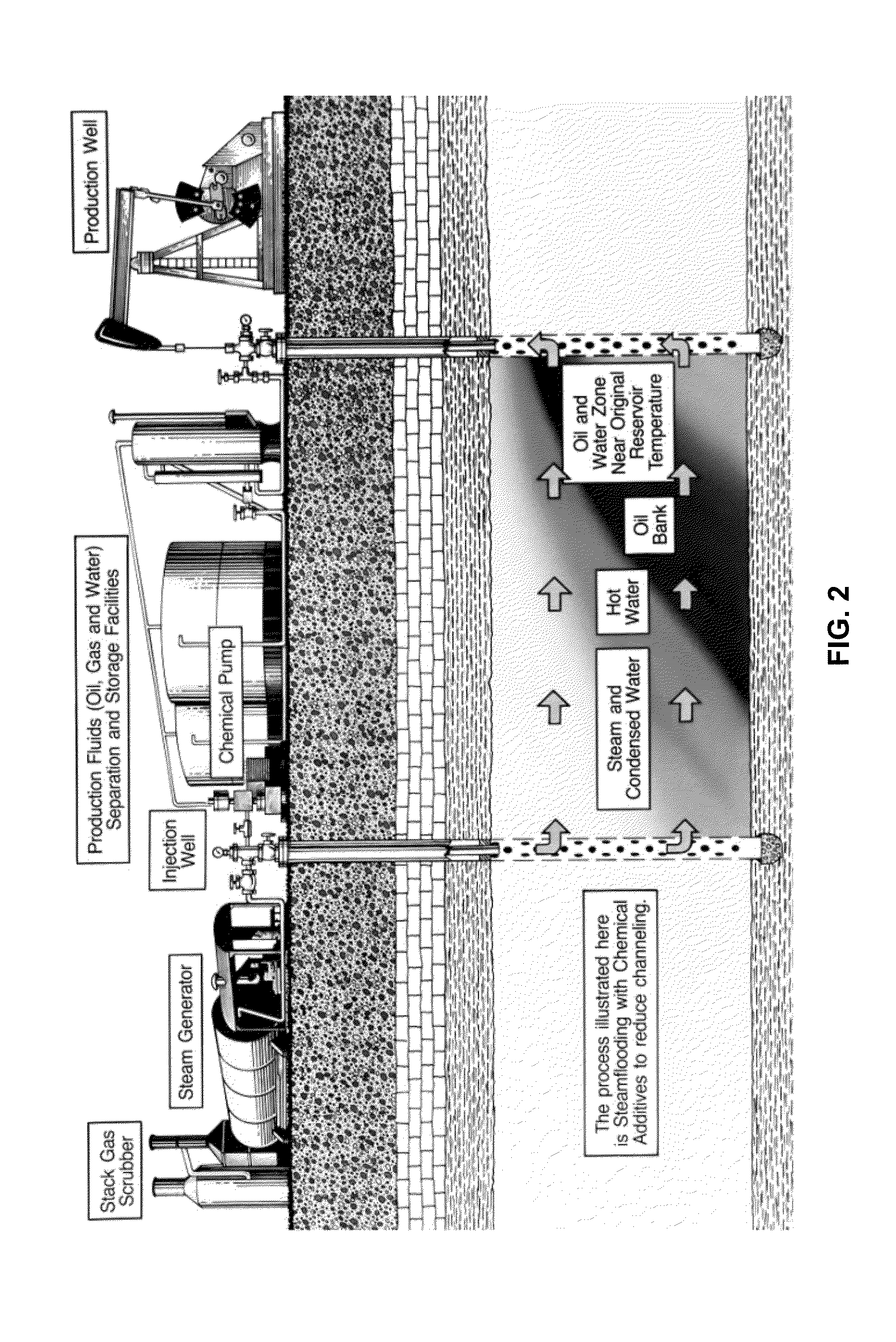
Figure 3
Abstract
Description
CROSS-REFERENCE TO RELATED APPLICATIONS
[0001] This application is a non-provisional application which claims benefit under 35 USC §119(e) to U.S. Provisional Application Ser. No. 61 / 750,248 filed Jan. 8, 2013, entitled “HEAT SCAVENGING METHOD FOR THERMAL RECOVERY PROCESSES,” which is incorporated herein in its entirety.FEDERALLY SPONSORED RESEARCH STATEMENT
[0002] Not applicable.FIELD OF THE INVENTION
[0003] The invention relates to a method of enhancing steam production of heavy oil, in particular to a method of improving recoveries and improving thermal efficiency by reducing steam and energy usage through the sweeping of the steam chamber with a low quality steam or hot water and foam combination. The low quality steam or hot water and foam combination carries water to the rock, that has been heated by the steam, and thus recaptures the waste heat therein and forms steam in situ, and driving production beyond what would normally be economical. Since less steam is used, the process is ...
Examples
Embodiment Construction
[0037]The disclosure relates to a heat scavenging method using an agent for forming foams / aerosols / hydrosols / other emulsions or colloidal dispersions, which can be abbreviated FHS for foam heat scavenging, herein. In some embodiments, the foams / aerosols / hydrosols / other emulsions or colloidal dispersions form above ground and injected instead of forming in situ.
[0038]This FHS invention will prolong the working life of the thermal recovery methods and increase oil production by allowing the use of low quality steam or hot water, a composition (such as a foaming agent, used hereafter for exemplary purposes only given possibility of creating the aerosols / hydrosols / other emulsions or dispersions) for the FHS, and optionally a gas to generate a foam that can capture the residual heat stored in the depleted portion of the reservoir to create in situ steam that will then be used to further recover bitumen.
[0039]The process will reduce the amount of energy left behind in the reservoir by uti...