
Therapeutic agent for cardiomyopathy, old myocardial infarction and chronic heart failure
Patent Information
- Authority / Receiving Office
- US · United States
- Current Assignee / Owner
- Publication Date
- 2019-11-14
Smart Images
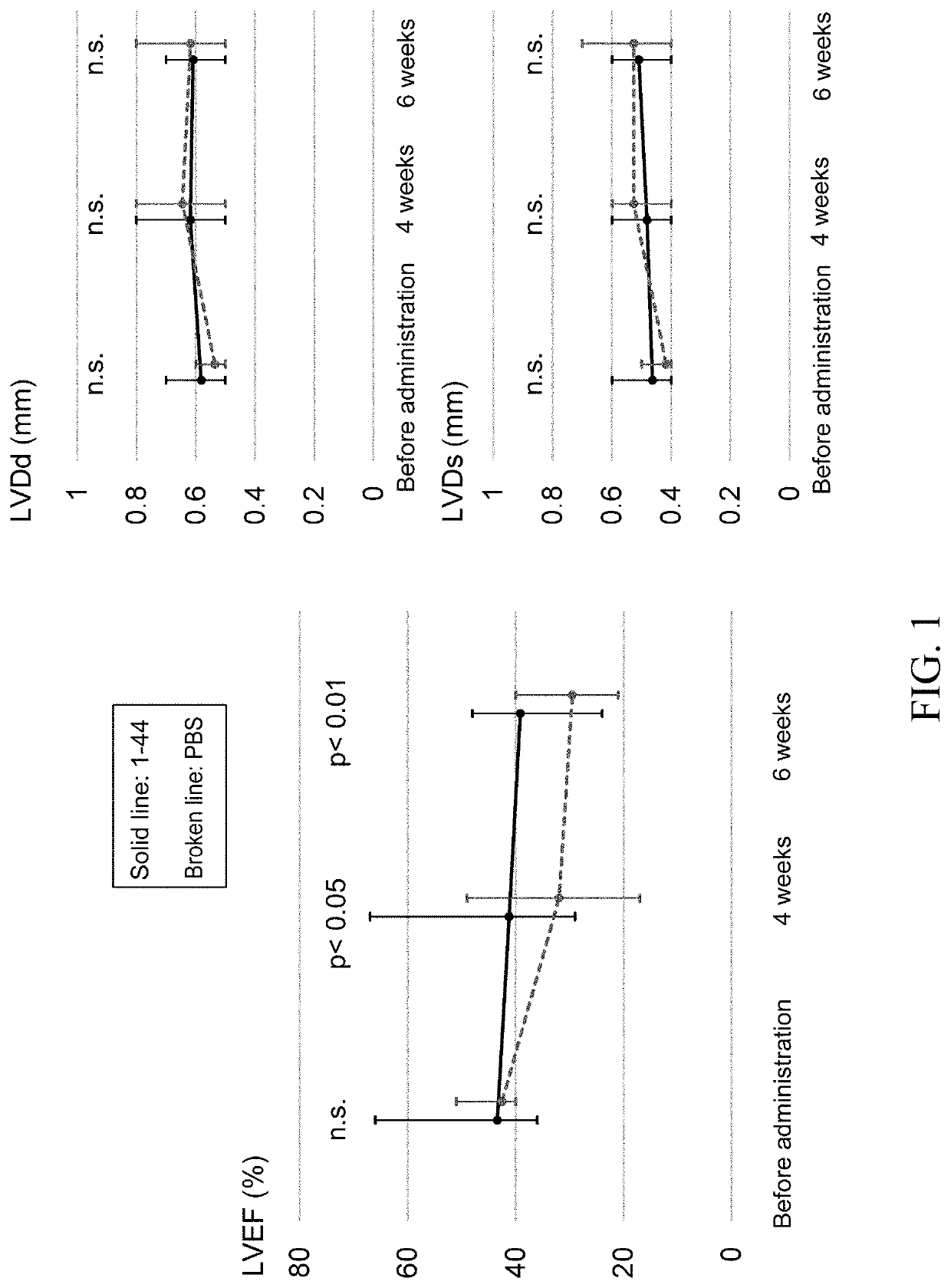
Figure 1 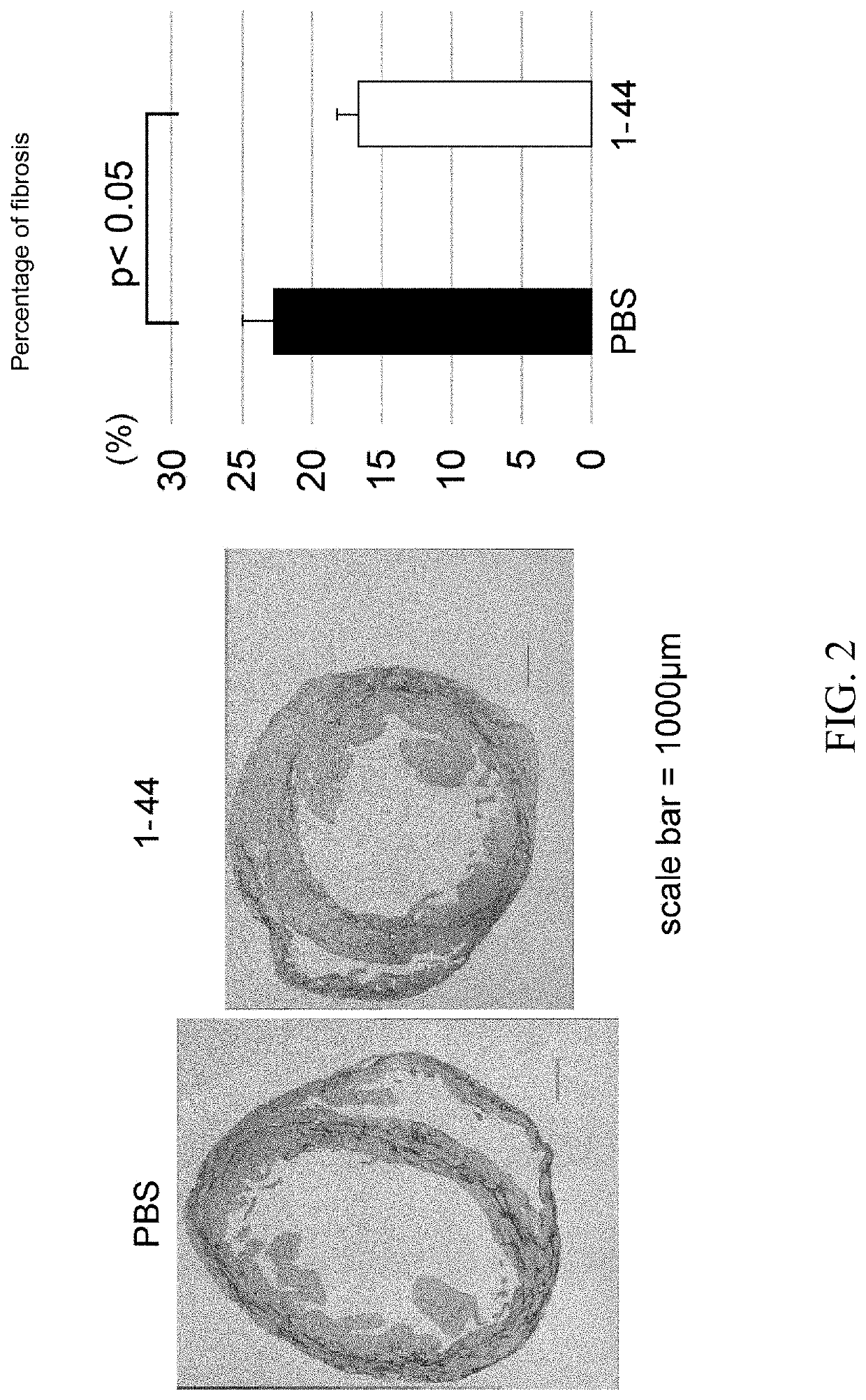
Figure 2 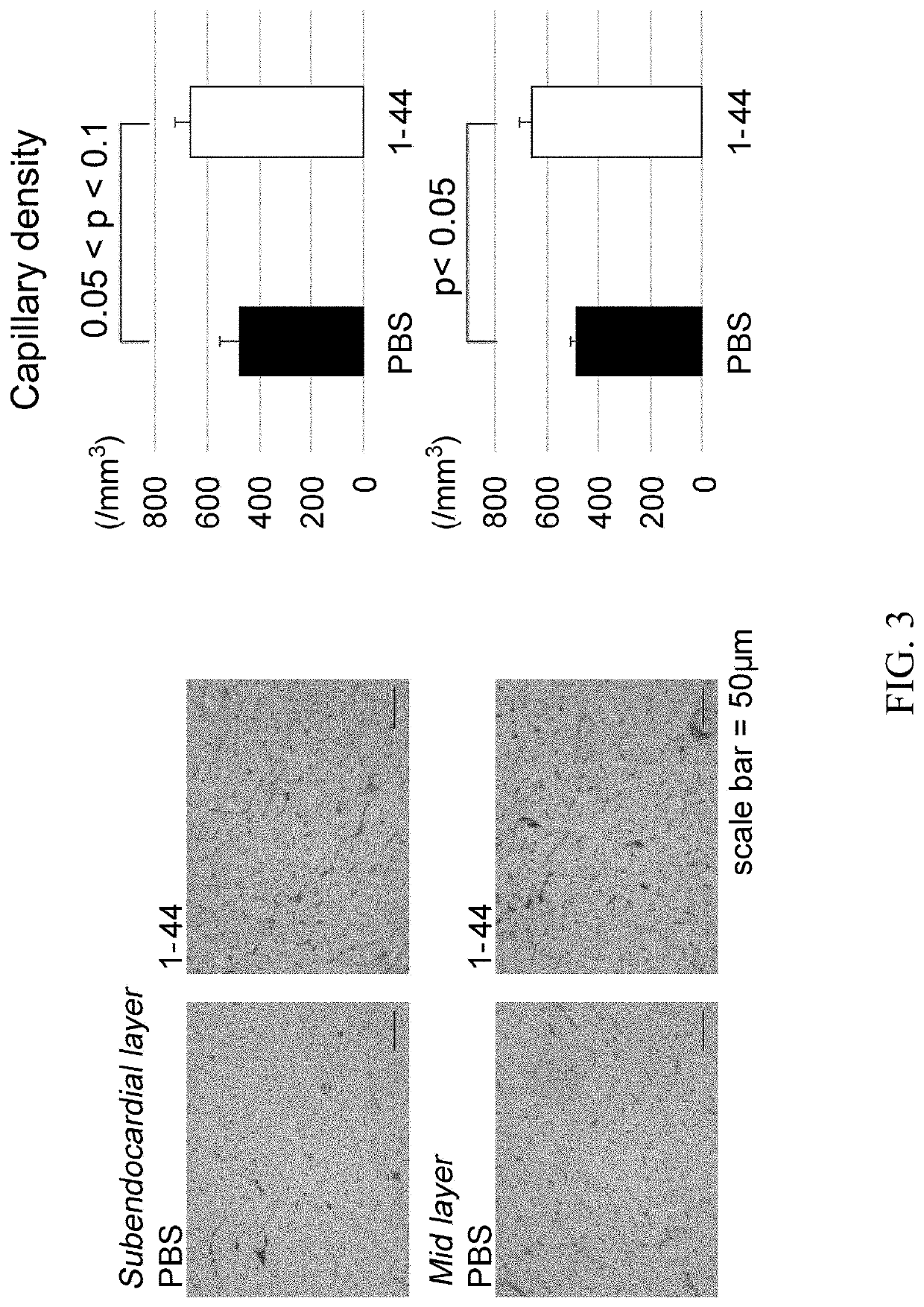
Figure 3
Abstract
Description
TECHNICAL FIELD
[0001] The present application relates to pharmaceutical compositions comprising a fragment peptide of the HMGB1 protein for the prevention and / or treatment of cardiomyopathy, old myocardial infarction, and chronic heart failure.BACKGROUND ART
[0002] Cardiomyopathy is defined as a “disease of myocardium associated with cardiac dysfunction” often accompanied by structural abnormalities of the heart, such as cardiomegaly, cardiomyocyte hypertrophy, and myocardial fibrosis; and presents symptoms of chronic heart failure as it progresses. Secondary cardiomyopathy may be ameliorated by treatment of the primary disease, but there is still no definitive treatment for idiopathic cardiomyopathy.
[0003] Myocardial infarction, which causes myocardial necrosis due to coronary artery occlusion, is a major underlying disorder of heart disease which is the leading cause of death in developed countries (first in the United States and second in Japan). While the acute-phase treatment outco...
Examples
example 1
[Example 1] Efficacy Evaluation of an HMGB1 Fragment Peptide for Dilated Cardiomyopathy
(1) Materials and Methods
[0092]J2N-k hamsters (18-week-old, male, 20 animals in total), which are model animals of dilated cardiomyopathy, were obtained from Japan SLC, acclimated for 2 weeks, and then used for experiments. J2N-k hamsters spontaneously develop dilated cardiomyopathy due to deletion mutations in the 8-sarcoglycan gene (specifically, cardiomyocyte shedding and fibrosis begin around 5 weeks of age, cardiomegaly and cardiac dysfunction appear at approximately 20 weeks of age, and eventually they die of congestive heart failure at approximately 1 year. J Biochem. 2003 August; 134(2):269-76). Also, a peptide consisting of amino acid residues 1-44 (SEQ ID NO: 1) of the human HMGB1 protein was chemically synthesized by a solid-phase method. Hereinafter, the peptide is referred to as the HMGB1 peptide (1-44), and is abbreviated as “1-44” in the drawing corresponding to the Examples.
[0093]J...
example 2
[Example 2] Efficacy Evaluation of the HMGB1 Fragment Peptide for Dilated Cardiomyopathy (Long-Term Observations)
(1) Materials and Methods
[0108]As in Example 1, twenty J2N-k hamsters were prepared and divided into the HMGB1 peptide (1-44)-treated group (n=11) and the PBS-treated group (control, n=9), and treatment was begun at 20 weeks of age. Administration of the test substance was carried out by injecting a solution of the HMGB1 peptide (1-44), which has been adjusted to a concentration of 1 mg / ml with PBS as the vehicle, into the external jugular vein at a dose of 3 ml / kg (3 mg / kg as the peptide dosage) once daily for four consecutive days. In the control group, PBS was injected into the external jugular vein at a dose of 3 ml / kg once a day for four consecutive days. Evaluation of the cardiac function and survival rate was continued thereafter while rearing the hamsters under normal conditions.
(2) Items for Evaluation
i) Cardiac Function
[0109]Echocardiography was performed prior ...
example 3
[Example 3] Efficacy Evaluation of the HMGB1 Fragment Peptide on Improving the Cardiac Function after Old Myocardial Infarction
(1) Materials and Methods
[0113]SD rats (7-week-old, male, body weight of approximately 250 g) were anesthetized with the inhalation anesthetic sevofrane (or isoflurane) and intubated endotracheally after adequate suppression was achieved, and deep anesthesia was maintained with the inhalation anesthetic. A thoracotomy was performed in the supine position at the left fourth intercostal space, and the proximal portion of the left anterior descending coronary artery was ligated with 6-0 prolene sutures to create a broad-area myocardial infarction model. The cardiac function was evaluated by echocardiography 2 weeks after the infarction was made, and cases in which extensive infarction was obtained (LVEF<50%) were used as old myocardial infarction model rats (17 animals in total). Similar to the above examples, the HMGB1 peptide (1-44) consisting of SEQ ID NO: 1...