
Administration and dosage of diaminophenothiazines
Patent Information
- Authority / Receiving Office
- US · United States
- Current Assignee / Owner
- Publication Date
- 2020-01-16
Smart Images
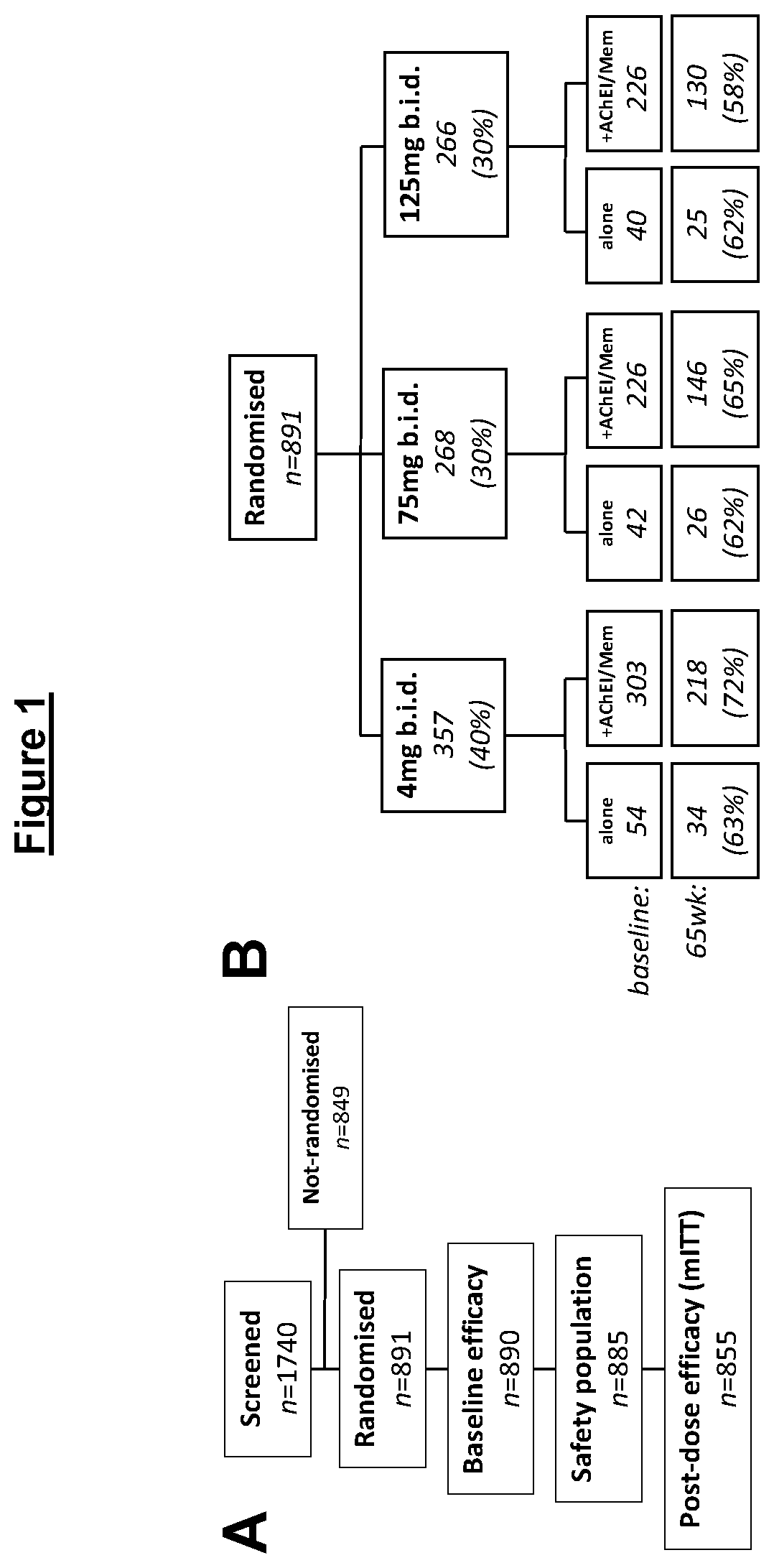
Figure 1 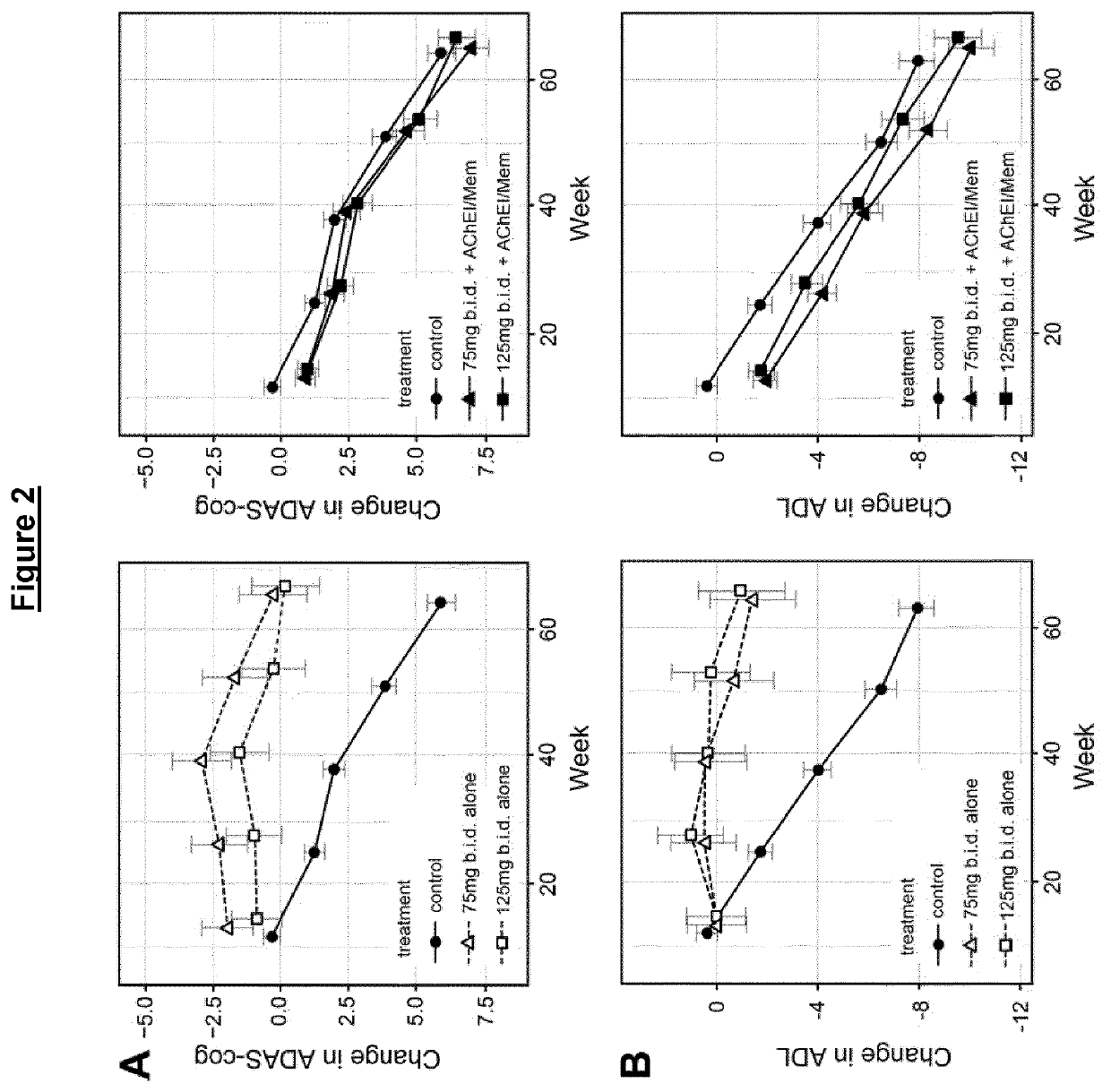
Figure 2 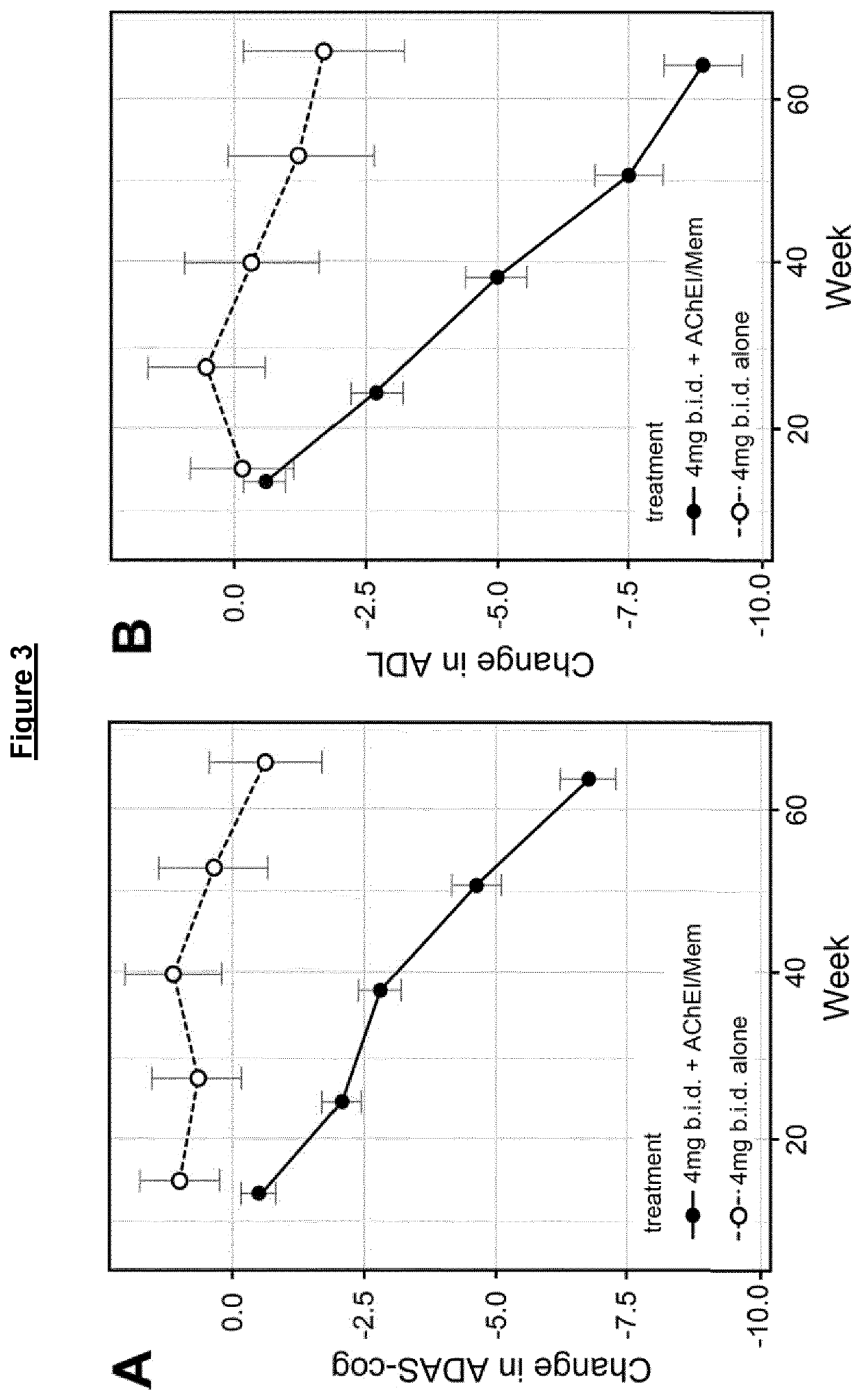
Figure 3
Abstract
Description
CROSS-REFERENCE TO RELATED APPLICATIONS
[0001] This Application is a National Stage filing under 35 U.S.C. 371 of International Patent Application Serial No. PCT / EP2017 / 068749, filed Jul. 25, 2017, which claims priority to Great Britain Application No. 1612863.9, filed Jul. 25, 2016, and Great Britain Application No. 1710382.1, filed Jun. 29, 2017. The contents of these applications are incorporated herein by reference in their entirety.TECHNICAL FIELD
[0002] The present invention relates generally to methods and materials for use in the treatment or prophylaxis of diseases of protein aggregation, for example cognitive disorders, using diaminophenothiazines.BACKGROUND ART
[0003] Aberrant protein aggregation is believed to be a proximal cause of numerous disease states, which may be manifested as neurodegeneration, clinical dementia, and other pathological symptoms.
[0004] In general, the aberrant protein aggregation is that which arises from an induced conformational polymerisation interact...
Examples
example 1
Provision of MT-Containing Compounds
[0382]Methods for the chemical synthesis of the MT-containing compounds described herein are known in the art. For example:
[0383]Synthesis of compounds 1 to 7 can be performed according to the methods described in WO2012 / 107706, or methods analogous to those.
[0384]Synthesis of compound 8 can be performed according to the methods described in
[0385]WO2007 / 110627, or a method analogous to those.
[0386]Synthesis of compound 9 (MTC) is well known in the art. Examples syntheses of highly pure MTC are provided in WO2006 / 032879 and WO2008 / 007074.
[0387]Synthesis of compounds 10 to 13 can be performed according to the methods described in WO2007 / 110630, or methods analogous to those.
example 2
Formulation of MT-Containing Compounds
[0388]Methods for the chemical synthesis of the MT-containing compounds described herein are known in the art. Example methods using dry compression, for example, are provided in WO2012 / 072977.
example 3
Phase 3 Clinical Trial in Mild to Moderate AD
Methods
Outcomes and Measures
[0389]The co-primary efficacy outcomes were change from baseline in 11-item Alzheimer's Disease Assessment Scale—cognitive subscale (ADAS-cog) and the 23-item Alzheimer's Disease Cooperative Study Activities of Daily Living (ADCS-ADL). Magnetic resonance imaging (MRI) volumetry was chosen as the principal secondary outcome to support a potential effect on the rate of brain atrophy (Fox et al., 1997; Ridha et al., 2008). Change in Lateral Ventricular Volume (LVV), as measured by the Ventricular Boundary Shift Integral (VBSI), (Salloway et al., 2014) was chosen as the principal measure as it provides high-contrast boundaries for measurement and is less affected by motion artefacts than whole brain or smaller structures. Key supportive topographical measures (temporo-parietal (TPV) and hippocampal volume (HV)) are also reported.
Patients
[0390]Patients were recruited at 115 sites across 16 countries between January ...