
Pneumatic Tire
a technology of pneumatic tires and rims, which is applied in the direction of tire beads, rolling resistance optimization, vehicle components, etc., can solve the problems of deterioration of tire durability due to the omission of bead fillers, and achieve the effects of reducing tire weight, ensuring the durability of the rim fitting portion, and suppressing deterioration of workability of tire mounting
Patent Information
- Authority / Receiving Office
- US · United States
- Patent Type
- Applications(United States)
- Current Assignee / Owner
- Publication Date
- 2021-06-10
Smart Images
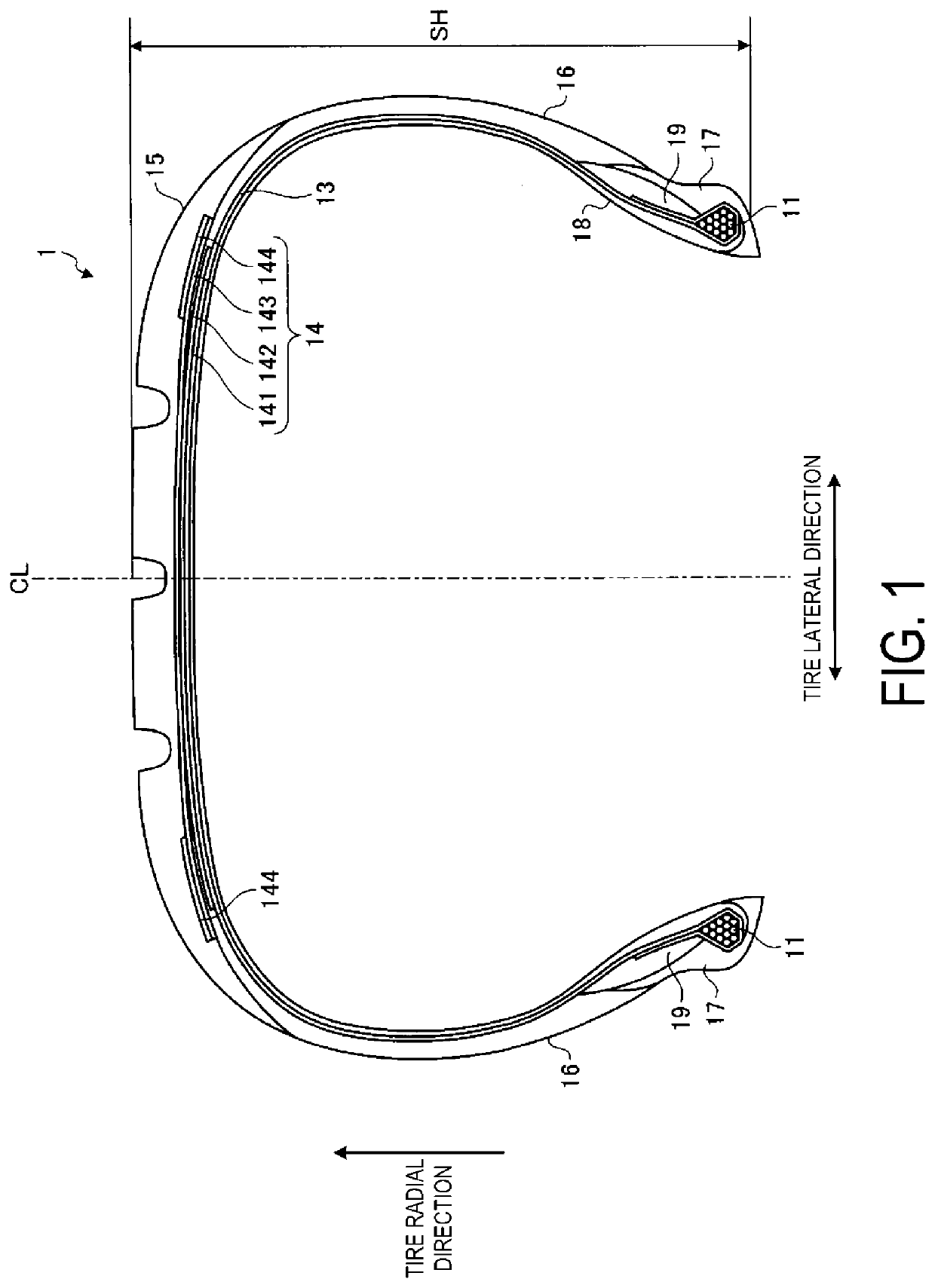
Figure 1 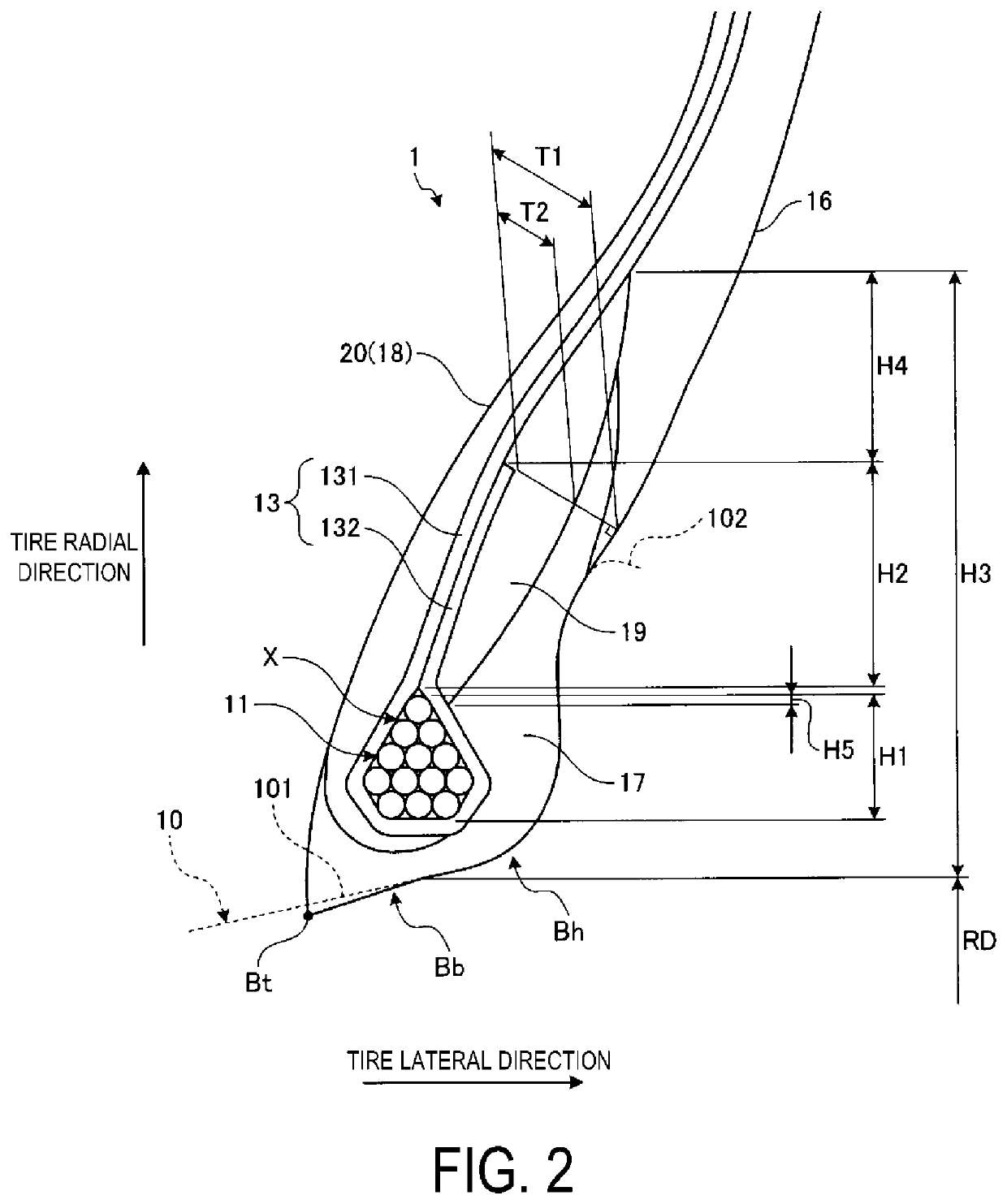
Figure 2 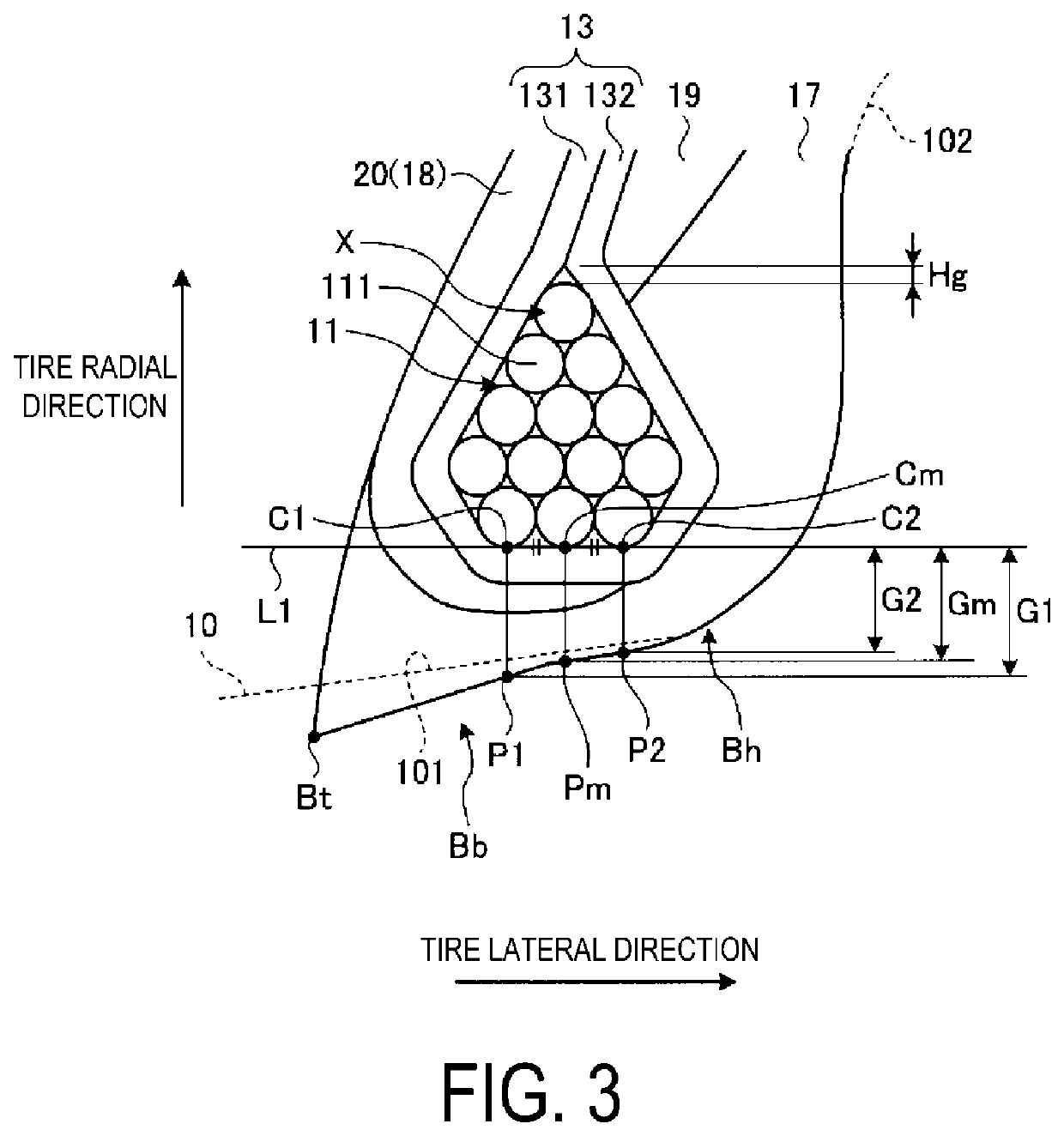
Figure 3
Abstract
Description
TECHNICAL FIELD
[0001] The technology relates to a pneumatic tire and particularly relates to a pneumatic tire that can improve durability of the tire while a weight of the tire is reduced.BACKGROUND ART
[0002] In recent years, for weight reduction of a tire, weight reduction of bead portions has been advanced. As a conventional pneumatic tire, a technology described in Japan Unexamined Patent Publication No. 2008-149778 has been known. In Japan Unexamined Patent Publication No. 2008-149778, bead fillers are omitted to reduce a weight of the tire.
[0003] However, in the conventional pneumatic tire described above, deterioration of durability of the tire due to the omission of the bead fillers is a concern.SUMMARY
[0004] The technology provides a pneumatic tire that can improve durability of the tire while a weight of the tire is reduced.
[0005] A pneumatic tire according to an embodiment of the technology includes bead cores, a carcass layer, and a rim cushion rubber. The bead cores are forme...
Examples
example
[0153]FIG. 14 is a table showing results of performance tests of pneumatic tires according to the embodiment of the technology. FIG. 15 is an explanatory diagram illustrating bead cores of a test tire of Conventional Example.
[0154]In the performance test, a plurality of types of test tires having a tire size of 205 / 55R16 were evaluated for (1) tire mass and (2) durability.
[0155](1) The tire mass is calculated as the average value of the masses of five test tires having the same structure. The measurement results are expressed as index values and evaluated with the Conventional Example being assigned as the reference (100). The smaller the values in this evaluation, the lighter the test tires are, which is preferred. Additionally, when the index is 99 or less, it can be said that the weight of the tire is reduced compared to that of the existing tire structure including bead fillers.
[0156](2) In the evaluation for durability, the test tires are mounted on rims having a rim size of 16...