
Polymer film and polymer film manufacturing method
a polymer film and manufacturing method technology, applied in the field of polymer films, can solve the problems of insufficient adhesion, degraded increase the total weight of tires, so as to improve the fuel efficiency of an automobile, reduce the weight of tires, and improve the effect of gas barrier properties
Patent Information
- Authority / Receiving Office
- US · United States
- Patent Type
- Applications(United States)
- Current Assignee / Owner
- Publication Date
- 2017-11-02
Smart Images
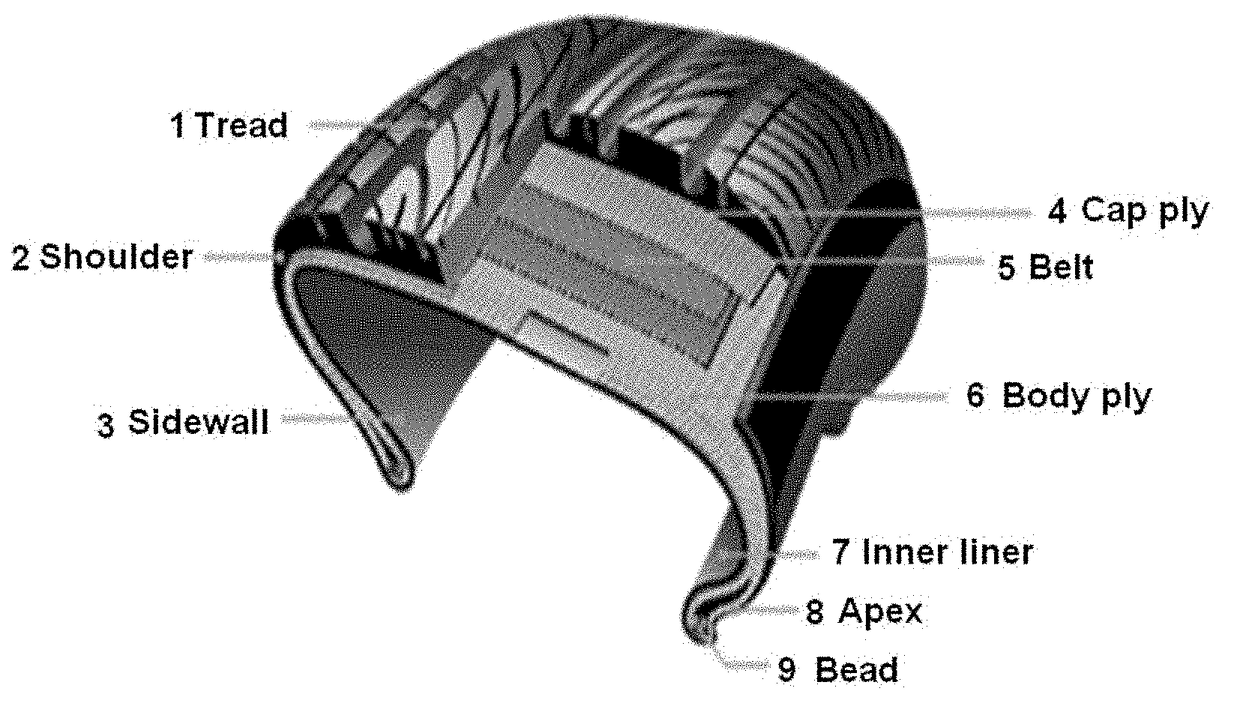
Figure 1 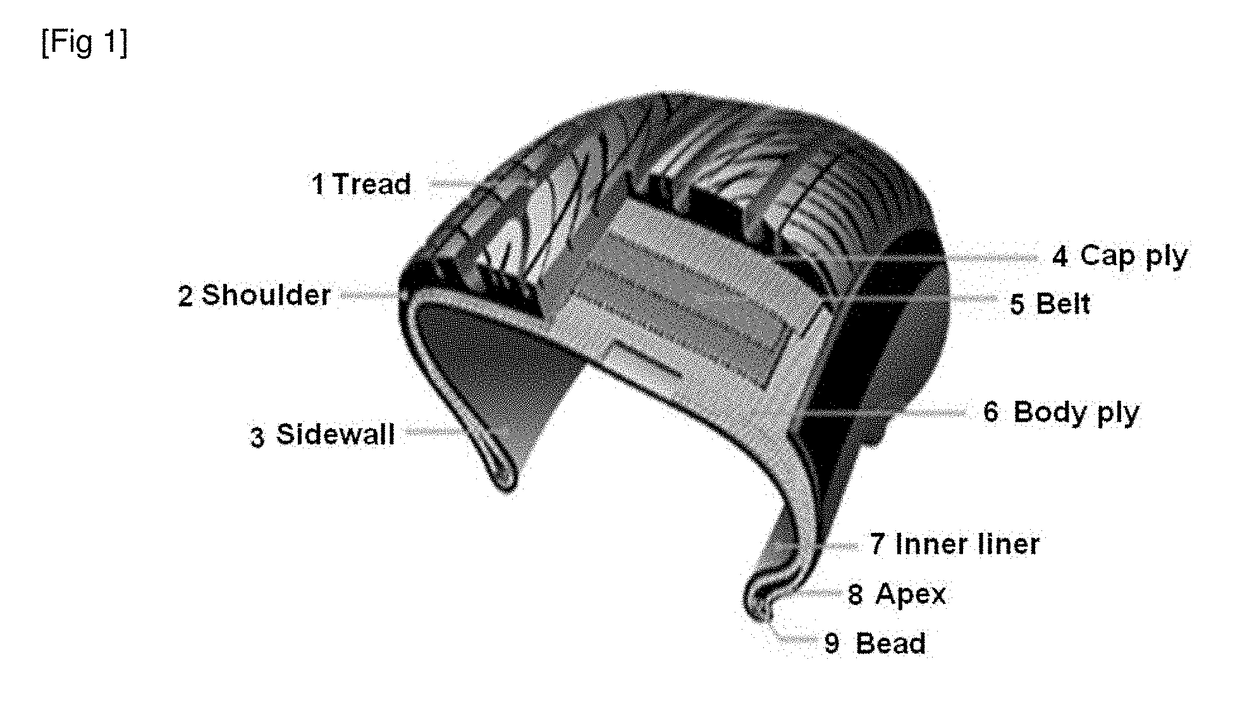
Figure 2 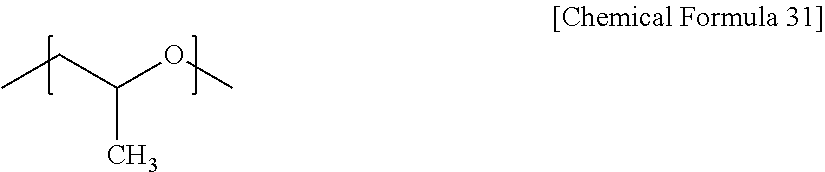
Figure 3
Abstract
Description
CROSS-REFERENCE TO RELATED APPLICATION
[0001] This application claims the benefit of Korean Patent Application No. 10-2014-0131683 filed on Sep. 30, 2014 with the Korean Intellectual Property Office, the disclosures of which are herein incorporated by reference in their entirety.FIELD OF THE INVENTION
[0002] The present invention relates to a polymer film and a method for preparing the same, more specifically, to a polymer film that can realize excellent gas barrier property even with a thin thickness, and thus, can reduce the weight of a tire and improve fuel efficiency of an automobile, and has mechanical properties such as high heat-resistant impact strength and durability, etc. as well as excellent formability, and a method for preparing the polymer film.BACKGROUND OF THE INVENTION
[0003] A tire withstands the weight of an automobile, reduces impact from the road, and transfers driving force or braking force of an automobile to the ground. In general, a tire is a complex of fiber / stee...
Examples
example 1
[0138](1) Preparation of a Base Film
[0139]Polyamide-based resin (nylon 6) with a relative viscosity (sulfuric acid 96% solution) of 3.3 prepared from ε-caprolactam, copolymer resin with a weight average molecular weight of about 105,000 (comprising 25 wt % of polyether-based segments including a polytetramethylene oxide main chain and 75 wt % of polyamide-based segments derived from ε-caprolactam), and copolymer resin with a weight average molecular weight of about 115,000 (synthesized using 25 wt % of polyether-based segments including a poly(iso-propylene) oxide main chain with an amine end group, and 75 wt % of polyamide-based segments derived from ε-caprolactam) were mixed at a weight ratio of 5:2.5:2.5, and a cross linking agent styrene 2-isopropenyl-2-oxazoline copolymer and a heat resistant agent [a mixture of copper iodide and potassium iodide—the content of Cu in the mixture 7 wt %] were added thereto, thus preparing a mixture for preparing a base film. The content of the c...
example 2
[0144]Polyamide-based resin with a relative viscosity (sulfuric acid 96% solution) of 3.8 [synthesized using ε-caprolactam, and hexamethylene diamine and adipic acid at a weight ratio of 94:6], copolymer resin with a weight average molecular weight of about 130,000 (comprising 40 wt % of polyether-based segments including a polytetramethylene oxide main chain and 60 wt % of polyamide-based segments derived from ε-caprolactam), and copolymer resin with a weight average molecular weight of about 85,000 (comprising 20 wt % of polyether-based segments including a poly(iso-propylene) oxide main chain with an amine end group, and 80 wt % of polyamide-based segments derived from ε-caprolactam) were mixed at a weight ratio of 4:4:2, and a heat resistant agent [a mixture of copper iodide and potassium iodide—the content of Cu in the mixture 7 wt %] was added thereto, thus preparing a mixture for preparing a base film. The content of the heat resistant agent in the mixture was 0.8 wt %.
[0145]...
example 3
[0148](1) Preparation of Base Film
[0149]Polyamide-based resin (nylon 6) with a relative viscosity (sulfuric acid 96% solution) of 3.5 prepared from ε-caprolactam, copolymer resin with a weight average molecular weight of about 75,000 (comprising 20 wt % of polyether-based segments including a polytetramethylene oxide main chain and 80 wt % of polyamide-based segments derived from ε-caprolactam), and copolymer resin with a weight average molecular weight of about 105,000 (comprising 25 wt % of polyether-based segments including a poly(iso-propylene) oxide main chain with an amine end group, and 75 wt % of polyamide-based segments derived from ε-caprolactam) were mixed at a weight ratio of 2:5:3, and a heat resistant agent [a mixture of copper iodide and potassium iodide—the content of Cu in the mixture 7 wt %] and ethylene-propylene copolymer (density 0.87 g / cm3) grafted with maleic anhydride (1.0 wt %) were added thereto, thus preparing a mixture for preparing a base film. In the mi...