
Monoclonal antibody Anti-fgfr4
a monoclonal antibody and anti-fgfr4 technology, applied in the field of monoclonal antibody anti-fgfr4, can solve the problems of colorectal cancer (crc) being a major cause of morbidity and mortality in the world, affecting the quality of life of people, and presenting a mounting socio-economic burden worldwide, so as to efficiently inhibit the binding of fgf ligands and improve the signalling of ligand-dependen
Patent Information
- Authority / Receiving Office
- US · United States
- Current Assignee / Owner
- Publication Date
- 2021-07-29
Smart Images
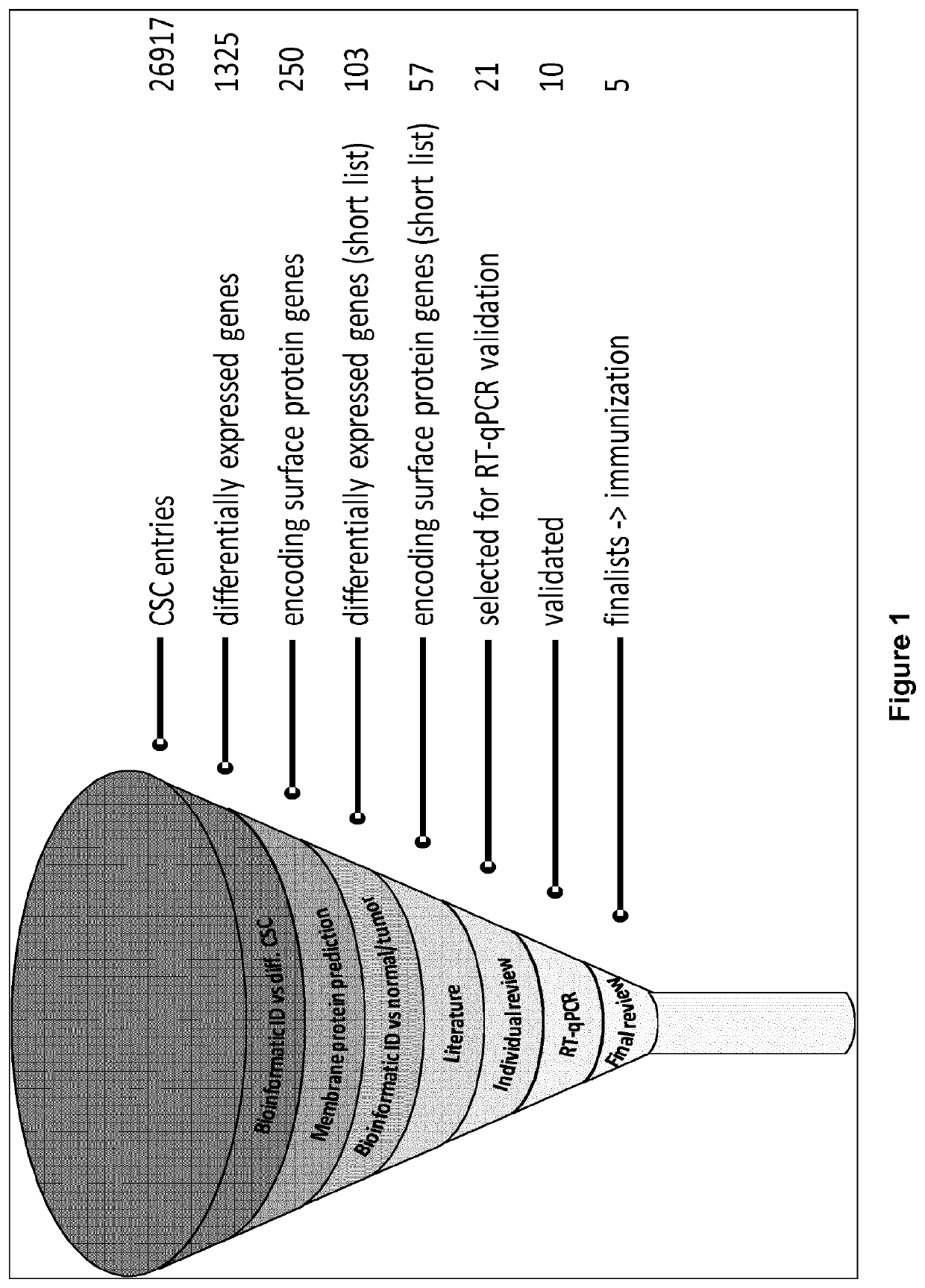
Figure 1 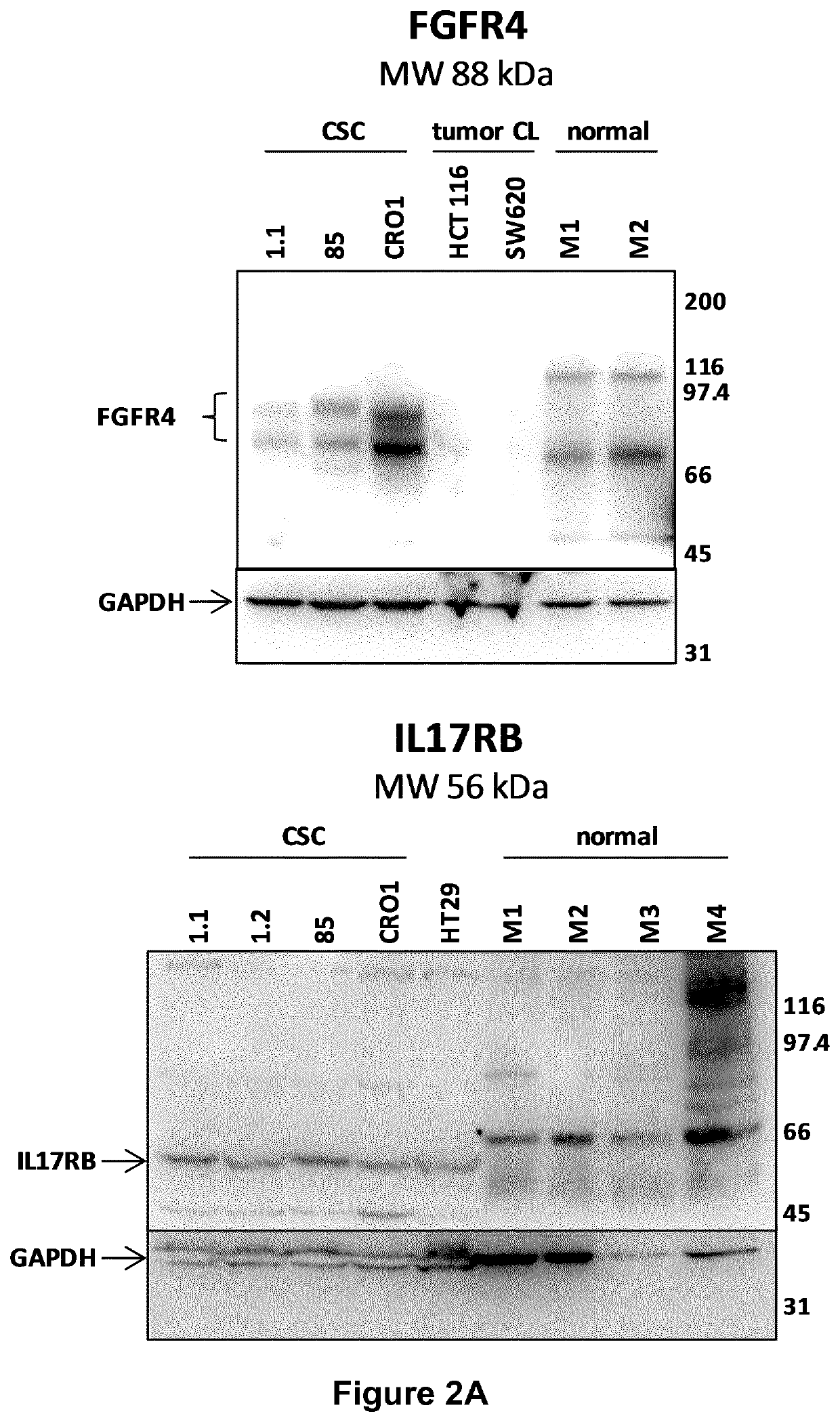
Figure 2 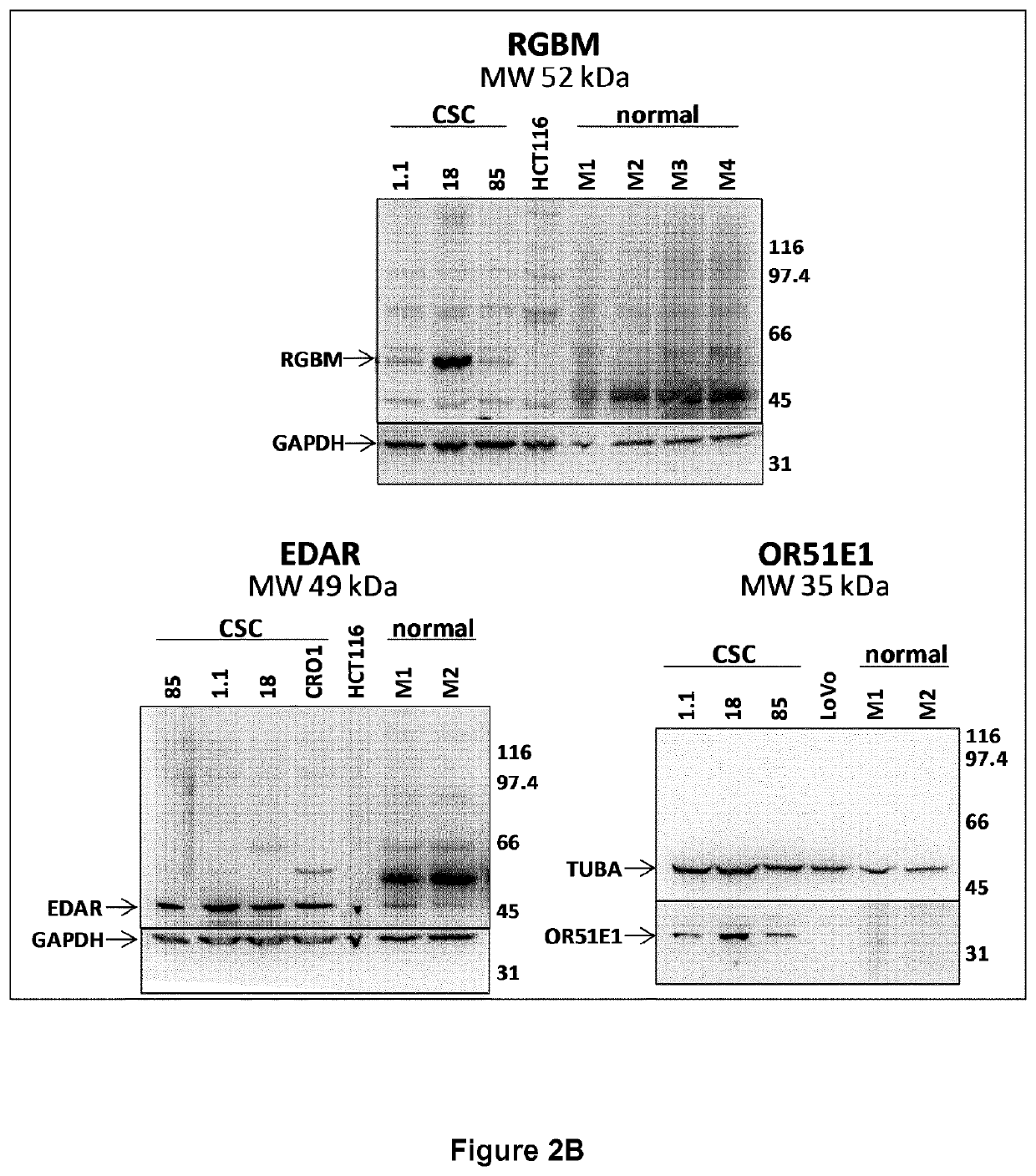
Figure 3
Abstract
Description
[0001] The present invention relates to the field of monoclonal antibodies, in particular to monoclonal antibodies anti-FGFR4 and their use as medicaments and diagnostic agents.BACKGROUND OF THE INVENTION
[0002] Cancer is one of the most common diseases in the Western world with ever-increasing numbers and it represents a mounting socio-economic burden worldwide. Despite a considerable improvement in our understanding of cancer biology, patients with solid metastatic tumors are essentially incurable and their quality of life is often significantly affected as a consequence of treatment. With 14.1 million new cancer cases and 8.2 million deaths worldwide in 2012 and with estimated 24 million new cases each year by 2035, cancer remains an important public health problem in the world (Ferlay et al. 2015).
[0003] Our inability to efficiently address advanced cancer therapeutically has recently received a new theoretical underpinning. Compelling evidence supported the existence, in different ...
Examples
example 1
Bioinformatic Identification of Genes Encoding Membrane Proteins Selectively Expressed in Colon Cancer Stem Cells
[0300]In order to identify novel colon cancer stem cells (CSC) membrane antigens, a computational analysis has been performed by mining a proprietary CSC-specific Affymetrix microarray and cross-querying available public expression databases.
[0301]This analysis took advantage of the availability of a genome-wide gene expression data bank (Affymetrix microarray, Human Gene 1.0 ST platform), including data obtained from eight colon CSC lines isolated from primary tumor samples and metastases that were propagated as spheroids in defined serum-free media complemented with EGF and bFGF, or differentiated in vitro in the presence of 10% serum (Ricci-Vitiani et al., 2007). This dataset contains distinct probesets for 26917 different human genes.
[0302]In order to define a list of potential target genes the following overall workflow was adopted. Using the reference colon CSC data...
example 2
Confirmation of the Specificity of the Selected Gene Expression in Colon CSC
[0311]The differential expression of the 21 selected genes have been confirmed and quantified by qRT-PCR. The eight different colon CSC lines used to generate microarray data were propagated as spheroids in defined serum-free media complemented with EGF and bFGF. For comparison, eleven different commercial colon tumor cell lines (ATCC), selected among those included in the dataset used in the bioinformatic analysis, were cultured following ATCC recommendations (Table 5).
TABLE 5Colon tumor cell lines analyzed by qRT-PCR.Colon CSC line Colon tumor cell line Code1.1 Caco-2 cl11.2 DLD-1 cl218 HCT 1 16 cl385 HCT 15 cl4CR01 HT-29 cl5CC1 LoVo cl6CC2 SNU-C2B cl7CC5 SW48 cl8SW480 cl9SW620 cl10WiDr cl1 1
[0312]Total RNA was prepared using the RNAeasy mini kit (Qiagen) following the manufacturer's recommendations. RNA samples were collected in RNase-free water, quantified by measuring the absorbance at 260 nm using an E...
example 3
Generation of Monoclonal Antibodies Against the Colon CSC Membrane Antigens
[0318]Monoclonal antibodies (mAbs) against the five selected antigens have been generated by genetic immunizations of rats using the Aldevron / GENOVAC core technology platform that enables the development of antibodies against protein targets directly using the corresponding DNA coding-sequences (http: / / www.aldevron.com / services / antibody-development / genetic-immunization, see for example the following references:
[0319]Bioprocessing—Genetic Immunization for Antibody Production. Tutorial: Genovac's Technological Shortcut From Gene to Antibody. By John Thompson, Ph.D., and Stefan Lang, Ph.D., published in Genetic Engineering News, Vol. 22, No. 17, Oct. 1, 2002; Custom-made antibodies produced by genetic immunisation: Applications in drug development, therapy and diagnosis. By Stefan Lang and John Thompson, published in Global Outsourcing Review, Vol. 5, No. 1, Spring 2003; A shortcut from genomics to drug developm...