
Torsional vibration damper
a technology of vibration damping and torsional disc, which is applied in the direction of vibration suppression adjustment, yielding coupling, coupling, etc., can solve the problem that the clutch disc cannot cause the wheels of the motor vehicle to rota
Patent Information
- Authority / Receiving Office
- US · United States
- Current Assignee / Owner
- Publication Date
- 2000-10-24
- Estimated Expiration
- Not applicable · inactive patent
Smart Images
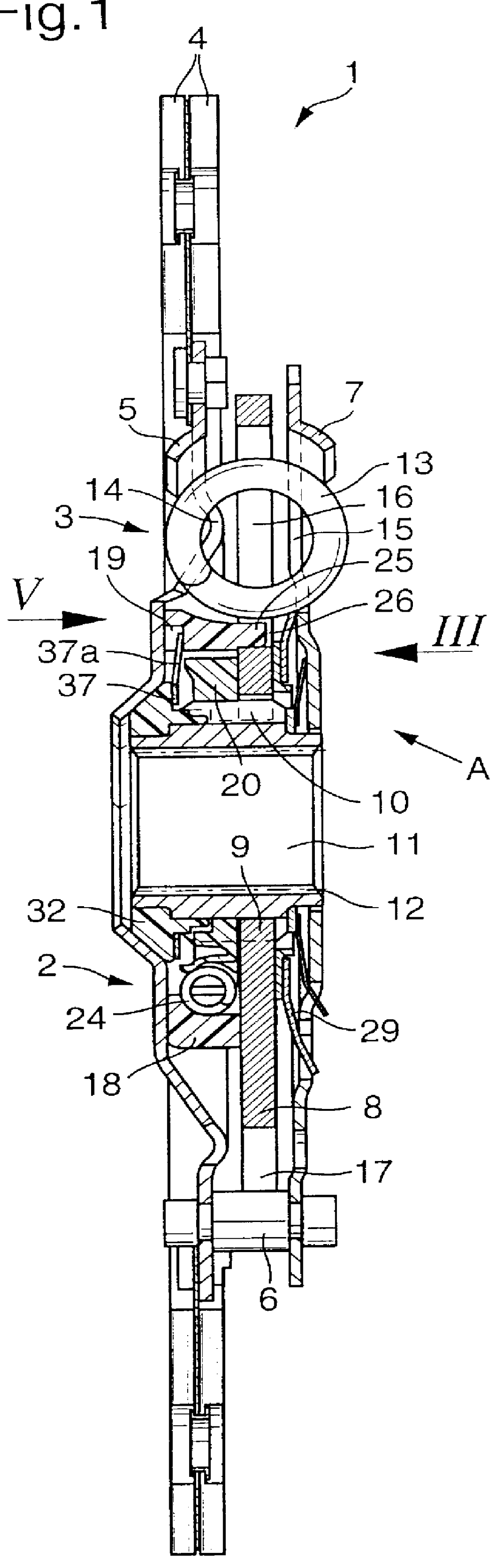
Figure 1 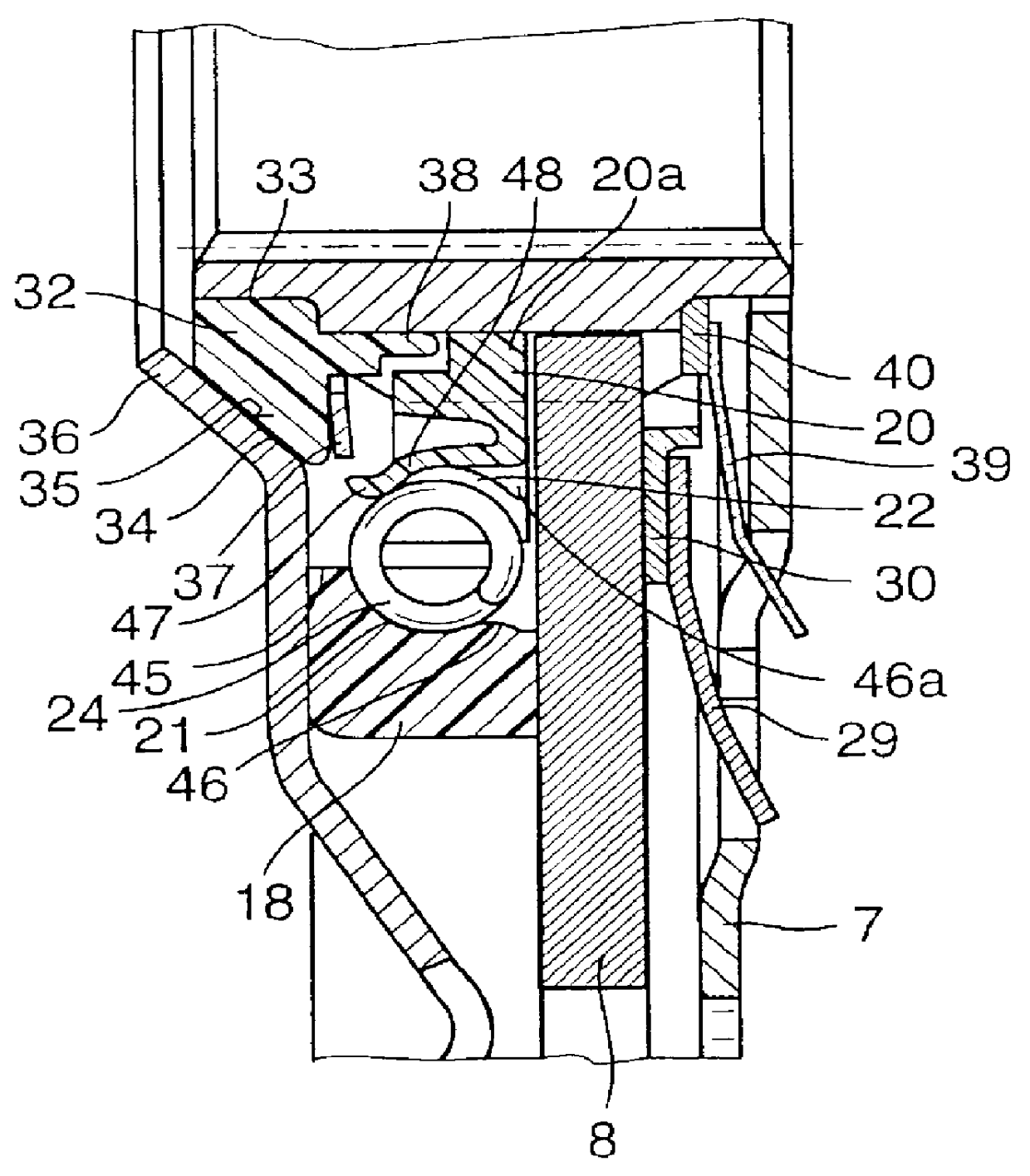
Figure 2 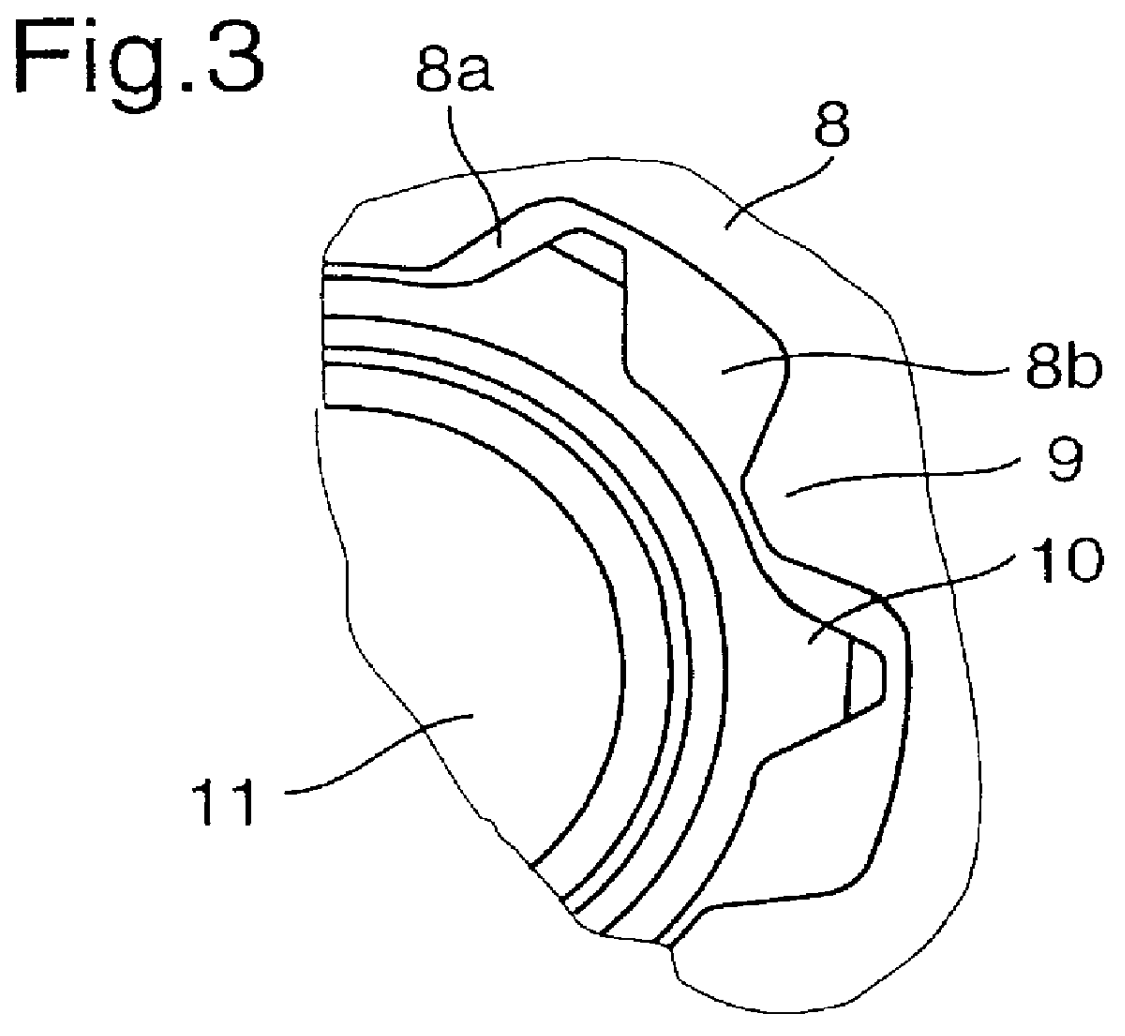
Figure 3
Abstract
Description
The present invention relates to improvements in torsional vibration dampers, and more particularly to improvements in apparatus which embody one or more dampers to prevent the transmission of torsional vibrations and / or other stray movements from a rotary input component to a rotary output component which can rotate with and relative to the input component.It is already known to prevent the transmission of undesirable vibratory and / or other stray movements from a rotary input component to a rotary output component by resorting to torque transmitting means in the form of several torsional vibration dampers. For example, the torque transmitting means can comprise a first or auxiliary damper with coaxial rotary input and output elements and one or more energy storing devices (such as coil springs) between such elements, and a second or main damper with energy storing devices which are normally stiffer (i.e., more resistant to deformation) than the energy storing device or devices of t...
Examples
Embodiment Construction
FIG. 1 shows a torsional vibration damping apparatus 1 which is a clutch disc or clutch plate adapted to be utilized in a manually operable or automated torque transmitting system, for example, in a friction clutch of the type shown in FIG. 2 of commonly owned U.S. Pat. No. 5,409,091 granted Apr. 25, 1995 to Reik et al. for "AUTOMATICALLY ADJUSTABLE FRICTION CLUTCH". The apparatus 1 comprises a first torsional vibration damper 2 and a second or main or primary torsional vibration damper 3.
The input component of the apparatus 1 comprises a rotary disc 5 carrying two sets of friction linings 4 and being non-rotataby secured to a coaxial second disc 7 by a set of rivets 6 adapted to maintain the two discs 5, 7 at a fixed axial distance from each other. The input component 4-7 of the apparatus 1 further constitutes the input member of the main damper 3. The output member of the main damper 3 comprises a rotary washer-like member 8 (called flange) having an internal profile 9 (such as an...