
Back light reflection sheet for liquid crystal
Patent Information
- Authority / Receiving Office
- US · United States
- Current Assignee / Owner
- Publication Date
- 2003-06-17
- Estimated Expiration
- Not applicable · inactive patent
Smart Images
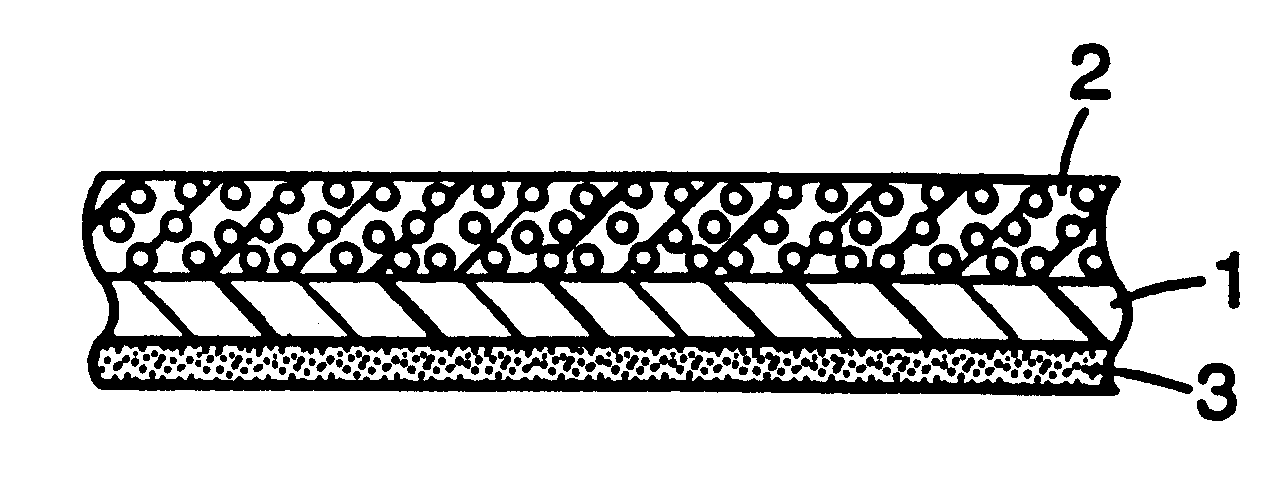
Figure 1 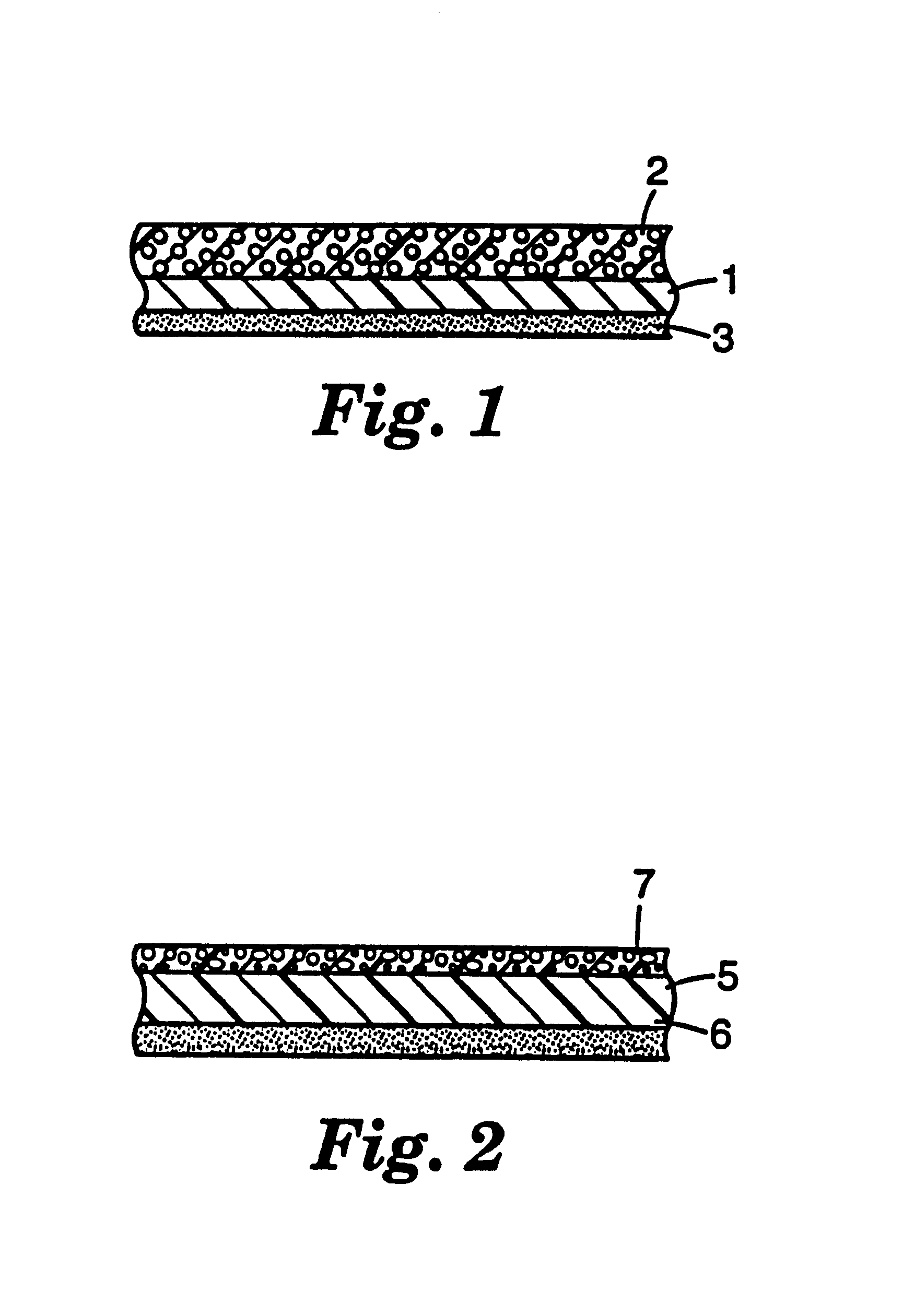
Figure 2
Abstract
Description
TECHNICAL FIELD OF INVENTIONThe present invention relates to a reflection sheet, particularly a reflection sheet disposed so as to surround a straight tube type fluorescent lamp provided along the edge of a light guide plate in an edge type back light device among back light devices of liquid crystal display panels, and a reflection sheet disposed on the reverse side of the light guide plate.PRIOR ARTIn an edge type back light device among back light devices of liquid crystal display panels, a straight tube type fluorescent lamp is disposed along the edge of a light guide plate. Part of light emitted from the fluorescent lamp on the light guide plate is directly guided to the light guide plate. The remainder of the light is reflected by a reflection sheet disposed so as to surround the fluorescent lamp and then enters the light guide plate. The light guided to the light guide plate is reflected by a light diffusing layer, which has been printed in a dot form on the reverse side of t...
Examples
examples 1 to 7
A white ink (a mixture of an acrylic / urethane binder with 50% by weight of Lamic.TM. F-22OHC White manufactured by Dainichiseika Color & Chemicals Manufacturing Co., Ltd. (titanium oxide)) was coated on one surface of a 36 .mu.m-thick white foamed polyester film (MELINEX.TM. 337, manufactured by ICI Co., Ltd.) (Examples 1 and 2 and 4 to 7) or a 36 .mu.m-thick unfoamed transparent polyester film (Example 3), which has been subjected to a treatment for facilitating bonding, to a thickness on a dry basis of 20 .mu.m, and the resultant coating was then dried, thereby preparing a white sheet. A reflective paint prepared according to a formulation specified in Table 3 was coated on the white ink layer of the white layer to a thickness on a dry basis of 50 .mu.m, and the resultant coating was then dried to prepare a reflection sheet. The reflection sheet thus obtained was slit into a strip having a width of 20 mm and a length of 219 mm. The strip was fixed with a pressure sensitive adhesiv...
examples 8 to 19
Each of reflective paints listed in Table 5 was coated on the surface of the same white sheet as used in Example 1 (Examples 8 and 10 to 19) or the same transparent sheet as used in Example 3 (Example 9) remote from the white ink layer to a thickness on a dry basis of 50 .mu.m, and the resultant coating was then dried, thereby preparing reflection sheets. For the reflection sheets thus obtained, the brightness was measured in the same manner as in Example 1. The relative brightness values are given in Table 5.
examples 20 to 22
Each of reflective paints (binder: a silicone-grafted type acrylic ester copolymer (trade name: Silicone-Acrylic Emulsion SX-8307 (A)04), Tg=5.degree. C., average light transmittance in the wavelength range of from 400 to 800 nm=100%) containing fillers listed in Table 5 was coated on the reflective coating layer of the reflection sheet prepared in Example 8 to a thickness on a dry basis of 5 .mu.m, and the resultant coating was then dried to form a layer (called a "top coat"), thereby preparing reflection sheets. For the reflection sheets thus obtained, the brightness was measured in the same manner as in Example 1. The relative brightness values are given in Table 5.