
Slide bearing and method for the production thereof
a technology of slide bearings and bearing pins, which is applied in the direction of bearings, shafts, engine lubrication, etc., can solve the problems of complex production of slide bearings, inability to loosen bearing pins subsequently, and the appearance of corrugated profiles becoming plasti
Patent Information
- Authority / Receiving Office
- US · United States
- Patent Type
- Patents(United States)
- Current Assignee / Owner
- Publication Date
- 2003-11-18
- Estimated Expiration
- Not applicable · inactive patent
Smart Images
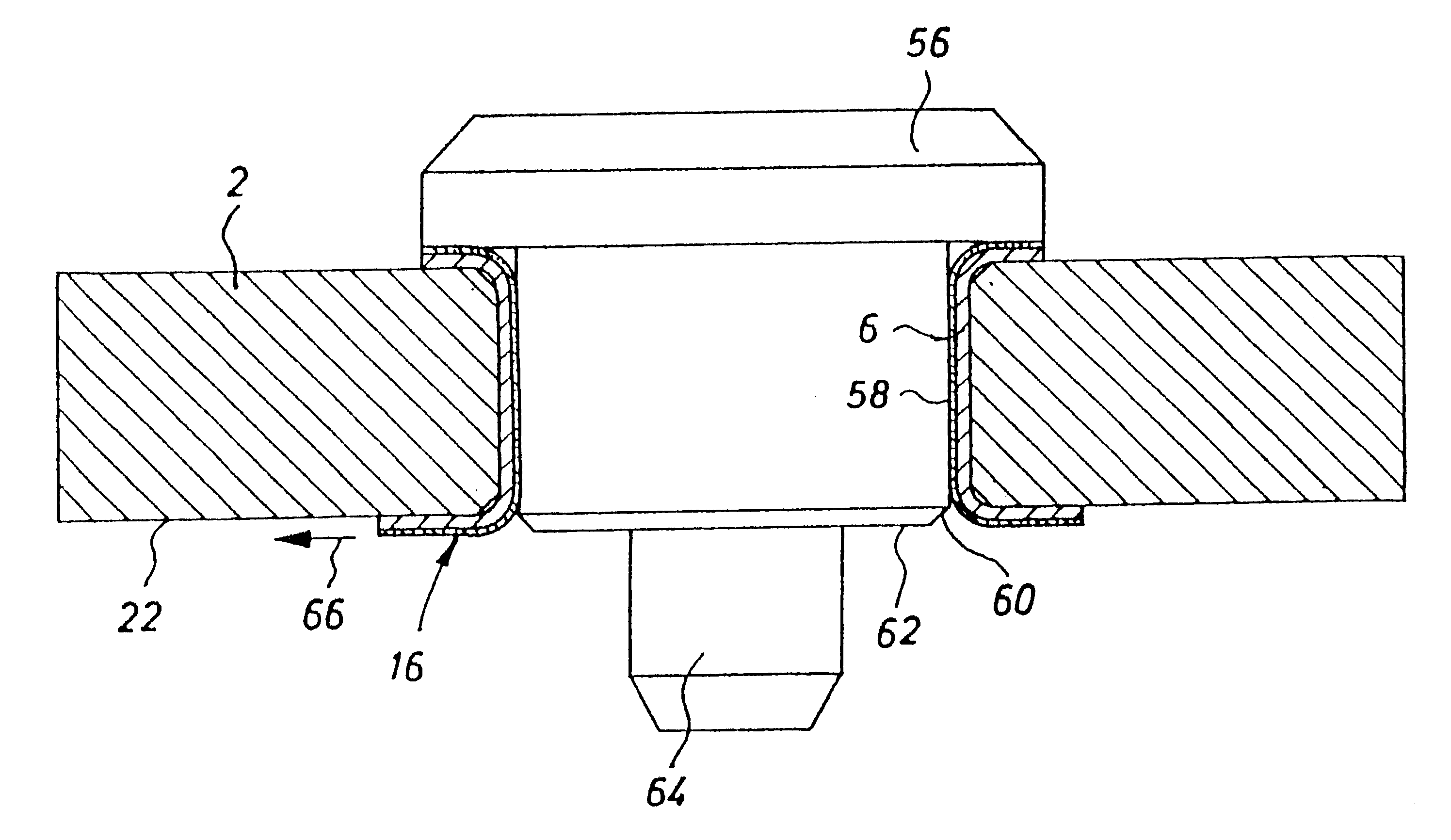
Figure 1 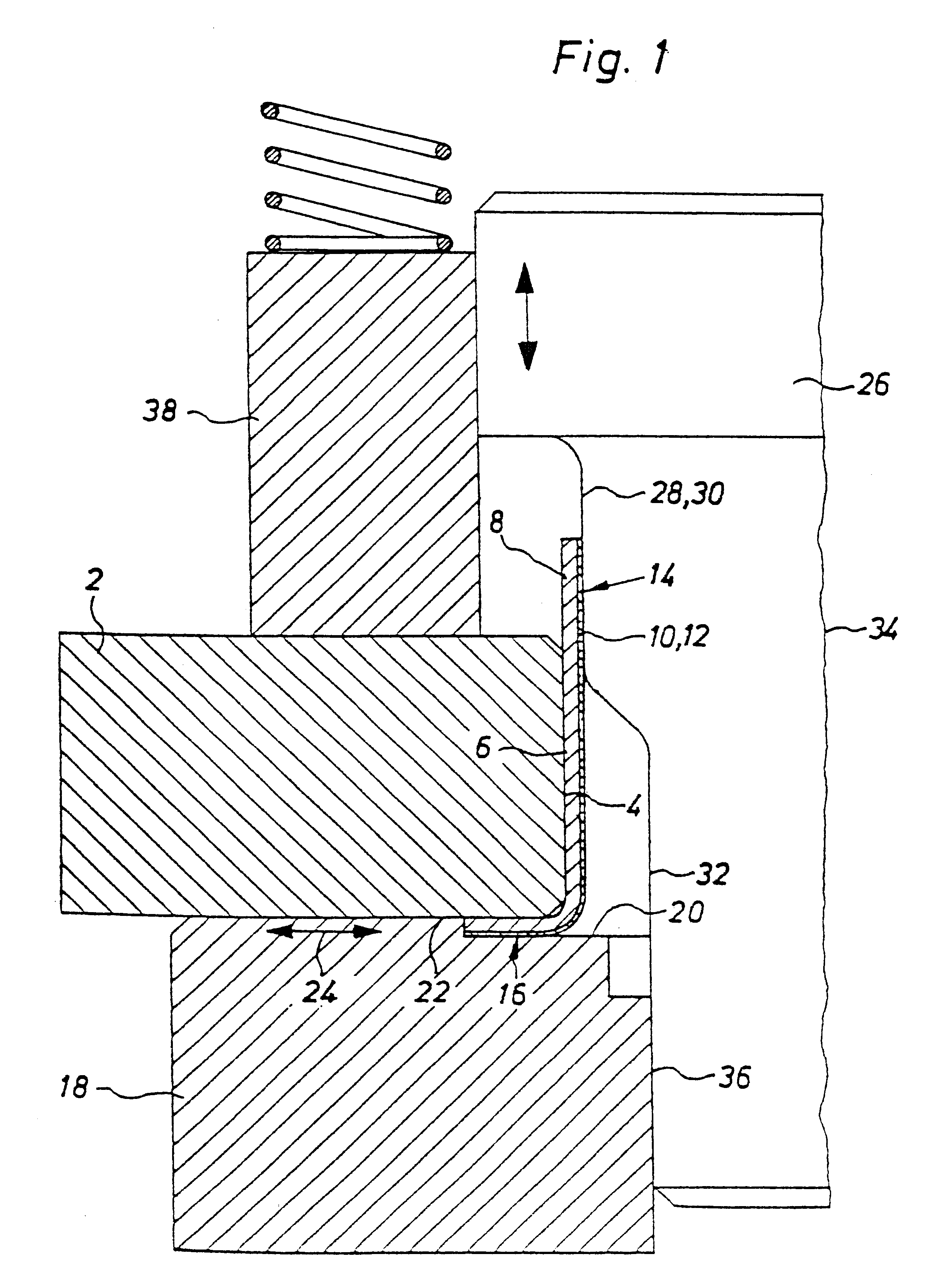
Figure 2 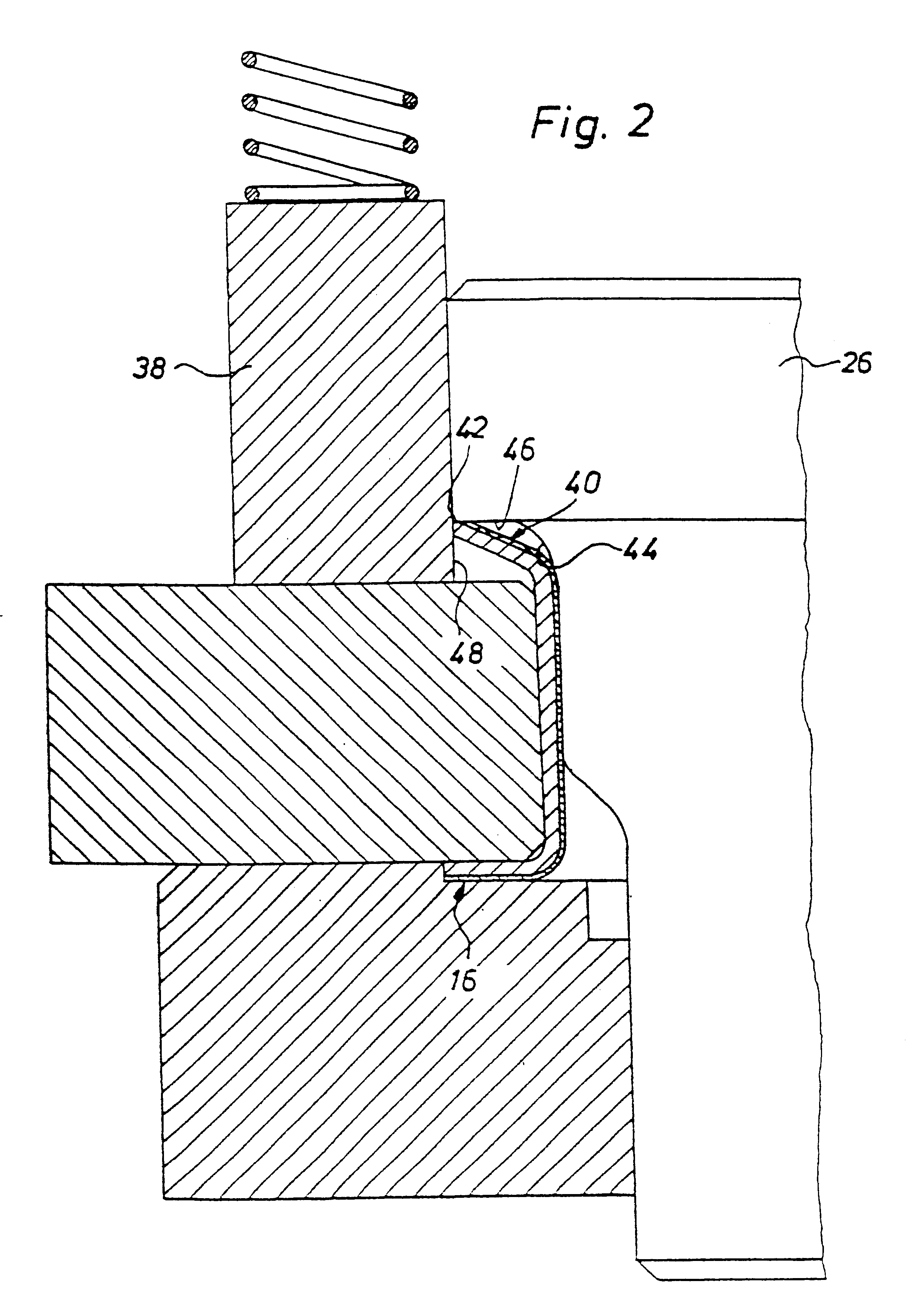
Figure 3
Abstract
Description
BACKGROUNDThe invention relates to a slide bearing comprising a hinge housing component having a bearing opening and a flange-bearing bushing pressed into the bearing opening, into which a bearing pin can be inserted and pivoted therein, where the flange-bearing bushing has a crimped protrusion projecting radially inward along the periphery.The term 11 hinge housing component 11 is to be understood in the broadest sense. It can be a hinge or articulated arm which interacts with another articulated arm or hinge arm and on which a component to be swung, for example, an automobile door, can be attached. A stationary hinge plate or one attached to a piece of equipment which has a bearing opening to insert a bearing pin can also act as a hinge housing component. The bearing pin itself can be already tightened or be tightened down later to an additional hinge housing component, or with an object opposite the first one which is to be swung.A slide bearing of this type is known from DE 84 3...
Examples
Embodiment Construction
FIG. 1 shows a half-section drawing of an inventive slide bearing. The slide bearing comprises a hinge housing component 2 with a bearing opening 4 and flange-bearing bushing 6 pressed into it. The bearing bushing 6 is made from a steel-plastic-composite material. A porous bronze layer is sintered onto a steel backing 8, and a plastic slide bearing mixture 12 on a PTFE base is introduced into the pores of the bronze layer 10. The flange-bearing bushing 6 comprises a cylindrical part 14 and a first flange 16. The flange-bearing bushing 6 is pressed into the bearing opening 4. The flange 16 is held by means of a die press 18, with a press bearing surface 20 matching the flange, against a hinge housing component surface 22 which is adjacent to the opening 4. As a result, the flange 16 is held fast in the direction of the double arrow 24 as well, that is to say, in the surface plane direction of the surface 22. A mandrel 26 is inserted into the opening of the flange-bearing bushing 6. T...