
System and method for processing wake-up signals in a network
a technology of network wake-up and wake-up signal, applied in high-level techniques, instruments, data switching details, etc., can solve the problems of limited matching capability, system failure, and inability to locate wake-up, and achieve the effect of less complicated and less costly to modify
Patent Information
- Authority / Receiving Office
- US · United States
- Patent Type
- Patents(United States)
- Current Assignee / Owner
- Publication Date
- 2005-01-25
- Estimated Expiration
- Not applicable · inactive patent
Smart Images
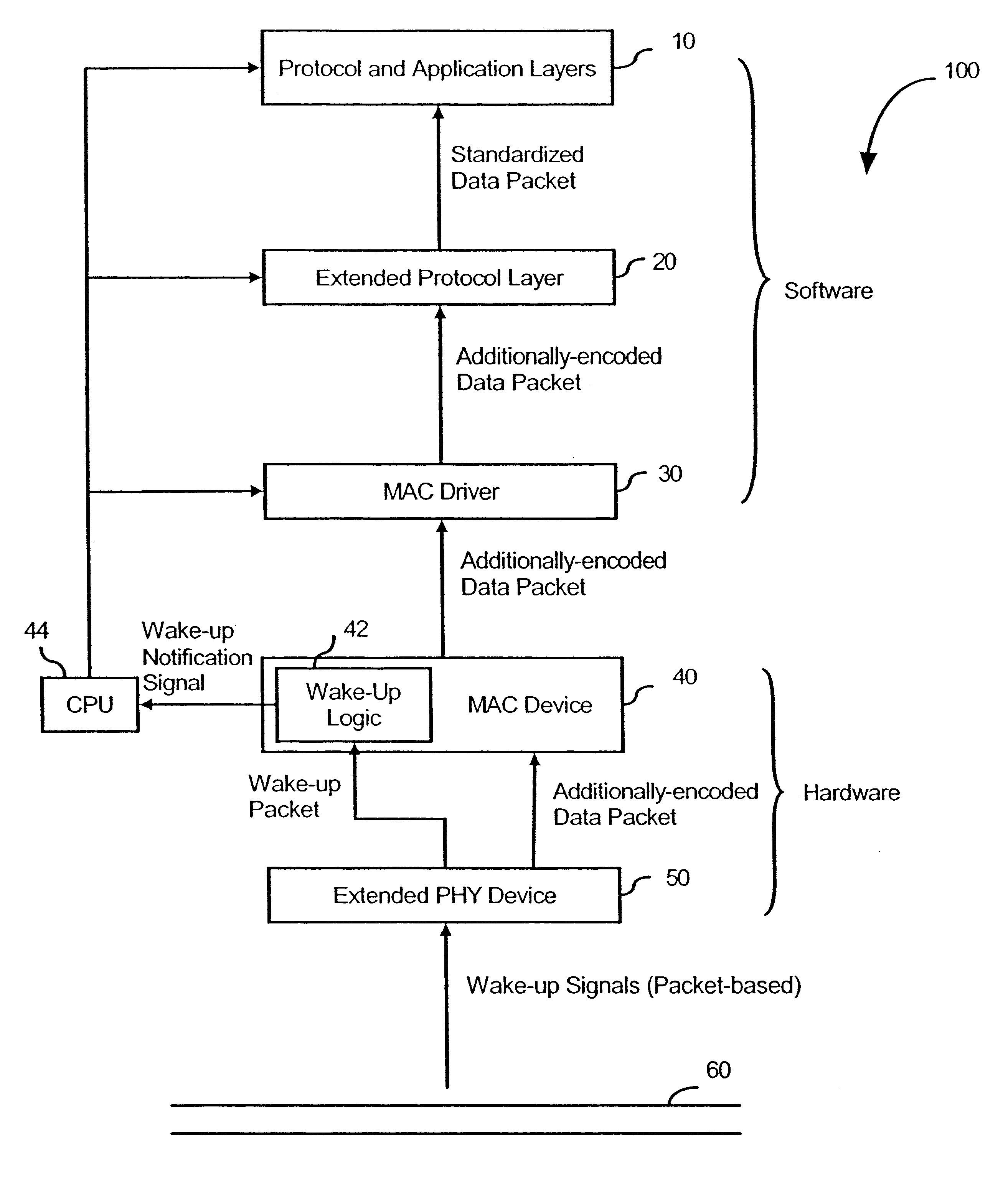
Figure 1 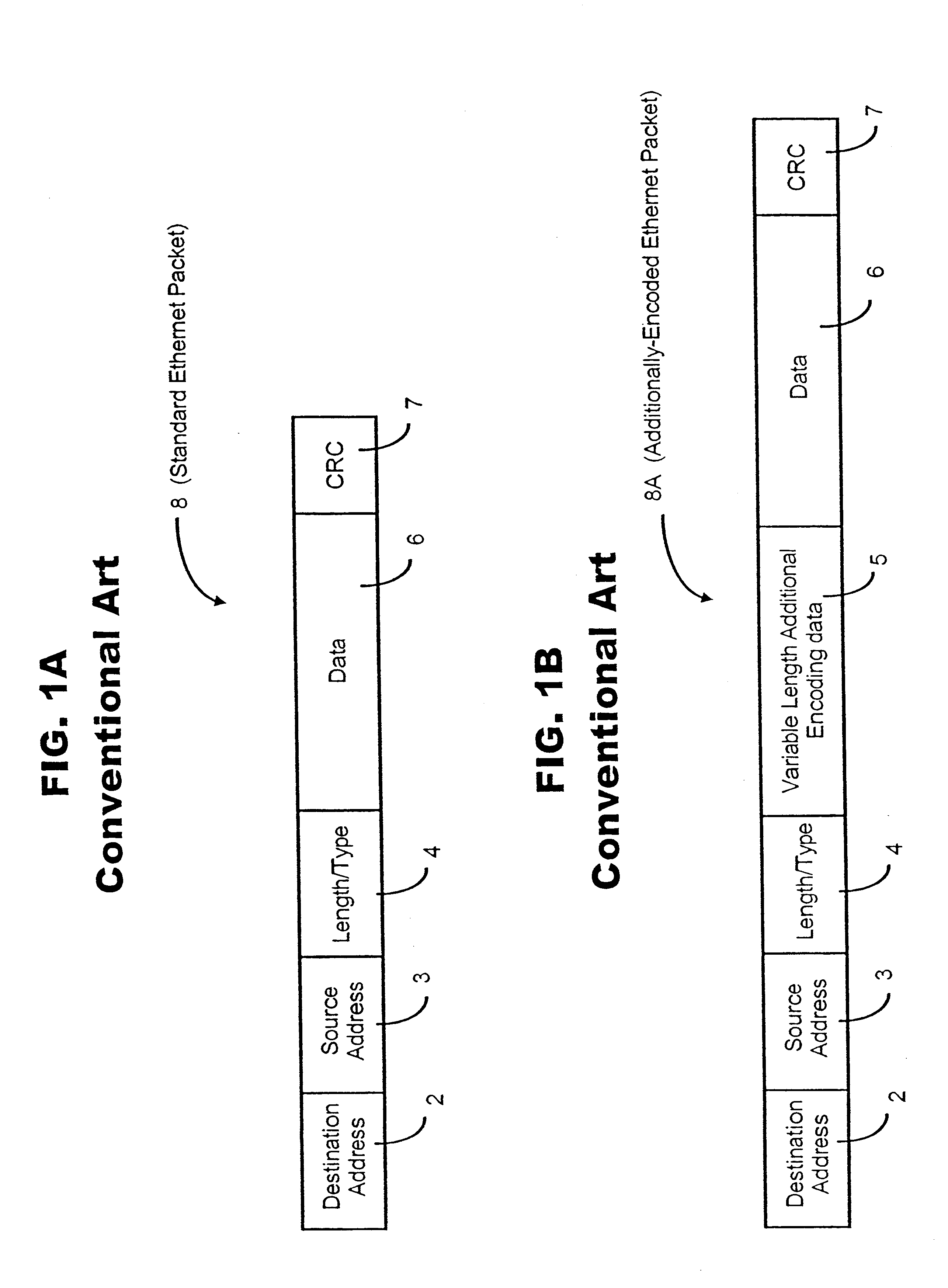
Figure 2 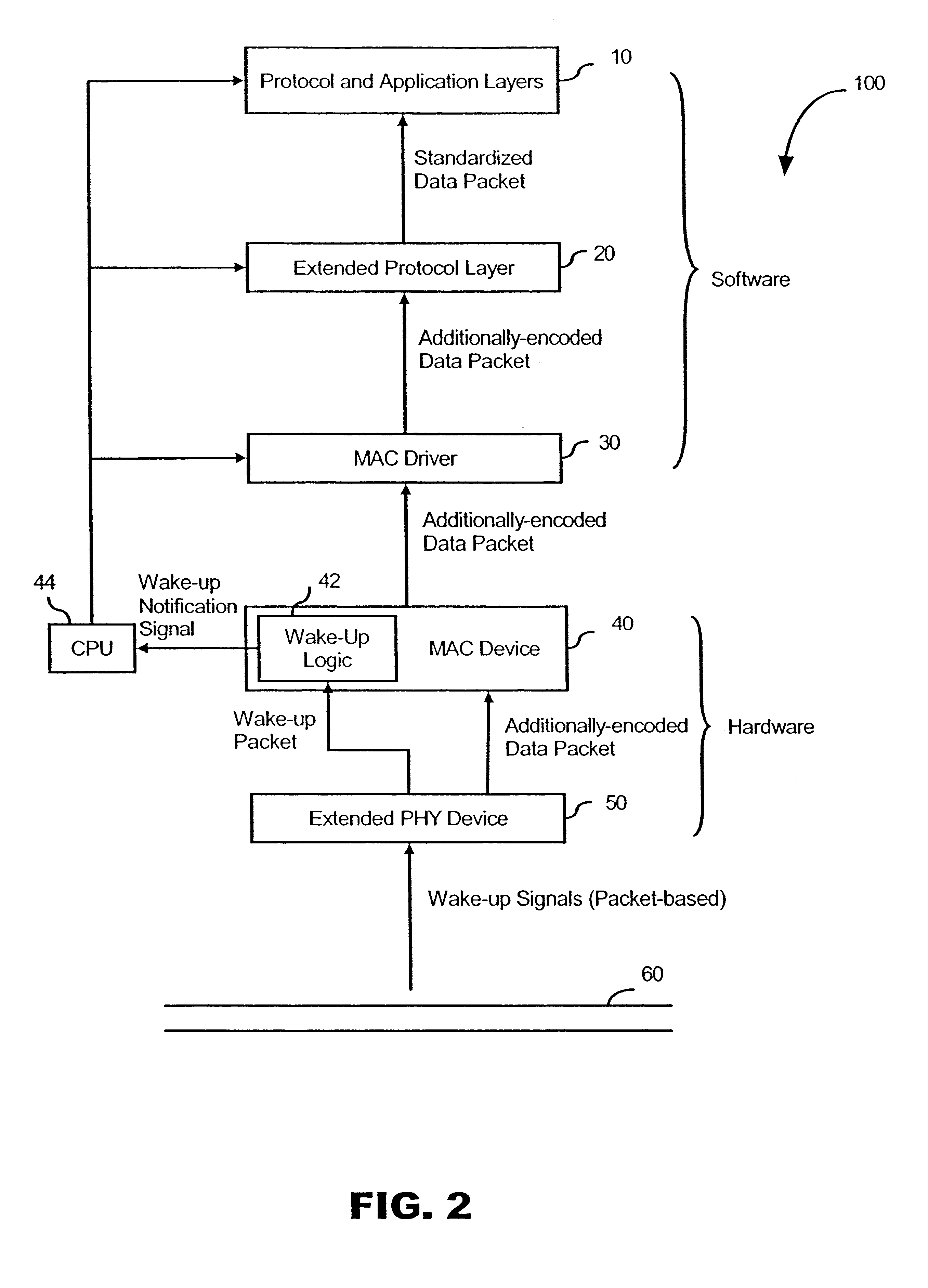
Figure 3
Abstract
Description
BACKGROUND OF THE INVENTION1. Field of the InventionThe present invention relates to computer network systems and, more particularly, to a system and method for processing wake-up signals during a sleep mode of a computer in a network system.2. Discussion of Related ArtIn a conventional network such as a Local Area Network (LAN), a plurality of computers are configured to communicate with each other over a shared network medium such as coaxial cables. When computers in the network are not in use, generally they are configured to enter automatically a “sleep” mode, so as to save power. This “sleep” mode involves removing power from most components of the computer, except for a few designated components that need to stay “awake”, i.e., fully powered, to wake up the computer whenever appropriate. These designated components monitor incoming signals on the network medium and determine whether the incoming signals are wake-up signals for waking up the sleeping components of the computer....
Examples
first embodiment
FIG. 2 is a block diagram of a system 100 for processing wake-up signals during a sleep mode of a computer in a communications network according to the present invention. The system 100 is implemented in a computer of a packet-based network system such as the Ethernet where data is communicated in packets and where wake-up signals carry wake-up data as well as additional encoding data that is variable in length. As shown in FIG. 2, the system 100 includes protocol and application layers 10, an extended protocol layer 20, a MAC driver 30, a MAC device 40 including wake-up logic 42, an extended PHY device 50, and a network medium 60, all operatively coupled. All of the components (10, 20, 30, 40 and 60) are conventional components that operate in the manner well known in the network art, except for the extended PHY device 50.
The extended PHY device 50 is a modified version of a conventional PHY device and is capable of generating a standardized “wake-up” packet based on an additionall...
second embodiment
FIG. 4 is a block diagram of a system 200 for processing wake-up signals during a sleep mode of a computer in a communications network according to the present invention. In this embodiment, the system 200 is capable of processing a wake-up signal that is not packet-based, e.g., a wake-up signal can be a tone signal, a level signal (e.g., 5 volts), a pulse signal, an optical signal, etc. For example, the system 200 is able to process a wake-up signal representing a particular tone. This embodiment allows any system to wake up the sleeping components in response to a simple non-packet based wake-up signal. Once the system 200 is awake, however, it can process data packets according to known techniques.
As shown in FIG. 4, the system 200 includes protocol and application layers 10, a MAC driver 30, a MAC device 40 including wake-up logic 42, an extended PHY device 52, and a network medium 60, all operatively coupled. The components 10, 30, 40 and 60 are the same elements as the compone...