
Methods and apparatus for characterization of polymers using multi-dimensional liquid chromatography with regular second-dimension sampling
a liquid chromatography and multi-dimensional technology, applied in the field of methods and equipment for characterization of polymer samples in multi-dimensional liquid chromatography systems, can solve the problems of general inefficiency with respect to overall sample throughput, complicated control and/or operation schemes and systems, etc., and achieve the effect of less complicated
Patent Information
- Authority / Receiving Office
- US · United States
- Patent Type
- Patents(United States)
- Current Assignee / Owner
- Publication Date
- 2004-05-04
- Estimated Expiration
- Not applicable · inactive patent
Smart Images
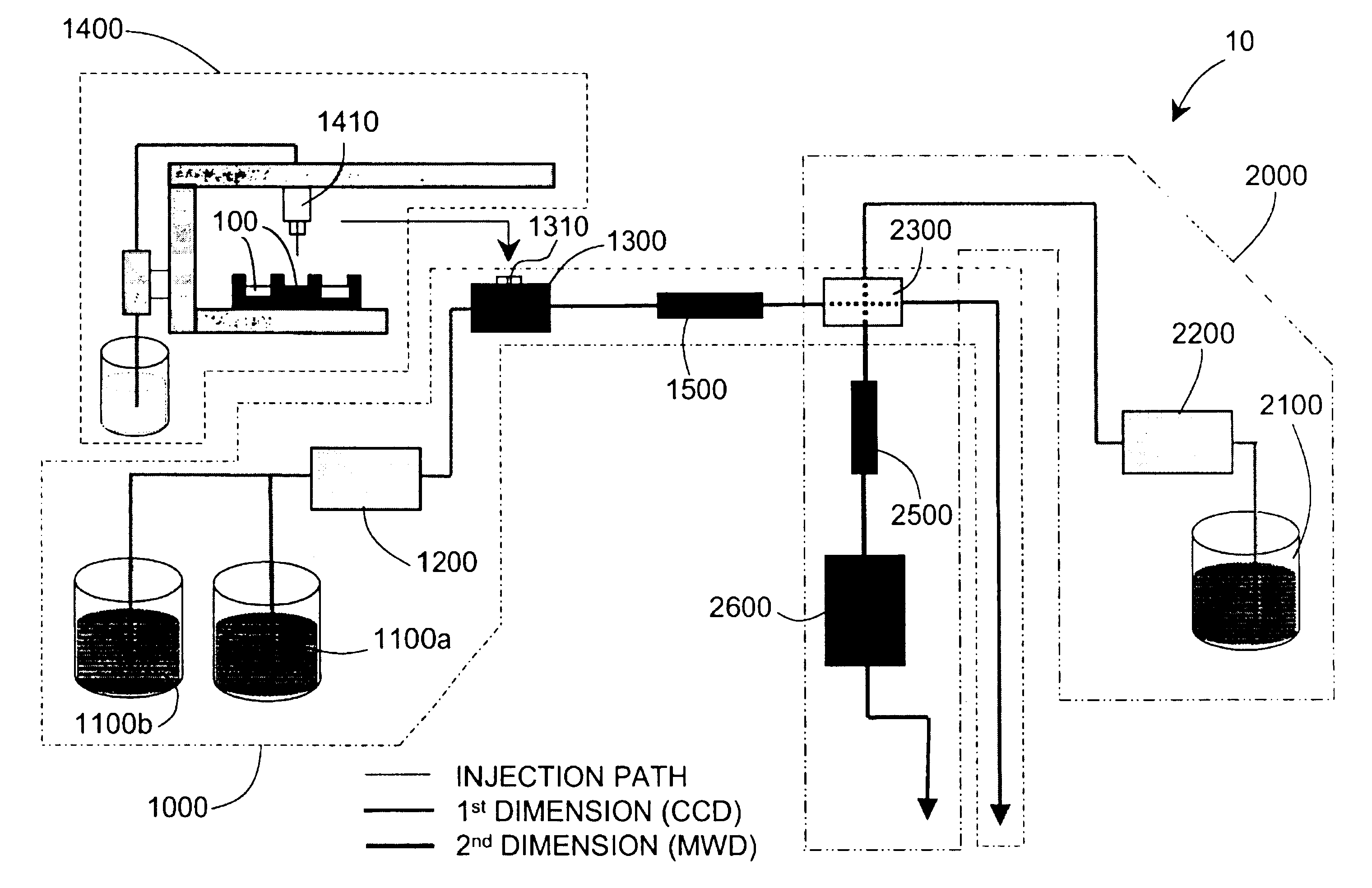
Figure 1 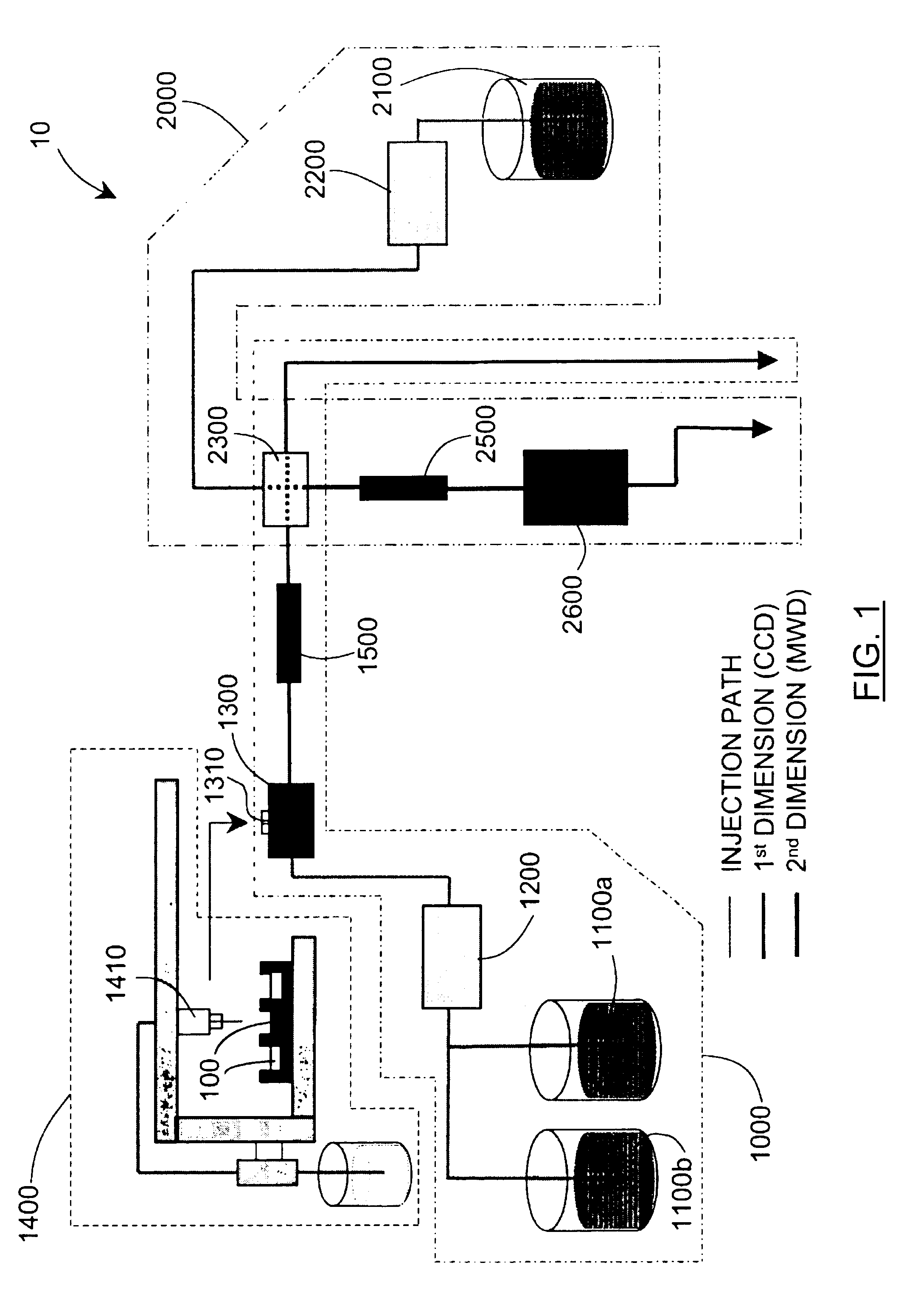
Figure 2 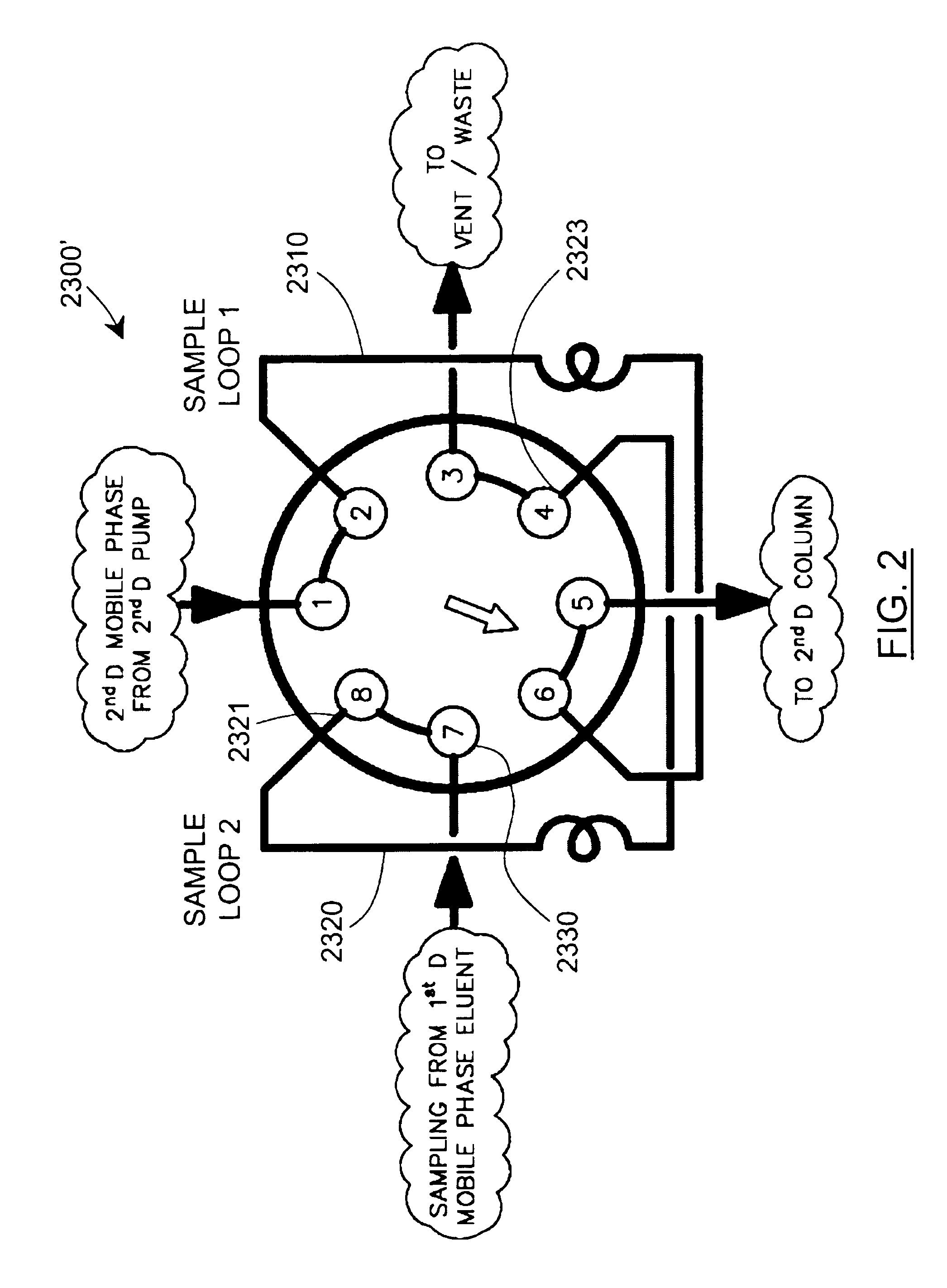
Figure 3
Abstract
Description
BACKGROUND OF INVENTIONThe present invention generally relates to methods and apparatus for characterization of polymer samples in liquid chromatography systems, and specifically, for characterization of polymer samples in multi-dimensional liquid chromatography systems. The invention particularly relates, in a preferred embodiment, to characterization of polymer samples in a comprehensive, directly-coupled, multi-dimensional high-performance liquid chromatography systems including a first HPLC dimension adapted for determining composition (e.g., adapted for reverse phase chromatography, adsorption chromatography, and the like such as mobile phase gradient-elution chromatography) and a second HPLC dimension adapted for determining molecular weight or size (e.g., adapted for size exclusion chromatography such as gel permeation chromatography).Multi-dimensional high-performance liquid chromatography systems are known in the art. See e.g., Murphy et al., Effect of Sampling Rate on Reso...
Examples
example 1
Two-Dimensional Liquid Chromatography with Regularly Recurring 2.sup.nd -Dimension Sampling Interval
This example demonstrates two-dimensional liquid chromatography techniques for characterizing a polymer sample comprising polymer components of varying composition and / or molecular weight, wherein the second-dimension is comprehensively and directly coupled to the first dimension, by in-line sampling of the first-dimension mobile phase eluent at regularly recurring intervals of time.
In experiments effected for this example, various polymer samples (described below) having components with different chemical compositions and / or molecular weight were characterized in a two-dimension chromatography system comprising a first dimension HPLC subsystem adapted for normal-phase compositional gradient elution chromatography, and a second dimension HPLC subsystem adapted for gel permeation chromatography (GPC). Briefly, about 50 .mu.L of a polymer sample solution was injected into the mobile pha...
example 2
Use of 2-Dimensional Liquid Chromatography for Fingerprinting Characterization of a Combinatorial Library of Polymer Samples
This example demonstrates two-dimensional liquid chromatography techniques as applied for characterizing a combinatorial library of polymer samples comprising polymer components of random copolymers, poly(AB), synthesized by free-radical polymerization in a parallel batch reactor with various ratios of monomers A and B, and with varying ratios of monomer to initiator. This example also demonstrates that such two-dimensional characterization protocols are comparable in quality of results to separate, one-dimensional analysis conducted independently of each other, and favorable in terms of overall sample throughput.
The polymer samples of the library were synthesized in the parallel batch reactor using combinatorial polymerization approaches known in the art. FIG. 7A is a graphical representation of the library design for the library of polymer samples, showing th...
example 3
Comparative Characterization Using 2-Dimensional Liquid Chromatography versus Using Separate, One-Dimension HPLC and GPC Analysis, for Fingerprinting Characterization of a Combinatorial Library of Polymer Samples
This example demonstrates a comparison between two-dimensional liquid chromatography techniques, and corresponding separate, individual one-dimensional liquid chromatography protocols, as applied for characterizing a combinatorial library of polymer samples. The library of polymer samples comprises polymer components of random copolymers, poly(AB), synthesized by free-radical polymerization in a parallel batch reactor with various ratios of monomers A and B, and with varying ratios of monomer to initiator, where A and B represent hydroxyethylmethacrylate (HEMA) and styrene monomers, respectively.
The polymer samples of the library were synthesized in the parallel batch reactor using combinatorial polymerization approaches known in the art. FIG. 8A is a graphical representatio...