
Method for the surface treatment of a fluorine resin, method for making a laminate, and a laminate
a fluorine resin and surface treatment technology, applied in the field of laminates, can solve the problems of poor bonding properties of the elastic adhesive body formulated with a silane coupling agent, disadvantageous crosslinking elastic adhesive body, and unsatisfactory surface treatment of the fluorine resin. achieve excellent initial bonding properties and storage stability
Patent Information
- Authority / Receiving Office
- US · United States
- Patent Type
- Patents(United States)
- Current Assignee / Owner
- Publication Date
- 2005-12-06
- Estimated Expiration
- Not applicable · inactive patent
Smart Images
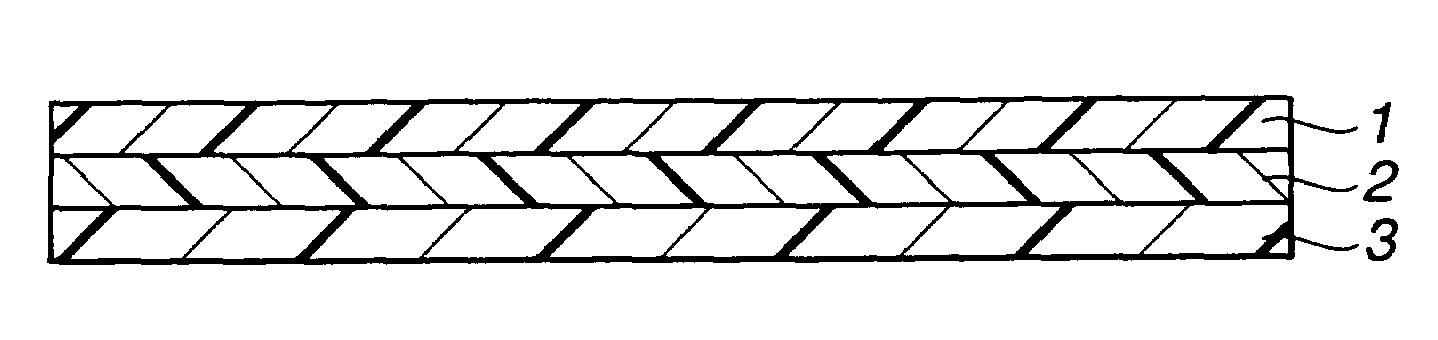
Figure 1 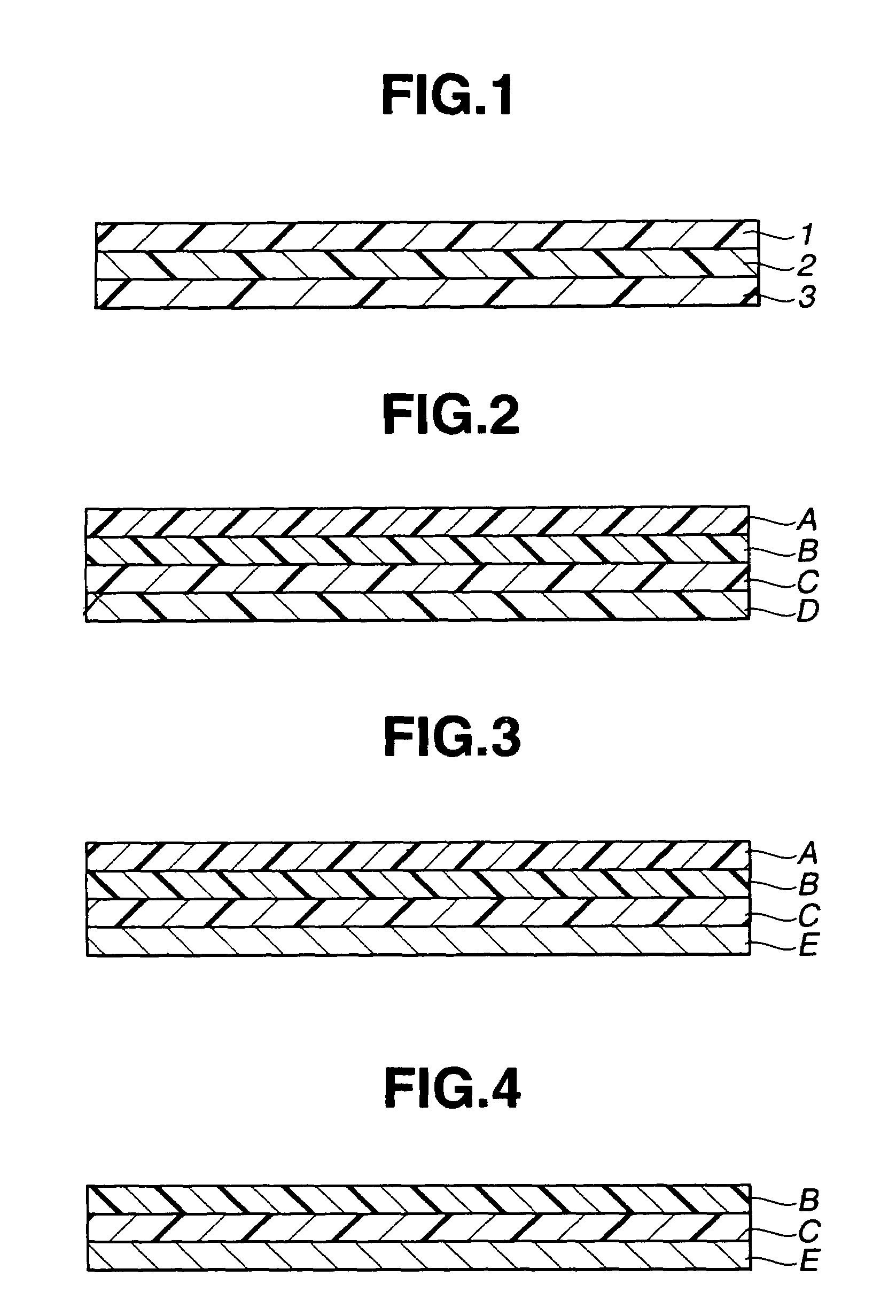
Figure 2 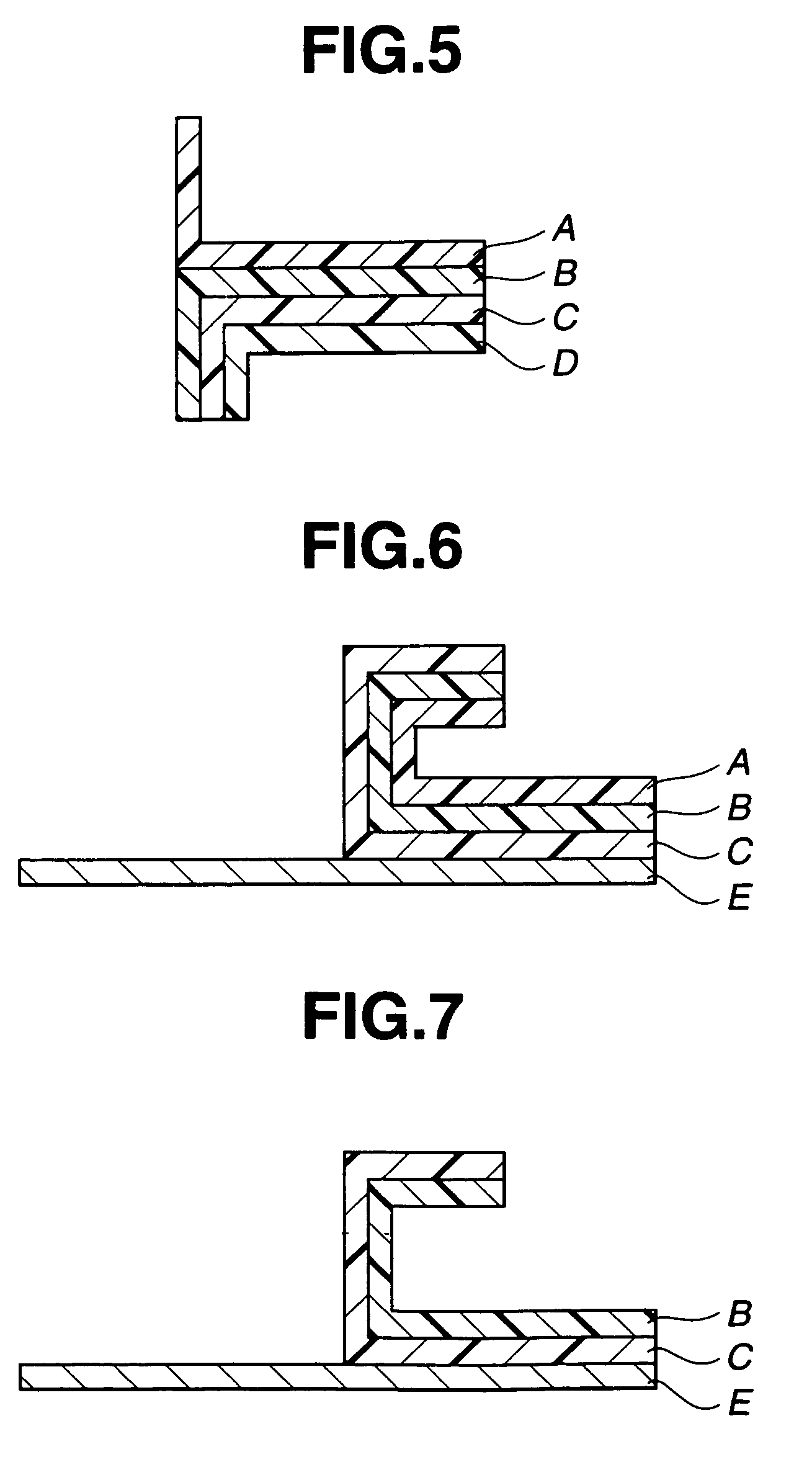
Figure 3
Abstract
Description
BACKGROUND OF THE INVENTION
[0001] This invention relates to a laminate, which has, at least at a part thereof, a portion where a fluorine resin and a crosslinking elastic adhesive body, such as of an ethylene-vinyl acetate copolymer or the like, are directly bonded to each other and which is adapted for use as a window material for buildings and an electric member mainly for outdoor use and also, to a method for making such a laminate. More particularly, the invention relates to a method for the surface treatment of a fluorine resin, which is suited to impart bonding properties to a fluorine resin for the laminate, a laminate having an excellent property of bonding between the fluorine resin and the crosslinking elastic adhesive body, and a method for making such a laminate as mentioned above.
[0002] The laminate obtained by directly bonding, to a fluorine resin, a crosslinking elastic adhesive body, such as of an ethylene-vinyl acetate copolymer (EVA) or the like, is used by bonding t...
Examples
experimental examples 1 , 2
Experimental Examples 1, 2
[0153]The property of bonding between a corona discharged fluorine resin and a crosslinked elastic adhesive body directly laminated thereon was tested in the following manner.
[0154]Crosslinking elastic adhesive body compositions B, C as used in Example 9 were, respectively, used and formulated with a silane coupling agent as shown in Table 4, followed by lamination on the corona discharged fluorine resin in the same manner as in the example to obtain laminates each having a double-layered structure including one fluorine resin layer and one crosslinking elastic adhesive body layer.
[0155]The resultant laminates were each checked with respect to initial bonding force and bonding force after one month. The ratio of the bonding force after one month to the initial bonding force was calculated as storage stability. The ratio of 50% or over, which was considered to keep a good bonding force, was assessed as ◯, and the ratio less than 50%, which was considered to ...