
Hydroxymorpholinone derivative and medicinal use thereof
a technology of hydroxymorpholinone and derivative, which is applied in the field of new hydroxymorpholinone derivatives, can solve the problems of inability to put inhibitors into practice, and achieve the effects of superior penetration to tissue and absorbability, low toxicity, and superior safety
Patent Information
- Authority / Receiving Office
- US · United States
- Patent Type
- Patents(United States)
- Current Assignee / Owner
- Publication Date
- 2007-05-29
- Estimated Expiration
- Not applicable · inactive patent
Smart Images
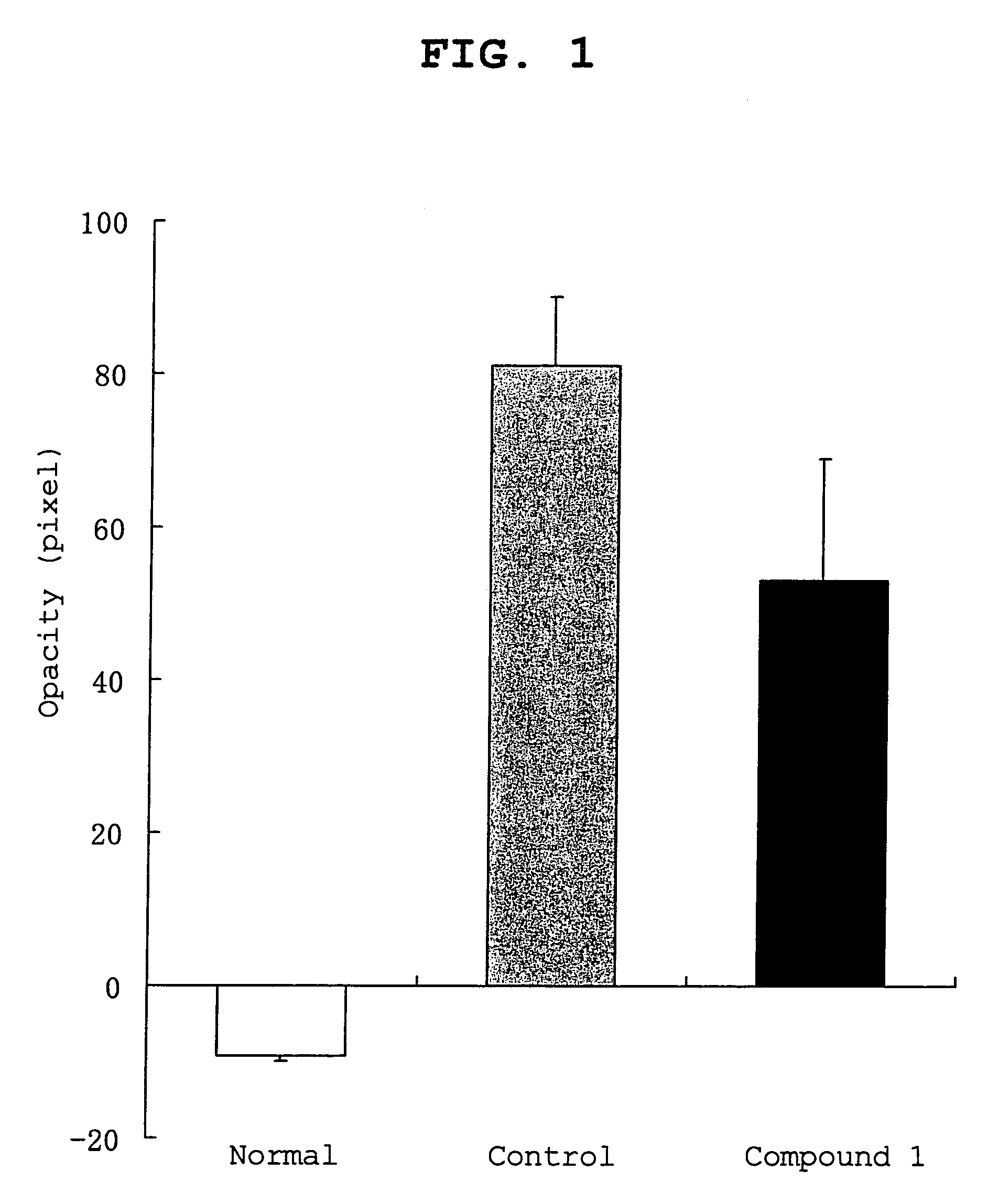
Figure 1 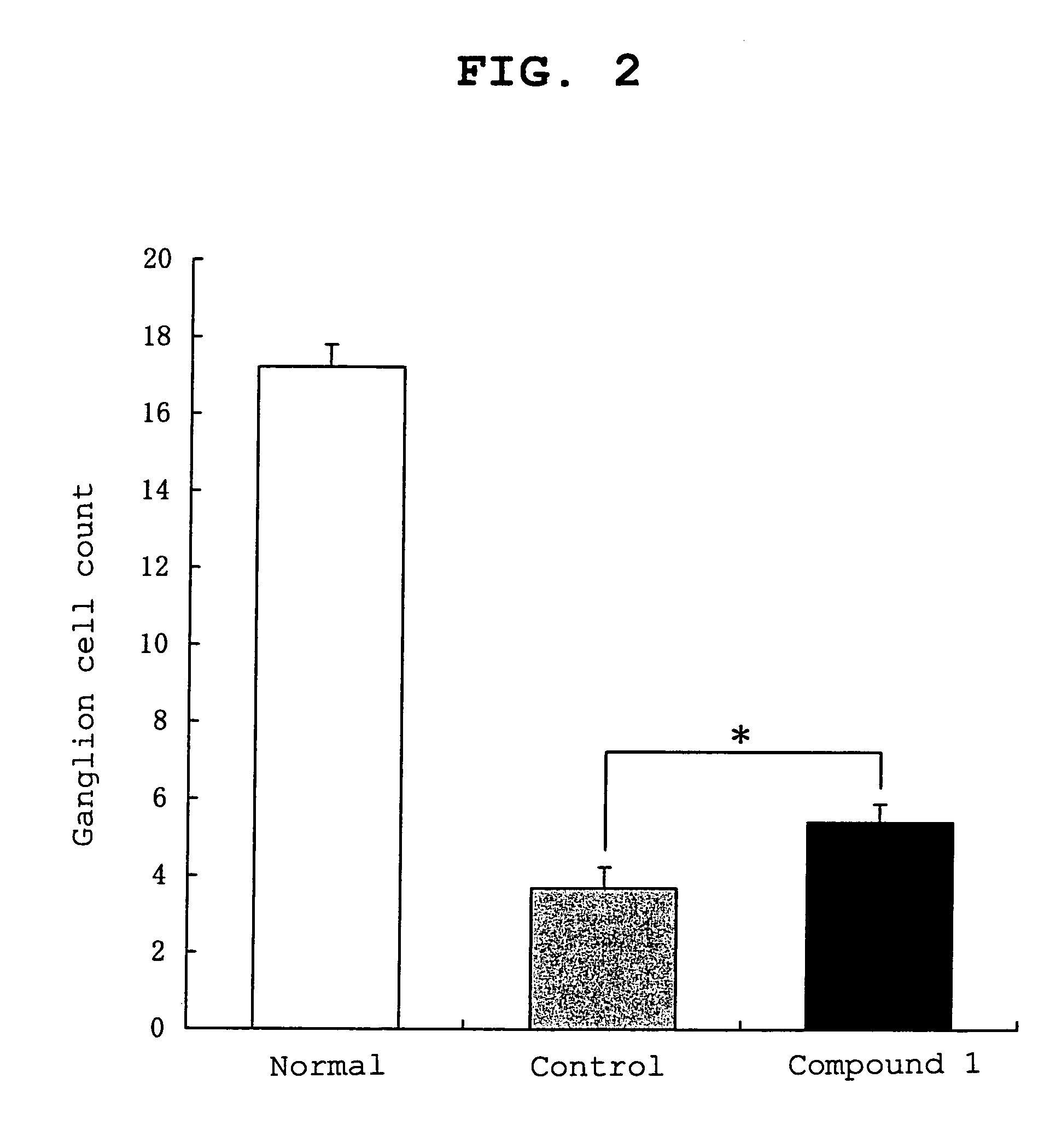
Figure 2 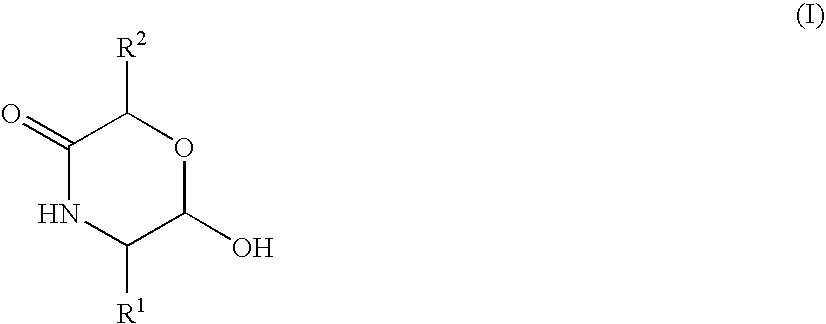
Figure 3
Abstract
Description
[0001] This application is a U.S. national stage of International Application No. PCT / JP03 / 03910 filed Mar. 27, 2003.TECHNICAL FIELD
[0002] The present invention relates to a novel hydroxymorpholinone derivative having a calpain inhibitory activity. More particularly, the present invention relates to a medicine containing a novel hydroxymorpholinone derivative.BACKGROUND ART
[0003] Calpain is one of the proteolytic enzymes in cytoplasm, which are distributed widely in living organisms, and activated by a calcium ion. At present, it has been clarified that abnormal activation of this calpain is involved in various diseases such as stroke, subarachnoid hemorrhage, Alzheimer's disease, ischemic disease, muscular dystrophy,cataract, platelet aggregation, arthritis and the like [Trends in Pharmacological Sciences, vol. 15, p. 412 (1994)]. On the other hand, it has been clarified that a calpain inhibitor is effective for maintaining transparency of a lens in an experimental cataract model by w...
Examples
reference example 1
Homo-L-phenylalaninol (Reference Compound 1)
[0080]To a solution (200 mL) of lithium borohydride (3.6 g, 170 mmol) in tetrahydrofuran was added trichloromethylsilane (36 g, 340 mmol) under ice-cooling, and the mixture was stirred for 30 min. To this solution was slowly added homo-L-phenylalanine (10 g, 56 mmol) under the same conditions and the mixture was stirred for 18 hr. To this solution was added methanol until generation of a hydrogen gas stopped. After concentration under reduced pressure, 5% aqueous sodium hydroxide solution was added and the mixture was extracted twice with dichloromethane. The organic layer was dried over anhydrous magnesium sulfate and concentrated under reduced pressure to give Reference compound 1 (9.2 g, 97%) as a white solid.
[0081]mp 40.3-41.3° C. 1H-NMR (300 MHz, DMSO-d6)δ: 1.39 (m, 1H), 1.64 (m, 1H), 2.54-2.75 (m, 3H), 3.17 (dd, 1H, J=7.7, 4.1 Hz), 3.26 (m, 3H), 3.29 (dd, 1H, J=10.5, 4.8 Hz), 7.13-7.30 (m, 5H).
reference example 2
3-(2-naphthyl)-L-alaninol (Reference Compound 2)
[0082]Operations in the same manner as in Reference Example 1 and using 3-(2-naphthyl)-L-alanine instead of homo-L-phenylalanine afforded Reference compound 2 as colorless crystals.
[0083]mp 94.1-95.8° C. 1H-NMR (300 MHz, DMSO-d6)δ: 1.36 (s, 2H), 2.58 (dd, 1H, J=13.2, 7.8 Hz), 2.86 (dd, 1H, J=13.2, 5.4 Hz), 2.97 (m, 1H), 3.20-3.31 (m, 2H), 4.61 (s, 1H), 7.38-7.51 (m, 3H), 7.70 (s, 1H), 7.82-7.88 (m, 3H).
reference example 3
2-fluoro-L-phenylalaninol (Reference Compound 3)
[0084]Operations in the same manner as in Reference Example 1 and using 2-fluoro-L-phenylalanine instead of homo-L-phenylalanine afforded Reference compound 3 as colorless crystals.
[0085]mp 86.5-88.5° C. 1H-NMR (300 MHz, DMSO-d6)δ: 2.46 (dd, 1H, J=13.4, 7.7 Hz), 2.72 (dd, 1H, J=13.7, 5.9 Hz), 2.84-2.92 (m, 1H), 3.19 (dd, 1H, J=10.5, 6.3 Hz), 3.30 (dd, 1H, J=10.2, 4.8 Hz), 7.09-7.15 (m, 2H), 7.21-7.33 (m, 2H).