
Router image support device
a technology of image support and router, which is applied in the field of multi-network computing systems, can solve the problems of inability to restore the router to its previous functional state, inability to address this problem, and interruption of the wan or remote link,
Patent Information
- Authority / Receiving Office
- US · United States
- Patent Type
- Patents(United States)
- Current Assignee / Owner
- Publication Date
- 2008-01-29
- Estimated Expiration
- Not applicable · inactive patent
Smart Images
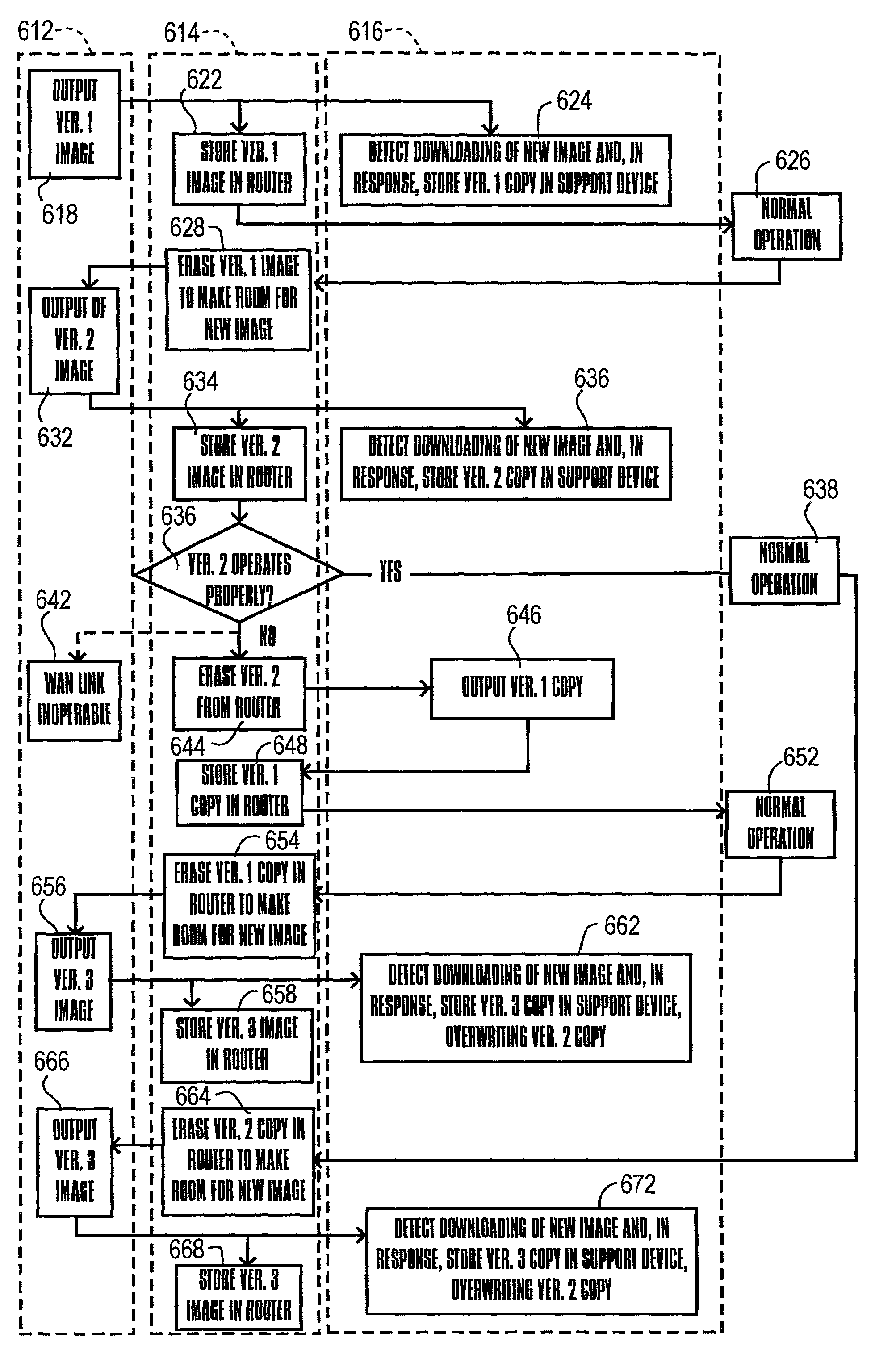
Figure 1 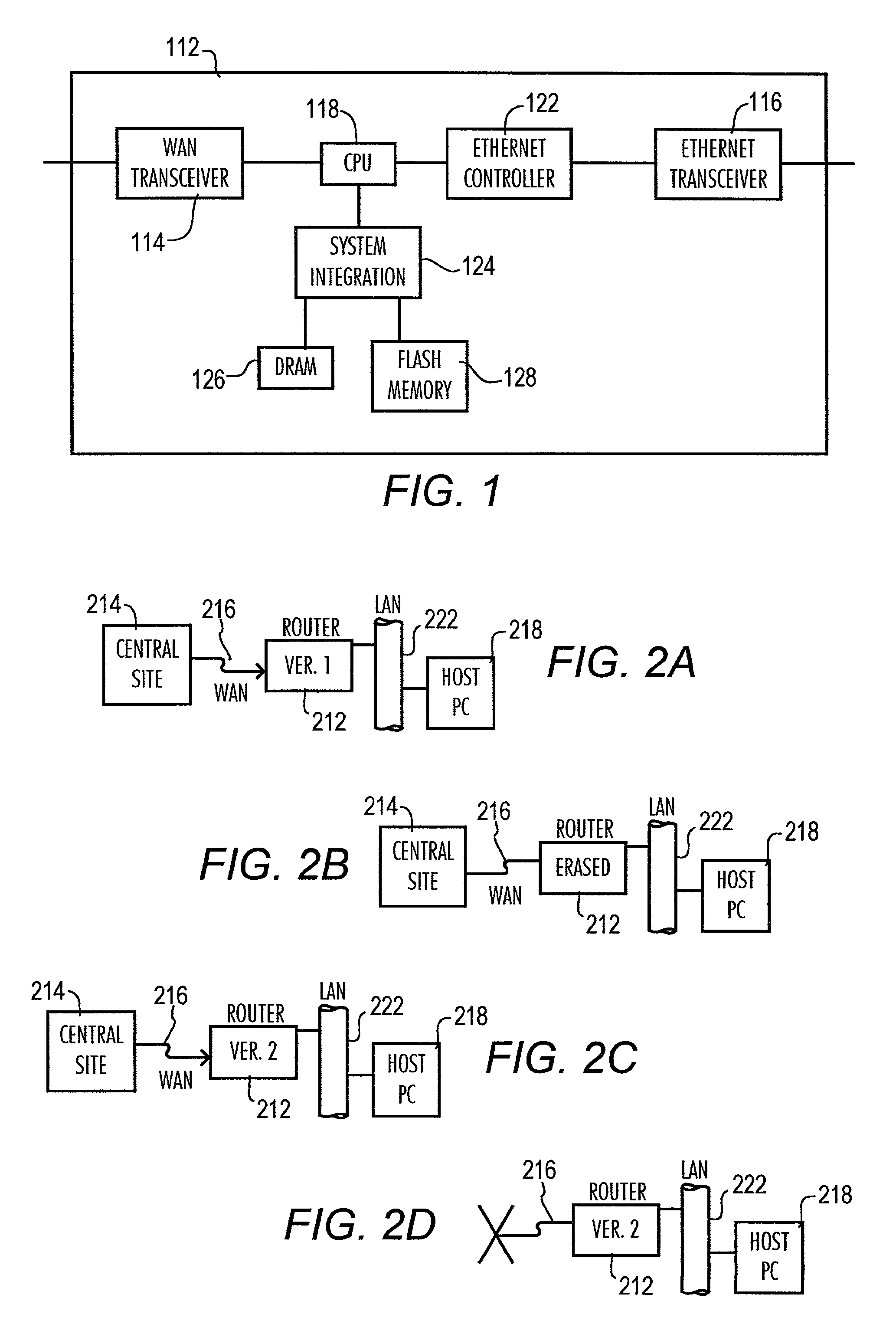
Figure 2 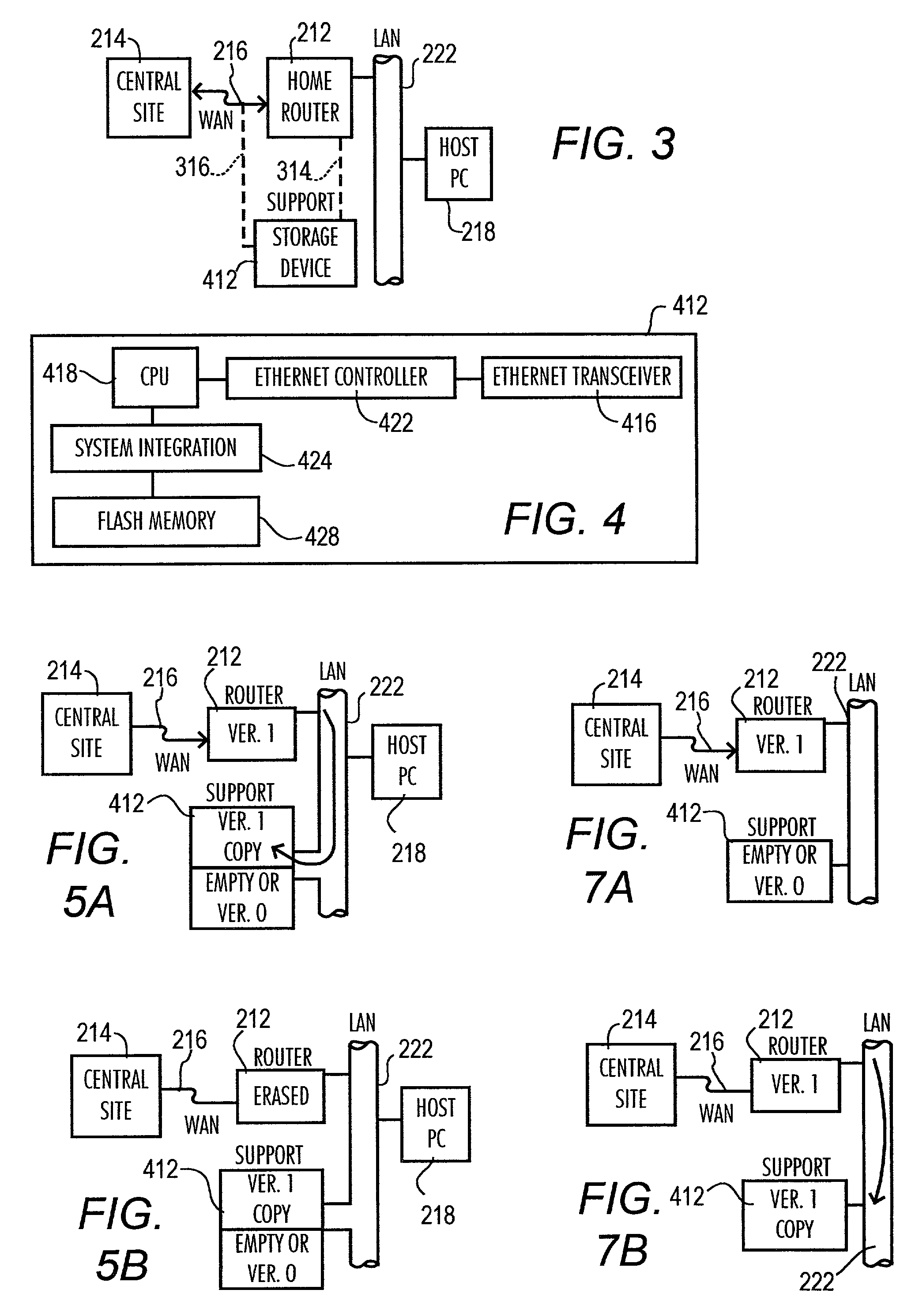
Figure 3
Abstract
Description
[0001] This application is a continuation of application Ser. No. 09 / 220,870, filed Dec. 23, 1998, entitled “Router Image Support Device,” which names Paul Ward as the inventor and is now U.S. Pat. No. 6,438,606, which issued Aug. 20, 2002.
[0002] The present invention relates to a support device for use in restoring a router image and in particular to a support device for local storage of at least one copy of a router operating system or image and a method of use.BACKGROUND INFORMATION
[0003] In a multi-network computing system, routers may be used, e.g. for providing communication between two or more different networks. Typically, a first network will have a plurality of components including one or more routers and a plurality of personal computers, work stations or other computing or telecommunication devices. Such plurality of local devices may be coupled over any of a number of different types of local area networks including Ethernet, token ring networks and the like. The local rou...
Examples
Embodiment Construction
[0017]Before describing features of the present invention, certain aspects of devices and procedures which were previously used will be described. As depicted in FIG. 1, a typical router 112 includes a wide area network transceiver 114 for providing a link to remote devices or networks over a WAN link and a local area network transceiver such as an Ethernet transceiver 116 for communicating with local devices or a local area network. The Ethernet transceiver 116 is coupled to a microprocessor CPU (central processing unit) 118 via a Ethernet controller 122. Transceiver 114 is similarly coupled to the CPU 118. The CPU 118 is also coupled, e.g. via system integration circuitry 124 to one or more types of memory such as dynamic random access memory (DRAM) 126 and / or flash memory 128. The memory provided in the router 112 is used for a number of purposes including storage of data, scratch pad memory and the like, but preferably at least some nonvolatile memory such as a flash memory 128 ...