
Modified beta-lactamase and method for its preparation
a beta-lactamase and beta-lactamase technology, applied in the field of modified beta-lactamase and method for its preparation, can solve the problems of reducing the value of the enzyme, limiting the use of the enzyme as a drug substance, and difficult clinical trials
Patent Information
- Authority / Receiving Office
- US · United States
- Patent Type
- Patents(United States)
- Current Assignee / Owner
- Publication Date
- 2011-08-02
Smart Images
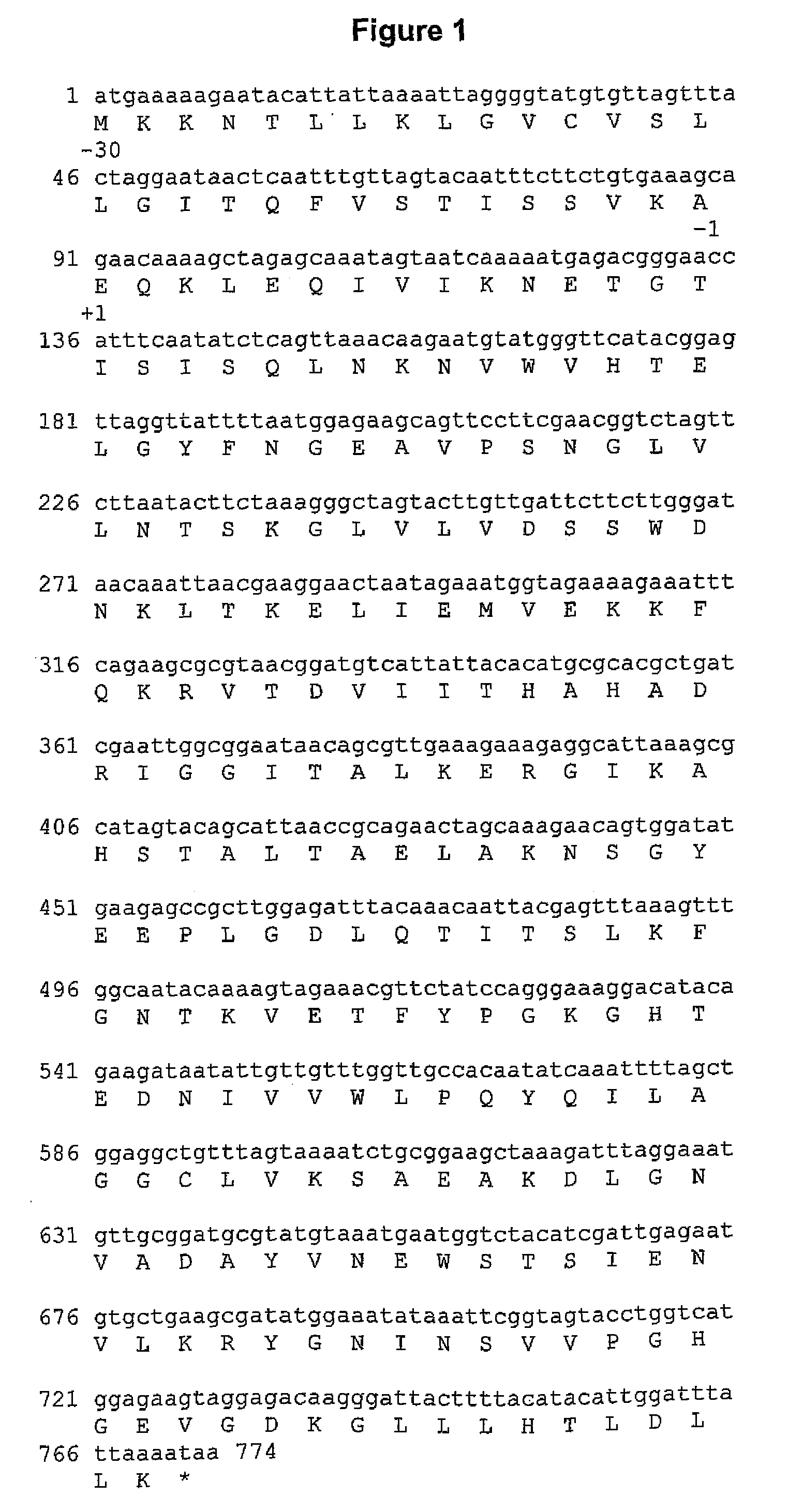
Figure 1 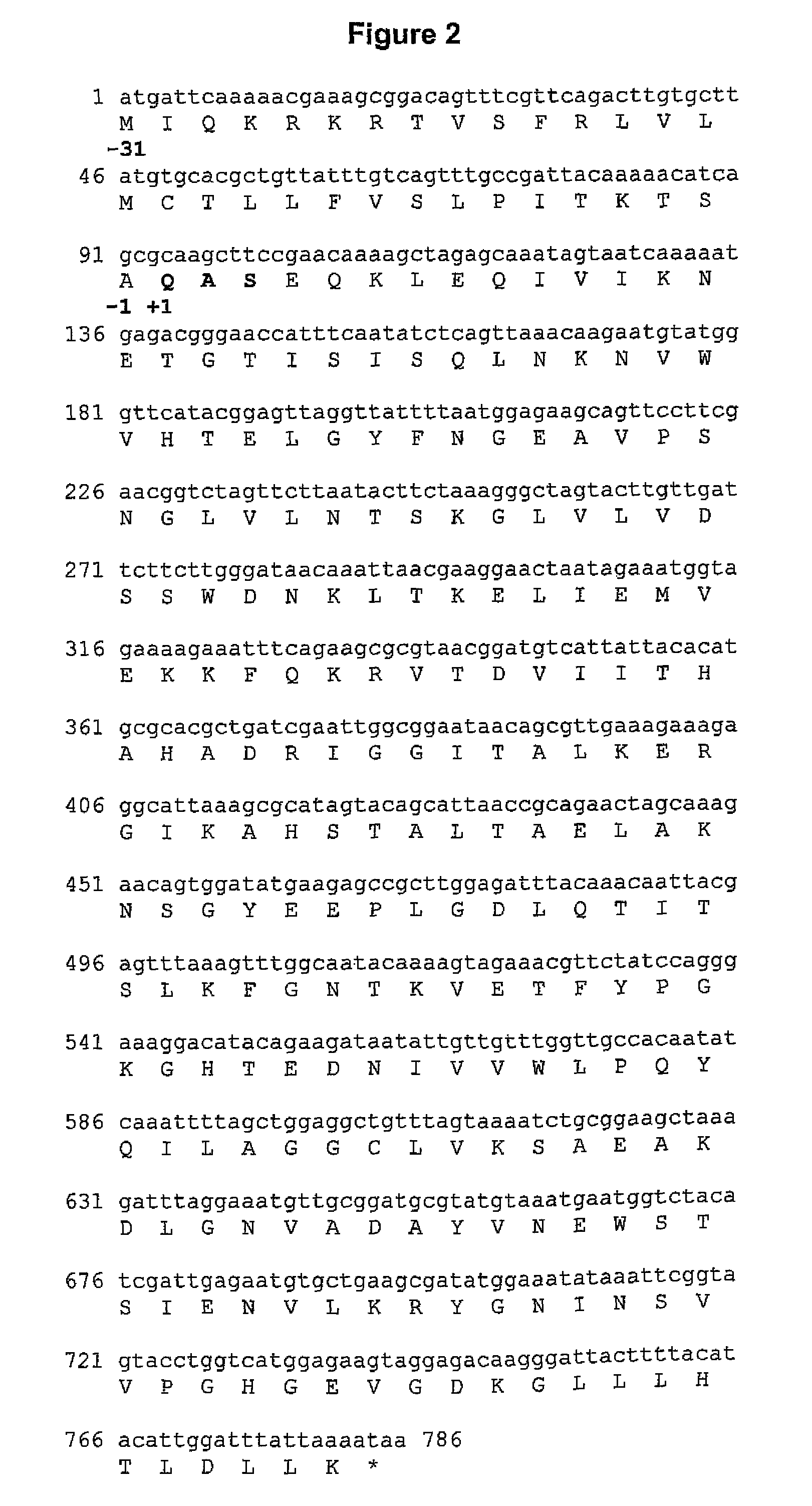
Figure 2 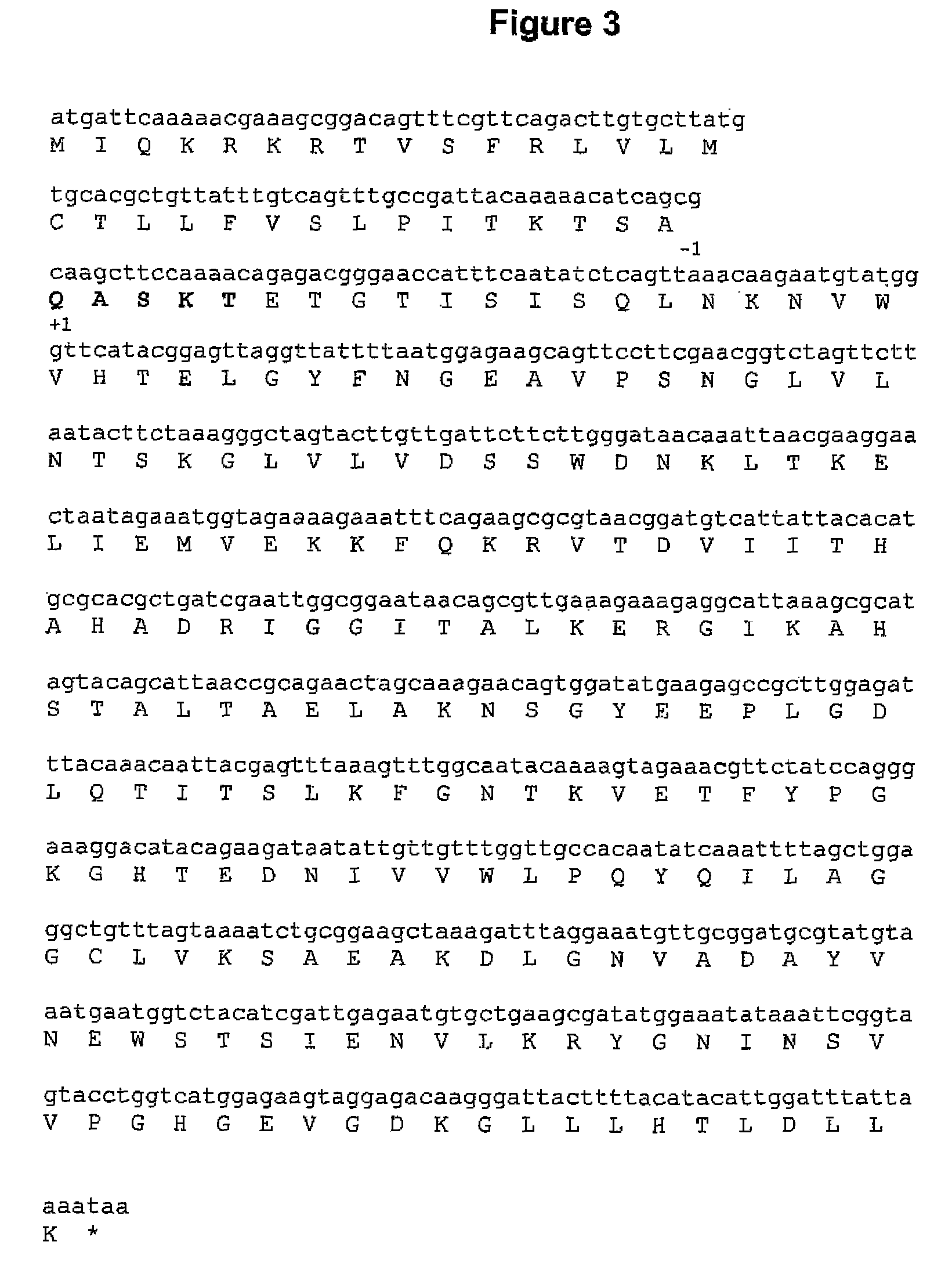
Figure 3
Abstract
Description
RELATED APPLICATIONS
[0001] This application claims priority from PCT application number PCT / FI2007 / 050372, filed Jun. 19, 2007; which claims priority from Finnish patent application number 20065431, filed Jun. 21, 2006; each of which is hereby incorporated herein by reference in its entirety for all purposes.FIELD OF THE INVENTION
[0002] Various antibiotics are used in the treatment of bacterial infections. However, the antibiotics do not only attack pathogens, but they also affect the normal bacterial flora, leading to adverse side effects e.g. in the patient's intestine. These side effects can be reduced by administering enzymes capable of degrading residual antibiotic in the intestine. The present invention relates to modified metallo-beta-lactamases that are useful in treating and preventing adverse effects of antibiotics having a beta-lactam ring, or in the preparation of such enzymes. The invention is also directed to a method for preparing the modified beta-lactamases as well as...
Examples
example 1
Materials and Methods
Bacterial Strains and Growth Conditions
[0053]The bacterial strains and their relevant genotypes and phenotypes are presented in Table 2.
[0054]
TABLE 2Bacterial strains and their relevant genotypes and phenotypesStrainRelevant genotypeRelevant phenotypeBacillus subtilis RS303trpC2, sigG::catTryptophan auxotroph,(Δ sigG)asporogenicBacillus subtilis IH 6140sacA321Reduced exoproteaselevelBacillus subtilis RS314trpC2, sigG::cat, (Δ sigG)Tryptophan auxotroph,pRSH314 expression constructasporogenic, secretesencoding the truncatedmetallo-beta-lactamasemetallo-beta-lactamaseBacillus subtilis RS315trpC2, sigG::cat, (Δ sigG)Tryptophan auxotroph,pRSH315 expression constructasporogenic, secretesencoding the completemetallo-beta-lactamasemetallo-beta-lactamase geneBacillus subtilis RS317trpC2, sigG::cat, (Δ sigG)Tryptophan auxotroph,pRSH317 expression constructasporogenic, secretesencoding truncatedmetallo-beta-lactamasemetallo-beta-lactamaseBacillus subtilis RS318trpC2, sigG:...
example 2
The Complete Nucleotide Sequence of Bacillus cereus 98ME1552 Metallo-Beta-Lactamase Gene
[0062]The determination of the complete gene coding metallo-beta-lactamase was sequentially performed by using PCR and Vectorette techniques. Part of the structural gene was amplified by PCR, with isolated chromosomal DNA of a clinical isolate B. cereus 98ME1552 as a template and with primers designed to hybridize to the SQKVEKTVI (SEQ ID NO:19) coding region (forward primer) and HTLDLL (SEQ ID NO:20) coding region (reverse primer) of the Bacillus cereus 569 / H metallo-beta-lactamase gene. Both primers also carry Hind III restriction sites. The amplified DNA fragment (about 700 bp) was digested with Hind III and ligated to the Hind III site of a secretion vector pKTH141. Competent Bacillus subtilis IH6140 cells were transformed with the ligation mixture. A clone harboring a plasmid expressing metallo-beta-lactamase was verified by DNA sequencing. The plasmid was named pRSH314.
[0063]Competent B. su...
example 3
Cloning and Expression of the B. cereus 98ME1552 Metallo-Beta-Lactamase Gene in Bacillus subtilis
[0066]Based on the obtained DNA sequences from the Vectorette library new primers,
[0067]
BLC1-F(5′-CGCGAAGCTTCCGAACAAAAGCTAGAGCAAATAGTAATC),andBLC1-R(5′-GCCGAAGCTTTTATTTTAATAAATCCAATGTATGTAAAAGTAATCCC)
were designed to generate a DNA insert encoding the complete metallo-beta-lactamase in PCR. The primers also carried Hind III-sites at their ends and purified chromosomal DNA of B. cereus 98ME1552 was used as a template. The amplified PCR fragment of about 0.7 kb was digested with Hind III and ligated to the Hind III site of a pKTH141 secretion vector. Competent Bacillus subtilis RS303 cells were transformed by the ligation mixture. One positive clone was designated RS315 and the harboring expression construct was named pRSH315.
[0068]The pRSH315 expression construct was isolated and the insert region was sequenced. The nucleotide and deduced amino acid sequences of the cloned metallo-beta-l...