
Endolumenal sealant delivery apparatus and methods
a technology of endolumenal sealant and delivery apparatus, which is applied in the direction of prosthesis, blood vessels, applications, etc., can solve the problems of weakened and susceptible to rupture of abnormal dilated walls, difficulty in relatively complex applications, and difficulty in properly aligning preformed openings with target branch vessels, so as to prevent or minimize the risk of fenestration tear propagation and enhance the effect of seal
Patent Information
- Authority / Receiving Office
- US · United States
- Patent Type
- Patents(United States)
- Current Assignee / Owner
- Publication Date
- 2012-06-26
Smart Images
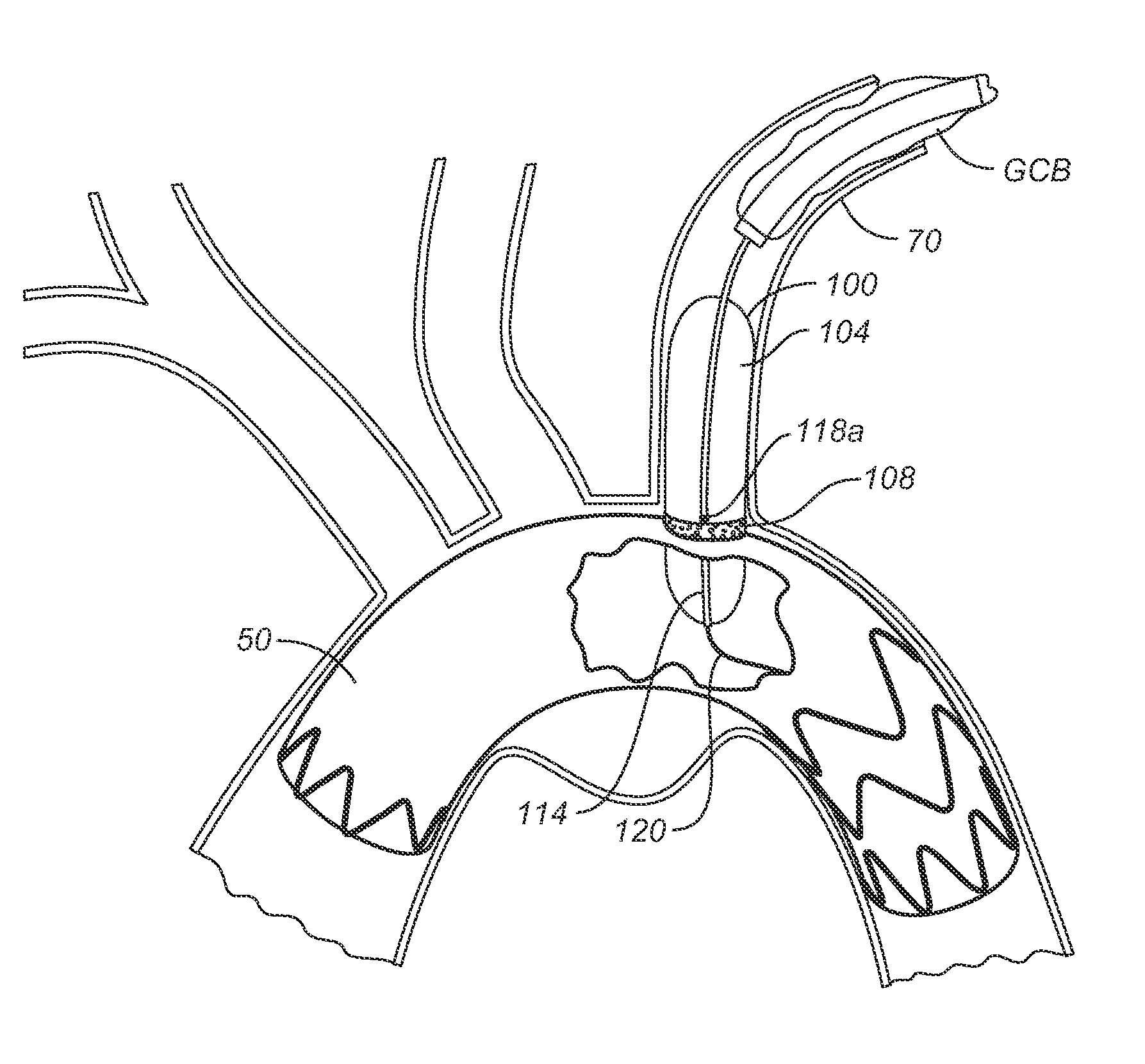
Figure 1 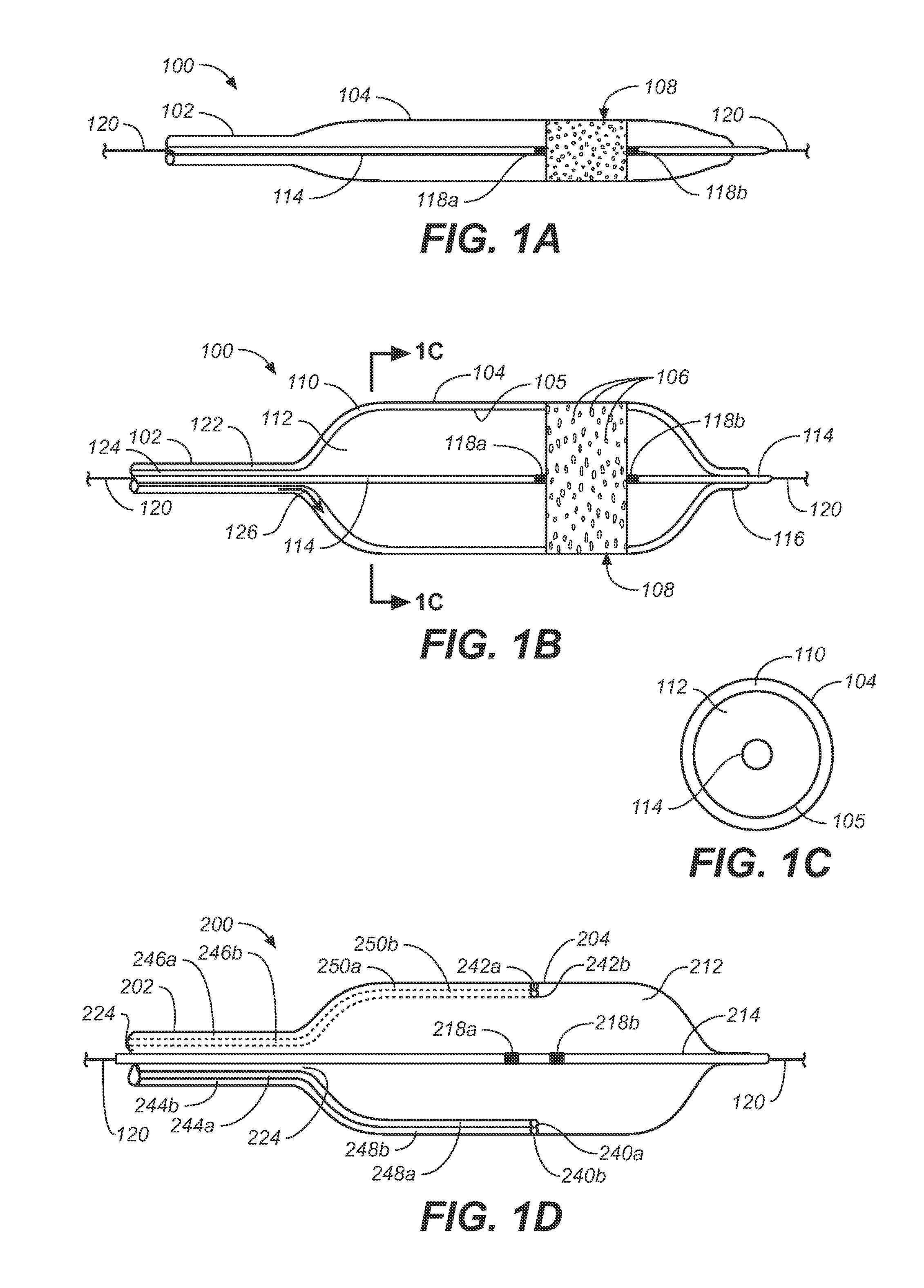
Figure 2 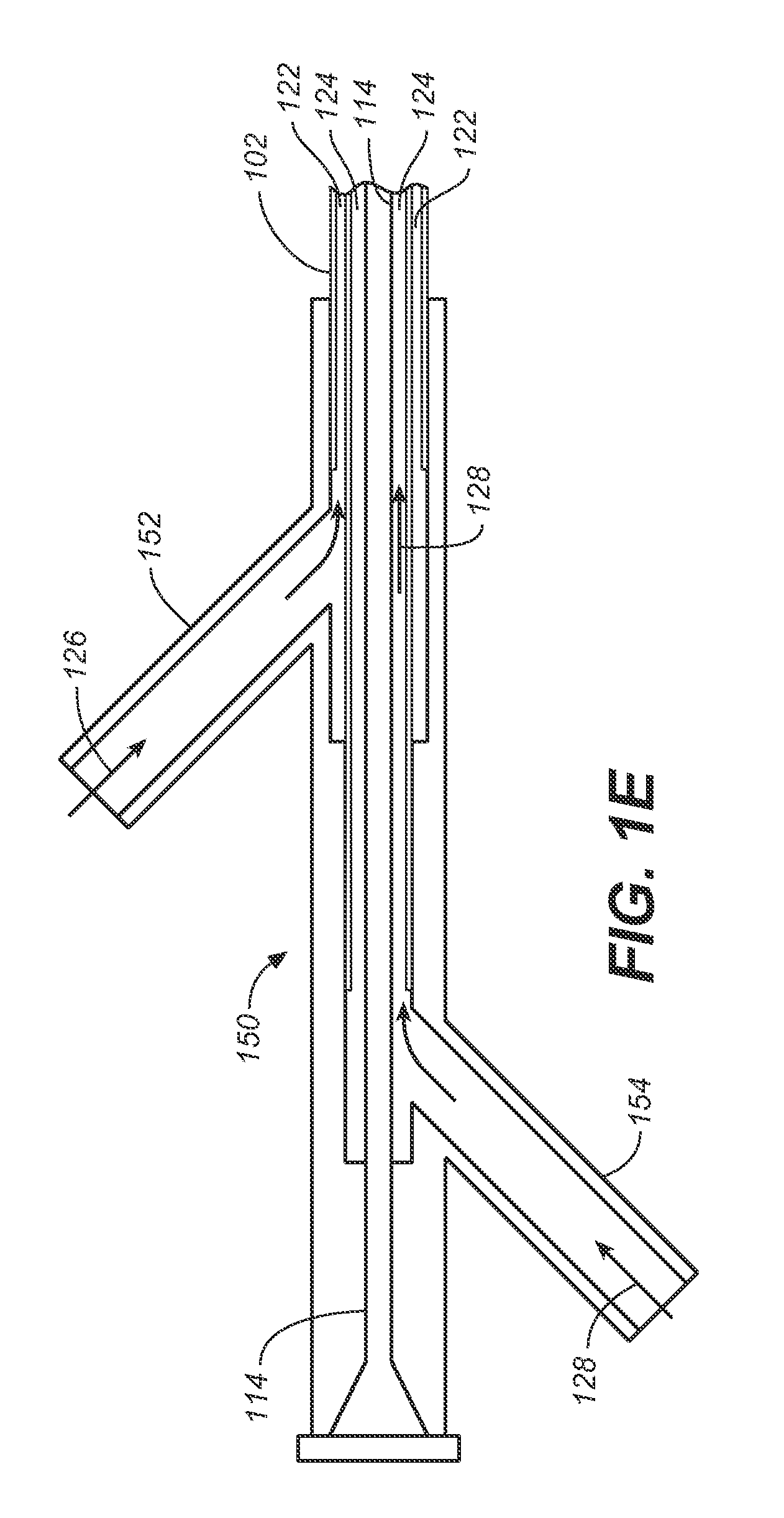
Figure 3
Abstract
Description
FIELD OF THE INVENTION
[0001] The invention relates to sealant delivery apparatus and methods for delivering sealants at stent-graft implantation sites.BACKGROUND OF THE INVENTION
[0002] Tubular prostheses such as stents, grafts, and stent-grafts (e.g., stents having an inner and / or outer covering comprising graft material and which may be referred to as covered stents) have been used to treat abnormalities in passageways in the human body. In vascular applications, these devices often are used to replace or bypass occluded, diseased or damaged blood vessels such as stenotic or aneurysmal vessels. For example, it is well known to use stent-grafts, which comprise biocompatible graft material (e.g., Dacron® or expanded polytetrafluoroethylene (ePTFE) or some other polymer) supported by a framework (e.g., one or more stent or stent-like structures), to treat or isolate aneurysms. The framework provides mechanical support and the graft material or liner provides a blood barrier.
[0003] Aneury...
Examples
Embodiment Construction
[0032]The following description will be made with reference to the drawings where when referring to the various figures, it should be understood that like numerals or characters indicate like elements. Further, when referring to catheters, delivery devices, and loaded fasteners described below, the proximal end is the end nearest the operator and the distal end is farthest from the operator. While when referring to stent grafts delivered, their proximal end is the one nearest by way of blood flow path from the heart, while the distal end is the end farthest from the heart by way of blood flow path.
[0033]One embodiment generally involves endolumenally sealing a zone around the puncture and dilation area of a stent-graft fenestration with an expandable sealant delivery device. The sealant can be any suitable surgical sealant such as any sealant selected from the group consisting of surgical cyanoacrylate, fibrin sealants, collagen, and polyehthylene glycol polymers or bioglues, CoSeal...