
Battery powered charger
a battery-powered charger and charger technology, applied in the direction of battery load switching, electrical equipment, electric vehicles, etc., can solve the problem of the possibility that the primary cell being charged therein may fail catastrophically
Patent Information
- Authority / Receiving Office
- US · United States
- Patent Type
- Patents(United States)
- Current Assignee / Owner
- Publication Date
- 2012-08-28
Smart Images
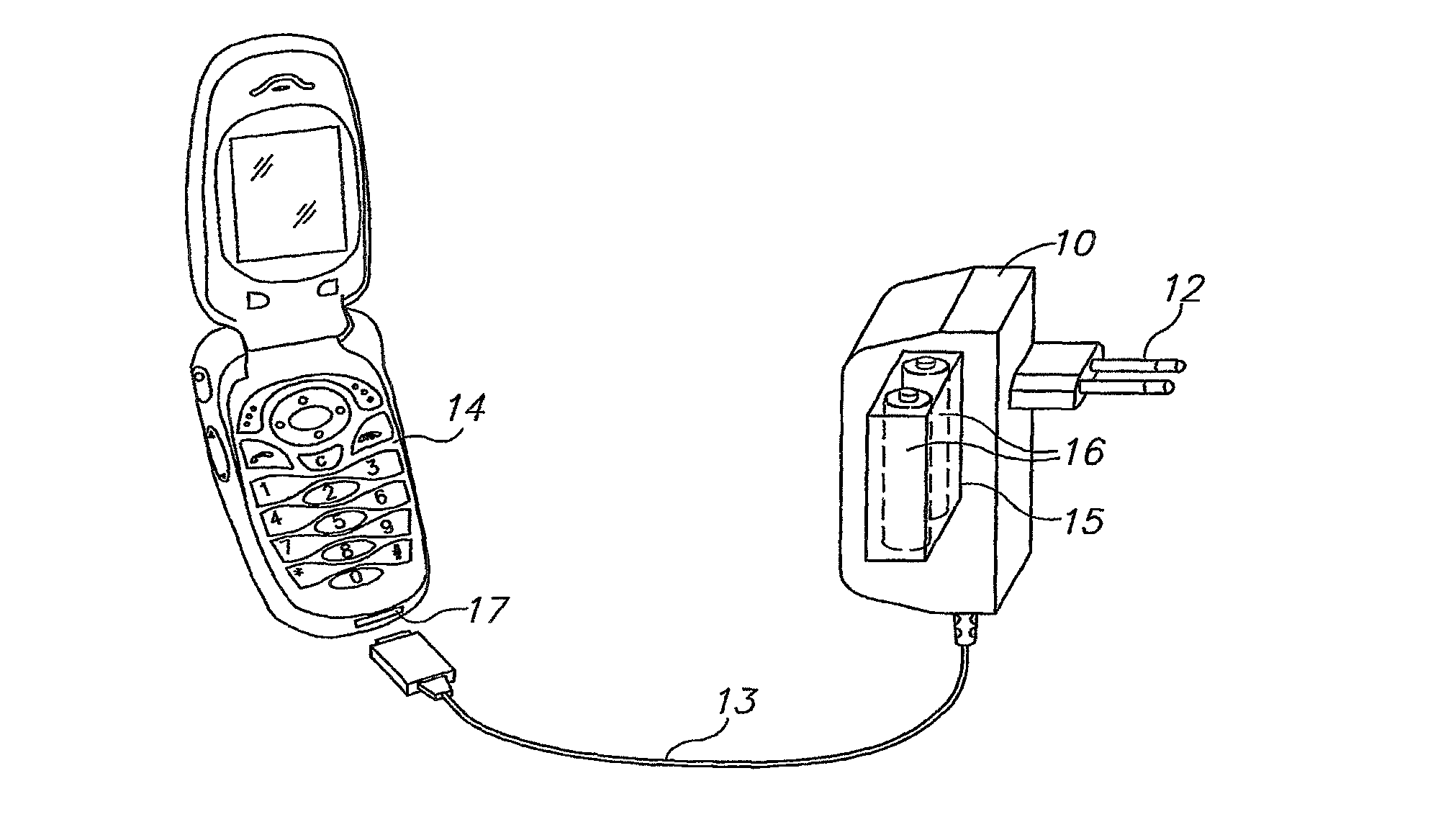
Figure 1 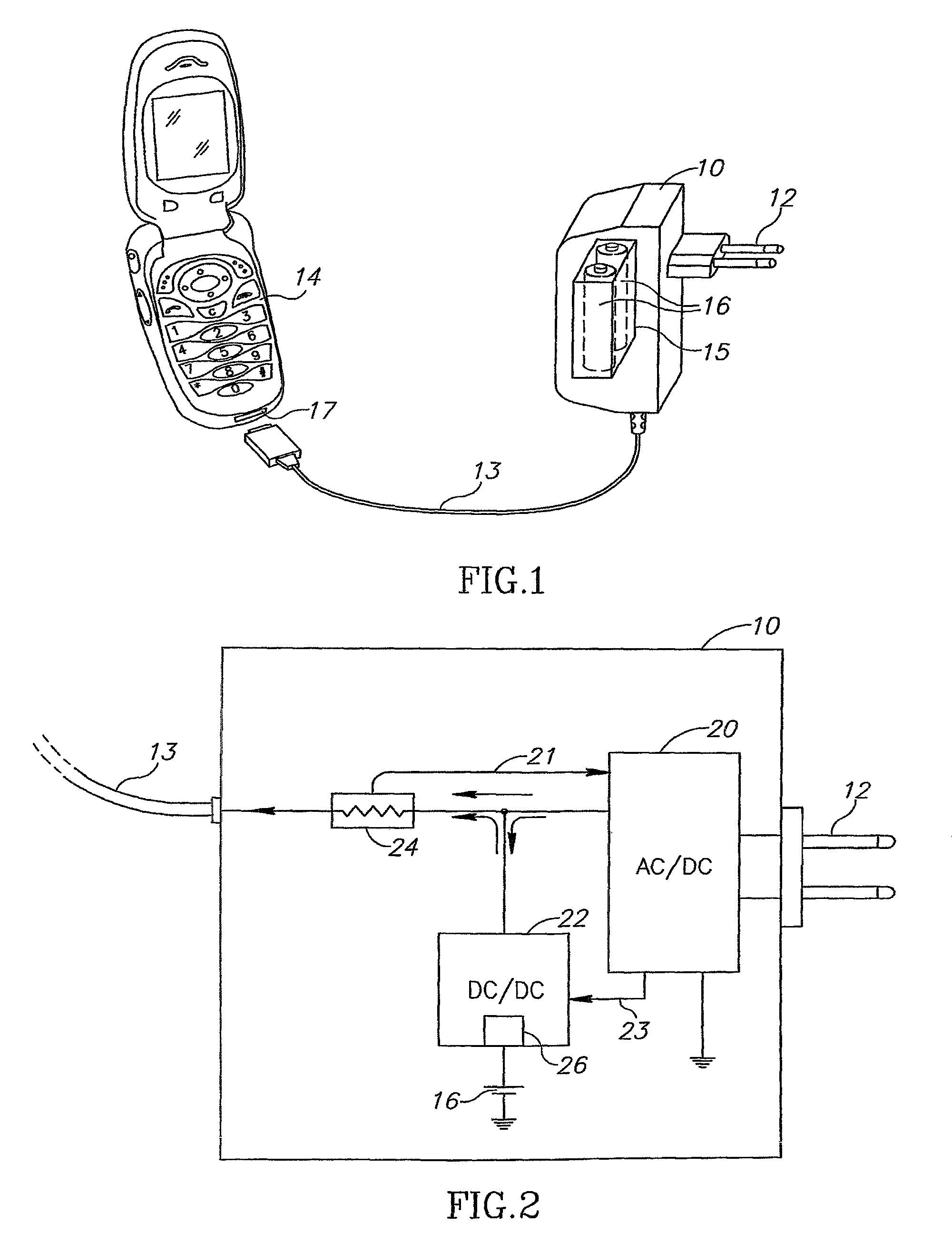
Figure 2 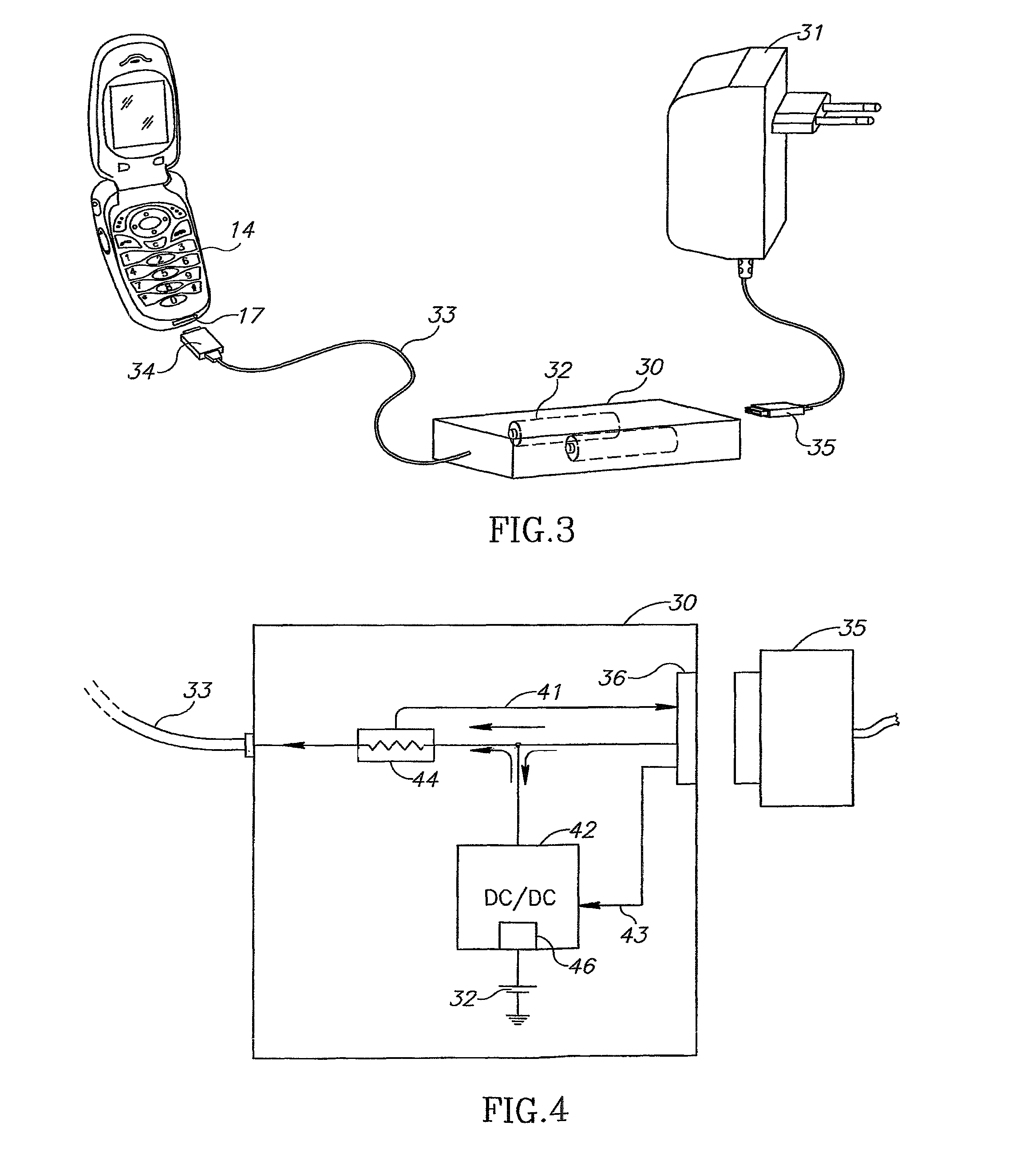
Figure 3
Abstract
Description
RELATED APPLICATIONS
[0001] This application is a National Phase Application filed under 35 USC §371 of PCT Application No. PCT / IL2007 / 001582 with an International filing date of Dec. 20, 2007, which claims priority of U.S. Provisional Application No. 60 / 996,220, filed Nov. 7, 2007 and U.S. Provisional Application No. 60 / 875,814, filed Dec. 20, 2006. Each of these applications is herein incorporated by reference in their entirety for all purposes.FIELD OF THE INVENTION
[0002] The present invention relates to the field of charging devices for portable electronic equipment, especially those for use with mobile telephones.BACKGROUND OF THE INVENTION
[0003] Portable electronic devices generally use internal rechargeable batteries for operation. In order to maintain the internal batteries in a state of charge, the device is generally recharged at regular intervals using a wall mains adaptor unit, whose function is to convert the comparatively high voltage AC mains voltage available at wall soc...
Examples
Embodiment Construction
[0032]Reference is now made to FIG. 1, which illustrates schematically a wall charger 10, constructed and operative according to a first preferred embodiment of the present invention, The wall charger preferably has conventional power pins 12 for inserting into a wall socket (not shown), though it may also use a conventional plug on the end of a flying lead cable, or a push-in plug for use with a cigarette lighter socket in a car. A cable 13 provides connection to a mobile telephone 14, used as an example of a portable electronic device which can be charged by the wall charger. The output may equally well be provided in the form of a cradle in which the phone or other electronic device sits without a connection cable. The wall charger 10 differs, however, from a conventional wall charger in that it also contains a battery cavity 15, inside of which can be installed one or more cells or batteries 16, which are preferably secondary. Alternatively and preferably, primary cells or batte...