
Method and rig for dragging a fallen game animal
Patent Information
- Authority / Receiving Office
- US · United States
- Current Assignee / Owner
- Publication Date
- 2012-10-23
- Estimated Expiration
- Not applicable · inactive patent
Smart Images
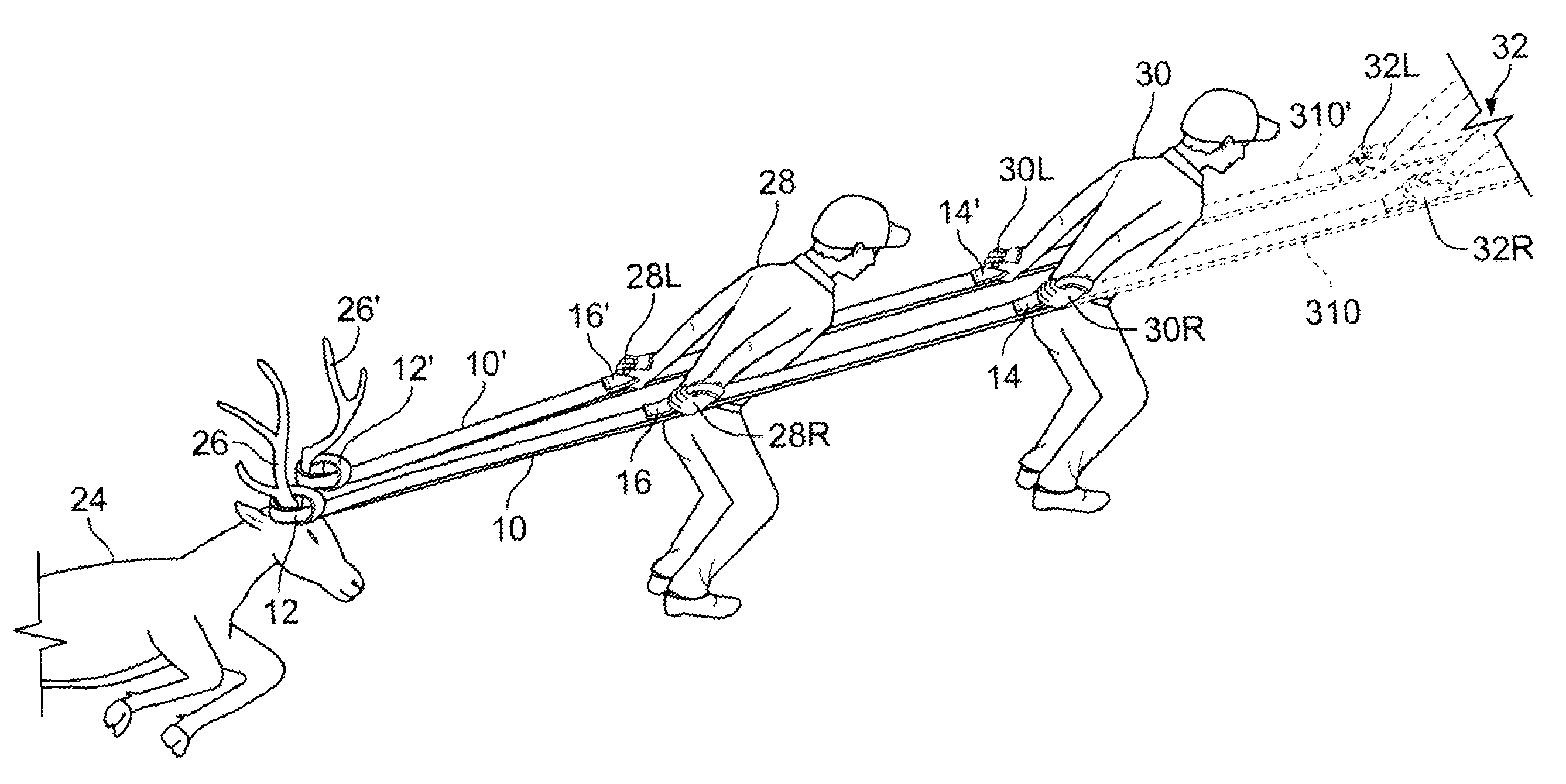
Figure 1 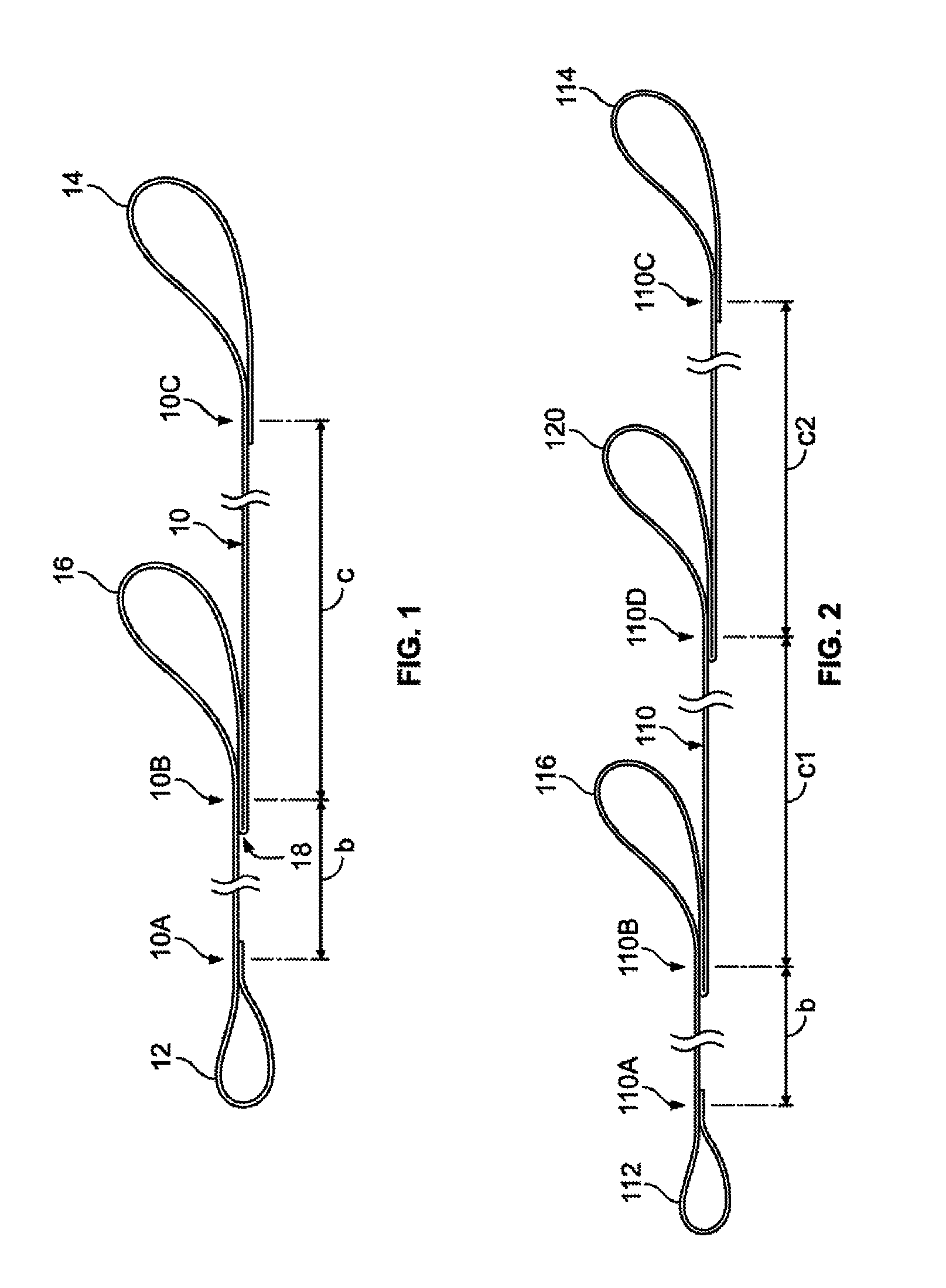
Figure 2 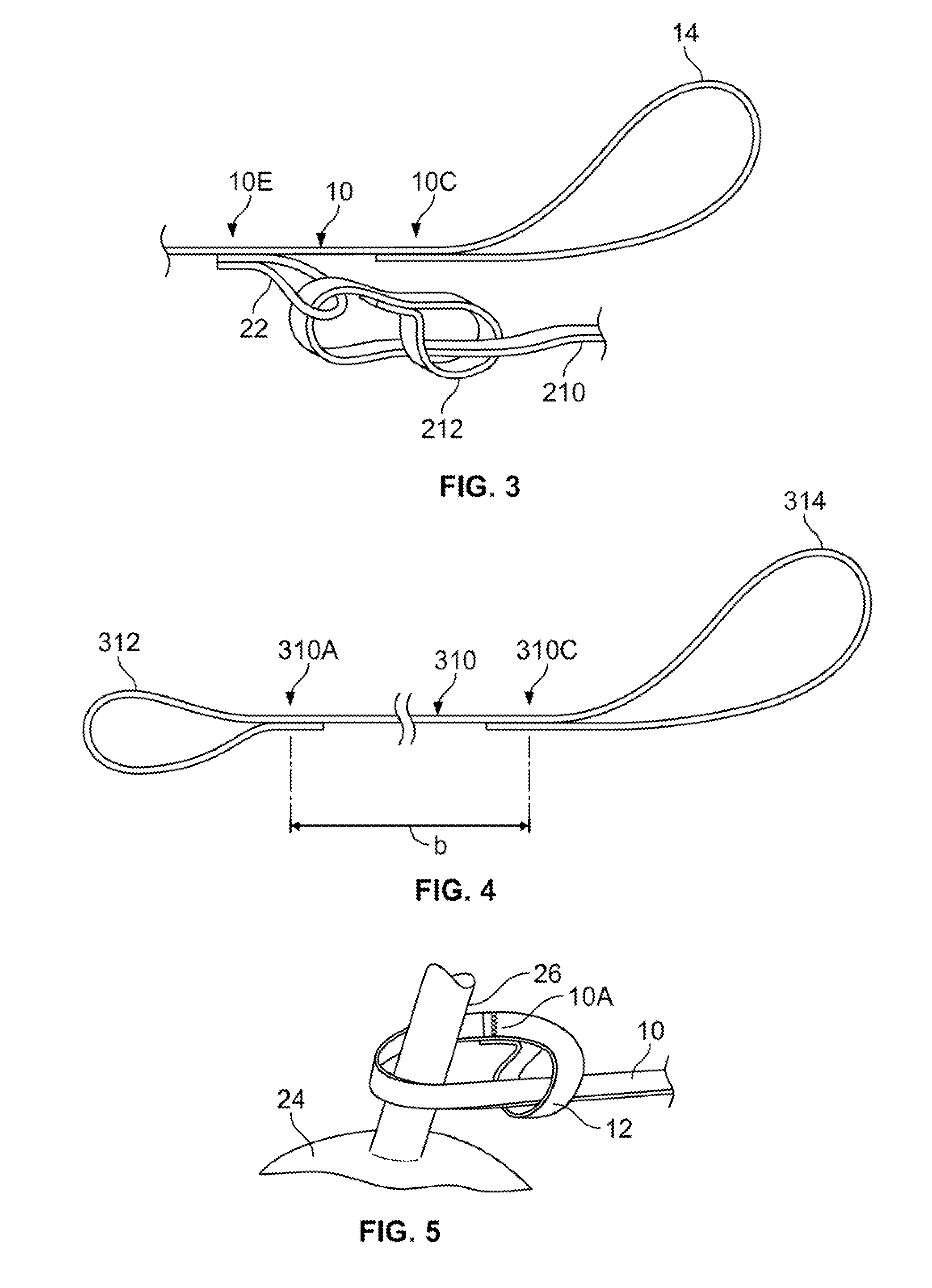
Figure 3
Abstract
Description
CROSS-REFERENCES TO RELATED APPLICATIONS
[0001] This application claims the benefit of U.S. Provisional Patent Application Ser. No. 60 / 668,206, filed 4 Apr. 2005, the contents of which are hereby incorporated by reference herein.BACKGROUND OF THE INVENTION
[0002] 1. Field of the Invention
[0003] The present invention relates to methods and rigs for dragging a fallen animal, and in particular, to techniques for allowing cooperative dragging by two or more persons.
[0004] 2. Description of Related Art
[0005] Sport hunting is a popular recreational activity and many hunters are interested in the larger game animals such as deer, elk, moose, bear, etc. Hunting these larger game animals often requires traveling to remote areas inaccessible by vehicles and often without established trails. Once the animal is taken, transporting it back to a vehicle is a daunting task. Whitetail deer harvested in the United States can routinely range up to 200 pounds (440 kg) in weight. The average buck taken in New...
Examples
Embodiment Construction
[0035]Referring to FIG. 1, the illustrated tether 10 is one of an identical pair that together form a rig. In this embodiment tether 10 is one continuous strap with its proximal end folded back and stitched at location 10A to form loop 12. Its distal end is also folded back and stitched at location 10C to form another, larger loop 14. The strap of tether 10 is gathered along its midsection to form another loop 16 that is then folded down to form bight 18. The resulting triple layer is stitched together at location 10B to fix loop 16 in place. Accordingly, tether 10 has two relatively larger loops 14 and 16 that are about the same size and can be used as a handholds, in a manner to be described presently.
[0036]While stitching was just described, in other embodiments the strap sections of tether 10 can be secured by rivets, staples, ferrules, glue, welding, nuts and bolts, or other fastening means. The strap of tether 10 can be webbing material that is knitted or woven from synthetic ...