

Medical instrument, treatment solution, and method for manufacturing medical instrument
A composition of silicone resin, silane coupling agent, and haloalkylsilane forms a durable, lubricious coating on medical devices, enhancing sliding properties and preventing peeling, thus addressing the challenges of existing lubrication methods.
Patent Information
- Application Number
- PCT/JP2024/012387
- Authority / Receiving Office
- WO · WO
- Patent Type
- Applications
- Current Assignee / Owner
- Priority Date
- 2023-03-31
- Filing Date
- 2024-03-27
- Publication Date
- 2024-10-03
AI Technical Summary
Medical devices such as syringes and needles require improved sliding properties and coating adhesion to prevent peeling, which is not adequately addressed by existing lubrication methods.
A medical device with a sliding portion coated using a composition containing a silicone resin with hydroxyl groups, a silane coupling agent, and haloalkylsilane, which forms a durable and lubricious film that bonds well to various materials, including polymers and metals.
The solution provides excellent sliding properties and prevents peeling of the coating, maintaining device functionality and minimizing adverse effects on medical solutions, while ensuring long-term slidability and reduced peeling of the coating.
Smart Images
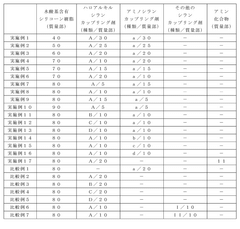
Figure JPOXMLDOC01-APPB-T000001 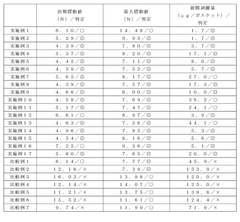
Figure JPOXMLDOC01-APPB-T000002
Abstract
Description
Medical device, treatment liquid, and method for manufacturing medical device
[0001] The present invention relates to a medical device, a treatment liquid, and a method for manufacturing a medical device.
[0002] Many medical devices require slidability, such as syringe barrels and plungers, injection needles, and bottle needles. A known method for imparting slidability to medical devices is to apply a lubricant to the area of the medical device where slidability is required. Specifically, a method has been proposed in which a small amount of silicone compound is applied to a laminate film that covers the stopper (gasket) at the tip of the plunger of a prefilled syringe (see Patent Document 1).
[0003] Japanese Patent Application Laid-Open No. 2020-182677
[0004] When a medical device is coated with a drug, it is desired that the coating is not easily peeled off from the medical device in order to prevent adverse effects on the drug solution and the human body.In the pre-filled syringe described in Patent Document 1, a small amount of silicone compound is applied to the surface of the stopper, so the silicone compound is not easily peeled off from the surface of the stopper.However, because only a small amount of silicone compound is applied, the pre-filled syringe described in Patent Document 1 has room for improvement in friction properties.
[0005] The present invention has been made in consideration of the above-mentioned problems, and aims to provide a medical device having a sliding portion that has excellent sliding properties and in which peeling of a coating provided on the sliding portion is suppressed, a chemical solution that is preferably used in manufacturing the medical device, and a method for manufacturing the medical device that includes forming a coating using the chemical solution.
[0006] The present inventors have discovered that the above-mentioned problems can be solved by forming a coating consisting of a cured product of a composition containing a silicone resin having hydroxyl groups and a silane coupling agent on the surface of the sliding portion of a medical device, and by incorporating into the composition an aminosilane of a specific structure as a silane coupling agent or an amine compound that does not fall under the category of aminosilane, as well as a haloalkylsilane of a specific structure, and have thus completed the present invention.
[0007] According to the present invention, it is possible to provide a medical device having a sliding portion that has excellent sliding properties and in which peeling of a coating provided on the sliding portion is suppressed, a chemical solution that is preferably used in manufacturing the medical device, and a method for manufacturing the medical device that includes forming a coating using the chemical solution.
[0008] <Medical Device> The medical device has a sliding portion. The sliding portion is covered with a coating. The coating is made of a cured product of a composition containing a silicone resin having a hydroxyl group and a silane coupling agent. The composition contains an aminosilane as a silane coupling agent, or an amine compound that does not correspond to the aminosilane group. Furthermore, the composition contains a haloalkylsilane. The haloalkylsilane is a compound represented by the following formula (1): R 1 Si(OR 2 ) 3 ...(1) In formula (1), R 1 is a haloalkyl group having 1 to 6 carbon atoms. 2 is an alkyl group having 1 to 6 carbon atoms.
[0009] Specific examples of medical devices include an injection needle having a coating on its outer surface, a bottle needle having a coating on its outer surface, an infusion tube having a coating on its outer surface, a catheter having a coating on its outer surface, a guide wire having a coating on its outer surface, a syringe barrel having a coating on its outer or inner surface, and a syringe plunger having a coating on the outer surface of a gasket.
[0010] A coating formed from a cured film of the above composition bonds well to various materials and is resistant to peeling. The silane coupling agent bonds with functional groups having active hydrogen atoms, such as hydroxyl groups and amino groups, present on the surface of various materials to form covalent bonds. The silane coupling agent also bonds with silicone resins having hydroxyl groups to form a mesh-like network. For the above reasons, a coating formed from a cured film of the above composition has the lubricity derived from the silicone resin and also bonds firmly to various materials.
[0011] The material of the sliding portion is not particularly limited, and may be a polymer material, a metal, or glass.
[0012] Examples of polymeric materials include polyolefins, (meth)acrylic resins, polyesters, and polyamides. Specific examples of polyolefins include low-density polyethylene, high-density polyethylene, polypropylene, ethylene-propylene copolymers, ethylene-vinyl acetate copolymers, poly-1-butene, and poly-4-methyl-1-pentene. Specific examples of (meth)acrylic resins include polymers of one or more (meth)acrylate monomers selected from (meth)acrylates such as methyl (meth)acrylate, ethyl (meth)acrylate, n-propyl (meth)acrylate, n-butyl (meth)acrylate, phenyl (meth)acrylate, and benzyl (meth)acrylate. Specific examples of polyesters include polyethylene terephthalate (PET), polybutylene terephthalate (PBT), polyethylene naphthalate (PEN), and polylactic acid (PLA). Specific examples of polyamides include nylon 6, nylon 6,6, nylon 12, nylon 6,12, and MXD nylon. Also preferred as polymeric materials are cyclic olefin polymers (COPs), which are polymers of cyclic olefins such as norbornene, and cyclic olefin copolymers (COCs), which are copolymers of cyclic olefins and olefins such as ethylene. Furthermore, various elastic materials are also preferred as polymeric materials. Specific examples of elastic materials include natural rubber, isoprene rubber, butyl rubber, styrene-butadiene rubber, chloroprene rubber, silicone rubber, styrene-based elastomers, polyurethane-based elastomers, polyvinyl chloride-based elastomers, and polyolefin-based elastomers.
[0013] Specific examples of metals include various stainless steels, aluminum, aluminum alloys, titanium, and titanium alloys.
[0014] In order to bond a coating made of a cured film of the above-mentioned composition more firmly to the sliding portion, hydroxyl groups may be introduced to the surface of the sliding portion before the coating is formed by a method such as water vapor plasma treatment. Increasing the amount of hydroxyl groups on the surface of the sliding portion increases the number of covalent bonds formed between the coating and the surface of the sliding portion. As a result, the coating bonds more firmly to the sliding portion.
[0015] The composition used to form the coating will be described below.
[0016] <Composition> As described above, the composition contains a silicone resin having a hydroxyl group and a silane coupling agent. The composition may contain an aminosilane as a silane coupling agent, or an amine compound that does not fall under the category of aminosilane. Furthermore, the composition contains a haloalkylsilane. The composition may contain only one silicone resin having a hydroxyl group, or may contain a combination of two or more silicone resins having a hydroxyl group. The composition may contain only one aminosilane, or may contain a combination of two or more aminosilanes. The composition may contain only one amine compound that does not fall under the category of aminosilane, or may contain a combination of two or more amine compounds that do not fall under the category of aminosilane. The composition may contain only one haloalkylsilane, or may contain a combination of two or more haloalkylsilanes.
[0017] The composition is applied to the sliding portion of the medical device to form a coating, and therefore typically contains an organic solvent.
[0018] The aminosilane and amine compound catalyze the condensation reaction between silane coupling agents or between a silane coupling agent and a silicone resin having a hydroxyl group. Therefore, when the composition contains the aminosilane or amine compound, the composition cures well and a coating film that does not easily peel off from the surface of the sliding portion is formed.
[0019] The essential and optional components contained in the composition will be described below.
[0020] [Hydroxyl group-containing silicone resin] The composition contains a hydroxyl group-containing silicone resin. The hydroxyl group-containing silicone resin imparts lubricity to a coating film formed using the composition, and also reacts with a silane coupling agent (described later) to form a mesh-like network, providing a coating film that is firmly bonded to sliding portions.
[0021] The molecular structure of the silicone resin is not particularly limited. The molecular structure of the silicone resin may be linear or branched, with linear being preferred. The molecular chain structure of the silicone resin is a polyorganosiloxane structure, with a polydimethylsiloxane structure being preferred. The position of the hydroxyl group in the silicone resin is not particularly limited, but the terminal of the molecular chain is preferred. The silicone resin may have a hydroxyl group (silanol group) bonded to the silicon atom constituting the molecular chain of the silicone resin, or may have an organic group containing a hydroxyl group. As the organic group containing a hydroxyl group, a hydroxyalkyl group is preferred, a hydroxyalkyl group having 1 to 4 carbon atoms is more preferred, a hydroxyethyl group and a hydroxymethyl group are even more preferred, and a hydroxymethyl group is particularly preferred. As the silicone resin having a hydroxyl group, a bifunctional silicone resin in which a hydroxyl group is bonded to each silicon atom at both ends of a linear molecule is preferred, and a modified polydimethylsiloxane in which a hydroxyl group is bonded to each silicon atom at both ends of a linear molecule is more preferred.
[0022] [Silane Coupling Agent] The composition contains a silane coupling agent. The composition may contain an aminosilane as a silane coupling agent, or an amine compound that does not fall under the category of aminosilane. The composition may also contain a haloalkylsilane. That is, the composition may contain a combination of an aminosilane and a haloalkylsilane, or a combination of an amine compound that does not fall under the category of aminosilane and a haloalkylsilane. The composition may also contain a combination of an aminosilane, a haloalkylsilane, and an amine compound that does not fall under the category of aminosilane. The composition may also contain a silane coupling agent that does not fall under either an aminosilane or a haloalkylsilane, as long as the desired effect is not impaired.
[0023] (Aminosilane) The aminosilane is not particularly limited as long as it is a silane coupling agent having an amino group. The amino group of the aminosilane may be a primary amino group, a secondary amino group, or a tertiary amino group. Furthermore, the aminosilane may have two or more amino groups. When the aminosilane has two or more amino groups, the two or more amino groups may be the same or different.
[0024] The aminosilane is preferably a compound represented by the following formula (2): (R 5 - (R 3 -NR 7 ) a -R 4 )-Si(OR 6 ) 3 ...(2) In formula (2), R 3 is an alkylene group having 1 to 4 carbon atoms. 4 is an alkylene group having 1 to 6 carbon atoms. 5 is a hydrogen atom or an amino group. 5 The amino group as R may be a primary amino group, a secondary amino group, or a tertiary amino group. 6 is an alkyl group having 1 to 6 carbon atoms. 7 is a hydrogen atom or an alkyl group having 1 to 6 carbon atoms. a is 0 or 1. When a is 0, R 5 is an amino group.
[0025] R 3 Specific examples of the alkylene group as include a methylene group, an ethane-1,2-diyl group (ethylene group), an ethane-1,1-diyl group, a propane-1,3-diyl group, a propane-1,2-diyl group, and a butane-1,4-diyl group.
[0026] R 4 Specific examples of the alkylene group as the alkylene group include a methylene group, an ethane-1,2-diyl group (ethylene group), an ethane-1,1-diyl group, a propane-1,3-diyl group, a propane-1,2-diyl group, a butane-1,4-diyl group, a pentane-1,5-diyl group, and a hexane-1,6-diyl group.
[0027] R 5 When the amino group as R is a primary amino group, 5 is an amino group (-NH 2 ) R 5 When the amino group as R is a secondary amino group, 5 is preferably a monoalkylamino group. The alkyl group contained in the monoalkylamino group is preferably an alkyl group having 1 to 4 carbon atoms. Specific examples of suitable monoalkylamino groups include a methylamino group, an ethylamino group, an n-propylamino group, an isopropylamino group, an n-butylamino group, an isobutylamino group, a sec-butylamino group, and a tert-butylamino group. 5 When the amino group as R is a tertiary amino group, 5 is preferably a dialkylamino group. The alkyl group contained in the dialkylamino group is preferably an alkyl group having 1 to 4 carbon atoms. Specific preferred examples of the dialkylamino group include a dimethylamino group, a diethylamino group, a di-n-propylamino group, a diisopropylamino group, a di-n-butylamino group, a diisobutylamino group, a di-sec-butylamino group, a di-tert-butylamino group, a methyl(ethyl)amino group, a methyl(n-propyl)amino group, and an ethyl(n-propylamino group).
[0028] R 6 Specific examples of the alkyl group as include a methyl group, an ethyl group, an n-propyl group, an isopropyl group, an n-butyl group, an isobutyl group, a sec-butyl group, a tert-butyl group, an n-pentyl group, and an n-hexyl group.
[0029] R 7 Specific examples of the alkyl group as R 6 The specific examples of the alkyl group are the same as those of the alkyl group.
[0030] a is 0 or 1, and is preferably 1.
[0031] Specific preferred examples of the compound represented by formula (2) include: 2-aminoethyltrialkoxysilanes such as 2-aminoethyltrimethoxysilane, 2-aminoethyltriethoxysilane, and 2-aminoethyltri-n-propoxysilane; 3-aminopropyltrialkoxysilanes such as 3-aminopropyltrimethoxysilane, 3-aminopropyltriethoxysilane, and 3-aminopropyltri-n-propoxysilane; 4-aminobutyltrialkoxysilanes such as 4-aminobutyltrimethoxysilane, 4-aminobutyltriethoxysilane, and 4-aminobutyltri-n-propoxysilane; N-methyl-2-aminoethyltrialkoxysilanes such as N-methyl-2-aminoethyltrimethoxysilane, N-methyl-2-aminoethyltriethoxysilane, and N-methyl-2-aminoethyltri-n-propoxysilane; N-methyl-3-aminopropyltrialkoxysilanes such as N-methyl-3-aminopropyltrimethoxysilane, N-methyl-3-aminopropyltriethoxysilane, and N-methyl-3-aminopropyltri-n-propoxysilane; N-methyl-4-aminobutyltrialkoxysilanes such as N-methyl-4-aminobutyltrimethoxysilane, N-methyl-4-aminobutyltriethoxysilane, and N-methyl-4-aminobutyltri-n-propoxysilane; N-ethyl-2-aminoethyltrialkoxysilanes such as N-ethyl-2-aminoethyltrimethoxysilane, N-ethyl-2-aminoethyltriethoxysilane, and N-ethyl-2-aminoethyltri-n-propoxysilane; N-ethyl-3-aminopropyltrialkoxysilanes such as N-ethyl-3-aminopropyltrimethoxysilane, N-ethyl-3-aminopropyltriethoxysilane, and N-ethyl-3-aminopropyltri-n-propoxysilane; N-ethyl-4-aminobutyltrialkoxysilanes such as N-ethyl-4-aminobutyltrimethoxysilane, N-ethyl-4-aminobutyltriethoxysilane, and N-ethyl-4-aminobutyltri-n-propoxysilane;N,N-dimethyl-2-aminoethyltrialkoxysilanes such as N,N-dimethyl-2-aminoethyltrimethoxysilane, N,N-dimethyl-2-aminoethyltriethoxysilane, and N,N-dimethyl-2-aminoethyltri-n-propoxysilane; N,N-dimethyl-3-aminopropyltrialkoxysilanes such as N,N-dimethyl-3-aminopropyltrimethoxysilane, N,N-dimethyl-3-aminopropyltriethoxysilane, and N,N-dimethyl-3-aminopropyltri-n-propoxysilane; N,N-dimethyl-4-aminobutyltrialkoxysilanes such as N,N-dimethyl-4-aminobutyltrimethoxysilane, N,N-dimethyl-4-aminobutyltriethoxysilane, and N,N-dimethyl-4-aminobutyltri-n-propoxysilane; N,N-diethyl-2-aminoethyltrialkoxysilanes such as N,N-diethyl-2-aminoethyltrimethoxysilane, N,N-diethyl-2-aminoethyltriethoxysilane, and N,N-diethyl-2-aminoethyltri-n-propoxysilane; N,N-diethyl-3-aminopropyltrialkoxysilanes such as N,N-diethyl-3-aminopropyltrimethoxysilane, N,N-diethyl-3-aminopropyltriethoxysilane, and N,N-diethyl-3-aminopropyltri-n-propoxysilane; N,N-diethyl-4-aminobutyltrialkoxysilanes such as N,N-diethyl-4-aminobutyltrimethoxysilane, N,N-diethyl-4-aminobutyltriethoxysilane, and N,N-diethyl-4-aminobutyltri-n-propoxysilane; N-(2-aminoethyl)-2-aminoethyltrialkoxysilanes such as N-(2-aminoethyl)-2-aminoethyltrimethoxysilane, N-(2-aminoethyl)-2-aminoethyltriethoxysilane, and N-(2-aminoethyl)-2-aminoethyltri-n-propoxysilane; N-(3-aminopropyl)-2-aminoethyltrialkoxysilanes such as N-(3-aminopropyl)-2-aminoethyltrimethoxysilane, N-(3-aminopropyl)-2-aminoethyltriethoxysilane, and N-(3-aminopropyl)-2-aminoethyltri-n-propoxysilane;N-(4-aminobutyl)-2-aminoethyltrialkoxysilanes such as N-(4-aminobutyl)-2-aminoethyltrimethoxysilane, N-(4-aminobutyl)-2-aminoethyltriethoxysilane, and N-(4-aminobutyl)-2-aminoethyltri-n-propoxysilane; N-(2-aminoethyl)-3-aminopropyltrialkoxysilanes such as N-(2-aminoethyl)-3-aminopropyltrimethoxysilane, N-(2-aminoethyl)-3-aminopropyltriethoxysilane, and N-(2-aminoethyl)-3-aminopropyltri-n-propoxysilane; N-(3-aminopropyl)-3-aminopropyltrialkoxysilanes such as N-(3-aminopropyl)-3-aminopropyltrimethoxysilane, N-(3-aminopropyl)-3-aminopropyltriethoxysilane, and N-(3-aminopropyl)-3-aminopropyltri-n-propoxysilane; N-(4-aminobutyl)-3-aminopropyltrialkoxysilanes such as N-(4-aminobutyl)-3-aminopropyltrimethoxysilane, N-(4-aminobutyl)-3-aminopropyltriethoxysilane, and N-(4-aminobutyl)-3-aminopropyltri-n-propoxysilane; N-(2-aminoethyl)-4-aminobutyltrialkoxysilanes such as N-(2-aminoethyl)-4-aminobutyltrimethoxysilane, N-(2-aminoethyl)-4-aminobutyltriethoxysilane, and N-(2-aminoethyl)-4-aminobutyltri-n-propoxysilane; N-(3-aminopropyl)-4-aminobutyltrialkoxysilanes such as N-(3-aminopropyl)-4-aminobutyltrimethoxysilane, N-(3-aminopropyl)-4-aminobutyltriethoxysilane, and N-(3-aminopropyl)-4-aminobutyltri-n-propoxysilane; N-(4-aminobutyl)-4-aminobutyltrialkoxysilanes such as N-(4-aminobutyl)-4-aminobutyltrimethoxysilane, N-(4-aminobutyl)-4-aminobutyltriethoxysilane, and N-(4-aminobutyl)-4-aminobutyltri-n-propoxysilane are included;
[0032] (Haloalkylsilane) Haloalkylsilane is a compound represented by the following formula (1): 1 Si(OR 2 ) 3 ...(1) In formula (1), R 1 is a haloalkyl group having 1 to 6 carbon atoms. 2 is an alkyl group having 1 to 6 carbon atoms.
[0033] R 1 Examples of the halogen atom contained in the haloalkyl group as R include a fluorine atom, a chlorine atom, a bromine atom, and an iodine atom, and a fluorine atom, a chlorine atom, and a bromine atom are preferred. 1 The haloalkyl group as may contain only one kind of halogen atom, or may contain two or more kinds of halogen atoms in combination.
[0034] R 1Specific examples of the haloalkyl group as the radical include: monohalomethyl groups such as a chloromethyl group, a bromomethyl group, and a fluoromethyl group; dihalomethyl groups such as a dichloromethyl group, a dibromomethyl group, and a difluoromethyl group; trihalomethyl groups such as a trichloromethyl group, a tribromomethyl group, and a trifluoromethyl group; 2-haloethyl groups such as a 2-chloroethyl group, a 2-bromoethyl group, and a 2-fluoroethyl group; 1-haloethyl groups such as a 1-chloroethyl group, a 1-bromoethyl group, and a 1-fluoroethyl group; 2,2-dihaloethyl groups such as a 2,2-dichloroethyl group, a 2,2-dibromoethyl group, and a 2,2-difluoroethyl group; 1,2-dihaloethyl groups such as a 1,2-dichloroethyl group, a 1,2-dibromoethyl group, and a 1,2-difluoroethyl group; 2,2,2-trihaloethyl groups such as a 2,2,2-trichloroethyl group, a 2,2,2-tribromoethyl group, and a 2,2,2-trifluoroethyl group; 3-halopropyl groups such as a 3-chloropropyl group, a 3-bromopropyl group, and a 3-fluoropropyl group; 2-halopropyl groups such as a 2-chloropropyl group, a 2-bromopropyl group, and a 2-fluoropropyl group; 2,3-dihalopropyl groups such as a 2,3-dichloropropyl group, a 2,3-dibromopropyl group, and a 2,3-difluoropropyl group; 3,3,3-trihalopropyl groups such as a 3,3,3-trichloropropyl group, a 3,3,3-tribromopropyl group, and a 3,3,3-trifluoropropyl group; 2,2,3,3-tetrahalopropyl groups such as a 2,2,3,3-tetrachloropropyl group, a 2,2,3,3-tetrabromopropyl group, and a 2,2,3,3-tetrafluoropropyl group; 2,2,3,3,3-pentahalopropyl groups such as a 2,2,3,3,3-pentachloropropyl group, a 2,2,3,3,3-pentabromopropyl group, and a 2,2,3,3,3-pentafluoropropyl group; 1-halo-1-methylethyl groups such as a 1-chloro-1-methylethyl group, a 1-bromo-1-methylethyl group, and a 1-fluoro-1-methylethyl group; 2-halo-1-methylethyl groups such as a 2-chloro-1-methylethyl group, a 2-bromo-1-methylethyl group, and a 2-fluoro-1-methylethyl group; 4-halobutyl groups such as a 4-chlorobutyl group, a 4-bromobutyl group, and a 4-fluorobutyl group;5-halopentyl groups such as a 5-chloropentyl group, a 5-bromopentyl group, and a 5-fluoropentyl group; and 6-halohexyl groups such as a 6-chlorohexyl group, a 6-bromohexyl group, and a 6-fluorohexyl group.
[0035] The small molecular weight of haloalkylsilanes makes it easy to form a coating with a high cross-linking density, and many covalent bonds can be easily formed between the coating and the sliding portion. In addition, haloalkylsilanes are easily available. 1 The haloalkyl group as the alkyl group is preferably a chloroalkyl group having 1 to 3 carbon atoms. The chloroalkyl group having 1 to 3 carbon atoms may contain two or more chlorine atoms.
[0036] R 6 Specific examples of the alkyl group as include a methyl group, an ethyl group, an n-propyl group, an isopropyl group, an n-butyl group, an isobutyl group, a sec-butyl group, a tert-butyl group, an n-pentyl group, and an n-hexyl group.
[0037] Specific examples of the haloalkylsilane represented by formula (1) include monohalomethyltrialkoxysilanes such as chloromethyltrimethoxysilane, bromomethyltrimethoxysilane, fluoromethyltrimethoxysilane, chloromethyltriethoxysilane, bromomethyltriethoxysilane, fluoromethyltriethoxysilane, chloromethyltri-n-propoxysilane, bromomethyltri-n-propoxysilane, and fluoromethyltri-n-propoxysilane; dihalomethyltrialkoxysilanes such as dichloromethyltrimethoxysilane, dibromomethyltrimethoxysilane, difluoromethyltrimethoxysilane, dichloromethyltriethoxysilane, dibromomethyltriethoxysilane, difluoromethyltriethoxysilane, dichloromethyltri-n-propoxysilane, dibromomethyltri-n-propoxysilane, and difluoromethyltri-n-propoxysilane; trihalomethyltrialkoxysilanes such as trichloromethyltrimethoxysilane, tribromomethyl, trifluoromethyltrimethoxysilane, trichloromethyltriethoxysilane, tribromomethyltriethoxysilane, trifluoromethyltriethoxysilane, trichloromethyltri-n-propoxysilane, tribromomethyltri-n-propoxysilane, and trifluoromethyltri-n-propoxysilane; 2-haloethyltrialkoxysilanes such as 2-chloroethyltrimethoxysilane, 2-bromoethyltrimethoxysilane, 2-fluoroethyltriethoxysilane, 2-bromoethyltriethoxysilane, 2-fluoroethyltriethoxysilane, 2-chloroethyltri-n-propoxysilane, 2-bromoethyltri-n-propoxysilane, and 2-fluoroethyltri-n-propoxysilane; 1-haloethyltrialkoxysilanes such as 1-chloroethyltrimethoxysilane, 1-bromoethyltrimethoxysilane, 1-fluoroethyltrimethoxysilane, 1-chloroethyltriethoxysilane, 1-bromoethyltriethoxysilane, 1-fluoroethyltriethoxysilane, 1-chloroethyltri-n-propoxysilane, 1-bromoethyltri-n-propoxysilane, and 1-fluoroethyltri-n-propoxysilane;2,2-dihaloethyltrialkoxysilanes such as 2,2-dichloroethyltrimethoxysilane, 2,2-dibromoethyltrimethoxysilane, 2,2-difluoroethyltrimethoxysilane, 2,2-dichloroethyltriethoxysilane, 2,2-dibromoethyltriethoxysilane, 2,2-difluoroethyltriethoxysilane, 2,2-dichloroethyltri-n-propoxysilane, 2,2-dibromoethyltri-n-propoxysilane, and 2,2-difluoroethyltri-n-propoxysilane; 1,2-dihaloethyltrialkoxysilanes such as 1,2-dichloroethyltrimethoxysilane, 1,2-dibromoethyltrimethoxysilane, 1,2-difluoroethyltrimethoxysilane, 1,2-dichloroethyltriethoxysilane, 1,2-dibromoethyltriethoxysilane, 1,2-difluoroethyltriethoxysilane, 1,2-dichloroethyltri-n-propoxysilane, 1,2-dibromoethyltri-n-propoxysilane, and 1,2-difluoroethyltri-n-propoxysilane; 2,2,2-trihaloethyltrialkoxysilanes such as 2,2,2-trichloroethyltrimethoxysilane, 2,2,2-tribromoethyltrimethoxysilane, 2,2,2-trifluoroethyltrimethoxysilane, 2,2,2-trichloroethyltriethoxysilane, 2,2,2-tribromoethyltriethoxysilane, 2,2,2-trifluoroethyltriethoxysilane, 2,2,2-trichloroethyltri-n-propoxysilane, 2,2,2-tribromoethyltri-n-propoxysilane, and 2,2,2-trifluoroethyltri-n-propoxysilane; 3-halopropyltrialkoxysilanes such as 3-chloropropyltrimethoxysilane, 3-bromopropyltrimethoxysilane, 3-fluoropropyltrimethoxysilane, 3-chloropropyltriethoxysilane, 3-bromopropyltriethoxysilane, 3-fluoropropyltriethoxysilane, 3-chloropropyltri-n-propoxysilane, 3-bromopropyltri-n-propoxysilane, and 3-fluoropropyltri-n-propoxysilane;3-halopropyltrialkoxysilanes such as 2-chloropropyltrimethoxysilane, 2-bromopropyltrimethoxysilane, 2-fluoropropyltrimethoxysilane, 2-chloropropyltriethoxysilane, 2-bromopropyltriethoxysilane, 2-fluoropropyltriethoxysilane, 2-chloropropyltri-n-propoxysilane, 2-bromopropyltri-n-propoxysilane, and 2-fluoropropyltri-n-propoxysilane; 2,3-dihalopropyltrialkoxysilanes such as 2,3-dichloropropyltrimethoxysilane, 2,3-dibromopropyltrimethoxysilane, 2,3-difluoropropyltrimethoxysilane, 2,3-dichloropropyltriethoxysilane, 2,3-dibromopropyltriethoxysilane, 2,3-difluoropropyltriethoxysilane, 2,3-dichloropropyltri-n-propoxysilane, 2,3-dibromopropyltri-n-propoxysilane, and 2,3-difluoropropyltri-n-propoxysilane; 3,3,3-trihalopropyltrialkoxysilanes such as 3,3,3-trichloropropyltrimethoxysilane, 3,3,3-tribromopropyltrimethoxysilane, 3,3,3-trifluoropropyltrimethoxysilane, 3,3,3-trichloropropyltriethoxysilane, 3,3,3-tribromopropyltriethoxysilane, 3,3,3-trifluoropropyltriethoxysilane, 3,3,3-trichloropropyltri-n-propoxysilane, 3,3,3-tribromopropyltri-n-propoxysilane, and 3,3,3-trifluoropropyltri-n-propoxysilane;2,2,3,3-tetrachloropropyltrimethoxysilane, 2,2,3,3-tetrabromopropyltrimethoxysilane, 2,2,3,3-tetrafluoropropyltrimethoxysilane, 2,2,3,3-tetrachloropropyltriethoxysilane, 2,2,3,3-tetrabromopropyltriethoxysilane, 2,2,3,3-tetrafluoropropyltriethoxysilane, 2,2,3,3-tetrachloropropyltriethoxysilane 2,2,3,3,3-pentahalopropyltrialkoxysilanes such as silane, 2,2,3,3-tetrabromopropyltriethoxysilane, 2,2,3,3-tetrafluoropropyltriethoxysilane, 2,2,3,3,3-pentachloropropyltri-n-propoxysilane, 2,2,3,3,3-pentabromopropyltri-n-propoxysilane, and 2,2,3,3,3-pentafluoropropyltri-n-propoxysilane; 1-halo-1-methylethyltrialkoxysilanes such as 1-chloro-1-methylethyltrimethoxysilane, 1-bromo-1-methylethyltrimethoxysilane, 1-fluoro-1-methylethyltrimethoxysilane, 1-chloro-1-methylethyltriethoxysilane, 1-bromo-1-methylethyltriethoxysilane, 1-fluoro-1-methylethyltriethoxysilane, 1-chloro-1-methylethyltri-n-propoxysilane, 1-bromo-1-methylethyltri-n-propoxysilane, and 1-fluoro-1-methylethyltri-n-propoxysilane; 2-halo-1-methylethyltrialkoxysilanes such as 2-chloro-1-methylethyltrimethoxysilane, 2-bromo-1-methylethyltrimethoxysilane, 2-fluoro-1-methylethyltrimethoxysilane, 2-chloro-1-methylethyltriethoxysilane, 2-bromo-1-methylethyltriethoxysilane, 2-fluoro-1-methylethyltriethoxysilane, 2-chloro-1-methylethyltri-n-propoxysilane, 2-bromo-1-methylethyltri-n-propoxysilane, and 2-fluoro-1-methylethyltri-n-propoxysilane;4-halobutyltrialkoxysilanes such as 4-chlorobutyltrimethoxysilane, 4-bromobutyltrimethoxysilane, 4-fluorobutyltrimethoxysilane, 4-chlorobutyltriethoxysilane, 4-bromobutyltriethoxysilane, 4-fluorobutyltriethoxysilane, 4-chlorobutyltri-n-propoxysilane, 4-bromobutyltri-n-propoxysilane, and 4-fluorobutyltri-n-propoxysilane; 5-halopentyltrialkoxysilanes such as 5-chloropentyltrimethoxysilane, 5-bromopentyltrimethoxysilane, 5-fluoropentyltriethoxysilane, 5-bromopentyltriethoxysilane, 5-fluoropentyltriethoxysilane, 5-chloropentyltri-n-propoxysilane, 5-bromopentyltri-n-propoxysilane, and 5-fluoropentyltri-n-propoxysilane; 6-halohexyltrialkoxysilanes such as 6-chlorohexyltrimethoxysilane, 6-bromohexyltrimethoxysilane, and 6-fluorohexyltrimethoxysilane, 6-chlorohexyltriethoxysilane, 6-bromohexyltriethoxysilane, 6-fluorohexyltriethoxysilane, 6-chlorohexyltri-n-propoxysilane, 6-bromohexyltri-n-propoxysilane, and 6-fluorohexyltri-n-propoxysilane;
[0038] (Other silane coupling agent) The silane coupling agent may contain other silane coupling agents other than aminosilane and haloalkylsilane, as long as the desired effect is not impaired.The mass ratio of other silane coupling agents to the mass of the silane coupling agent is preferably 20 mass% or less, more preferably 10 mass% or less, even more preferably 5 mass% or less, particularly preferably 1 mass% or less, and most preferably 0 mass%.
[0039] Specific examples of other silane coupling agents include n-propyltrimethoxysilane, n-propyltriethoxysilane, n-octyltrimethoxysilane, n-octyltriethoxysilane, n-dodecyltrimethoxysilane, n-dodecyltriethoxysilane, n-hexadecyltrimethoxysilane, n-hexadecyltriethoxysilane, n-octadecyltrimethoxysilane, n-octadecyltriethoxysilane, phenyltrimethoxysilane, phenyltriethoxysilane, vinyltrimethoxysilane, vinyltriethoxysilane, allyltrimethoxysilane, allyltriethoxysilane, 1-hexenyltrimethoxysilane, 1- Examples thereof include hexenyltriethoxysilane, 1-octenyltrimethoxysilane, 1-octenyltriethoxysilane, 3-mercaptopropyltrimethoxysilane, 3-mercaptopropyltriethoxysilane, 3-acryloyloxypropyltrimethoxysilane, 3-acryloylpropyltriethoxysilane, 3-methacryloyloxypropyltrimethoxysilane, 3-methacryloyloxypropyltriethoxysilane, 3-isocyanatopropyltrimethoxysilane, 3-isocyanatopropyltriethoxysilane, 3-glycidoxypropyltrimethoxysilane, and 3-glycidoxypropyltriethoxysilane.
[0040] The coating formed using the composition preferably contains a condensate of a silicone resin having hydroxyl groups and a silane coupling agent in an amount of 11 to 150 parts by mass per 100 parts by mass of the silicone resin having hydroxyl groups. The amount of silane coupling agent used is preferably 18 to 100 parts by mass, more preferably 25 to 43 parts by mass, per 100 parts by mass of the silicone resin having hydroxyl groups. Condensation of the silicone resin having hydroxyl groups and the silane coupling agent in such a ratio facilitates the formation of a coating with a high crosslink density that is firmly bonded to the sliding portion.
[0041] When the silane coupling agent contains an aminosilane and a haloalkylsilane, the ratio of the mass of the haloalkylsilane to the total mass of the haloalkylsilane and the aminosilane is preferably 20% by mass or more and 85% by mass or less, more preferably 25% by mass or more and 80% by mass or less, and even more preferably 30% by mass or more and 75% by mass or less.
[0042] [Amine Compound] As the amine compound, any amine compound that has conventionally been used as a silane coupling agent or as a catalyst in the condensation reaction of a silane compound having a hydrolyzable group such as an alkoxy group can be used without any particular limitation.
[0043] Examples of the amine compound include aliphatic primary amines, aliphatic secondary amines, aliphatic tertiary amines, aromatic amines, nitrogen-containing heterocyclic compounds; compounds having an amidine structure, compounds having a guanidine structure, compounds having a biguanide structure, and other amines not falling under these compounds.
[0044] Specific examples of the amine compound include aliphatic primary amines such as methylamine, ethylamine, n-propylamine, isopropylamine, n-butylamine, n-pentylamine, n-hexylamine, n-octylamine, 2-ethylhexylamine, n-nonylamine, n-decylamine, laurylamine, n-pentadecylamine, cetylamine, stearylamine, cyclohexylamine, oleylamine monoethanolamine, 3-hydroxypropylamine, ethylenediamine, propylenediamine, hexamethylenediamine, and 3-methoxypropylamine; Aliphatic secondary amines such as dimethylamine, diethylamine, di-n-propylamine, diisopropylamine, di-n-butylamine, di-n-pentylamine, di-n-hexylamine, di-n-octylamine, di(2-ethylhexyl)amine, di-n-decylamine, dilaurylamine, dicetylamine, distearylamine, methylstearylamine, ethylstearylamine, butylstearylamine, diethanolamine, and N,N'-dimethyl-1,3-propanediamine; Aliphatic tertiary amines such as triethylamine, diisopropylethylamine, tri-n-butylamine, tri-n-hexylamine, tri-n-octylamine, triallylamine, and triethanolamine; Aromatic amines such as aniline, laurylaniline, stearylaniline, and triphenylamine; nitrogen-containing heterocyclic compounds such as pyridine, 2-aminopyridine, 2-(dimethylamino)pyridine, 4-(dimethylaminopyridine), 2-hydroxypyridine, imidazole, 2-ethyl-4-methylimidazole, morpholine, N-methylmorpholine, piperidine, 2-piperidinemethanol, 2-(2-piperidino)ethanol, piperidone, 1,2-dimethyl-1,4,5,6-tetrahydropyrimidine, 1,4-diazabicyclo[2,2,2]octane (DABCO), and aziridine;Compounds having an amidine structure such as 1,8-diazabicyclo[5,4,0]undec-7-ene (DBU), 6-(dibutylamino)-1,8-diazabicyclo[5,4,0]undec-7-ene (DBA-DBU), 6-(2-hydroxypropyl)-1,8-diazabicyclo[5,4,0]undec-7-ene (OH-DBU), and 1,5-diazabicyclo[4,3,0]non-5-ene (DBN); compounds having a guanidine structure such as guanidine, phenylguanidine, and diphenylguanidine; compounds having a biguanide structure such as butylbiguanide, 1-o-tolylbiguanide, and 1-phenylbiguanide;
[0045] The amount of the amine compound used is not particularly limited as long as the desired effect is not impaired, and is preferably 6 parts by mass or more and 30 parts by mass or less, and more preferably 10 parts by mass or more and 20 parts by mass or less, relative to 100 parts by mass of the silane coupling agent.
[0046] [Organic Solvent] The composition preferably contains an organic solvent from the viewpoint of application to a medical device. The type of organic solvent is not particularly limited as long as the organic solvent components described above are well dissolved in the organic solvent.
[0047] In terms of the solubility of silicone resins having hydroxyl groups, examples of organic solvents include hydrochlorofluoroolefins (HCFOs). Preferred examples of hydrochlorofluorofins include Amorea (registered trademark) AS-300 ((E)-1-chloro-2,3,3-trifluoropropene / (Z)-1-chloro-2,3,3-trifluoropropene, manufactured by AGC) and Cerefhin (registered trademark) 1233Z (manufactured by Honmachi Chemical Industry Co., Ltd.). Furthermore, chlorine-containing hydrocarbon solvents that do not fall under the category of hydrochlorofluoroolefins, such as dichloromethane, chloroform, 1,2-dichloroethane, 1,1-dichloroethane, and carbon tetrachloride, are also preferred in terms of the solubility of silicone resins having hydroxyl groups.
[0048] In terms of the solubility of the silane coupling agent, alkanols are preferred, such as methanol, ethanol, n-propanol, isopropanol, n-butanol, n-pentanol, and n-hexanol.
[0049] The composition is preferably prepared by mixing a solution in which a silicone resin having a hydroxyl group is dissolved in a hydrochlorofluoroolefin or a chlorine-containing hydrocarbon solvent other than hydrochlorofluoroolefin with a solution in which a silane coupling agent is dissolved in an alkanol. The amine compound may be added to the solution of the silicone resin having a hydroxyl group or to the solution of the silane coupling agent. Alternatively, the amine compound may be added to a solution in which a solution of a silicone resin having a hydroxyl group and a solution of a silane coupling agent are mixed.
[0050] The content of the organic solvent in the composition is not particularly limited and is determined appropriately taking into consideration the thickness of the coating film to be formed using the composition, etc. The higher the content of the silicone resin having a hydroxyl group and the content of the silane coupling agent in the composition, the easier it is to form a thicker coating film.
[0051] [Water] The composition can be cured by moisture in the air. Therefore, the composition does not need to contain water. However, it is preferable to add water to the composition in order to rapidly progress the curing. The content of water in the composition is preferably 10 parts by mass or more and 50 parts by mass or less, more preferably 20 parts by mass or more and 35 parts by mass or less, relative to 100 parts by mass of the silane coupling agent.
[0052] <Method of Forming a Coating> The composition described above is applied to the surface of the sliding portion of a medical device to form a coating. The application method is not particularly limited. Examples of application methods include dipping, spraying, inkjet printing, screen printing, and roll coating. Among these application methods, dipping is preferred because it is easy to apply the composition to the surface of a medical device with a complex shape. Alternatively, spraying is preferred because it does not volatilize the organic solvent and does not cause a change in the concentration of the composition. The method of curing the composition applied to the medical device is not particularly limited. The composition may be cured at room temperature. Alternatively, to accelerate the curing, the composition may be cured under heating. The heating temperature is not particularly limited as long as the materials constituting the medical device are not thermally deteriorated or deformed and the components contained in the coating are not decomposed or thermally deteriorated. The heating temperature is preferably 50°C or higher and 200°C or lower, more preferably 60°C or higher and 190°C or lower, and particularly preferably 80°C or higher and 180°C or lower. The heating time is appropriately determined taking into account the heating temperature and other factors. The heating time is typically preferably from 5 minutes to 6 hours, more preferably from 10 minutes to 5 hours, and even more preferably from 30 minutes to 2 hours.
[0053] The medical device manufactured as described above exhibits excellent sliding properties at sliding portions. Furthermore, in the medical device manufactured as described above, the coating formed at the sliding portions is resistant to peeling, so that the sliding properties of the medical device are maintained for a long period of time and there is little adverse effect on the drug solution or the living body due to peeled coating.
[0054] <<Syringe>> A syringe comprises a barrel and a plunger. The barrel usually has a luer at one end for allowing liquid to flow into the barrel or out of the barrel, and an opening at the other end. The luer has an opening for allowing liquid to flow. The plunger comprises a plunger rod and a gasket. The plunger is inserted into the barrel from the opening on the opposite side of the barrel from the luer. The gasket seals the space inside the barrel by adhering to the inner surface of the barrel. The gasket moves inside the barrel while sealing the space inside the barrel by pushing or pulling the plunger rod into the barrel.
[0055] The material of the gaskets provided on the barrel and plunger is preferably a polymeric material, which is easy to form a well-adhered coating, lightweight, and resistant to breakage. Specific examples of the polymeric material are as described above.
[0056] In the syringe, the coating is formed on at least one of the inner surface of the barrel and the outer surface of the gasket, allowing the plunger to move smoothly with little force.
[0057] Furthermore, the syringe typically contains in its barrel various medicinal liquids, liquid biological samples, etc. However, in the syringe, peeling of the coating from the inner surface of the barrel and the outer surface of the gasket is suppressed, so that there is little adverse effect on the medicinal liquids, liquid biological samples, etc. contained in the barrel.
[0058] <<Prefilled Syringe>> A prefilled syringe includes a syringe barrel, a syringe plunger, a sealant, and a drug. The drug is filled into the barrel. The plunger includes a gasket. One opening of the barrel is sealed by the gasket. The other opening of the barrel is sealed by the sealant.
[0059] The barrel has a luer at one end for allowing liquid to flow into the barrel or out of the barrel, and an opening at the other end. The luer has an opening for allowing the liquid to flow. In the pre-filled syringe, the opening of the luer is sealed with a sealant.
[0060] The plunger is as described above.
[0061] The medicine filled in the barrel is a liquid medicine, and examples of the medicine include physiological saline, heparin saline, contrast medium, hyaluronic acid preparation, insulin preparation, anti-rheumatic drug, and anti-cancer drug.
[0062] In the pre-filled syringe, the above-mentioned coating is formed on at least one of the inner surface of the barrel and the outer surface of the gasket. Therefore, in the pre-filled syringe, the plunger can be moved smoothly with a small force.
[0063] Furthermore, in the pre-filled syringe, peeling of the coating from the inner surface of the barrel and the outer surface of the gasket is suppressed, which reduces adverse effects on the medicine contained in the barrel.
[0064] Example 1: A solution of a silicone resin having hydroxyl groups was obtained by dissolving 40 parts by mass of a modified dimethylpolysiloxane having hydroxyl groups at both ends of its linear molecular chain in 783 parts by mass of Amorea® AS-300 (manufactured by AGC Corporation). A solution of a silane coupling agent was obtained by dissolving 30 parts by mass of chloromethyltrimethoxysilane and 30 parts by mass of N-(2-aminoethyl)-2-aminoethyltrimethoxysilane in 783 parts by mass of isopropanol. While stirring the solution of the silicone resin having hydroxyl groups with a magnetic stirrer, the solution of the silane coupling agent was added dropwise to the solution of the silicone resin having hydroxyl groups. After the addition of the silane coupling agent solution was completed, 17 parts by mass of water was added to the mixture of the solution of the silicone resin having hydroxyl groups and the solution of the silane coupling agent to obtain a composition for forming a coating. A gasket for a 2.25 mL syringe plunger was immersed in the composition for 5 seconds to form a coating film on the surface of the gasket. The gasket coated with the composition was air-dried at room temperature, and then heated at 145°C for 120 minutes to form a coating film.
[0065] Examples 2 to 16 and Comparative Examples 1 to 7 Compositions were obtained in the same manner as in Example 1, except that the silicone resin having a hydroxyl group was used in the amount shown in Table 1, and the silane coupling agent was used in the type and amount shown in Table 1. Using the obtained compositions of each Example and Comparative Example, a coating made of a cured product of the composition was formed on the surface of a gasket provided on a plunger for a 2.25 mL syringe in the same manner as in Example 1.
[0066] Example 17 A composition was obtained in the same manner as in Example 1, except that a silicone resin having a hydroxyl group was used in the amount shown in Table 1, a silane coupling agent of the type and amount shown in Table 1 was used, and 11 parts by mass of triethylamine was added to the composition as an amine compound. Using the obtained composition, a coating made of a cured product of the composition was formed on the surface of a gasket provided on a plunger for a 2.25 mL syringe in the same manner as in Example 1.
[0067] The types of silane coupling agents listed in Table 1 are as follows: (Haloalkyl silane coupling agents) A: Chloromethyltrimethoxysilane B: 3-chloropropyltrimethoxysilane C: 3-trifluoropropyltrimethoxysilane D: 3-bromopropyltrimethoxysilane (Amino silane coupling agents) a: N-(2-aminoethyl)-2-aminoethyltrimethoxysilane b: 3-aminopropyltrimethoxysilane c: N-methyl-3-aminopropyltrimethoxysilane d: N,N-dimethyl-3-aminopropyltrimethoxysilane (Other silane coupling agents) I: 3-glycidoxypropyltrimethoxysilane II: Methyltrimethoxysilane
[0068] Using each example and the syringe equipped with the gasket having a coating on its surface obtained in each example, the sliding properties of the gasket within the barrel were evaluated by the following method. Also, using each example and the gasket having a coating on its surface obtained in each example, the amount of coating peeling from the gasket was evaluated. The evaluation results are shown in Table 2.
[0069] <Evaluation of Gasket Sliding Properties> The gasket was inserted into a 2.25 mL COP barrel. Next, the position of the gasket was aligned with the nominal capacity of the syringe. Water was injected into the barrel through the luer end of the barrel, filling the interior of the barrel with water. A rubber cap was attached to the luer end of the barrel, and a plunger rod was attached to the gasket to assemble the syringe. The assembled syringe filled with water was left to stand at 20-30°C for 24 hours. Thereafter, using an autograph (AG-X plus, manufactured by Shimadzu Corporation) equipped with a load cell (SLBL-500N, manufactured by Shimadzu Corporation), the plunger was pushed in at a rate of 300 mm / min until the gasket was positioned 5 mm from the tip of the barrel, and the load applied by pushing the plunger in was measured, and a load-stroke chart was obtained. Note that the rubber cap was removed from the syringe when measuring with the load cell. The initial sliding value (N) and maximum sliding value (N) were read from the obtained load-stroke chart. In the load-stroke chart, a peak appears indicating a maximum load when the plunger begins to be pressed. The maximum load value at this peak is the initial sliding value (N). The maximum load value in the range of pressing amount exceeding the range of pressing amount corresponding to the peak is the maximum sliding value (N). When a person manually presses the plunger provided on a syringe, the initial sliding value has a greater influence than the maximum sliding value on the feeling of ease of pressing the plunger. This is because once the plunger is pressed and starts to move, the plunger will continue to move even if the maximum sliding value is relatively large. Based on the initial sliding value and the maximum sliding value, the sliding properties of the gasket were evaluated according to the following criteria. The evaluation results are shown in Table 2. (Initial sliding value) ◎: Initial sliding value is 6 N or less. ○: Initial sliding value is 8 N or less. ×: The initial sliding value is more than 8N. (Maximum sliding value) ⊚: The maximum sliding value is 10N or less. ○: The maximum sliding value is 15N or less. ×: The maximum sliding value is more than 15N.
[0070] <Measurement of the amount of coating peeled off> Four gaskets having a coating on their surface were placed in a 50 mL volumetric flask with a lid, and the lid was then closed. The gasket in the volumetric flask was shaken for 3 hours at 40 rpm using a shaker (R2200, manufactured by Argos Technologies, Inc.). After removing the gasket from the volumetric flask, 2 mL of methyl isobutyl ketone was added to the volumetric flask, and the peeled coating in the volumetric flask was dissolved in the methyl isobutyl ketone. Using the methyl isobutyl ketone added to the volumetric flask as a sample, ICP emission spectroscopy was performed to quantify the amount of silicon atoms derived from the coating peeled off from the gasket. The amount of coating peeled off from the four gaskets was calculated based on the quantified amount of silicon atoms and the calculated silicon atom content per unit mass of the cured product of the composition of each example and each comparative example constituting the coating. The calculated amount of coating peeled from the four gaskets was divided by 4 to calculate the average amount of coating peeled from one gasket. The average amount of coating peeled from one gasket is shown in Table 2. Based on the calculated amount of coating peeled (μg / gasket (one)), the difficulty of peeling of the coating was judged according to the following criteria. The results of these judgments are shown in Table 2. ◎: The amount of silicon atoms derived from the coating peeled from the gasket is 20 μg or less per gasket. ○: The amount of silicon atoms derived from the coating peeled from the gasket is 45 μg or less per gasket. ×: The amount of silicon atoms derived from the coating peeled from the gasket is more than 45 μg per gasket.
[0071]
[0072]
[0073] Tables 1 and 2 show that the syringes equipped with the gaskets of the examples having coatings formed using compositions that satisfy the above-mentioned specified conditions have excellent gasket sliding properties and the coatings are resistant to peeling. On the other hand, the syringes equipped with the gaskets of the comparative examples having coatings formed using compositions that do not satisfy the above-mentioned specified conditions were inferior in at least one of the gasket sliding properties and the coating peeling resistance.
Claims
1. A medical device having a sliding portion coated with a coating, the coating being made of a cured product of a composition containing a silicone resin having a hydroxyl group and a silane coupling agent, the composition containing an aminosilane as the silane coupling agent or containing an amine compound other than the aminosilane, the silane coupling agent being represented by the following formula (1): R 1 Si(OR 2 ) 3 ...(1) (In formula (1), R 1 is a haloalkyl group having from 1 to 6 carbon atoms; R 2 is an alkyl group having 1 to 6 carbon atoms.
2. The composition includes the aminosilane, and the aminosilane is represented by the following formula (2): (R 5 - (R 3 -NR 7 ) a -R 4 )-Si(OR 6 ) 3 ...(2) (In formula (2), R 3 is an alkylene group having 1 to 4 carbon atoms; R 4 is an alkylene group having 1 to 6 carbon atoms; R 5 is a hydrogen atom or an amino group, R 5 The amino group as R may be a primary amino group, a secondary amino group, or a tertiary amino group. 6 is an alkyl group having 1 to 6 carbon atoms; R 7 is a hydrogen atom or an alkyl group having 1 to 6 carbon atoms, a is 0 or 1, and when a is 0, R 5 The medical device according to claim 1 , comprising a silane compound represented by the following formula:
3. The medical device according to claim 1 or 2, which is an injection needle having said coating on its outer surface, a bottle needle having said coating on its outer surface, an infusion tube having said coating on its outer surface, a catheter having said coating on its outer surface, a guide wire having said coating on its outer surface, a syringe barrel having said coating on its outer or inner surface, or a syringe plunger having said coating on the outer surface of a gasket.
4. The medical device according to claim 1 or 2, wherein the coating comprises the condensate obtained by condensing the silicone resin with 11 parts by mass or more and 150 parts by mass or less of the silane coupling agent per 100 parts by mass of the silicone resin.
5. The medical device according to claim 1 or 2, wherein the ratio of the mass of the haloalkylsilane to the sum of the mass of the haloalkylsilane and the mass of the aminosilane is 20% by mass or more and 85% by mass or less.
6. The above R 1 The medical device according to claim 1 or 2, wherein is a chloroalkyl group having 1 to 3 carbon atoms.
7. The medical device according to claim 1 or 2, wherein a is 1.
8. A syringe comprising a barrel and a plunger, wherein the barrel is a barrel for a syringe as the medical tool described in claim 3, or the plunger is a plunger for a syringe as the medical tool described in claim 3.
9. The syringe of claim 8, wherein the gaskets on the syringe barrel and the syringe plunger are made of a polymeric material.
10. A prefilled syringe comprising a syringe barrel, a syringe plunger, a sealant, and a drug, wherein the drug is filled in the barrel, the syringe plunger is provided with a gasket, one opening of the syringe barrel is sealed by the gasket, the other opening of the syringe barrel is sealed by the sealant, at least one of the inner surface of the syringe barrel and the surface of the gasket is covered with a coating, the coating is made of a cured product of a composition containing a silicone resin having a hydroxyl group and a silane coupling agent, the composition contains an aminosilane as the silane coupling agent or contains an amine compound other than the aminosilane, and the silane coupling agent is represented by the following formula (1): R 1 Si(OR 2 ) 3 ...(1) (In formula (1), R 1 is a haloalkyl group having from 1 to 6 carbon atoms; R 2 is an alkyl group having 1 to 6 carbon atoms.
11. The composition comprises the aminosilane, and the aminosilane is represented by the following formula (2): (R 5 - (R 3 -NR 7 ) a -R 4 )-Si(OR 6 ) 3 ...(2) (In formula (2), R 3 is an alkylene group having 1 to 4 carbon atoms; R 4 is an alkylene group having 1 to 6 carbon atoms; R 5 is a hydrogen atom or an amino group, R 5 The amino group as R may be a primary amino group, a secondary amino group, or a tertiary amino group. 6 is an alkyl group having 1 to 6 carbon atoms; R 7 is a hydrogen atom or an alkyl group having 1 to 6 carbon atoms, a is 0 or 1, and when a is 0, R 5The prefilled syringe according to claim 10, comprising a silane compound represented by the following formula:
12. A treatment liquid used in a medical device having a sliding part for forming a coating on the sliding part, the treatment liquid comprising a silicone resin having a hydroxyl group and a silane coupling agent, the treatment liquid comprising an aminosilane as the silane coupling agent or an amine compound other than the aminosilane, the silane coupling agent being represented by the following formula (1): R 1 Si(OR 2 ) 3 ...(1) (In formula (1), R 1 is a haloalkyl group having from 1 to 6 carbon atoms; R 2 is an alkyl group having 1 to 6 carbon atoms.
13. The treatment liquid contains the aminosilane, and the aminosilane is represented by the following formula (2): (R 5 - (R 3 -NR 7 ) a -R 4 )-Si(OR 6 ) 3 ...(2) (In formula (1), R 3 is an alkylene group having 1 to 4 carbon atoms; R 4 is an alkylene group having 1 to 6 carbon atoms; R 5 is a hydrogen atom or an amino group, R 5 The amino group as R may be a primary amino group, a secondary amino group, or a tertiary amino group. 6 is an alkyl group having 1 to 6 carbon atoms; R 7 is a hydrogen atom or an alkyl group having 1 to 6 carbon atoms, a is 0 or 1, and when a is 0, R 5 The treatment liquid according to claim 12 , comprising a silane compound represented by the following formula:
14. A method for manufacturing a medical device having a sliding portion, the method comprising applying the treatment liquid according to claim 12 or 13 to the sliding portion of the device to form a coating.
Citation Information
Patent Citations
Syringe and prefilled syringe using the same
JP2020182677A
Stab needle
JP2001190654A
Surface modification method and syringe gasket
JP2020062082A
medical devices
JP2020520262A
JPS463627B1