

Analyzing GDI Engine Valve Operations for Optimization
AUG 28, 20259 MIN READ
Generate Your Research Report Instantly with AI Agent
PatSnap Eureka helps you evaluate technical feasibility & market potential.
GDI Valve Technology Background and Objectives
Gasoline Direct Injection (GDI) technology has evolved significantly since its commercial introduction in the late 1990s, revolutionizing internal combustion engine efficiency and performance. The development trajectory of GDI systems has been characterized by progressive refinements in fuel delivery precision, combustion control, and emissions reduction capabilities. Early GDI implementations focused primarily on achieving stratified charge combustion, while modern systems have expanded to address multiple objectives including fuel economy, power density, and emissions compliance.
The valve operation subsystem represents a critical component within the broader GDI architecture, directly influencing air-fuel mixture formation, combustion stability, and thermal efficiency. Historical developments in valve technology have progressed from simple mechanical actuation to sophisticated electronically controlled variable valve timing and lift systems that can be optimized for different engine operating conditions.
Current technological trends in GDI valve operations are moving toward greater precision in timing control, enhanced durability under high-temperature and high-pressure conditions, and integration with advanced engine management systems. The industry is witnessing a convergence of mechanical engineering principles with digital control technologies to achieve unprecedented levels of valve operation optimization.
The primary technical objectives for GDI valve operation optimization encompass several dimensions. First, improving combustion efficiency through precise control of intake and exhaust valve timing to maximize volumetric efficiency across the engine's operating range. Second, reducing pumping losses through innovative valve lift strategies, particularly at partial load conditions where traditional engines suffer efficiency penalties. Third, enabling advanced combustion modes such as homogeneous charge compression ignition (HCCI) through sophisticated valve control strategies.
Additionally, there are emerging objectives related to emissions reduction, particularly targeting particulate matter and NOx formation that remain challenging aspects of GDI technology. Valve timing strategies that facilitate optimal exhaust gas recirculation (EGR) rates represent a promising approach to addressing these emissions concerns without compromising performance.
From a materials science perspective, the development of valve components capable of withstanding the increased thermal and mechanical stresses associated with direct injection systems remains an ongoing challenge. Research into advanced alloys, ceramic composites, and surface treatments aims to extend valve component lifespan while reducing weight to decrease reciprocating mass.
The ultimate goal of GDI valve operation optimization is to create a flexible, responsive, and durable system that can adapt in real-time to changing engine demands, environmental conditions, and driver inputs while maintaining optimal efficiency and emissions performance throughout the vehicle's lifecycle.
The valve operation subsystem represents a critical component within the broader GDI architecture, directly influencing air-fuel mixture formation, combustion stability, and thermal efficiency. Historical developments in valve technology have progressed from simple mechanical actuation to sophisticated electronically controlled variable valve timing and lift systems that can be optimized for different engine operating conditions.
Current technological trends in GDI valve operations are moving toward greater precision in timing control, enhanced durability under high-temperature and high-pressure conditions, and integration with advanced engine management systems. The industry is witnessing a convergence of mechanical engineering principles with digital control technologies to achieve unprecedented levels of valve operation optimization.
The primary technical objectives for GDI valve operation optimization encompass several dimensions. First, improving combustion efficiency through precise control of intake and exhaust valve timing to maximize volumetric efficiency across the engine's operating range. Second, reducing pumping losses through innovative valve lift strategies, particularly at partial load conditions where traditional engines suffer efficiency penalties. Third, enabling advanced combustion modes such as homogeneous charge compression ignition (HCCI) through sophisticated valve control strategies.
Additionally, there are emerging objectives related to emissions reduction, particularly targeting particulate matter and NOx formation that remain challenging aspects of GDI technology. Valve timing strategies that facilitate optimal exhaust gas recirculation (EGR) rates represent a promising approach to addressing these emissions concerns without compromising performance.
From a materials science perspective, the development of valve components capable of withstanding the increased thermal and mechanical stresses associated with direct injection systems remains an ongoing challenge. Research into advanced alloys, ceramic composites, and surface treatments aims to extend valve component lifespan while reducing weight to decrease reciprocating mass.
The ultimate goal of GDI valve operation optimization is to create a flexible, responsive, and durable system that can adapt in real-time to changing engine demands, environmental conditions, and driver inputs while maintaining optimal efficiency and emissions performance throughout the vehicle's lifecycle.
Market Demand Analysis for GDI Engine Optimization
The global automotive industry is experiencing a significant shift towards more efficient and environmentally friendly technologies, with Gasoline Direct Injection (GDI) engines at the forefront of this transformation. Market analysis indicates that the demand for GDI engine valve optimization solutions has grown substantially over the past five years, driven primarily by stringent emission regulations and consumer preference for fuel-efficient vehicles.
Current market projections value the global GDI engine components market at approximately 7.5 billion USD in 2023, with an expected compound annual growth rate of 6.8% through 2028. Valve operation optimization represents a critical segment within this market, accounting for roughly 18% of the total market share due to its direct impact on engine performance, fuel efficiency, and emissions control.
Regional analysis reveals varying degrees of market penetration. North America and Europe lead in adoption rates, influenced by strict regulatory frameworks such as Euro 7 standards and Corporate Average Fuel Economy (CAFE) regulations. The Asia-Pacific region, particularly China and India, demonstrates the highest growth potential, with projected market expansion rates exceeding 9% annually as these countries implement more stringent emission standards.
Consumer demand patterns indicate a growing preference for vehicles offering improved fuel economy without compromising performance. Market surveys show that 72% of new vehicle buyers consider fuel efficiency among their top three purchasing criteria, creating a direct market pull for advanced valve operation technologies in GDI engines.
The commercial vehicle segment presents an emerging opportunity, with fleet operators increasingly focused on total cost of ownership calculations where fuel consumption plays a decisive role. This segment is projected to grow at 7.5% annually for GDI valve optimization technologies, outpacing the passenger vehicle segment.
Aftermarket solutions for GDI valve optimization are gaining traction, with a market size of approximately 1.2 billion USD and growing at 5.3% annually. This trend is particularly evident in mature automotive markets where vehicle owners seek performance upgrades and efficiency improvements for existing engines.
Industry stakeholders, including OEMs, tier-one suppliers, and independent engineering firms, are increasingly investing in research and development focused on valve timing optimization, valve lift control systems, and advanced materials for valve components. This investment trend underscores the market's recognition of valve operation as a critical factor in meeting both regulatory requirements and consumer expectations for modern GDI engines.
Current market projections value the global GDI engine components market at approximately 7.5 billion USD in 2023, with an expected compound annual growth rate of 6.8% through 2028. Valve operation optimization represents a critical segment within this market, accounting for roughly 18% of the total market share due to its direct impact on engine performance, fuel efficiency, and emissions control.
Regional analysis reveals varying degrees of market penetration. North America and Europe lead in adoption rates, influenced by strict regulatory frameworks such as Euro 7 standards and Corporate Average Fuel Economy (CAFE) regulations. The Asia-Pacific region, particularly China and India, demonstrates the highest growth potential, with projected market expansion rates exceeding 9% annually as these countries implement more stringent emission standards.
Consumer demand patterns indicate a growing preference for vehicles offering improved fuel economy without compromising performance. Market surveys show that 72% of new vehicle buyers consider fuel efficiency among their top three purchasing criteria, creating a direct market pull for advanced valve operation technologies in GDI engines.
The commercial vehicle segment presents an emerging opportunity, with fleet operators increasingly focused on total cost of ownership calculations where fuel consumption plays a decisive role. This segment is projected to grow at 7.5% annually for GDI valve optimization technologies, outpacing the passenger vehicle segment.
Aftermarket solutions for GDI valve optimization are gaining traction, with a market size of approximately 1.2 billion USD and growing at 5.3% annually. This trend is particularly evident in mature automotive markets where vehicle owners seek performance upgrades and efficiency improvements for existing engines.
Industry stakeholders, including OEMs, tier-one suppliers, and independent engineering firms, are increasingly investing in research and development focused on valve timing optimization, valve lift control systems, and advanced materials for valve components. This investment trend underscores the market's recognition of valve operation as a critical factor in meeting both regulatory requirements and consumer expectations for modern GDI engines.
Current GDI Valve Operation Challenges
Gasoline Direct Injection (GDI) engines face several critical valve operation challenges that impact their performance, efficiency, and emissions profiles. The precise timing and movement of intake and exhaust valves represent one of the most significant hurdles in GDI optimization. Current valve actuation systems often struggle to maintain optimal timing across the entire engine operating range, resulting in efficiency losses at certain RPM ranges and load conditions.
Valve thermal management presents another substantial challenge. GDI engines operate at higher combustion temperatures than port fuel injection systems, subjecting valves to extreme thermal stress. This leads to accelerated wear, potential valve seat recession, and in severe cases, valve burning. The temperature differential between intake and exhaust valves further complicates the engineering requirements for materials and cooling strategies.
Carbon deposit formation on valve surfaces has emerged as a particularly troublesome issue specific to GDI technology. Unlike traditional port injection where fuel spray helps clean valve surfaces, direct injection bypasses this cleaning mechanism. Consequently, intake valves accumulate carbon deposits more rapidly, affecting airflow dynamics, reducing volumetric efficiency, and potentially causing valve sticking or incomplete sealing.
Valve train friction represents approximately 15-20% of total engine mechanical losses in modern GDI systems. Current roller follower technologies and surface treatments have improved this situation, but significant friction still occurs during valve opening and closing events, particularly at higher engine speeds where inertial forces dominate.
Variable valve timing (VVT) systems, while beneficial for performance optimization, introduce additional complexity and potential failure points. Many current implementations suffer from hydraulic system limitations, response delays, and restricted adjustment ranges. These constraints prevent truly optimal valve timing across all operating conditions, forcing engineers to compromise between low-end torque, high-end power, and emissions compliance.
Noise, vibration, and harshness (NVH) characteristics related to valve operation remain problematic in GDI engines. The higher injection pressures and combustion dynamics create more aggressive valve loading patterns, resulting in increased mechanical noise and potential durability concerns. Current damping solutions add weight and complexity without fully resolving these issues.
Manufacturing tolerances and long-term durability present ongoing challenges. The precise valve clearances required for optimal GDI operation are difficult to maintain over the engine's service life. Thermal expansion, wear patterns, and material fatigue all contribute to gradual performance degradation that current maintenance schedules and materials science have not fully addressed.
Valve thermal management presents another substantial challenge. GDI engines operate at higher combustion temperatures than port fuel injection systems, subjecting valves to extreme thermal stress. This leads to accelerated wear, potential valve seat recession, and in severe cases, valve burning. The temperature differential between intake and exhaust valves further complicates the engineering requirements for materials and cooling strategies.
Carbon deposit formation on valve surfaces has emerged as a particularly troublesome issue specific to GDI technology. Unlike traditional port injection where fuel spray helps clean valve surfaces, direct injection bypasses this cleaning mechanism. Consequently, intake valves accumulate carbon deposits more rapidly, affecting airflow dynamics, reducing volumetric efficiency, and potentially causing valve sticking or incomplete sealing.
Valve train friction represents approximately 15-20% of total engine mechanical losses in modern GDI systems. Current roller follower technologies and surface treatments have improved this situation, but significant friction still occurs during valve opening and closing events, particularly at higher engine speeds where inertial forces dominate.
Variable valve timing (VVT) systems, while beneficial for performance optimization, introduce additional complexity and potential failure points. Many current implementations suffer from hydraulic system limitations, response delays, and restricted adjustment ranges. These constraints prevent truly optimal valve timing across all operating conditions, forcing engineers to compromise between low-end torque, high-end power, and emissions compliance.
Noise, vibration, and harshness (NVH) characteristics related to valve operation remain problematic in GDI engines. The higher injection pressures and combustion dynamics create more aggressive valve loading patterns, resulting in increased mechanical noise and potential durability concerns. Current damping solutions add weight and complexity without fully resolving these issues.
Manufacturing tolerances and long-term durability present ongoing challenges. The precise valve clearances required for optimal GDI operation are difficult to maintain over the engine's service life. Thermal expansion, wear patterns, and material fatigue all contribute to gradual performance degradation that current maintenance schedules and materials science have not fully addressed.
Current GDI Valve Operation Solutions
01 Valve timing control systems for GDI engines
Valve timing control systems are crucial for optimizing the performance of Gasoline Direct Injection (GDI) engines. These systems adjust the opening and closing timing of intake and exhaust valves according to engine operating conditions, improving fuel efficiency and reducing emissions. Advanced valve timing control mechanisms can continuously vary valve timing to achieve optimal combustion across different engine speeds and loads.- Valve timing control systems for GDI engines: Gasoline Direct Injection (GDI) engines utilize advanced valve timing control systems to optimize performance and efficiency. These systems adjust the timing of valve opening and closing based on engine operating conditions, allowing for better fuel economy, reduced emissions, and improved power output. Variable valve timing mechanisms can be hydraulically or electronically controlled to provide precise adjustment of intake and exhaust valve operations throughout different engine speeds and loads.
- Valve lift and duration control mechanisms: GDI engines employ specialized mechanisms to control valve lift height and duration. These systems can vary the amount of valve opening and the duration it remains open, which is crucial for optimizing air-fuel mixture formation in direct injection systems. Advanced mechanisms include variable valve lift systems, cam profile switching systems, and continuously variable valve lift technologies that adapt to different driving conditions, enhancing combustion efficiency and engine performance.
- Integration of valve operation with direct injection timing: The coordination between valve operations and fuel injection timing is critical in GDI engines. Systems are designed to synchronize valve movements with the precise moment of fuel injection directly into the combustion chamber. This integration enables stratified charge combustion during part-load conditions and homogeneous charge during full-load operation. Advanced control algorithms manage this coordination to optimize combustion stability, reduce knock tendency, and improve thermal efficiency across various operating conditions.
- Valve cooling and thermal management systems: GDI engines operate at higher temperatures and pressures than traditional port fuel injection engines, requiring specialized valve cooling and thermal management systems. These systems include sodium-filled valves, advanced valve seat materials, and optimized coolant flow paths around valve areas. Effective thermal management prevents valve distortion, premature wear, and ensures consistent valve operation even under high-load conditions, which is essential for maintaining the precision required in direct injection combustion processes.
- Electronic valve control and monitoring systems: Modern GDI engines utilize sophisticated electronic control systems to monitor and adjust valve operations in real-time. These systems employ sensors to detect valve position, timing, and performance parameters, feeding data to the engine control unit. Advanced electronic valve actuation technologies, including electromagnetic or electrohydraulic actuators, enable camless valve operation in some designs. These systems provide precise control over valve events, allowing for adaptive strategies that respond to changing driving conditions and engine requirements.
02 Variable valve lift mechanisms in GDI engines
Variable valve lift mechanisms allow for adjustable valve opening heights in GDI engines, providing better control over the air-fuel mixture. These systems can modify the valve lift according to engine requirements, enhancing combustion efficiency and engine performance. By varying the valve lift, these mechanisms help optimize engine breathing across different operating conditions, resulting in improved power output and reduced fuel consumption.Expand Specific Solutions03 Valve actuation mechanisms for GDI engines
Valve actuation mechanisms in GDI engines control the physical operation of valves, including hydraulic, mechanical, and electronic systems. These mechanisms ensure precise valve movement and seating, which is critical for maintaining proper combustion chamber sealing. Advanced actuation systems may incorporate features like hydraulic lash adjusters or electronic solenoids to provide more precise control over valve operations, enhancing engine performance and durability.Expand Specific Solutions04 Valve cooling and thermal management in GDI engines
Thermal management of valves is essential in GDI engines due to the high combustion temperatures. Various cooling strategies are employed to prevent valve overheating, including sodium-filled valves and improved cooling passages. Effective valve cooling systems help maintain valve geometry and prevent premature wear or failure, ensuring consistent engine performance and longevity under various operating conditions.Expand Specific Solutions05 Integration of valve operations with GDI fuel injection systems
The coordination between valve operations and fuel injection timing is critical in GDI engines. Sophisticated control systems synchronize valve events with direct fuel injection to optimize the air-fuel mixture formation and combustion process. This integration enables advanced combustion strategies such as stratified charge combustion and homogeneous charge compression ignition, resulting in improved fuel efficiency, reduced emissions, and enhanced engine performance across various operating conditions.Expand Specific Solutions
Key Industry Players in GDI Engine Technology
The GDI Engine Valve Operations optimization market is currently in a growth phase, with increasing demand driven by stringent emission regulations and fuel efficiency requirements. The market size is projected to expand significantly as automotive manufacturers prioritize engine performance optimization. Technologically, the field shows varying maturity levels across players, with established automotive giants like Ford, GM, Toyota, and Hyundai leading innovation through substantial R&D investments. Companies like Robert Bosch GmbH and AVL List GmbH provide specialized expertise in engine component optimization, while Jacobs Vehicle Systems demonstrates advanced valve actuation technology. Emerging players from Asian markets, particularly SAIC Motor and Dongfeng, are rapidly advancing their capabilities, creating a competitive landscape where technological differentiation and intellectual property development are key success factors.
Ford Global Technologies LLC
Technical Solution: Ford has pioneered a comprehensive GDI valve operation optimization system centered around their EcoBoost engine technology. Their approach integrates variable cam timing with direct injection valve operations to maximize efficiency across diverse driving conditions. Ford's system employs dual independent variable camshaft timing (Ti-VCT) that works in concert with high-pressure direct injectors operating at pressures exceeding 200 bar. The valve operation strategy incorporates advanced mapping that adjusts injection timing based on multiple parameters including engine load, ambient temperature, and altitude. Ford has developed specialized valve cooling channels that maintain optimal thermal conditions, preventing carbon buildup—a common challenge in GDI systems. Their technology also features adaptive learning algorithms that continuously optimize valve operations throughout the engine's lifecycle, compensating for wear and changing fuel characteristics. Ford's latest iterations incorporate cylinder deactivation technology that seamlessly transitions between full and partial cylinder operation while maintaining precise valve control.
Strengths: Excellent real-world fuel economy improvements (up to 20% compared to port injection); robust performance across diverse environmental conditions; proven reliability in mass-market applications. Weaknesses: More complex maintenance requirements compared to conventional systems; potential for increased particulate emissions under certain operating conditions; higher manufacturing costs than traditional port injection systems.
GM Global Technology Operations LLC
Technical Solution: GM has developed an innovative GDI valve operation system featuring their patented Variable Valve Timing (VVT) technology integrated with direct injection. Their approach utilizes a two-stage oil control system that enables precise camshaft phasing adjustments of up to 62 degrees, working in harmony with electronically controlled direct injectors. GM's system incorporates Active Fuel Management (AFM) technology that seamlessly deactivates cylinders during light load conditions while maintaining optimal valve operations in active cylinders. The valve control architecture employs advanced solenoids capable of switching states in under 10 milliseconds, enabling multiple injection events per combustion cycle. GM has implemented specialized valve coatings that reduce friction and wear while improving heat dissipation, extending component lifespan in high-pressure GDI environments. Their system also features integrated knock sensors that provide feedback for real-time valve timing adjustments, optimizing performance while preventing detonation. Additionally, GM's technology incorporates adaptive learning algorithms that continuously refine valve operation parameters based on driving patterns and fuel quality variations.
Strengths: Excellent balance between performance and efficiency; seamless cylinder deactivation capabilities; robust adaptation to varying fuel qualities. Weaknesses: Complex calibration requirements across diverse operating conditions; higher initial system cost compared to conventional port injection; potential for increased maintenance requirements as systems age.
Critical Patents and Innovations in GDI Valve Design
Gasoline Direct Injection Engine
PatentInactiveUS20100108013A1
Innovation
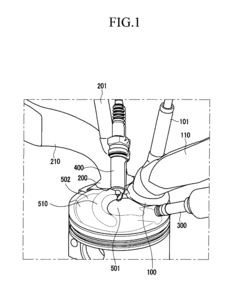
- The engine design includes specific angle configurations between the piston, intake manifold, intake valve, and injector, such as acute valve, tumble, and incidence angles, along with a cavity on the piston to optimize fuel and air mixing, reducing interference and promoting effective tumble and swirl generation.
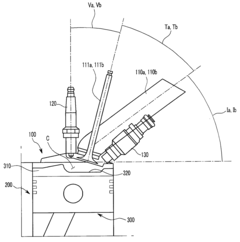
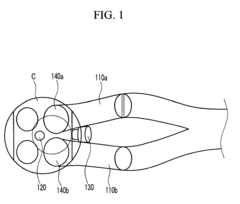
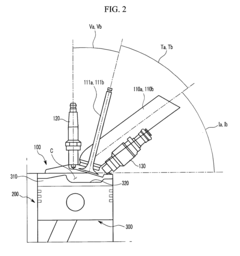
Gasoline direct injection engine
PatentInactiveUS8251040B2
Innovation
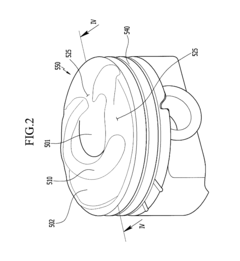
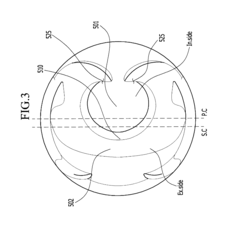
- The engine design includes a piston head with a first cavity for fuel return to the spark plug and a protrusion offset towards the exhaust valve, featuring a second cavity of a smaller height, allowing for differential control of intake and exhaust valve volumes to optimize the combustion chamber's volume ratio.
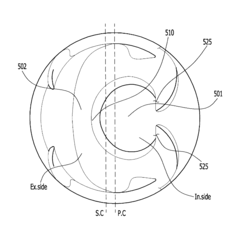
Environmental Impact and Emission Regulations
The environmental impact of Gasoline Direct Injection (GDI) engine valve operations has become a critical focus area as global emission regulations continue to tighten. GDI engines, while offering improved fuel efficiency and performance, face significant challenges in meeting increasingly stringent emission standards worldwide. Particulate matter (PM) emissions, particularly in the form of ultrafine particles, represent one of the most concerning byproducts of GDI technology, largely attributed to suboptimal valve timing and fuel-air mixture formation.
Current regulatory frameworks, including Euro 7 in Europe, China 6b, and US EPA Tier 3 standards, have established progressively lower limits for particulate emissions, nitrogen oxides (NOx), and hydrocarbon emissions. These regulations have directly influenced valve operation optimization strategies, pushing manufacturers to implement more precise valve timing control systems that minimize emissions during critical operational phases such as cold starts and transient conditions.
The correlation between valve operation parameters and emission formation is particularly evident in the combustion chamber wall wetting phenomenon. Improper valve timing can lead to increased fuel impingement on cylinder walls, resulting in incomplete combustion and elevated hydrocarbon and particulate emissions. Research indicates that optimized valve overlap periods can reduce NOx formation by up to 15% while maintaining performance parameters.
Real-world driving emission (RDE) testing requirements have further complicated compliance challenges, as valve operations must now be optimized across a much broader range of operating conditions than traditional laboratory test cycles. This has accelerated the development of adaptive valve timing systems that can respond dynamically to changing driving conditions while maintaining emission compliance.
Carbon dioxide (CO2) emission targets, though not directly regulated as pollutants, have become equally important drivers for valve operation optimization. The European fleet average target of 95g CO2/km and similar standards in other markets have pushed manufacturers to extract maximum efficiency from the combustion process through precise valve control strategies, including variable valve timing and lift technologies.
The regulatory landscape continues to evolve, with several jurisdictions announcing future bans on internal combustion engines. However, the transition period to full electrification is expected to span decades in many markets, making GDI valve optimization a crucial technology pathway for meeting near and medium-term emission targets. Recent regulatory impact assessments suggest that optimized valve operations could extend the viability of internal combustion engines by 5-10 years in markets with the most aggressive electrification timelines.
Current regulatory frameworks, including Euro 7 in Europe, China 6b, and US EPA Tier 3 standards, have established progressively lower limits for particulate emissions, nitrogen oxides (NOx), and hydrocarbon emissions. These regulations have directly influenced valve operation optimization strategies, pushing manufacturers to implement more precise valve timing control systems that minimize emissions during critical operational phases such as cold starts and transient conditions.
The correlation between valve operation parameters and emission formation is particularly evident in the combustion chamber wall wetting phenomenon. Improper valve timing can lead to increased fuel impingement on cylinder walls, resulting in incomplete combustion and elevated hydrocarbon and particulate emissions. Research indicates that optimized valve overlap periods can reduce NOx formation by up to 15% while maintaining performance parameters.
Real-world driving emission (RDE) testing requirements have further complicated compliance challenges, as valve operations must now be optimized across a much broader range of operating conditions than traditional laboratory test cycles. This has accelerated the development of adaptive valve timing systems that can respond dynamically to changing driving conditions while maintaining emission compliance.
Carbon dioxide (CO2) emission targets, though not directly regulated as pollutants, have become equally important drivers for valve operation optimization. The European fleet average target of 95g CO2/km and similar standards in other markets have pushed manufacturers to extract maximum efficiency from the combustion process through precise valve control strategies, including variable valve timing and lift technologies.
The regulatory landscape continues to evolve, with several jurisdictions announcing future bans on internal combustion engines. However, the transition period to full electrification is expected to span decades in many markets, making GDI valve optimization a crucial technology pathway for meeting near and medium-term emission targets. Recent regulatory impact assessments suggest that optimized valve operations could extend the viability of internal combustion engines by 5-10 years in markets with the most aggressive electrification timelines.
Cost-Benefit Analysis of GDI Valve Improvements
The implementation of valve improvements in Gasoline Direct Injection (GDI) engines necessitates a thorough cost-benefit analysis to determine economic viability. Initial investment costs for enhanced valve technologies range from $15-30 per valve, with premium materials like titanium alloys and advanced coatings representing the higher end of this spectrum. When multiplied across production volumes, these component costs can significantly impact unit economics.
Manufacturing process modifications present additional expenditures, with retooling production lines estimated at $500,000-2,000,000 depending on facility scale and existing infrastructure. Implementation timelines typically span 6-18 months, creating temporary production disruptions that must be factored into overall cost calculations.
Research and development investments for valve optimization technologies average $3-5 million for comprehensive programs, including computational fluid dynamics modeling, prototype development, and extensive durability testing. These upfront costs must be amortized across projected production volumes to determine per-unit impact.
Against these costs, quantifiable benefits emerge in multiple dimensions. Fuel efficiency improvements of 2-4% translate to significant lifetime savings for consumers and contribute to manufacturer fleet efficiency targets. Extended service intervals resulting from improved valve durability reduce maintenance costs by approximately $120-200 per vehicle over a 100,000-mile lifecycle.
Emissions reductions represent another critical benefit, with optimized valve operations potentially reducing NOx emissions by 5-8% and particulate matter by 3-6%. These improvements help manufacturers meet increasingly stringent regulatory standards while avoiding potential non-compliance penalties that can exceed $100 million annually.
Performance enhancements, including 3-5% torque improvements and more responsive throttle behavior, create marketable differentiation that supports premium positioning. Market research indicates consumers will pay a 1-2% price premium for vehicles with demonstrable performance advantages, partially offsetting implementation costs.
Return on investment calculations indicate most valve optimization technologies achieve breakeven within 2-3 years of implementation, with premium market segments showing faster returns due to higher margins and greater consumer willingness to pay for performance enhancements. Long-term profitability models suggest a 1.5-2.5x return on initial investment over a five-year product cycle when all direct and indirect benefits are properly accounted for.
Manufacturing process modifications present additional expenditures, with retooling production lines estimated at $500,000-2,000,000 depending on facility scale and existing infrastructure. Implementation timelines typically span 6-18 months, creating temporary production disruptions that must be factored into overall cost calculations.
Research and development investments for valve optimization technologies average $3-5 million for comprehensive programs, including computational fluid dynamics modeling, prototype development, and extensive durability testing. These upfront costs must be amortized across projected production volumes to determine per-unit impact.
Against these costs, quantifiable benefits emerge in multiple dimensions. Fuel efficiency improvements of 2-4% translate to significant lifetime savings for consumers and contribute to manufacturer fleet efficiency targets. Extended service intervals resulting from improved valve durability reduce maintenance costs by approximately $120-200 per vehicle over a 100,000-mile lifecycle.
Emissions reductions represent another critical benefit, with optimized valve operations potentially reducing NOx emissions by 5-8% and particulate matter by 3-6%. These improvements help manufacturers meet increasingly stringent regulatory standards while avoiding potential non-compliance penalties that can exceed $100 million annually.
Performance enhancements, including 3-5% torque improvements and more responsive throttle behavior, create marketable differentiation that supports premium positioning. Market research indicates consumers will pay a 1-2% price premium for vehicles with demonstrable performance advantages, partially offsetting implementation costs.
Return on investment calculations indicate most valve optimization technologies achieve breakeven within 2-3 years of implementation, with premium market segments showing faster returns due to higher margins and greater consumer willingness to pay for performance enhancements. Long-term profitability models suggest a 1.5-2.5x return on initial investment over a five-year product cycle when all direct and indirect benefits are properly accounted for.
Unlock deeper insights with PatSnap Eureka Quick Research — get a full tech report to explore trends and direct your research. Try now!
Generate Your Research Report Instantly with AI Agent
Supercharge your innovation with PatSnap Eureka AI Agent Platform!