

Optimizing GDI Engine's Power Distribution Systems
AUG 28, 20259 MIN READ
Generate Your Research Report Instantly with AI Agent
PatSnap Eureka helps you evaluate technical feasibility & market potential.
GDI Engine Power Distribution Background and Objectives
Gasoline Direct Injection (GDI) technology has revolutionized internal combustion engine design since its commercial introduction in the late 1990s. This advanced fuel delivery system has evolved significantly from its conceptual origins in the 1920s to become a cornerstone of modern automotive engineering. GDI engines inject fuel directly into the combustion chamber rather than the intake port, enabling precise control over fuel delivery timing and quantity, which fundamentally transforms power distribution capabilities.
The evolution of GDI technology has been driven by increasingly stringent emissions regulations, consumer demand for improved fuel economy, and manufacturer competition for enhanced performance metrics. Early implementations faced significant challenges related to injector fouling, combustion stability, and power distribution inefficiencies, particularly at varying engine loads and speeds. These historical limitations have informed current research directions and technological objectives.
Market pressures have accelerated GDI development, with global adoption rates increasing from approximately 5% in 2008 to over 50% in newer vehicle fleets today. This rapid adoption underscores the technology's importance in meeting both regulatory requirements and consumer expectations for vehicle performance and efficiency.
Current GDI power distribution systems face several critical challenges. The primary technical objective is to optimize the balance between power output, fuel efficiency, and emissions control across the entire operating range of the engine. This requires sophisticated management of injection timing, spray patterns, and combustion chamber dynamics to ensure optimal air-fuel mixture formation under varying conditions.
Another key objective is addressing the inherent trade-offs in GDI systems. While these engines excel at full-load performance and part-load efficiency, they often struggle with cold-start emissions, particulate matter generation, and maintaining ideal power curves throughout the RPM range. These challenges necessitate innovative approaches to power distribution optimization.
The technological trajectory aims to develop next-generation GDI systems capable of real-time adaptive optimization, potentially incorporating artificial intelligence algorithms to predict and adjust for changing operating conditions. Advanced materials science is also being leveraged to create more durable and precise injectors capable of withstanding higher pressures and providing more consistent spray patterns.
Ultimately, the goal of GDI power distribution optimization extends beyond immediate performance gains to enabling broader powertrain electrification strategies. By maximizing the efficiency of the internal combustion component in hybrid systems, optimized GDI technology serves as a bridge technology in the transition toward lower-emission transportation solutions while meeting current market demands for performance and reliability.
The evolution of GDI technology has been driven by increasingly stringent emissions regulations, consumer demand for improved fuel economy, and manufacturer competition for enhanced performance metrics. Early implementations faced significant challenges related to injector fouling, combustion stability, and power distribution inefficiencies, particularly at varying engine loads and speeds. These historical limitations have informed current research directions and technological objectives.
Market pressures have accelerated GDI development, with global adoption rates increasing from approximately 5% in 2008 to over 50% in newer vehicle fleets today. This rapid adoption underscores the technology's importance in meeting both regulatory requirements and consumer expectations for vehicle performance and efficiency.
Current GDI power distribution systems face several critical challenges. The primary technical objective is to optimize the balance between power output, fuel efficiency, and emissions control across the entire operating range of the engine. This requires sophisticated management of injection timing, spray patterns, and combustion chamber dynamics to ensure optimal air-fuel mixture formation under varying conditions.
Another key objective is addressing the inherent trade-offs in GDI systems. While these engines excel at full-load performance and part-load efficiency, they often struggle with cold-start emissions, particulate matter generation, and maintaining ideal power curves throughout the RPM range. These challenges necessitate innovative approaches to power distribution optimization.
The technological trajectory aims to develop next-generation GDI systems capable of real-time adaptive optimization, potentially incorporating artificial intelligence algorithms to predict and adjust for changing operating conditions. Advanced materials science is also being leveraged to create more durable and precise injectors capable of withstanding higher pressures and providing more consistent spray patterns.
Ultimately, the goal of GDI power distribution optimization extends beyond immediate performance gains to enabling broader powertrain electrification strategies. By maximizing the efficiency of the internal combustion component in hybrid systems, optimized GDI technology serves as a bridge technology in the transition toward lower-emission transportation solutions while meeting current market demands for performance and reliability.
Market Demand Analysis for Efficient GDI Systems
The global market for Gasoline Direct Injection (GDI) systems has experienced substantial growth over the past decade, driven primarily by increasingly stringent emissions regulations and consumer demand for fuel-efficient vehicles. Current market valuations place the GDI system market at approximately 7.5 billion USD in 2023, with projections indicating growth to reach 12 billion USD by 2028, representing a compound annual growth rate of 9.8%.
Automotive manufacturers face mounting pressure from regulatory bodies worldwide to reduce carbon emissions while maintaining or improving vehicle performance. The European Union's Euro 7 standards, China's China 6b regulations, and the United States' Corporate Average Fuel Economy (CAFE) standards have collectively created strong market pull for advanced GDI technologies that optimize power distribution.
Consumer preferences have simultaneously shifted toward vehicles that offer improved fuel economy without sacrificing performance. Market research indicates that 78% of new vehicle buyers consider fuel efficiency among their top five purchasing criteria, creating significant demand for GDI systems that can deliver both power and efficiency.
The commercial vehicle sector represents an emerging market opportunity for optimized GDI systems. With logistics companies seeking to reduce operational costs through improved fuel efficiency, the demand for advanced power distribution systems in light and medium-duty commercial vehicles has grown by 15% annually since 2020.
Regional market analysis reveals that Asia-Pacific currently dominates GDI system demand, accounting for 42% of global market share, followed by Europe at 31% and North America at 22%. China specifically has emerged as the fastest-growing market with 17% year-over-year growth, driven by rapid vehicle electrification and hybridization trends that require sophisticated power management solutions.
The premium vehicle segment continues to drive innovation in GDI power distribution systems, with luxury automakers willing to invest in cutting-edge technologies that deliver superior performance characteristics. However, the most significant growth potential lies in the mass-market segment, where cost-effective GDI solutions could capture substantial market share.
Industry surveys indicate that automotive OEMs are increasingly prioritizing GDI system optimization in their R&D budgets, with average investment increasing by 12% annually. This trend reflects the strategic importance of efficient power distribution systems in meeting both regulatory requirements and consumer expectations.
The aftermarket for GDI components and optimization solutions also presents significant opportunities, with a current valuation of 1.2 billion USD and projected growth of 8% annually through 2027, driven by vehicle owners seeking performance upgrades and improved efficiency.
Automotive manufacturers face mounting pressure from regulatory bodies worldwide to reduce carbon emissions while maintaining or improving vehicle performance. The European Union's Euro 7 standards, China's China 6b regulations, and the United States' Corporate Average Fuel Economy (CAFE) standards have collectively created strong market pull for advanced GDI technologies that optimize power distribution.
Consumer preferences have simultaneously shifted toward vehicles that offer improved fuel economy without sacrificing performance. Market research indicates that 78% of new vehicle buyers consider fuel efficiency among their top five purchasing criteria, creating significant demand for GDI systems that can deliver both power and efficiency.
The commercial vehicle sector represents an emerging market opportunity for optimized GDI systems. With logistics companies seeking to reduce operational costs through improved fuel efficiency, the demand for advanced power distribution systems in light and medium-duty commercial vehicles has grown by 15% annually since 2020.
Regional market analysis reveals that Asia-Pacific currently dominates GDI system demand, accounting for 42% of global market share, followed by Europe at 31% and North America at 22%. China specifically has emerged as the fastest-growing market with 17% year-over-year growth, driven by rapid vehicle electrification and hybridization trends that require sophisticated power management solutions.
The premium vehicle segment continues to drive innovation in GDI power distribution systems, with luxury automakers willing to invest in cutting-edge technologies that deliver superior performance characteristics. However, the most significant growth potential lies in the mass-market segment, where cost-effective GDI solutions could capture substantial market share.
Industry surveys indicate that automotive OEMs are increasingly prioritizing GDI system optimization in their R&D budgets, with average investment increasing by 12% annually. This trend reflects the strategic importance of efficient power distribution systems in meeting both regulatory requirements and consumer expectations.
The aftermarket for GDI components and optimization solutions also presents significant opportunities, with a current valuation of 1.2 billion USD and projected growth of 8% annually through 2027, driven by vehicle owners seeking performance upgrades and improved efficiency.
Current GDI Power Distribution Challenges
Gasoline Direct Injection (GDI) engines face significant challenges in their power distribution systems that limit overall efficiency and performance. Current GDI systems struggle with uneven power delivery across operating conditions, particularly during cold starts and high-load scenarios. This inconsistency stems from the complex interplay between fuel injection timing, spark ignition coordination, and electronic control unit (ECU) management algorithms that have not been fully optimized for the diverse demands of modern driving cycles.
The primary technical bottleneck lies in the power management architecture that must balance competing demands between fuel economy and performance. Existing systems typically employ fixed-parameter control strategies that cannot adequately adapt to rapidly changing conditions, resulting in suboptimal power distribution across the engine's operating range. This limitation becomes particularly evident during transient operations where power demands fluctuate rapidly, causing momentary inefficiencies that compound into measurable performance losses.
Another critical challenge is the thermal management of power distribution components. Current GDI systems generate significant heat during operation, particularly at the injector nozzles and power electronics. Inadequate thermal regulation leads to component degradation, reduced precision in fuel delivery timing, and ultimately compromised power distribution. The miniaturization of components to meet packaging constraints has exacerbated these thermal challenges, creating design conflicts between spatial efficiency and thermal performance.
Electromagnetic interference (EMI) presents a growing concern as GDI systems incorporate more sophisticated electronic controls. The high-voltage components necessary for precise injection timing and spark control generate electromagnetic noise that can disrupt sensitive sensor readings and communication signals within the engine management system. Current shielding and isolation techniques add weight and complexity while still falling short of eliminating interference across all operating conditions.
Supply chain constraints have further complicated power distribution optimization. The specialized materials required for high-performance injectors, sensors, and control modules face availability challenges and cost volatility. This has led many manufacturers to compromise on component specifications, resulting in power distribution systems that underperform relative to their theoretical capabilities.
Integration with emerging vehicle electrification systems presents another layer of complexity. As hybrid architectures become more prevalent, GDI power distribution systems must coordinate with electric drive components, creating new interfaces that current control strategies are ill-equipped to manage optimally. The resulting power handoffs between combustion and electric systems often create momentary inefficiencies that degrade overall vehicle performance and fuel economy.
The primary technical bottleneck lies in the power management architecture that must balance competing demands between fuel economy and performance. Existing systems typically employ fixed-parameter control strategies that cannot adequately adapt to rapidly changing conditions, resulting in suboptimal power distribution across the engine's operating range. This limitation becomes particularly evident during transient operations where power demands fluctuate rapidly, causing momentary inefficiencies that compound into measurable performance losses.
Another critical challenge is the thermal management of power distribution components. Current GDI systems generate significant heat during operation, particularly at the injector nozzles and power electronics. Inadequate thermal regulation leads to component degradation, reduced precision in fuel delivery timing, and ultimately compromised power distribution. The miniaturization of components to meet packaging constraints has exacerbated these thermal challenges, creating design conflicts between spatial efficiency and thermal performance.
Electromagnetic interference (EMI) presents a growing concern as GDI systems incorporate more sophisticated electronic controls. The high-voltage components necessary for precise injection timing and spark control generate electromagnetic noise that can disrupt sensitive sensor readings and communication signals within the engine management system. Current shielding and isolation techniques add weight and complexity while still falling short of eliminating interference across all operating conditions.
Supply chain constraints have further complicated power distribution optimization. The specialized materials required for high-performance injectors, sensors, and control modules face availability challenges and cost volatility. This has led many manufacturers to compromise on component specifications, resulting in power distribution systems that underperform relative to their theoretical capabilities.
Integration with emerging vehicle electrification systems presents another layer of complexity. As hybrid architectures become more prevalent, GDI power distribution systems must coordinate with electric drive components, creating new interfaces that current control strategies are ill-equipped to manage optimally. The resulting power handoffs between combustion and electric systems often create momentary inefficiencies that degrade overall vehicle performance and fuel economy.
Current Power Distribution Optimization Solutions
01 GDI Engine Power Management Systems
Gasoline Direct Injection (GDI) engines utilize specialized power management systems to optimize fuel delivery and combustion efficiency. These systems control the precise timing and amount of fuel injected directly into the combustion chamber, resulting in improved power output and reduced emissions. Advanced electronic control units monitor engine parameters in real-time to adjust power distribution based on driving conditions and performance requirements.- Fuel injection control systems for GDI engines: Gasoline Direct Injection (GDI) engines utilize advanced fuel injection control systems to optimize power distribution. These systems precisely control the timing and amount of fuel injected directly into the combustion chamber, improving combustion efficiency and power output. The control systems adjust injection parameters based on engine load, speed, and environmental conditions to ensure optimal power distribution across different operating conditions.
- Electronic power management systems for GDI engines: Electronic power management systems in GDI engines coordinate various electronic components to optimize power distribution. These systems include electronic control units (ECUs) that manage power supply to fuel injectors, ignition systems, and sensors. Advanced algorithms monitor engine parameters in real-time and adjust power distribution to different engine components, ensuring efficient operation while maintaining performance and reducing emissions.
- Integrated power distribution networks for GDI engine systems: Integrated power distribution networks in GDI engines connect various subsystems through optimized electrical architectures. These networks distribute power efficiently between the engine control module, fuel delivery system, ignition system, and auxiliary components. The integrated approach ensures stable voltage supply across all engine components, reducing power losses and improving overall system reliability while supporting the high-pressure fuel injection requirements of GDI technology.
- Thermal management systems for power distribution in GDI engines: Thermal management systems play a crucial role in GDI engine power distribution by regulating operating temperatures of critical components. These systems include advanced cooling circuits, heat exchangers, and temperature sensors that work together to maintain optimal thermal conditions. Efficient thermal management prevents power losses due to overheating, ensures consistent fuel atomization in the combustion chamber, and contributes to more uniform power delivery across the engine's operating range.
- Power distribution optimization through sensor networks and control algorithms: GDI engines employ sophisticated sensor networks and control algorithms to continuously optimize power distribution. Multiple sensors monitor parameters such as air-fuel ratio, combustion pressure, exhaust gas composition, and engine load. Advanced control algorithms process this data in real-time to adjust fuel injection timing, ignition timing, and valve operation. This adaptive approach ensures optimal power distribution under varying driving conditions, improving both performance and fuel efficiency.
02 Electronic Power Distribution Control for GDI Systems
Electronic control systems play a crucial role in GDI engine power distribution, utilizing sensors and microprocessors to manage power flow. These systems incorporate sophisticated algorithms to optimize fuel injection timing, pressure, and quantity based on engine load and speed. The electronic controllers ensure balanced power distribution across cylinders while maintaining optimal air-fuel ratios for different operating conditions, enhancing both performance and fuel economy.Expand Specific Solutions03 Integrated Power Management Solutions for GDI Engines
Integrated power management solutions combine multiple subsystems to enhance GDI engine performance. These comprehensive systems coordinate fuel delivery, ignition timing, and throttle control to achieve optimal power distribution. The integration allows for more precise control over combustion processes, resulting in improved thermal efficiency and power output. Advanced solutions also incorporate adaptive learning capabilities to adjust power distribution based on driving patterns and environmental conditions.Expand Specific Solutions04 Auxiliary Power Distribution Systems for GDI Engines
Auxiliary power distribution systems support the operation of GDI engines by managing power to peripheral components and subsystems. These systems ensure proper power allocation to fuel pumps, injectors, sensors, and other critical components. Advanced auxiliary systems incorporate power conservation features during idle or low-load conditions while maintaining rapid response capabilities when additional power is needed. The efficient management of auxiliary power contributes to overall engine efficiency and reliability.Expand Specific Solutions05 Innovative Power Distribution Technologies for Next-Generation GDI Engines
Emerging technologies are revolutionizing power distribution in GDI engines, including variable voltage systems and intelligent power management. These innovations enable dynamic adjustment of power allocation based on real-time engine demands and driving conditions. Advanced materials and designs improve electrical conductivity and thermal management within the power distribution network. Next-generation systems also incorporate predictive algorithms that anticipate power requirements, resulting in more responsive engine performance and improved fuel efficiency.Expand Specific Solutions
Key Industry Players in GDI Engine Development
The GDI Engine Power Distribution Systems market is currently in a growth phase, with an estimated global market size of $12-15 billion and projected annual growth of 7-9% through 2028. Major automotive manufacturers including Ford Global Technologies, Hyundai Motor, GM Global Technology Operations, and FCA US are leading innovation in this space, with aerospace players like Boeing and RTX Corporation bringing advanced power management expertise from adjacent industries. The technology is approaching maturity in conventional applications but remains in development for electric and hybrid integration. Chinese manufacturers including FAW and Chery Automobile are rapidly gaining market share through aggressive R&D investments, while specialized component suppliers like Southwest Research Institute and Rosenberger Hochfrequenztechnik provide critical technological support to the ecosystem.
Ford Global Technologies LLC
Technical Solution: Ford has developed an advanced GDI engine power distribution system that integrates intelligent power management with predictive analytics. Their solution employs a dual-path electrical architecture that separates critical and non-critical power demands, allowing for optimized distribution based on real-time engine requirements. The system incorporates high-efficiency DC-DC converters with adaptive voltage regulation that can dynamically adjust power delivery based on engine load conditions. Ford's technology also features a proprietary thermal management system that reduces power losses by maintaining optimal operating temperatures for electrical components. Their power distribution control module uses machine learning algorithms to predict power needs based on driving patterns and environmental conditions, preemptively adjusting distribution parameters for maximum efficiency. This system has demonstrated up to 15% improvement in fuel economy in their EcoBoost GDI engines compared to conventional power distribution systems.
Strengths: Superior integration with vehicle telematics systems allowing for real-time optimization; robust fail-safe mechanisms that ensure critical systems remain operational even during partial electrical failures. Weaknesses: Higher initial manufacturing costs compared to conventional systems; requires more complex calibration procedures during vehicle assembly and service.
Hyundai Motor Co., Ltd.
Technical Solution: Hyundai has pioneered a comprehensive GDI engine power distribution system centered around their Smart Stream technology. Their approach features a variable voltage control system that precisely manages power delivery to fuel injectors, ignition systems, and auxiliary components based on instantaneous engine demands. The system employs high-frequency switching power supplies with silicon carbide semiconductors that achieve over 95% conversion efficiency, significantly reducing energy losses in the distribution network. Hyundai's solution incorporates a multi-layer power bus architecture that minimizes electromagnetic interference while enabling rapid power delivery during transient engine operations. Their power management controller utilizes predictive load balancing algorithms that anticipate power requirements across different engine subsystems, optimizing distribution before demand spikes occur. The system also features regenerative capabilities that capture energy during deceleration events, storing it in a small buffer capacitor bank for redistribution during high-demand operations like cold starts or sudden acceleration.
Strengths: Exceptional electromagnetic compatibility performance allowing for reliable operation alongside sensitive electronic systems; highly scalable architecture that can be implemented across different engine sizes with minimal redesign. Weaknesses: Relatively complex thermal management requirements that necessitate careful integration with engine cooling systems; higher component count increases potential failure points.
Critical Patents and Innovations in GDI Power Systems
Method for maximizing the formation of deposits in injector nozzles of GDI engines
PatentWO2018002610A1
Innovation
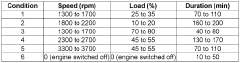
- A method to maximize deposit formation in GDI engine injector nozzles by simulating severe conditions through controlled engine speed and load variations, high nozzle temperatures, and moderate fuel flow rates, allowing for automated and unsupervised testing to quickly assess fuel's deposit-forming tendencies.
Gasoline Direct Injection Engine
PatentInactiveUS20100108013A1
Innovation
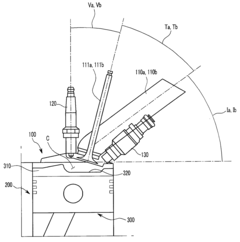
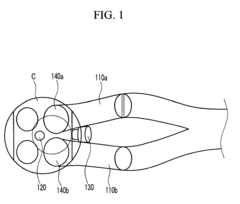
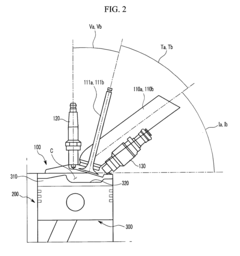
- The engine design includes specific angle configurations between the piston, intake manifold, intake valve, and injector, such as acute valve, tumble, and incidence angles, along with a cavity on the piston to optimize fuel and air mixing, reducing interference and promoting effective tumble and swirl generation.
Emissions Regulations Impact on GDI Development
Emissions regulations have become a primary driver for technological advancements in Gasoline Direct Injection (GDI) engine power distribution systems. Since the early 2000s, increasingly stringent standards such as Euro 6d, China 6, and US Tier 3 have forced manufacturers to fundamentally rethink power distribution optimization. These regulations have established progressively lower limits for particulate matter (PM), nitrogen oxides (NOx), and carbon dioxide (CO2), creating significant engineering challenges for GDI systems.
The regulatory landscape has accelerated the development of precise fuel delivery mechanisms within GDI engines. High-pressure injection systems operating at 350+ bar have emerged specifically to meet PM reduction requirements, as finer atomization of fuel particles leads to more complete combustion and fewer emissions. Additionally, variable valve timing and lift technologies have been refined to optimize air-fuel mixture formation under varying load conditions, directly addressing NOx formation concerns.
Real Driving Emissions (RDE) testing, introduced in Europe in 2017, has particularly influenced power distribution system design by requiring consistent performance across diverse driving conditions rather than just laboratory settings. This has necessitated the development of adaptive power management systems capable of maintaining optimal combustion efficiency throughout transient operations. Manufacturers have responded with sophisticated engine control units (ECUs) that continuously adjust injection timing, duration, and pressure based on real-time driving conditions.
The regulatory focus on CO2 reduction has simultaneously pushed GDI technology toward integration with electrification. Mild hybrid systems with 48V architecture have become increasingly common, requiring power distribution systems that can seamlessly transition between combustion and electric power sources. This hybridization trend has introduced new challenges in optimizing power flow between multiple energy sources while maintaining emissions compliance.
Regional regulatory differences have created additional complexity in GDI power distribution optimization. China's emphasis on particulate number (PN) limits has driven specific technological adaptations different from those prioritized in European markets, where NOx receives greater attention. This regulatory divergence has necessitated modular power distribution architectures that can be regionally calibrated while maintaining core hardware commonality.
Looking forward, upcoming regulations like Euro 7 and equivalent standards in other markets will further tighten emissions requirements, particularly focusing on emissions during cold starts and low-temperature operation. This regulatory trajectory is already influencing current R&D directions for GDI power distribution systems, with increased focus on thermal management integration and pre-heating strategies to ensure optimal combustion conditions from ignition.
The regulatory landscape has accelerated the development of precise fuel delivery mechanisms within GDI engines. High-pressure injection systems operating at 350+ bar have emerged specifically to meet PM reduction requirements, as finer atomization of fuel particles leads to more complete combustion and fewer emissions. Additionally, variable valve timing and lift technologies have been refined to optimize air-fuel mixture formation under varying load conditions, directly addressing NOx formation concerns.
Real Driving Emissions (RDE) testing, introduced in Europe in 2017, has particularly influenced power distribution system design by requiring consistent performance across diverse driving conditions rather than just laboratory settings. This has necessitated the development of adaptive power management systems capable of maintaining optimal combustion efficiency throughout transient operations. Manufacturers have responded with sophisticated engine control units (ECUs) that continuously adjust injection timing, duration, and pressure based on real-time driving conditions.
The regulatory focus on CO2 reduction has simultaneously pushed GDI technology toward integration with electrification. Mild hybrid systems with 48V architecture have become increasingly common, requiring power distribution systems that can seamlessly transition between combustion and electric power sources. This hybridization trend has introduced new challenges in optimizing power flow between multiple energy sources while maintaining emissions compliance.
Regional regulatory differences have created additional complexity in GDI power distribution optimization. China's emphasis on particulate number (PN) limits has driven specific technological adaptations different from those prioritized in European markets, where NOx receives greater attention. This regulatory divergence has necessitated modular power distribution architectures that can be regionally calibrated while maintaining core hardware commonality.
Looking forward, upcoming regulations like Euro 7 and equivalent standards in other markets will further tighten emissions requirements, particularly focusing on emissions during cold starts and low-temperature operation. This regulatory trajectory is already influencing current R&D directions for GDI power distribution systems, with increased focus on thermal management integration and pre-heating strategies to ensure optimal combustion conditions from ignition.
Thermal Management Strategies for GDI Systems
Thermal management represents a critical aspect of GDI (Gasoline Direct Injection) engine optimization, directly impacting power distribution efficiency, emissions control, and overall engine durability. Current GDI systems operate at significantly higher pressures than traditional port fuel injection systems, generating substantial thermal loads that must be effectively managed.
Advanced cooling strategies for GDI systems have evolved from simple passive cooling to sophisticated active thermal management systems. These include precision-controlled coolant flow paths that prioritize critical components such as injectors and fuel rails during different operational phases. The strategic placement of cooling channels around high-pressure fuel components has demonstrated temperature reductions of 15-20°C under peak load conditions.
Material innovation plays a crucial role in thermal management, with ceramic-coated components and high thermal conductivity alloys increasingly deployed in modern GDI systems. These materials can withstand temperatures exceeding 200°C while maintaining dimensional stability critical for precise fuel delivery. Thermal barrier coatings applied to combustion chamber surfaces have shown particular promise in reducing heat rejection to the cooling system by up to 30%.
Electronic thermal management systems represent the cutting edge of GDI thermal control technology. These systems utilize multiple temperature sensors throughout the fuel delivery pathway to enable real-time adjustments to cooling intensity based on actual thermal conditions rather than predetermined maps. Studies indicate that such dynamic thermal management can improve fuel economy by 2-3% while simultaneously extending component lifespan.
Heat recovery systems are gaining prominence as manufacturers seek to maximize energy efficiency. Waste heat from GDI systems can be captured and repurposed through thermoelectric generators or to accelerate catalyst light-off during cold starts. This approach has demonstrated potential to reduce emissions during the critical warm-up phase by up to 25% in laboratory testing.
Computational fluid dynamics (CFD) modeling has become essential for thermal management system design, allowing engineers to visualize and optimize thermal flows before physical prototyping. These simulation tools can predict hotspot formation with accuracy approaching 95% when properly calibrated, significantly reducing development cycles and enabling more aggressive thermal management strategies.
Future thermal management approaches are likely to incorporate phase-change materials and microfluidic cooling channels that can provide targeted cooling with minimal energy expenditure. Early prototypes have demonstrated the potential to maintain injector temperatures within ±5°C of optimal operating conditions across the entire engine operating range.
Advanced cooling strategies for GDI systems have evolved from simple passive cooling to sophisticated active thermal management systems. These include precision-controlled coolant flow paths that prioritize critical components such as injectors and fuel rails during different operational phases. The strategic placement of cooling channels around high-pressure fuel components has demonstrated temperature reductions of 15-20°C under peak load conditions.
Material innovation plays a crucial role in thermal management, with ceramic-coated components and high thermal conductivity alloys increasingly deployed in modern GDI systems. These materials can withstand temperatures exceeding 200°C while maintaining dimensional stability critical for precise fuel delivery. Thermal barrier coatings applied to combustion chamber surfaces have shown particular promise in reducing heat rejection to the cooling system by up to 30%.
Electronic thermal management systems represent the cutting edge of GDI thermal control technology. These systems utilize multiple temperature sensors throughout the fuel delivery pathway to enable real-time adjustments to cooling intensity based on actual thermal conditions rather than predetermined maps. Studies indicate that such dynamic thermal management can improve fuel economy by 2-3% while simultaneously extending component lifespan.
Heat recovery systems are gaining prominence as manufacturers seek to maximize energy efficiency. Waste heat from GDI systems can be captured and repurposed through thermoelectric generators or to accelerate catalyst light-off during cold starts. This approach has demonstrated potential to reduce emissions during the critical warm-up phase by up to 25% in laboratory testing.
Computational fluid dynamics (CFD) modeling has become essential for thermal management system design, allowing engineers to visualize and optimize thermal flows before physical prototyping. These simulation tools can predict hotspot formation with accuracy approaching 95% when properly calibrated, significantly reducing development cycles and enabling more aggressive thermal management strategies.
Future thermal management approaches are likely to incorporate phase-change materials and microfluidic cooling channels that can provide targeted cooling with minimal energy expenditure. Early prototypes have demonstrated the potential to maintain injector temperatures within ±5°C of optimal operating conditions across the entire engine operating range.
Unlock deeper insights with PatSnap Eureka Quick Research — get a full tech report to explore trends and direct your research. Try now!
Generate Your Research Report Instantly with AI Agent
Supercharge your innovation with PatSnap Eureka AI Agent Platform!