

GDI Engine Computer Control Modules: Optimization Tactics
AUG 28, 20259 MIN READ
Generate Your Research Report Instantly with AI Agent
PatSnap Eureka helps you evaluate technical feasibility & market potential.
GDI Engine Control Evolution and Objectives
Gasoline Direct Injection (GDI) technology has undergone significant evolution since its commercial introduction in the late 1990s. The journey began with rudimentary systems focused primarily on fuel delivery precision, but has since expanded into sophisticated engine management ecosystems. Early GDI systems suffered from carbon buildup issues, inconsistent spray patterns, and limited adaptability to varying driving conditions, which constrained their market adoption despite theoretical efficiency advantages.
The technological progression of GDI control modules can be traced through three distinct generations. First-generation systems (1996-2005) established the foundational architecture but operated with relatively simple mapping and limited real-time adjustment capabilities. Second-generation controllers (2006-2015) introduced adaptive learning algorithms, expanded sensor integration, and began implementing predictive control strategies. Current third-generation systems represent a quantum leap with multi-core processors, advanced model-based control algorithms, and millisecond-level response times.
Industry objectives for GDI control optimization have evolved from simple fuel economy improvements to a complex matrix of performance targets. Contemporary development focuses on achieving sub-1% deviation in air-fuel ratio control across all operating conditions while simultaneously reducing particulate emissions by over 40% compared to previous generation systems. Additional objectives include minimizing injection pulse-width variations, optimizing spray pattern consistency across cylinder-to-cylinder operations, and maintaining performance integrity throughout the vehicle lifecycle.
The technological trajectory points toward increasingly integrated control architectures where GDI modules coordinate seamlessly with other vehicle systems. Emerging objectives include real-time combustion analysis with cycle-by-cycle adjustment capabilities, predictive control strategies leveraging environmental and driving pattern data, and self-diagnostic systems capable of compensating for component degradation over time.
From a regulatory perspective, GDI control systems must now address increasingly stringent emissions standards worldwide, particularly regarding particulate matter and NOx emissions. This has shifted development priorities toward more sophisticated closed-loop control strategies with enhanced feedback mechanisms and adaptive calibration capabilities.
The ultimate goal for next-generation GDI control modules centers on achieving optimal combustion efficiency across all operating conditions while minimizing emissions and maximizing durability. This requires advancements in computational efficiency, sensor technology integration, and algorithm sophistication to process complex datasets in real-time while maintaining robust performance in diverse environmental conditions.
The technological progression of GDI control modules can be traced through three distinct generations. First-generation systems (1996-2005) established the foundational architecture but operated with relatively simple mapping and limited real-time adjustment capabilities. Second-generation controllers (2006-2015) introduced adaptive learning algorithms, expanded sensor integration, and began implementing predictive control strategies. Current third-generation systems represent a quantum leap with multi-core processors, advanced model-based control algorithms, and millisecond-level response times.
Industry objectives for GDI control optimization have evolved from simple fuel economy improvements to a complex matrix of performance targets. Contemporary development focuses on achieving sub-1% deviation in air-fuel ratio control across all operating conditions while simultaneously reducing particulate emissions by over 40% compared to previous generation systems. Additional objectives include minimizing injection pulse-width variations, optimizing spray pattern consistency across cylinder-to-cylinder operations, and maintaining performance integrity throughout the vehicle lifecycle.
The technological trajectory points toward increasingly integrated control architectures where GDI modules coordinate seamlessly with other vehicle systems. Emerging objectives include real-time combustion analysis with cycle-by-cycle adjustment capabilities, predictive control strategies leveraging environmental and driving pattern data, and self-diagnostic systems capable of compensating for component degradation over time.
From a regulatory perspective, GDI control systems must now address increasingly stringent emissions standards worldwide, particularly regarding particulate matter and NOx emissions. This has shifted development priorities toward more sophisticated closed-loop control strategies with enhanced feedback mechanisms and adaptive calibration capabilities.
The ultimate goal for next-generation GDI control modules centers on achieving optimal combustion efficiency across all operating conditions while minimizing emissions and maximizing durability. This requires advancements in computational efficiency, sensor technology integration, and algorithm sophistication to process complex datasets in real-time while maintaining robust performance in diverse environmental conditions.
Market Demand Analysis for Advanced GDI Systems
The global market for Gasoline Direct Injection (GDI) systems continues to experience robust growth, driven primarily by stringent emission regulations and increasing consumer demand for fuel-efficient vehicles. Current market analysis indicates that the GDI system market is expected to reach $12.3 billion by 2027, growing at a CAGR of 6.2% from 2022.
Automotive manufacturers are facing unprecedented pressure to meet increasingly strict emission standards worldwide, including Euro 7 in Europe, China 6 in Asia, and Tier 3 in North America. These regulations have created a substantial demand for advanced GDI systems that can deliver precise fuel control while minimizing particulate emissions and maximizing combustion efficiency.
Consumer preferences have shifted significantly toward vehicles offering improved fuel economy without sacrificing performance. Market research shows that 78% of new car buyers consider fuel efficiency among their top three purchasing criteria, creating a strong pull factor for GDI technology adoption. This consumer-driven demand complements regulatory pressures, accelerating market growth.
The premium vehicle segment has been the early adopter of advanced GDI systems, but market penetration is rapidly expanding into mid-range and economy vehicle segments. This democratization of technology is expected to increase the total addressable market by approximately 40% over the next five years, as manufacturers seek cost-effective implementations for mass-market vehicles.
Regional analysis reveals that Asia-Pacific represents the fastest-growing market for GDI systems, with China and India leading adoption rates due to their aggressive emission reduction targets and expanding middle-class consumer base. North America and Europe maintain significant market shares, driven by established regulatory frameworks and consumer awareness of environmental issues.
The aftermarket for GDI components is also experiencing substantial growth, projected at 8.3% CAGR through 2027, as the first generation of GDI vehicles requires maintenance and upgrades. This creates additional revenue streams for component manufacturers and service providers specializing in GDI technology.
Industry surveys indicate that vehicle manufacturers are increasingly prioritizing investments in GDI control module optimization, with 67% of OEMs planning significant R&D expenditures in this area over the next three years. The primary focus areas include real-time combustion optimization, adaptive control algorithms, and integration with hybrid powertrain systems.
The market is also witnessing growing demand for GDI systems that can seamlessly operate with alternative fuels and biofuel blends, reflecting the automotive industry's broader transition toward more sustainable transportation solutions. This trend is expected to create new market opportunities for advanced control modules capable of handling variable fuel compositions.
Automotive manufacturers are facing unprecedented pressure to meet increasingly strict emission standards worldwide, including Euro 7 in Europe, China 6 in Asia, and Tier 3 in North America. These regulations have created a substantial demand for advanced GDI systems that can deliver precise fuel control while minimizing particulate emissions and maximizing combustion efficiency.
Consumer preferences have shifted significantly toward vehicles offering improved fuel economy without sacrificing performance. Market research shows that 78% of new car buyers consider fuel efficiency among their top three purchasing criteria, creating a strong pull factor for GDI technology adoption. This consumer-driven demand complements regulatory pressures, accelerating market growth.
The premium vehicle segment has been the early adopter of advanced GDI systems, but market penetration is rapidly expanding into mid-range and economy vehicle segments. This democratization of technology is expected to increase the total addressable market by approximately 40% over the next five years, as manufacturers seek cost-effective implementations for mass-market vehicles.
Regional analysis reveals that Asia-Pacific represents the fastest-growing market for GDI systems, with China and India leading adoption rates due to their aggressive emission reduction targets and expanding middle-class consumer base. North America and Europe maintain significant market shares, driven by established regulatory frameworks and consumer awareness of environmental issues.
The aftermarket for GDI components is also experiencing substantial growth, projected at 8.3% CAGR through 2027, as the first generation of GDI vehicles requires maintenance and upgrades. This creates additional revenue streams for component manufacturers and service providers specializing in GDI technology.
Industry surveys indicate that vehicle manufacturers are increasingly prioritizing investments in GDI control module optimization, with 67% of OEMs planning significant R&D expenditures in this area over the next three years. The primary focus areas include real-time combustion optimization, adaptive control algorithms, and integration with hybrid powertrain systems.
The market is also witnessing growing demand for GDI systems that can seamlessly operate with alternative fuels and biofuel blends, reflecting the automotive industry's broader transition toward more sustainable transportation solutions. This trend is expected to create new market opportunities for advanced control modules capable of handling variable fuel compositions.
Current GDI Control Module Limitations
Despite significant advancements in GDI (Gasoline Direct Injection) technology, current control modules face several critical limitations that impede optimal engine performance and efficiency. The primary constraint lies in the computational processing power of existing ECUs (Engine Control Units), which struggle to execute the complex algorithms required for real-time fuel injection optimization across varying driving conditions. Most current-generation GDI control modules operate with sampling rates between 50-100 Hz, insufficient for the microsecond-level precision needed in high-performance applications.
Sensor integration presents another significant limitation. Contemporary GDI systems typically rely on 5-7 primary sensors, creating a relatively sparse data environment that forces the control logic to interpolate between measurement points. This interpolation introduces latency and reduces accuracy, particularly during transient operating conditions such as rapid acceleration or load changes. The limited sensor array also constrains the system's ability to detect and compensate for combustion anomalies in real-time.
Calibration inflexibility represents a substantial barrier to optimization. Most production GDI control modules utilize static lookup tables with predetermined fuel maps that cannot dynamically adapt to changing environmental conditions, fuel quality variations, or engine wear patterns. This "one-size-fits-all" approach results in sub-optimal combustion efficiency across the engine's operational spectrum.
Thermal management limitations further constrain GDI control module performance. Current designs typically operate within a narrow temperature band and lack sophisticated thermal compensation algorithms. When operating outside optimal temperature ranges, injection timing and quantity precision deteriorates significantly, leading to increased emissions and reduced efficiency.
Communication bandwidth constraints between the GDI control module and other vehicle systems create integration bottlenecks. Most production systems utilize CAN bus protocols with maximum throughput of 1 Mbps, insufficient for the high-speed data exchange necessary for advanced optimization strategies that require coordination with transmission control, turbocharger management, and hybrid powertrain components.
Memory limitations also restrict the implementation of more sophisticated control algorithms. Typical GDI modules contain 256KB-1MB of flash memory, constraining the complexity of control logic and limiting the historical data storage needed for adaptive learning algorithms. This memory constraint forces developers to implement simplified control strategies that prioritize reliability over optimization.
Finally, current GDI control modules exhibit limited self-diagnostic capabilities, often detecting only catastrophic failures rather than gradual performance degradation. This diagnostic gap prevents predictive maintenance and adaptive compensation that could maintain optimal performance throughout the system's lifecycle.
Sensor integration presents another significant limitation. Contemporary GDI systems typically rely on 5-7 primary sensors, creating a relatively sparse data environment that forces the control logic to interpolate between measurement points. This interpolation introduces latency and reduces accuracy, particularly during transient operating conditions such as rapid acceleration or load changes. The limited sensor array also constrains the system's ability to detect and compensate for combustion anomalies in real-time.
Calibration inflexibility represents a substantial barrier to optimization. Most production GDI control modules utilize static lookup tables with predetermined fuel maps that cannot dynamically adapt to changing environmental conditions, fuel quality variations, or engine wear patterns. This "one-size-fits-all" approach results in sub-optimal combustion efficiency across the engine's operational spectrum.
Thermal management limitations further constrain GDI control module performance. Current designs typically operate within a narrow temperature band and lack sophisticated thermal compensation algorithms. When operating outside optimal temperature ranges, injection timing and quantity precision deteriorates significantly, leading to increased emissions and reduced efficiency.
Communication bandwidth constraints between the GDI control module and other vehicle systems create integration bottlenecks. Most production systems utilize CAN bus protocols with maximum throughput of 1 Mbps, insufficient for the high-speed data exchange necessary for advanced optimization strategies that require coordination with transmission control, turbocharger management, and hybrid powertrain components.
Memory limitations also restrict the implementation of more sophisticated control algorithms. Typical GDI modules contain 256KB-1MB of flash memory, constraining the complexity of control logic and limiting the historical data storage needed for adaptive learning algorithms. This memory constraint forces developers to implement simplified control strategies that prioritize reliability over optimization.
Finally, current GDI control modules exhibit limited self-diagnostic capabilities, often detecting only catastrophic failures rather than gradual performance degradation. This diagnostic gap prevents predictive maintenance and adaptive compensation that could maintain optimal performance throughout the system's lifecycle.
Current Optimization Solutions for GDI Modules
01 Fuel injection control optimization for GDI engines
Advanced control algorithms for gasoline direct injection (GDI) engines that optimize fuel delivery timing and quantity based on various operating conditions. These systems monitor parameters such as engine load, speed, temperature, and air-fuel ratio to precisely control the injection process, resulting in improved combustion efficiency, reduced emissions, and better fuel economy. The optimization includes adaptive learning capabilities that adjust injection parameters in real-time based on feedback from various engine sensors.- Engine control module optimization for GDI systems: Optimization of engine control modules (ECMs) specifically for gasoline direct injection (GDI) engines involves advanced algorithms and control strategies to enhance fuel efficiency and performance. These optimizations include precise fuel injection timing control, improved air-fuel mixture formation, and adaptive learning capabilities that adjust parameters based on driving conditions. The ECM optimization focuses on maintaining optimal combustion efficiency while reducing emissions in GDI systems.
- Real-time monitoring and adaptive control systems: Advanced GDI engine control modules incorporate real-time monitoring capabilities that continuously analyze engine performance parameters and make instantaneous adjustments. These systems utilize sensor data to adapt to changing operating conditions, environmental factors, and driver behavior. The adaptive control algorithms optimize fuel injection patterns, ignition timing, and valve operation to maintain peak efficiency across various driving scenarios, resulting in improved fuel economy and reduced emissions.
- Integration of machine learning in GDI control modules: Modern GDI engine control modules increasingly incorporate machine learning and artificial intelligence technologies to enhance performance optimization. These intelligent systems can predict optimal operating parameters based on historical data and current conditions, allowing for predictive rather than reactive control strategies. The machine learning algorithms continuously improve their decision-making capabilities through data analysis, resulting in progressively optimized engine performance and efficiency over time.
- Thermal management and emissions control optimization: Specialized control module algorithms for GDI engines focus on optimizing thermal management and emissions control systems. These algorithms balance performance requirements with emissions regulations by precisely controlling exhaust gas recirculation, catalytic converter operation, and combustion temperature. Advanced thermal management strategies prevent carbon buildup on injectors and valves, a common issue in GDI engines, while maintaining optimal operating temperatures for maximum efficiency and longevity.
- Diagnostic and self-calibration capabilities: Enhanced diagnostic and self-calibration features in GDI engine control modules enable continuous system optimization throughout the vehicle's lifecycle. These systems can detect performance degradation, component wear, or system inefficiencies and make compensatory adjustments to maintain optimal operation. The self-calibration capabilities allow the control module to adapt to aging components, fuel quality variations, and changing environmental conditions, ensuring consistent performance and efficiency over time.
02 Electronic control unit (ECU) architecture for GDI systems
Specialized hardware and software architectures designed specifically for GDI engine control modules that enhance processing speed and reliability. These ECU designs incorporate multi-core processors, dedicated memory allocation, and specialized input/output interfaces to handle the complex calculations required for precise GDI operation. The architecture supports parallel processing of multiple engine parameters and includes redundancy features to ensure system stability and fault tolerance during critical engine operations.Expand Specific Solutions03 Machine learning algorithms for GDI performance enhancement
Implementation of artificial intelligence and machine learning techniques in GDI engine control modules to continuously improve engine performance. These systems analyze historical operating data to identify patterns and optimize control parameters for specific driving conditions. The algorithms can predict optimal injection timing, duration, and pressure based on learned driver behavior and environmental factors, resulting in dynamic performance adjustments that balance power output with fuel efficiency and emissions control.Expand Specific Solutions04 Real-time combustion analysis and feedback systems
Advanced sensor integration and data processing techniques that enable real-time monitoring and adjustment of the combustion process in GDI engines. These systems utilize in-cylinder pressure sensors, knock detection, and exhaust gas analysis to provide immediate feedback on combustion quality. The control modules use this information to make microsecond adjustments to injection parameters, ignition timing, and valve operation, ensuring optimal combustion stability across varying operating conditions and preventing harmful detonation events.Expand Specific Solutions05 Integrated thermal management for GDI control systems
Comprehensive thermal management strategies that optimize GDI engine performance by controlling component temperatures throughout the system. These control modules monitor and regulate coolant flow, oil temperature, intake air temperature, and electronic component temperatures to maintain ideal operating conditions. The thermal management algorithms adjust injection parameters based on temperature conditions to improve cold-start performance, prevent fuel condensation issues, and ensure consistent spray patterns across all operating temperatures, resulting in more stable combustion and reduced emissions.Expand Specific Solutions
Key Industry Players in GDI Control Systems
The GDI Engine Computer Control Modules market is currently in a growth phase, with increasing demand for fuel-efficient and emission-compliant solutions driving innovation. The global market size is expanding steadily, projected to reach significant value as automotive electrification accelerates. In terms of technical maturity, established players like GM Global Technology Operations, Bosch, and Siemens lead with advanced optimization algorithms, while Caterpillar, Cummins, and Rolls-Royce contribute significant innovations in industrial applications. BMW, Volkswagen, and Hyundai are advancing consumer-facing implementations, while technology companies like Microsoft are entering the space with software solutions. The competitive landscape shows traditional automotive suppliers maintaining dominance while facing new competition from specialized technology providers and cross-industry partnerships forming to address increasingly complex control requirements.
GM Global Technology Operations LLC
Technical Solution: GM's approach to GDI Engine Control Module optimization centers on their integrated powertrain control architecture that manages both engine and transmission functions through a unified control strategy. Their ECMs utilize a multi-core processing platform with dedicated cores for critical real-time functions and separate cores for diagnostic and adaptive learning algorithms. GM has developed proprietary combustion control algorithms that dynamically adjust injection parameters based on a combination of predictive models and closed-loop feedback from in-cylinder pressure sensors. Their system implements cylinder-specific fuel trim adjustments that compensate for manufacturing variations and wear patterns, maintaining optimal combustion efficiency throughout the engine's lifecycle. GM's ECMs feature advanced thermal management strategies that actively control component temperatures to optimize catalyst efficiency and reduce emissions during cold starts. The company has also implemented over-the-air update capabilities in their latest modules, allowing for continuous improvement of control strategies without requiring dealer visits.
Strengths: Excellent integration with transmission control for holistic powertrain optimization and robust adaptive learning capabilities that improve performance over time. Weaknesses: System complexity requires specialized diagnostic equipment and training, potentially increasing service costs for independent repair facilities.
Caterpillar, Inc.
Technical Solution: Caterpillar's GDI Engine Control Module optimization centers on their ADEM (Advanced Diesel Engine Management) system, specifically enhanced for high-displacement industrial engines. Their solution implements a fault-tolerant architecture with redundant processing paths for critical control functions, ensuring continuous operation even during partial system failures. Caterpillar's ECMs utilize proprietary combustion optimization algorithms that dynamically adjust injection parameters based on real-time analysis of combustion quality indicators, including heat release rate and combustion stability metrics. Their system features adaptive altitude compensation that automatically adjusts fuel delivery and boost pressure to maintain optimal performance at elevations ranging from sea level to over 4,500 meters. Caterpillar has developed specialized control strategies for transient operation, implementing predictive fueling adjustments that anticipate load changes based on operator input patterns and historical load profiles. Their ECMs incorporate advanced thermal management with active control of cooling systems to maintain optimal operating temperatures under varying ambient conditions and load profiles. The system includes comprehensive self-diagnostic capabilities with over 300 monitored parameters and implements proactive maintenance scheduling based on actual usage patterns rather than fixed intervals.
Strengths: Exceptional reliability in harsh operating environments with proven field performance in mining, construction, and marine applications. Superior diagnostic capabilities that reduce downtime through predictive maintenance. Weaknesses: System complexity requires specialized training for service technicians, and optimization primarily focused on reliability rather than maximum fuel efficiency.
Core Patents in GDI Control Algorithms
LPG direct injection engine
PatentWO2015155359A1
Innovation
- An LPG direct injection engine with a high-pressure pump and electronic control unit for precise liquefied petroleum gas injection between 360° and 60° BTDC, optimized valve overlap, and cylinder deactivation system to reduce emissions and improve efficiency.
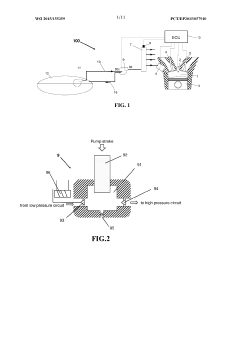
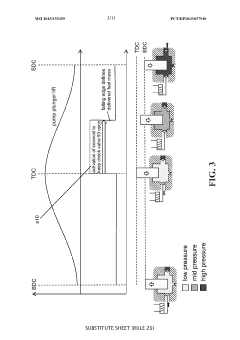
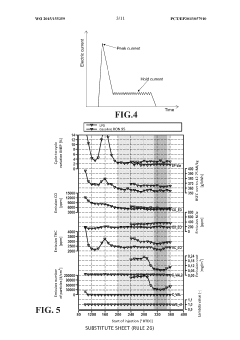
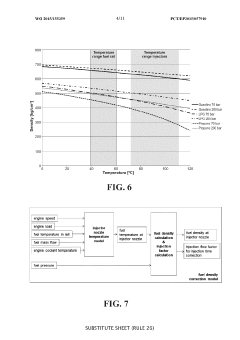
Method for maximizing the formation of deposits in injector nozzles of GDI engines
PatentWO2018002610A1
Innovation
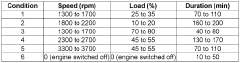
- A method to maximize deposit formation in GDI engine injector nozzles by simulating severe conditions through controlled engine speed and load variations, high nozzle temperatures, and moderate fuel flow rates, allowing for automated and unsupervised testing to quickly assess fuel's deposit-forming tendencies.
Emissions Compliance Strategies
Gasoline Direct Injection (GDI) engine systems face increasingly stringent emissions regulations worldwide, necessitating sophisticated compliance strategies. Modern emission standards such as Euro 7, China 6b, and US Tier 3 require unprecedented levels of pollutant reduction, particularly focusing on NOx, particulate matter, and CO2 emissions. Meeting these standards demands a multi-faceted approach within GDI control modules.
Real-time emissions monitoring represents a cornerstone of compliance strategies, with advanced sensors providing continuous feedback on exhaust composition. This data enables dynamic adjustments to fuel injection timing, duration, and pressure based on actual emissions output rather than predetermined maps. Integrated On-Board Diagnostics (OBD) systems continuously monitor catalyst efficiency and emission control systems, alerting drivers when components require maintenance or replacement.
Adaptive control algorithms have emerged as critical tools for emissions compliance. These systems utilize machine learning techniques to optimize combustion parameters across diverse operating conditions. By analyzing patterns in driver behavior, environmental conditions, and engine performance, these algorithms can predict and preemptively adjust control parameters to minimize emissions spikes during transient operations like acceleration or cold starts.
Thermal management strategies play a vital role in emissions reduction, particularly for catalytic converter efficiency. GDI control modules now incorporate sophisticated warm-up strategies that accelerate catalyst light-off times through techniques such as retarded ignition timing, increased idle speed, and secondary air injection. Some advanced systems employ electric heating elements or exhaust gas recirculation to maintain optimal catalyst temperatures across all operating conditions.
Selective regeneration protocols for particulate filters represent another key compliance strategy. GDI engines produce significantly more particulate matter than port fuel injection systems, necessitating robust filtration systems. Control modules must precisely manage periodic filter regeneration events to prevent clogging while minimizing fuel economy penalties.
Regulatory compliance also extends to over-the-air update capabilities, allowing manufacturers to refine emissions control strategies throughout a vehicle's lifecycle. This approach enables continuous improvement of emissions performance through software optimization without requiring physical modifications to the vehicle. Such capabilities have become particularly important as regulatory bodies increasingly focus on real-world emissions performance rather than laboratory test results.
Real-time emissions monitoring represents a cornerstone of compliance strategies, with advanced sensors providing continuous feedback on exhaust composition. This data enables dynamic adjustments to fuel injection timing, duration, and pressure based on actual emissions output rather than predetermined maps. Integrated On-Board Diagnostics (OBD) systems continuously monitor catalyst efficiency and emission control systems, alerting drivers when components require maintenance or replacement.
Adaptive control algorithms have emerged as critical tools for emissions compliance. These systems utilize machine learning techniques to optimize combustion parameters across diverse operating conditions. By analyzing patterns in driver behavior, environmental conditions, and engine performance, these algorithms can predict and preemptively adjust control parameters to minimize emissions spikes during transient operations like acceleration or cold starts.
Thermal management strategies play a vital role in emissions reduction, particularly for catalytic converter efficiency. GDI control modules now incorporate sophisticated warm-up strategies that accelerate catalyst light-off times through techniques such as retarded ignition timing, increased idle speed, and secondary air injection. Some advanced systems employ electric heating elements or exhaust gas recirculation to maintain optimal catalyst temperatures across all operating conditions.
Selective regeneration protocols for particulate filters represent another key compliance strategy. GDI engines produce significantly more particulate matter than port fuel injection systems, necessitating robust filtration systems. Control modules must precisely manage periodic filter regeneration events to prevent clogging while minimizing fuel economy penalties.
Regulatory compliance also extends to over-the-air update capabilities, allowing manufacturers to refine emissions control strategies throughout a vehicle's lifecycle. This approach enables continuous improvement of emissions performance through software optimization without requiring physical modifications to the vehicle. Such capabilities have become particularly important as regulatory bodies increasingly focus on real-world emissions performance rather than laboratory test results.
Real-time Diagnostics Integration
Real-time diagnostics integration represents a critical advancement in GDI (Gasoline Direct Injection) Engine Computer Control Module optimization. This technology enables continuous monitoring and analysis of engine performance parameters while the vehicle is in operation, providing immediate feedback for both the control system and diagnostic purposes.
The integration of real-time diagnostics into GDI systems leverages sophisticated sensor networks that capture data on fuel pressure, injection timing, combustion efficiency, and emissions output at millisecond intervals. These sensors communicate with the Engine Control Module (ECM) through high-speed data buses, allowing for instantaneous parameter adjustments based on operating conditions.
Modern GDI diagnostic systems employ machine learning algorithms to establish baseline performance metrics and detect anomalies that may indicate potential failures before they manifest as noticeable performance issues. This predictive capability significantly reduces maintenance costs and extends engine lifespan by addressing problems in their incipient stages.
A key component of real-time diagnostics is the implementation of closed-loop feedback systems that continuously compare actual performance against expected parameters. When deviations occur, the system can automatically adjust fuel mapping, ignition timing, and valve operation to maintain optimal efficiency while simultaneously logging diagnostic trouble codes for later analysis.
Wireless connectivity has further enhanced diagnostic capabilities by enabling over-the-air updates to diagnostic parameters and thresholds. This allows manufacturers to refine detection algorithms based on fleet-wide data, improving accuracy and reducing false positives that might trigger unnecessary service interventions.
For technicians and vehicle owners, real-time diagnostics integration provides unprecedented visibility into engine health through smartphone applications and dashboard interfaces. These tools translate complex diagnostic data into actionable information, empowering users to make informed decisions about vehicle operation and maintenance scheduling.
The integration of standardized diagnostic protocols such as OBD-II with GDI-specific parameters has created a comprehensive diagnostic ecosystem that supports both regulatory compliance and performance optimization. This standardization facilitates third-party diagnostic tool development, expanding the market for specialized GDI diagnostic solutions.
Looking forward, the next generation of real-time diagnostics will likely incorporate advanced sensor fusion techniques that combine traditional engine sensors with emerging technologies such as acoustic emission monitoring and thermal imaging to provide even more detailed insights into GDI system operation and potential failure modes.
The integration of real-time diagnostics into GDI systems leverages sophisticated sensor networks that capture data on fuel pressure, injection timing, combustion efficiency, and emissions output at millisecond intervals. These sensors communicate with the Engine Control Module (ECM) through high-speed data buses, allowing for instantaneous parameter adjustments based on operating conditions.
Modern GDI diagnostic systems employ machine learning algorithms to establish baseline performance metrics and detect anomalies that may indicate potential failures before they manifest as noticeable performance issues. This predictive capability significantly reduces maintenance costs and extends engine lifespan by addressing problems in their incipient stages.
A key component of real-time diagnostics is the implementation of closed-loop feedback systems that continuously compare actual performance against expected parameters. When deviations occur, the system can automatically adjust fuel mapping, ignition timing, and valve operation to maintain optimal efficiency while simultaneously logging diagnostic trouble codes for later analysis.
Wireless connectivity has further enhanced diagnostic capabilities by enabling over-the-air updates to diagnostic parameters and thresholds. This allows manufacturers to refine detection algorithms based on fleet-wide data, improving accuracy and reducing false positives that might trigger unnecessary service interventions.
For technicians and vehicle owners, real-time diagnostics integration provides unprecedented visibility into engine health through smartphone applications and dashboard interfaces. These tools translate complex diagnostic data into actionable information, empowering users to make informed decisions about vehicle operation and maintenance scheduling.
The integration of standardized diagnostic protocols such as OBD-II with GDI-specific parameters has created a comprehensive diagnostic ecosystem that supports both regulatory compliance and performance optimization. This standardization facilitates third-party diagnostic tool development, expanding the market for specialized GDI diagnostic solutions.
Looking forward, the next generation of real-time diagnostics will likely incorporate advanced sensor fusion techniques that combine traditional engine sensors with emerging technologies such as acoustic emission monitoring and thermal imaging to provide even more detailed insights into GDI system operation and potential failure modes.
Unlock deeper insights with PatSnap Eureka Quick Research — get a full tech report to explore trends and direct your research. Try now!
Generate Your Research Report Instantly with AI Agent
Supercharge your innovation with PatSnap Eureka AI Agent Platform!