Comparing GDI Engines with VVT Systems for Performance
AUG 28, 20259 MIN READ
Generate Your Research Report Instantly with AI Agent
PatSnap Eureka helps you evaluate technical feasibility & market potential.
GDI and VVT Technology Evolution and Objectives
Gasoline Direct Injection (GDI) and Variable Valve Timing (VVT) technologies represent two of the most significant advancements in internal combustion engine development over the past three decades. The evolution of these technologies has been driven by increasingly stringent emissions regulations, consumer demand for improved fuel economy, and the competitive pursuit of enhanced engine performance characteristics.
GDI technology traces its conceptual origins to the early 20th century, though practical implementation began in the 1990s with Mitsubishi's GDI system. The technology has evolved through multiple generations, from first-generation systems focused primarily on stratified charge combustion to contemporary systems capable of multiple injection events per cycle with precision measured in milliseconds and micrograms of fuel.
VVT systems have followed a parallel but distinct evolutionary path, beginning with simple two-position cam phasers in the 1980s and progressing to continuously variable systems that can adjust both valve timing and lift across the entire engine operating range. Toyota's VVT-i, Honda's VTEC, and BMW's VANOS represent significant milestones in this technological progression.
The convergence of these technologies has been accelerated by the development of sophisticated engine control units (ECUs) with exponentially increasing computational capabilities, enabling real-time optimization of multiple engine parameters simultaneously. This computational evolution has been as critical to performance improvements as the mechanical innovations themselves.
The primary objectives of modern GDI and VVT integration focus on achieving seemingly contradictory goals: maximizing power output while minimizing fuel consumption and emissions. Specifically, engineers target improvements in volumetric efficiency across broader RPM ranges, reduction of pumping losses, optimization of combustion phasing, and enablement of advanced combustion strategies such as Atkinson cycle operation.
Current development objectives include further refinement of spray patterns and mixture formation in GDI systems to address particulate emissions challenges, while VVT systems are evolving toward fully flexible valve actuation with independent control of each valve. The ultimate technical goal is to approach the theoretical ideal of "virtual camshaft" systems that can optimize valve events for each individual combustion cycle based on instantaneous operating conditions.
Looking forward, these technologies are being positioned not only as efficiency enhancers but as enabling technologies for hybridization strategies, where internal combustion engines must operate efficiently across an even wider range of load conditions than in conventional powertrains. The evolution continues toward systems that can dynamically adapt combustion strategies based on predictive algorithms and connected vehicle data.
GDI technology traces its conceptual origins to the early 20th century, though practical implementation began in the 1990s with Mitsubishi's GDI system. The technology has evolved through multiple generations, from first-generation systems focused primarily on stratified charge combustion to contemporary systems capable of multiple injection events per cycle with precision measured in milliseconds and micrograms of fuel.
VVT systems have followed a parallel but distinct evolutionary path, beginning with simple two-position cam phasers in the 1980s and progressing to continuously variable systems that can adjust both valve timing and lift across the entire engine operating range. Toyota's VVT-i, Honda's VTEC, and BMW's VANOS represent significant milestones in this technological progression.
The convergence of these technologies has been accelerated by the development of sophisticated engine control units (ECUs) with exponentially increasing computational capabilities, enabling real-time optimization of multiple engine parameters simultaneously. This computational evolution has been as critical to performance improvements as the mechanical innovations themselves.
The primary objectives of modern GDI and VVT integration focus on achieving seemingly contradictory goals: maximizing power output while minimizing fuel consumption and emissions. Specifically, engineers target improvements in volumetric efficiency across broader RPM ranges, reduction of pumping losses, optimization of combustion phasing, and enablement of advanced combustion strategies such as Atkinson cycle operation.
Current development objectives include further refinement of spray patterns and mixture formation in GDI systems to address particulate emissions challenges, while VVT systems are evolving toward fully flexible valve actuation with independent control of each valve. The ultimate technical goal is to approach the theoretical ideal of "virtual camshaft" systems that can optimize valve events for each individual combustion cycle based on instantaneous operating conditions.
Looking forward, these technologies are being positioned not only as efficiency enhancers but as enabling technologies for hybridization strategies, where internal combustion engines must operate efficiently across an even wider range of load conditions than in conventional powertrains. The evolution continues toward systems that can dynamically adapt combustion strategies based on predictive algorithms and connected vehicle data.
Market Demand Analysis for Advanced Engine Technologies
The global automotive industry is witnessing a significant shift towards advanced engine technologies driven by stringent emission regulations, fuel economy standards, and consumer demand for improved performance. Market analysis indicates that Gasoline Direct Injection (GDI) engines and Variable Valve Timing (VVT) systems represent two of the most impactful advancements in internal combustion engine technology over the past decade.
Consumer demand for these advanced engine technologies has shown consistent growth, with the global market for GDI systems projected to reach $12.3 billion by 2025, growing at a CAGR of 8.7%. Similarly, the VVT system market is expected to reach $52.1 billion by 2025 with a CAGR of 4.9%. This growth trajectory reflects increasing consumer preference for vehicles that deliver both power and efficiency without compromise.
Regional market analysis reveals varying adoption rates, with mature markets like North America and Europe showing stronger preference for these technologies due to stricter emission standards. The European market particularly values the fuel efficiency benefits of GDI and VVT systems, while North American consumers place greater emphasis on performance characteristics. Emerging markets in Asia-Pacific, especially China and India, are experiencing the fastest growth rates as their automotive industries rapidly modernize and align with global emission standards.
Vehicle segmentation data indicates that premium and mid-range passenger vehicles currently represent the largest market share for advanced engine technologies. However, the technology is increasingly penetrating economy segments as manufacturing costs decrease and consumer awareness of fuel economy benefits increases. SUVs and crossovers, the fastest-growing vehicle segments globally, are particularly driving demand for these technologies as manufacturers seek to offset the fuel economy penalties associated with larger vehicles.
Fleet operators and commercial vehicle manufacturers are also emerging as significant market drivers, particularly for VVT systems that can optimize engine performance across varying load conditions. This segment values the total cost of ownership benefits that advanced engine technologies provide through reduced fuel consumption and maintenance requirements.
Consumer surveys indicate that while end-users may not specifically request GDI or VVT by name, they increasingly prioritize the benefits these technologies deliver: improved acceleration, reduced fuel consumption, and lower emissions. This market pull is complemented by regulatory push factors, with governments worldwide implementing increasingly stringent CO2 and NOx emission standards that effectively mandate the adoption of advanced engine technologies.
Industry forecasts suggest that while electrification is gaining momentum, advanced internal combustion technologies like GDI and VVT will remain crucial in the medium term, particularly in hybrid powertrains where they complement electric propulsion systems. This creates a sustained market opportunity for continued innovation and refinement in these technologies over the next decade.
Consumer demand for these advanced engine technologies has shown consistent growth, with the global market for GDI systems projected to reach $12.3 billion by 2025, growing at a CAGR of 8.7%. Similarly, the VVT system market is expected to reach $52.1 billion by 2025 with a CAGR of 4.9%. This growth trajectory reflects increasing consumer preference for vehicles that deliver both power and efficiency without compromise.
Regional market analysis reveals varying adoption rates, with mature markets like North America and Europe showing stronger preference for these technologies due to stricter emission standards. The European market particularly values the fuel efficiency benefits of GDI and VVT systems, while North American consumers place greater emphasis on performance characteristics. Emerging markets in Asia-Pacific, especially China and India, are experiencing the fastest growth rates as their automotive industries rapidly modernize and align with global emission standards.
Vehicle segmentation data indicates that premium and mid-range passenger vehicles currently represent the largest market share for advanced engine technologies. However, the technology is increasingly penetrating economy segments as manufacturing costs decrease and consumer awareness of fuel economy benefits increases. SUVs and crossovers, the fastest-growing vehicle segments globally, are particularly driving demand for these technologies as manufacturers seek to offset the fuel economy penalties associated with larger vehicles.
Fleet operators and commercial vehicle manufacturers are also emerging as significant market drivers, particularly for VVT systems that can optimize engine performance across varying load conditions. This segment values the total cost of ownership benefits that advanced engine technologies provide through reduced fuel consumption and maintenance requirements.
Consumer surveys indicate that while end-users may not specifically request GDI or VVT by name, they increasingly prioritize the benefits these technologies deliver: improved acceleration, reduced fuel consumption, and lower emissions. This market pull is complemented by regulatory push factors, with governments worldwide implementing increasingly stringent CO2 and NOx emission standards that effectively mandate the adoption of advanced engine technologies.
Industry forecasts suggest that while electrification is gaining momentum, advanced internal combustion technologies like GDI and VVT will remain crucial in the medium term, particularly in hybrid powertrains where they complement electric propulsion systems. This creates a sustained market opportunity for continued innovation and refinement in these technologies over the next decade.
Current State and Challenges in Engine Performance Systems
The global automotive industry is witnessing a significant technological evolution in engine performance systems, with Gasoline Direct Injection (GDI) engines and Variable Valve Timing (VVT) systems at the forefront. Currently, approximately 70% of new passenger vehicles incorporate GDI technology, while VVT systems have achieved nearly 85% market penetration in modern engines, demonstrating their widespread adoption.
GDI engines have reached a mature development stage, offering 15-20% improved fuel efficiency compared to traditional port fuel injection systems. These engines operate at higher compression ratios (typically 11:1 to 14:1) and can generate 10-15% more power while reducing CO2 emissions by approximately 15%. However, they face challenges including increased particulate matter emissions, carbon buildup on intake valves, and higher manufacturing costs due to precision components.
VVT systems have evolved from simple dual-stage mechanisms to continuously variable systems that can adjust valve timing across the entire engine operating range. Advanced systems now incorporate both intake and exhaust timing control, with lift control capabilities providing 8-12% fuel economy improvements. The integration of electronic control units with sophisticated algorithms has enabled real-time optimization based on driving conditions, though this increases system complexity and potential failure points.
A significant technical challenge facing both technologies is their integration and optimization. While individually beneficial, the combined implementation of GDI and VVT creates complex interactions that require sophisticated control strategies. Engineers must balance performance parameters across varying operating conditions, with thermal management becoming increasingly critical as engines downsize while maintaining power output.
Material limitations present another obstacle, particularly for GDI systems where injectors must withstand extreme pressures (up to 350 bar) and temperatures while maintaining precision over the vehicle's lifetime. Similarly, VVT systems require durable components that can perform millions of cycles without degradation in harsh operating environments.
Regionally, development leadership varies with European manufacturers focusing on refinement of GDI technology for emissions compliance, Japanese companies pioneering advanced VVT implementations, and North American manufacturers emphasizing performance applications. Chinese automotive companies are rapidly advancing in both technologies, particularly in cost-effective implementation strategies.
The industry faces standardization challenges as manufacturers employ proprietary approaches to these technologies, complicating service procedures and increasing maintenance costs. Additionally, as electrification advances, determining the optimal investment balance between improving these internal combustion technologies versus transitioning to hybrid and electric powertrains represents a strategic dilemma for manufacturers.
GDI engines have reached a mature development stage, offering 15-20% improved fuel efficiency compared to traditional port fuel injection systems. These engines operate at higher compression ratios (typically 11:1 to 14:1) and can generate 10-15% more power while reducing CO2 emissions by approximately 15%. However, they face challenges including increased particulate matter emissions, carbon buildup on intake valves, and higher manufacturing costs due to precision components.
VVT systems have evolved from simple dual-stage mechanisms to continuously variable systems that can adjust valve timing across the entire engine operating range. Advanced systems now incorporate both intake and exhaust timing control, with lift control capabilities providing 8-12% fuel economy improvements. The integration of electronic control units with sophisticated algorithms has enabled real-time optimization based on driving conditions, though this increases system complexity and potential failure points.
A significant technical challenge facing both technologies is their integration and optimization. While individually beneficial, the combined implementation of GDI and VVT creates complex interactions that require sophisticated control strategies. Engineers must balance performance parameters across varying operating conditions, with thermal management becoming increasingly critical as engines downsize while maintaining power output.
Material limitations present another obstacle, particularly for GDI systems where injectors must withstand extreme pressures (up to 350 bar) and temperatures while maintaining precision over the vehicle's lifetime. Similarly, VVT systems require durable components that can perform millions of cycles without degradation in harsh operating environments.
Regionally, development leadership varies with European manufacturers focusing on refinement of GDI technology for emissions compliance, Japanese companies pioneering advanced VVT implementations, and North American manufacturers emphasizing performance applications. Chinese automotive companies are rapidly advancing in both technologies, particularly in cost-effective implementation strategies.
The industry faces standardization challenges as manufacturers employ proprietary approaches to these technologies, complicating service procedures and increasing maintenance costs. Additionally, as electrification advances, determining the optimal investment balance between improving these internal combustion technologies versus transitioning to hybrid and electric powertrains represents a strategic dilemma for manufacturers.
Current Technical Solutions for Performance Optimization
01 VVT system optimization for GDI engines
Variable Valve Timing (VVT) systems can be optimized for Gasoline Direct Injection (GDI) engines to improve performance. By precisely controlling valve timing based on engine load and speed, these systems can enhance combustion efficiency, increase power output, and reduce emissions. Advanced VVT mechanisms allow for dynamic adjustment of valve overlap periods, which is particularly beneficial for GDI engines where fuel delivery timing is critical for optimal combustion.- VVT system optimization for GDI engines: Variable Valve Timing (VVT) systems can be optimized for Gasoline Direct Injection (GDI) engines to improve performance. By precisely controlling valve timing based on engine load and speed, these systems can enhance combustion efficiency, increase power output, and reduce emissions. Advanced VVT mechanisms allow for dynamic adjustment of valve overlap periods, which is particularly beneficial for GDI engines where fuel delivery timing is critical for optimal performance.
- Fuel injection strategies with VVT in GDI engines: Specific fuel injection strategies can be implemented in conjunction with VVT systems in GDI engines to optimize performance. These strategies involve precise control of injection timing, duration, and pressure relative to valve events. By synchronizing fuel injection with optimized valve timing, combustion efficiency can be improved across various operating conditions. Multiple injection events per cycle can be coordinated with valve movements to enhance mixture formation and combustion stability.
- Thermal management integration with VVT in GDI systems: Thermal management systems can be integrated with VVT functionality in GDI engines to improve overall performance. By adjusting valve timing based on engine temperature conditions, these integrated systems can accelerate warm-up periods, maintain optimal operating temperatures, and prevent overheating. This integration allows for better control of combustion chamber temperatures, which is particularly important in GDI engines where precise thermal conditions affect fuel vaporization and mixing efficiency.
- Electronic control strategies for VVT-GDI systems: Advanced electronic control strategies are essential for maximizing the performance of VVT systems in GDI engines. These control algorithms can process inputs from multiple sensors to determine optimal valve timing and fuel injection parameters in real-time. Machine learning and adaptive control techniques enable the system to continuously optimize performance based on driving conditions and engine wear. The integration of these control systems with engine management units allows for comprehensive optimization of the entire powertrain.
- Mechanical design improvements for VVT in GDI applications: Mechanical design improvements in VVT systems specifically tailored for GDI engines can significantly enhance performance. These include advanced cam phasing mechanisms, high-response actuators, and durable valve train components capable of withstanding the higher pressures and temperatures in GDI environments. Innovative designs that reduce friction and improve response time of the VVT system contribute to better transient performance and fuel efficiency. Compact integration of these mechanical systems with the GDI components allows for better packaging and weight distribution.
02 Fuel injection strategies with VVT in GDI engines
Specific fuel injection strategies can be implemented in conjunction with VVT systems in GDI engines to maximize performance. These strategies involve precise control of injection timing, duration, and pressure relative to valve events. Multiple injection events per cycle can be coordinated with valve timing to create optimal air-fuel mixtures under various operating conditions. This coordination between direct injection and variable valve timing enables improved fuel atomization, better mixture formation, and more complete combustion.Expand Specific Solutions03 Thermal management in GDI engines with VVT
Thermal management systems specifically designed for GDI engines with VVT can significantly impact performance. These systems regulate engine temperature through coordinated control of valve timing, cooling systems, and exhaust gas recirculation. By maintaining optimal operating temperatures, these management systems prevent knock in high-compression GDI engines while allowing for maximum thermal efficiency. VVT can be utilized to manage combustion chamber temperatures by controlling the amount of residual exhaust gases and fresh air intake.Expand Specific Solutions04 Electronic control systems for VVT in GDI applications
Advanced electronic control systems are essential for optimizing the performance of VVT systems in GDI engines. These control systems utilize multiple sensors to monitor engine parameters and adjust valve timing accordingly. Machine learning algorithms can be implemented to continuously optimize valve timing based on driving conditions and performance requirements. The integration of these control systems with engine management units allows for precise coordination between direct fuel injection and variable valve actuation, resulting in improved power output, fuel efficiency, and emissions control.Expand Specific Solutions05 Mechanical improvements in VVT mechanisms for GDI engines
Mechanical enhancements to VVT mechanisms specifically designed for GDI engines can improve overall system performance. These improvements include reduced friction components, faster actuation systems, and wider ranges of valve timing adjustment. Hydraulic and electric actuators with quicker response times allow for more precise control of valve events relative to the direct injection timing. Advanced cam phasing mechanisms enable smoother transitions between different valve timing profiles, which is particularly important for GDI engines operating across varied load conditions.Expand Specific Solutions
Major Manufacturers and Competitive Landscape
The GDI (Gasoline Direct Injection) engine with VVT (Variable Valve Timing) technology market is currently in a growth phase, with an estimated global market size exceeding $30 billion. Major automotive manufacturers including Hyundai, Ford, GM, and Kia are leading technological innovation in this space, with significant competition from Chinese manufacturers like Chery, JAC, and Geely who are rapidly advancing their capabilities. The technology has reached moderate maturity in established markets but continues to evolve with companies like BorgWarner, Delphi Technologies, and Vitesco Technologies developing more sophisticated systems that improve fuel efficiency and reduce emissions. Research institutions such as Technion Research and Xi'an Jiaotong University are contributing to next-generation advancements, indicating continued innovation potential in this competitive landscape.
Hyundai Motor Co., Ltd.
Technical Solution: Hyundai has pioneered the Continuously Variable Valve Duration (CVVD) technology, representing a significant advancement beyond traditional VVT systems when paired with their GDI engines. Unlike conventional VVT that only adjusts valve timing, CVVD controls both timing and duration of valve opening, offering unprecedented control over the combustion process. This system utilizes an eccentric shaft with a control arm that modulates the rotation of the camshaft, allowing valve duration to vary between 170 and 230 degrees depending on driving conditions[2]. In their Smartstream G1.6 T-GDi engine, this technology works in conjunction with their direct injection system that operates at pressures up to 350 bar, creating an optimized spray pattern for different load conditions. The system switches between three distinct operation modes: eco mode (short valve duration at low-to-medium loads), dynamic mode (longer duration at high loads), and late closing mode for internal EGR effects. Hyundai's implementation includes integrated thermal management systems that rapidly bring the engine to optimal operating temperature, further enhancing the GDI-VVT performance synergy[3].
Strengths: Exceptional flexibility in engine operation with 4% improvement in performance and 5% better fuel efficiency compared to conventional VVT systems. Reduced emissions across broader operating conditions. Weaknesses: Increased mechanical complexity with more potential failure points, higher manufacturing costs, and requires sophisticated electronic control systems that add to vehicle cost and maintenance complexity.
Ford Global Technologies LLC
Technical Solution: Ford has developed advanced GDI (Gasoline Direct Injection) engines with integrated VVT (Variable Valve Timing) systems, notably in their EcoBoost engine family. Their technology combines turbocharging with direct injection and variable valve timing to optimize performance across the entire RPM range. Ford's system utilizes twin independent variable camshaft timing (Ti-VCT) that allows for precise control of both intake and exhaust valves independently. This enables dynamic adjustment of valve overlap based on engine load and speed, significantly improving low-end torque while maintaining high-end power. Ford's implementation includes high-pressure fuel injectors (operating at up to 2,150 psi) positioned centrally in the combustion chamber for optimal fuel atomization and combustion efficiency[1]. Their latest iterations incorporate advanced electronic control units that continuously adjust timing based on multiple sensor inputs including throttle position, engine temperature, and ambient conditions to maximize performance while minimizing emissions.
Strengths: Excellent balance of power and fuel economy, with up to 20% better fuel efficiency compared to conventional port injection engines. Reduced cold-start emissions and improved throttle response. Weaknesses: Higher manufacturing complexity and cost, potential carbon buildup issues on intake valves due to lack of fuel washing effect, and requires higher quality fuel to prevent injector fouling.
Core Innovations in GDI and VVT Integration
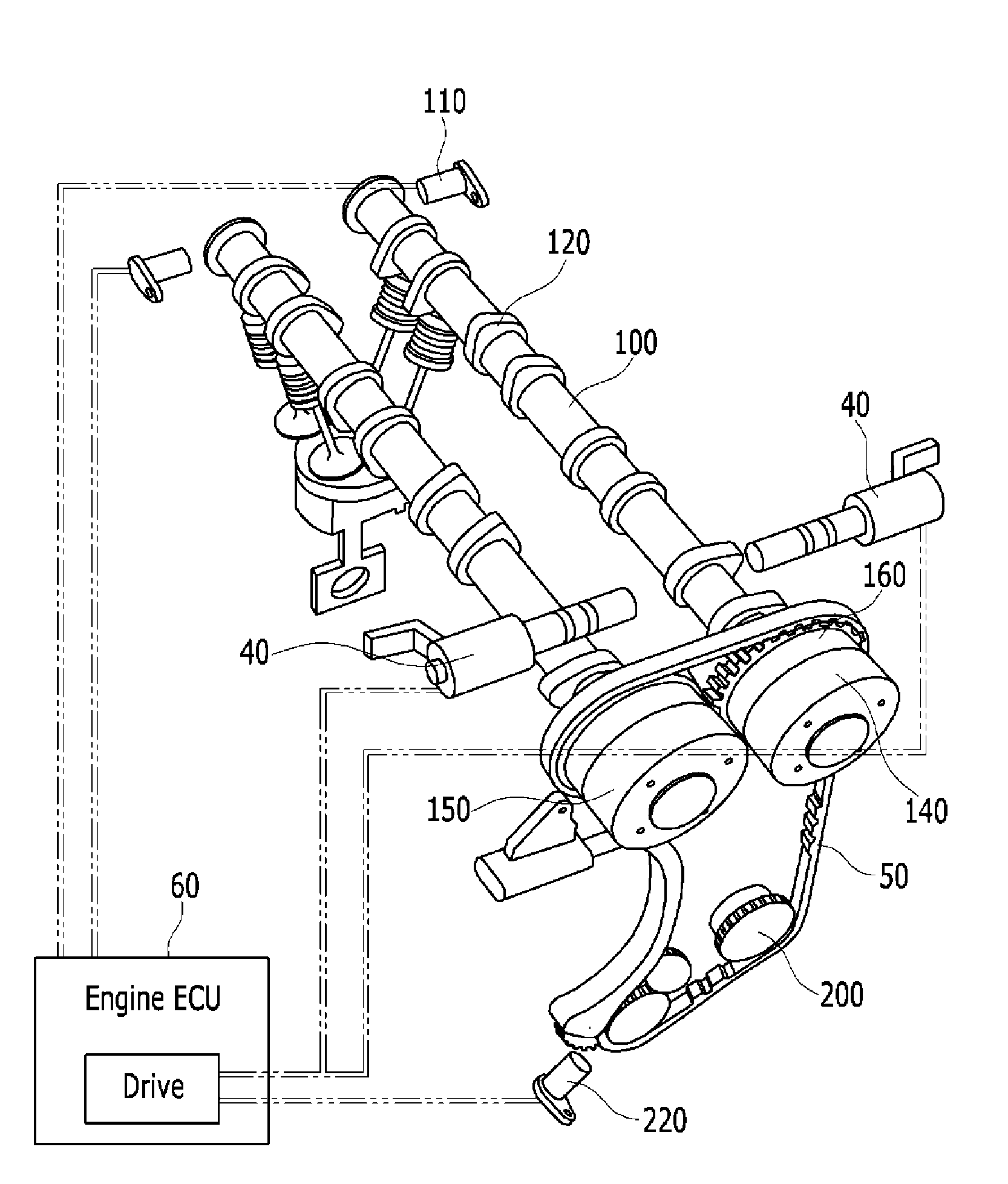
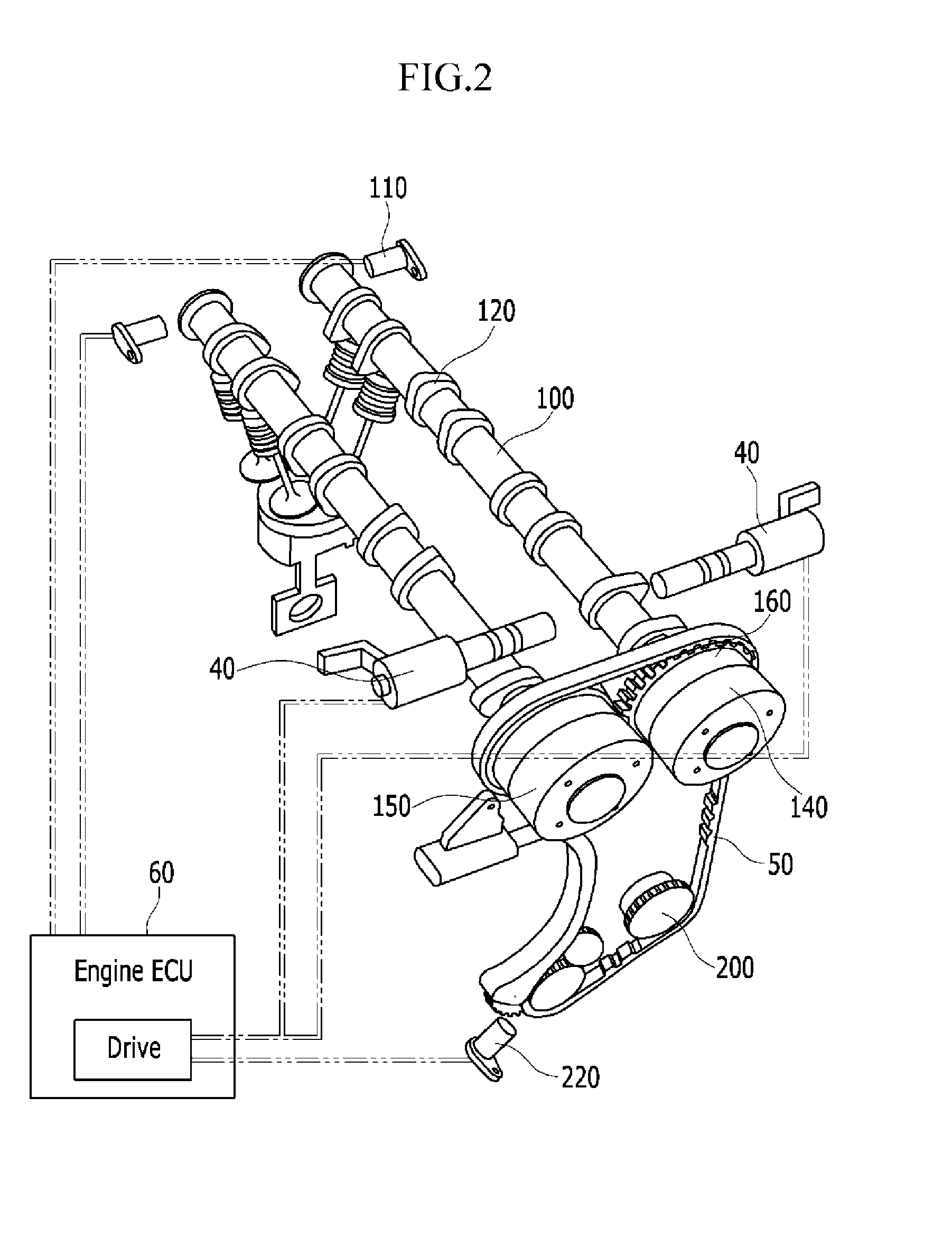
Startability improving method for GDI engine using electric CVVT control
PatentActiveUS20120143463A1
Innovation
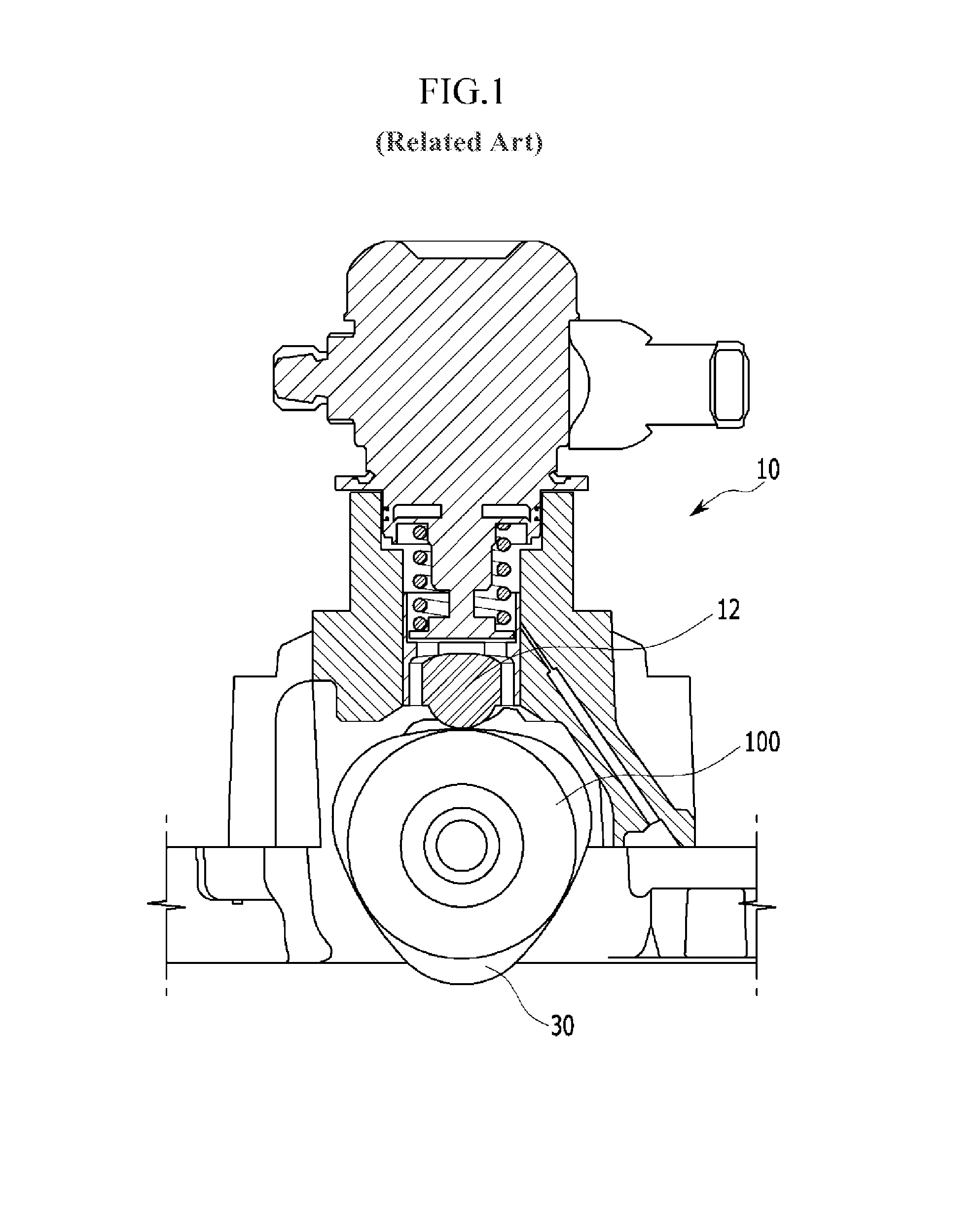
- An electric CVVT control method that calculates the phase angle and position difference between the camshaft and high pressure pump lobe, using sensors and a drive motor to adjust the camshaft position just before the end of the high pressure pump lobe, ensuring quicker high pressure formation and improved startability by determining the necessary duty to align the camshaft with the target position.

Control device of engine with variable valve timing mechanism
PatentWO2018078815A1
Innovation
- The engine control device adjusts the operating speed of the VVT mechanism by controlling hydraulic pressure, increasing speed when the overlap between intake and exhaust valve opening periods increases and decreasing it when the overlap decreases, while also optimizing oil supply and temperature settings to minimize oil pressure drops and reduce pumping loss.


Emissions Regulations Impact on Engine Technology
Emissions regulations have become a primary driver for engine technology evolution over the past two decades, significantly influencing the development trajectory of both Gasoline Direct Injection (GDI) engines and Variable Valve Timing (VVT) systems. The increasingly stringent standards established by regulatory bodies such as the EPA in the United States, Euro standards in Europe, and China's National standards have compelled manufacturers to continuously refine these technologies to achieve compliance while maintaining performance.
GDI engines have experienced substantial transformation in response to emissions regulations. Early GDI implementations faced challenges with particulate matter (PM) emissions, which became a regulatory focus point in Euro 6 and equivalent standards worldwide. This prompted the development of more sophisticated fuel injection strategies, including multiple injection events per cycle and precise spray pattern optimization to ensure complete combustion and minimize PM formation.
VVT systems have similarly evolved under regulatory pressure, with manufacturers expanding their capabilities from simple intake-only timing adjustments to fully variable systems controlling both intake and exhaust timing and lift. These advancements directly address NOx emissions by enabling precise control of internal exhaust gas recirculation (EGR), which reduces combustion temperatures and consequently NOx formation without sacrificing performance.
The combination of GDI and VVT technologies has proven particularly effective in meeting emissions targets while enhancing performance. This synergistic approach allows engines to operate in optimal combustion modes across varying load conditions, facilitating compliance with both CO2 and criteria pollutant regulations. The regulatory push toward real-world driving emissions (RDE) testing has further accelerated the refinement of these technologies to ensure consistent performance across all operating conditions.
Recent regulatory developments, including the announcement of future bans on internal combustion engines in various markets, have paradoxically intensified research into advanced GDI and VVT technologies. Manufacturers are pursuing maximum efficiency from these systems during the transition period to electrification, resulting in innovations such as variable compression ratio systems that work in concert with GDI and VVT to further optimize combustion processes.
The regulatory landscape has also driven the integration of these mechanical systems with sophisticated electronic controls and after-treatment technologies. Modern engine management systems continuously adjust GDI and VVT parameters based on emissions feedback from sensors, creating a closed-loop system that maintains optimal emissions performance throughout the vehicle's lifecycle, addressing the long-term compliance requirements embedded in current regulations.
GDI engines have experienced substantial transformation in response to emissions regulations. Early GDI implementations faced challenges with particulate matter (PM) emissions, which became a regulatory focus point in Euro 6 and equivalent standards worldwide. This prompted the development of more sophisticated fuel injection strategies, including multiple injection events per cycle and precise spray pattern optimization to ensure complete combustion and minimize PM formation.
VVT systems have similarly evolved under regulatory pressure, with manufacturers expanding their capabilities from simple intake-only timing adjustments to fully variable systems controlling both intake and exhaust timing and lift. These advancements directly address NOx emissions by enabling precise control of internal exhaust gas recirculation (EGR), which reduces combustion temperatures and consequently NOx formation without sacrificing performance.
The combination of GDI and VVT technologies has proven particularly effective in meeting emissions targets while enhancing performance. This synergistic approach allows engines to operate in optimal combustion modes across varying load conditions, facilitating compliance with both CO2 and criteria pollutant regulations. The regulatory push toward real-world driving emissions (RDE) testing has further accelerated the refinement of these technologies to ensure consistent performance across all operating conditions.
Recent regulatory developments, including the announcement of future bans on internal combustion engines in various markets, have paradoxically intensified research into advanced GDI and VVT technologies. Manufacturers are pursuing maximum efficiency from these systems during the transition period to electrification, resulting in innovations such as variable compression ratio systems that work in concert with GDI and VVT to further optimize combustion processes.
The regulatory landscape has also driven the integration of these mechanical systems with sophisticated electronic controls and after-treatment technologies. Modern engine management systems continuously adjust GDI and VVT parameters based on emissions feedback from sensors, creating a closed-loop system that maintains optimal emissions performance throughout the vehicle's lifecycle, addressing the long-term compliance requirements embedded in current regulations.
Cost-Benefit Analysis of GDI-VVT Implementation
Implementing GDI (Gasoline Direct Injection) with VVT (Variable Valve Timing) systems represents a significant investment for automotive manufacturers. This analysis examines the economic implications of this technology combination against its performance benefits.
Initial implementation costs for GDI-VVT systems typically range from $800-1,200 per unit higher than conventional port fuel injection systems. This includes additional components such as high-pressure fuel pumps, precision injectors, and more sophisticated engine control units. Manufacturers must also factor in research and development costs, which can reach $50-100 million for a new engine family.
Production line modifications represent another substantial investment, with retooling costs averaging $15-25 million per manufacturing facility. These capital expenditures must be amortized across production volumes, making the business case more challenging for low-volume vehicle applications.
Against these costs, GDI-VVT systems deliver quantifiable benefits. Fuel economy improvements of 12-15% translate to approximately $300-450 in fuel savings per year for average drivers. This creates a consumer payback period of 2-4 years depending on driving patterns and fuel prices. For manufacturers, these systems contribute 3-5 g/km CO₂ reduction, helping meet increasingly stringent emissions regulations and avoiding potential non-compliance penalties.
Performance enhancements provide additional value, with 8-12% torque improvements and 5-10% power increases allowing manufacturers to maintain performance while downsizing engines. This "downspeeding" strategy enables further efficiency gains while preserving marketable performance metrics.
Maintenance considerations present a mixed picture. GDI systems typically require premium fuel and may experience carbon buildup issues requiring periodic cleaning ($150-300 service). However, VVT systems generally reduce long-term valve train wear, potentially extending engine life.
Sensitivity analysis indicates that fuel price is the most critical variable affecting consumer return on investment. At prices below $2.50/gallon, payback periods extend beyond 4 years, potentially diminishing consumer value perception. Conversely, at prices above $3.50/gallon, payback accelerates to under 2 years, significantly enhancing the value proposition.
For manufacturers, the cost-benefit equation is most favorable for mid-to-high volume production (>100,000 units annually) where economies of scale can be achieved. Premium vehicle segments show stronger acceptance of the technology's cost premium, while mass-market implementation requires careful value engineering to maintain competitive pricing.
Initial implementation costs for GDI-VVT systems typically range from $800-1,200 per unit higher than conventional port fuel injection systems. This includes additional components such as high-pressure fuel pumps, precision injectors, and more sophisticated engine control units. Manufacturers must also factor in research and development costs, which can reach $50-100 million for a new engine family.
Production line modifications represent another substantial investment, with retooling costs averaging $15-25 million per manufacturing facility. These capital expenditures must be amortized across production volumes, making the business case more challenging for low-volume vehicle applications.
Against these costs, GDI-VVT systems deliver quantifiable benefits. Fuel economy improvements of 12-15% translate to approximately $300-450 in fuel savings per year for average drivers. This creates a consumer payback period of 2-4 years depending on driving patterns and fuel prices. For manufacturers, these systems contribute 3-5 g/km CO₂ reduction, helping meet increasingly stringent emissions regulations and avoiding potential non-compliance penalties.
Performance enhancements provide additional value, with 8-12% torque improvements and 5-10% power increases allowing manufacturers to maintain performance while downsizing engines. This "downspeeding" strategy enables further efficiency gains while preserving marketable performance metrics.
Maintenance considerations present a mixed picture. GDI systems typically require premium fuel and may experience carbon buildup issues requiring periodic cleaning ($150-300 service). However, VVT systems generally reduce long-term valve train wear, potentially extending engine life.
Sensitivity analysis indicates that fuel price is the most critical variable affecting consumer return on investment. At prices below $2.50/gallon, payback periods extend beyond 4 years, potentially diminishing consumer value perception. Conversely, at prices above $3.50/gallon, payback accelerates to under 2 years, significantly enhancing the value proposition.
For manufacturers, the cost-benefit equation is most favorable for mid-to-high volume production (>100,000 units annually) where economies of scale can be achieved. Premium vehicle segments show stronger acceptance of the technology's cost premium, while mass-market implementation requires careful value engineering to maintain competitive pricing.
Unlock deeper insights with PatSnap Eureka Quick Research — get a full tech report to explore trends and direct your research. Try now!
Generate Your Research Report Instantly with AI Agent
Supercharge your innovation with PatSnap Eureka AI Agent Platform!